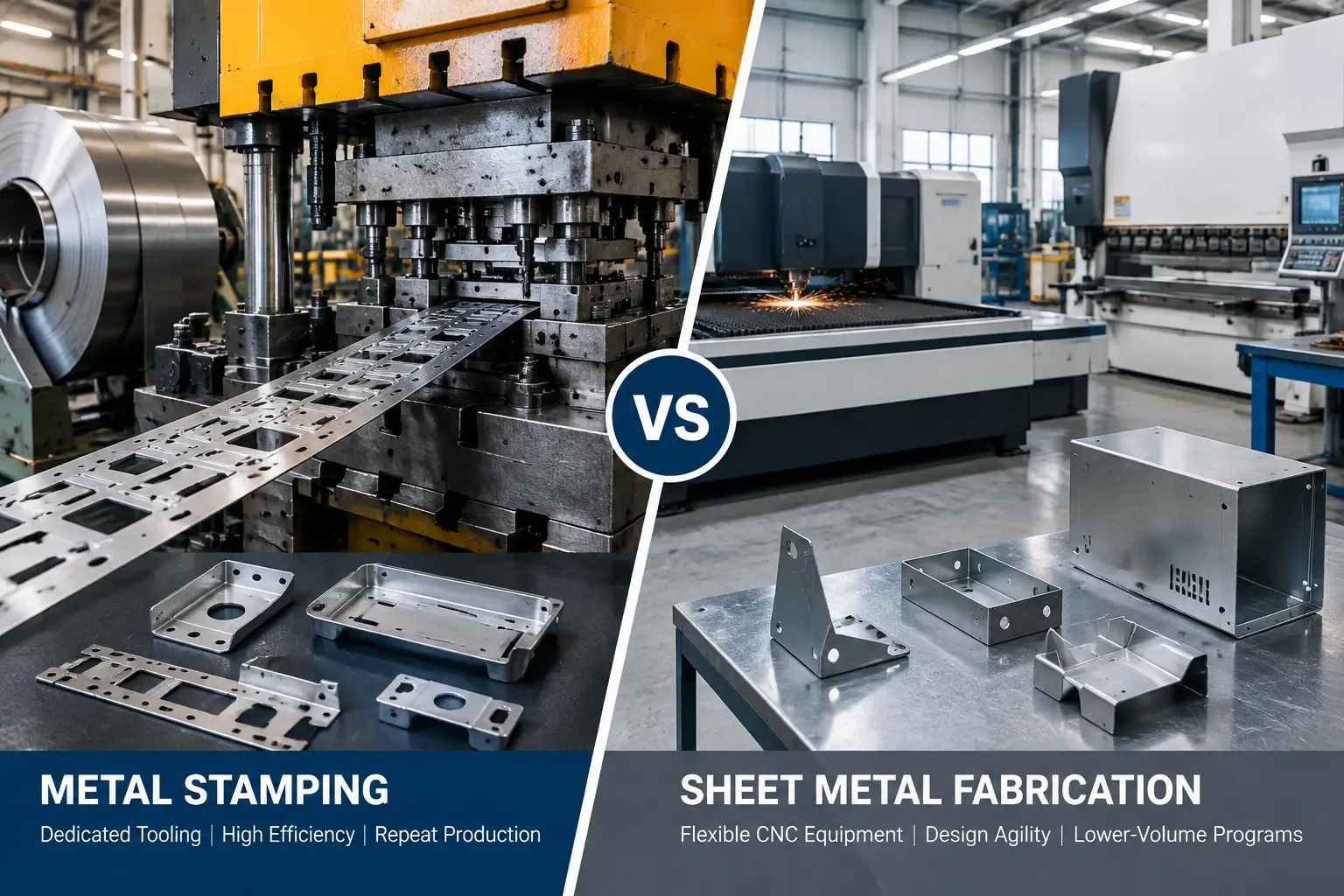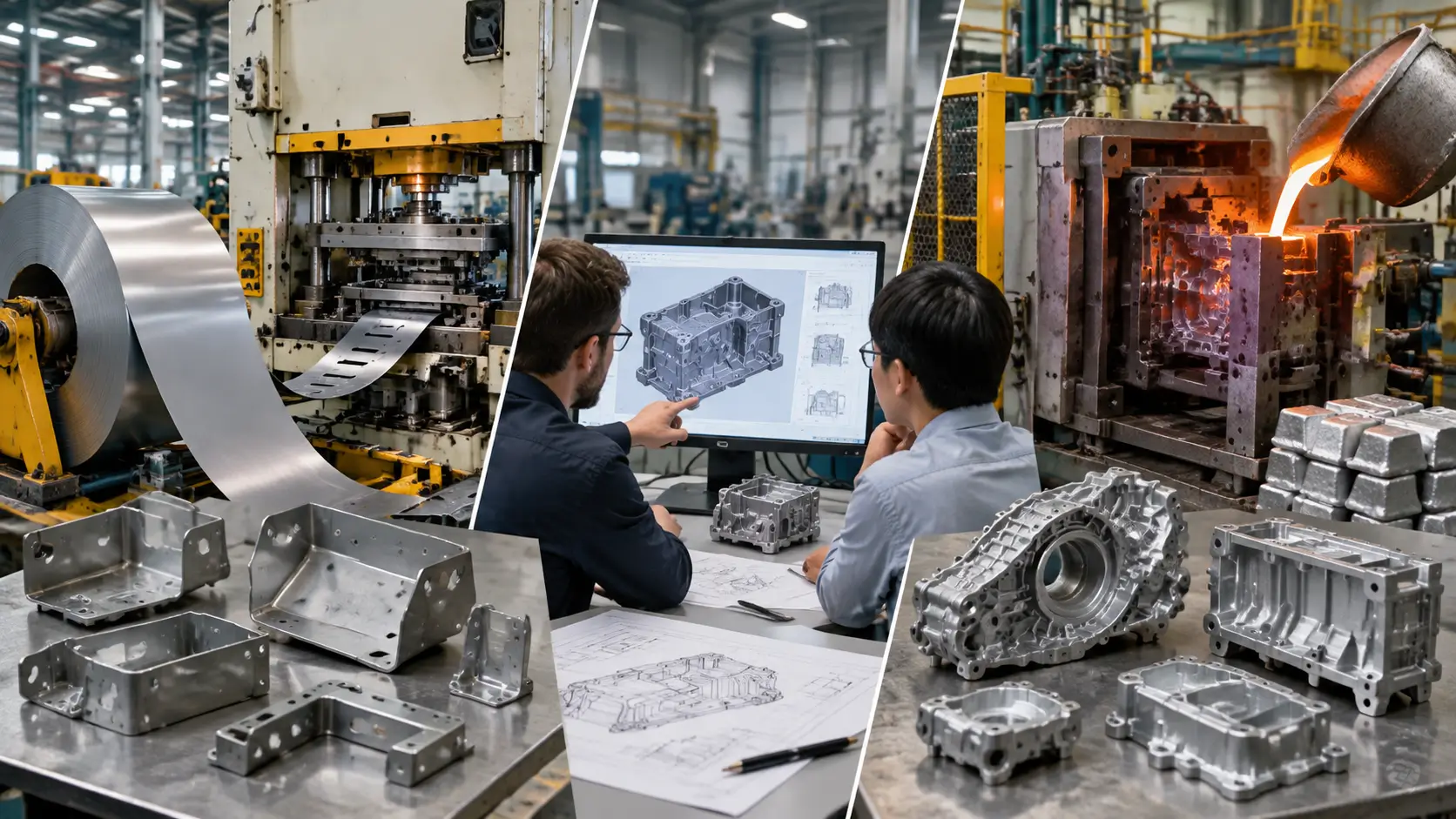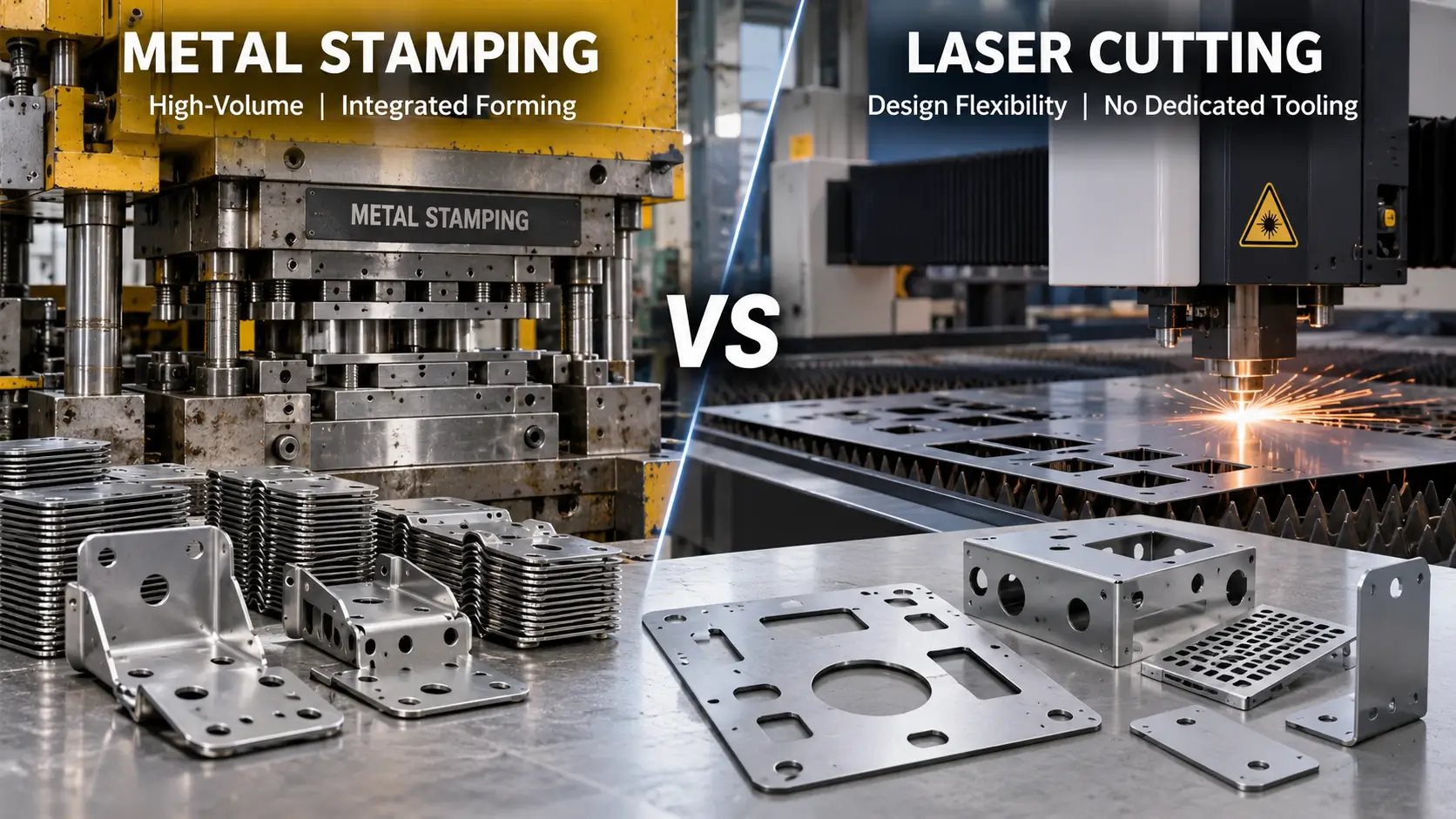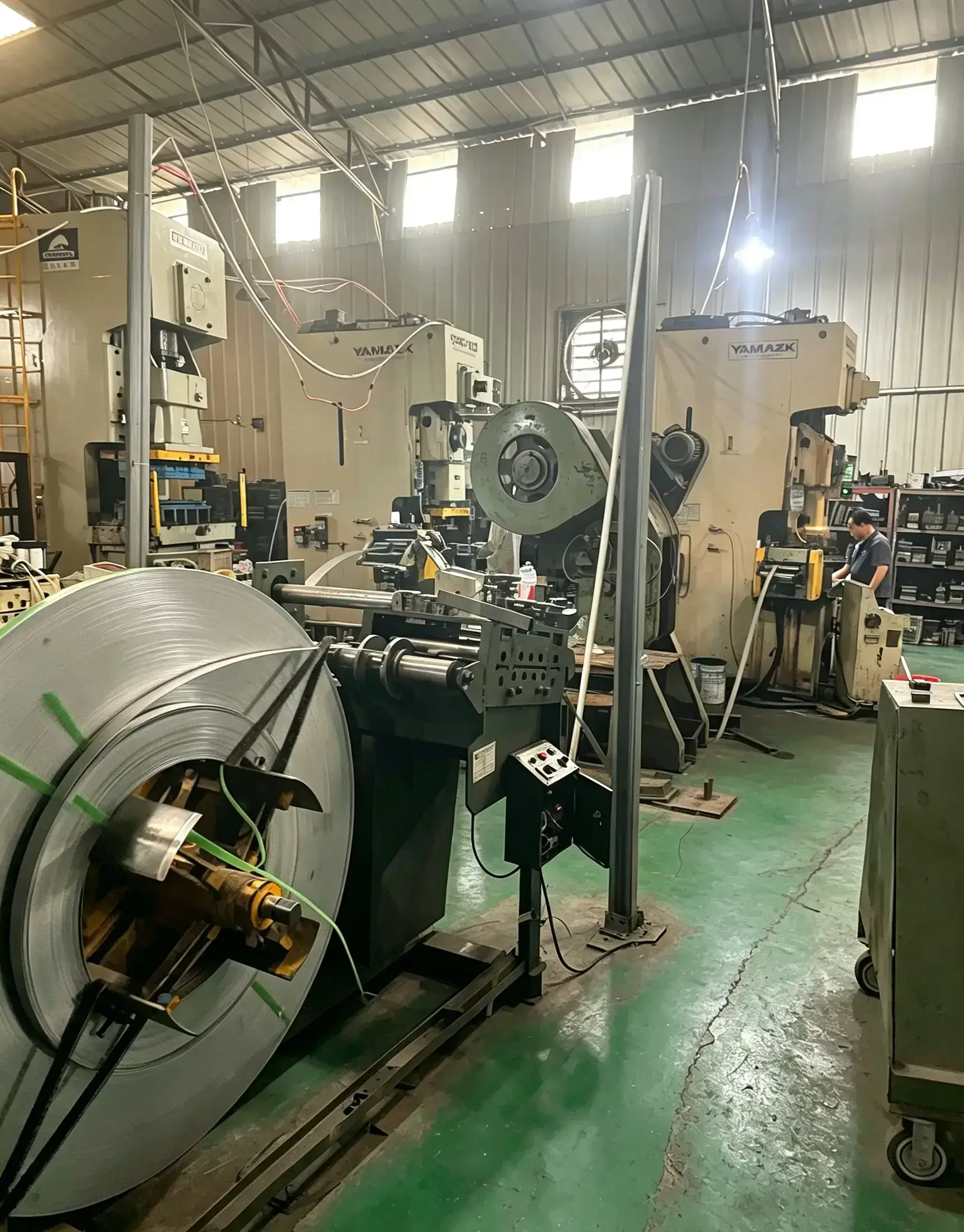
Industrial hardware metal stamping parts are custom metal components produced through precision stamping processes for industrial equipment, machinery, furniture hardware, and structural mounting applications. Manufactured by feeding sheet metal or coiled stock through mechanical or hydraulic presses, custom stamping operations utilize engineered dies to punch, notch, bend, and form raw metal into hardware components designed according to customer structural, mounting, and mechanical requirements.
For B2B buyers, OEM procurement managers, and mechanical engineering teams, sourcing custom stamped metal hardware provides a practical solution for dimensional consistency, functional repeatability, and production efficiency. Stamped metal components serve as critical load-bearing braces, mounting frames, joint brackets, and assembly hardware across diverse industrial sectors.
What Are Industrial Hardware Metal Stamping Parts?
Industrial hardware metal stamping parts refer specifically to custom-engineered metal components that provide structural support, physical attachment, or mechanical alignment within industrial systems. Designed according to specific customer requirements, these components are manufactured to meet specified dimensional tolerances and mechanical functional needs in equipment and furniture applications.
Custom metal stamping converts flat metal sheets—ranging from thin-gauge stock to thicker plate—into required 3D forms using custom tooling dies. OEM buyers rely on custom hardware stamping to replace labor-intensive manual fabrication with repeatable manufacturing runs based on approved drawings.
Key Characteristics of Stamped Industrial Hardware
- Designed for Application Requirements: Engineered from carbon steels, stainless alloys, or aluminum to meet specific structural, mounting, and mechanical loading specifications.
- Dimensional Repeatability: Stamping dies help maintain consistent hole centers, flange angles, and part geometry across batch production runs.
- Assembly-Oriented Features: Can be produced with punched holes, mounting features, or prepared for secondary fastener integration, deburring, and protective surface finishes based on customer project specifications.
- Scalable Production Line: Dedicated tooling development allows for efficient unit manufacturing during medium-to-high-volume production runs compared to manual fabrication methods.
Common Types of Industrial Hardware Metal Stamping Parts
Industrial metal stamping encompasses a wide array of functional geometries designed for physical mounting, structural joint reinforcement, and assembly support.
Industrial Mounting & Support Brackets
Mounting brackets form essential connection components in industrial machinery installations and equipment housing setups. Stamped mounting parts include L-brackets, Z-brackets, U-channels, and mounting frames. These components feature precise mounting holes, clearance slots, or drawn strengthening ribs designed to fit specific sub-assemblies, motors, diagnostic modules, and control cabinets.
Structural Connecting Plates & Reinforcements
Connecting plates—such as corner gussets, flat tie plates, base plates, and cross-brace retainers—are utilized to join structural beams, extrusions, and frame joints. Stamped connecting plates assist in securing structural joints and distributing localized mounting forces across designated surface areas according to structural engineering specifications.
Furniture & Heavy-Duty Equipment Hardware
Commercial furniture systems, specialized beds, commercial shelving, and industrial workstations require dedicated structural connectors. Key components include bed-frame locking brackets, interlocking hook plates, sliding rail brackets, and hinge components. These stamped hardware components are formed to provide rigid joint engagement and functional alignment during assembly.
Materials Used for Industrial Hardware Stamping
Selecting the appropriate raw metal stock depends on mechanical strength requirements, formability, component weight, and corrosion resistance in operating environments. Stamping factories evaluate material specifications to confirm forming feasibility while satisfying customer requirements.
| Material | Mechanical Properties | Typical Industrial Hardware Applications |
|---|---|---|
| Carbon Steel (SPCC, SPHC, Q235) | Good tensile strength, excellent formability, economical cost | Structural brackets, bed-frame locking hardware, mounting frames |
| Stainless Steel (304, 316) | Excellent corrosion resistance, good yield strength, wear resistance | Outdoor equipment hardware, chemical processing mounts, washdown enclosures |
| Aluminum Alloys (5052, 6061) | Lightweight, good strength-to-weight ratio, natural oxidation resistance | Equipment enclosures, lightweight mounting plates, hardware brackets |
| Galvanized Steel (SECC, SGCC) | Pre-coated corrosion protection, practical protection-to-cost ratio | Electrical equipment chassis, HVAC mounting hardware, structural braces |
Evaluating material grain direction, yield strength, and surface condition during DFM (Design for Manufacturability) review helps avoid micro-cracking along tight bend radii while maintaining part geometry.
Manufacturing Process of Industrial Hardware Stamping Parts
Converting raw sheet metal into finished industrial hardware components follows structured manufacturing steps, beginning with tooling development and progressing through press operations and dimensional verification.
Tooling Design & Die Development
Tooling engineers analyze 2D drawings and 3D CAD models to calculate forming sequences, blank sizes, springback allowances, and die clearance. Depending on target production volume and part geometry, engineers utilize single-stage dies, compound dies, or multi-station progressive dies. Tool steel materials are machined to perform continuous blanking, punching, and forming operations.
Progressive Die Stamping & Forming
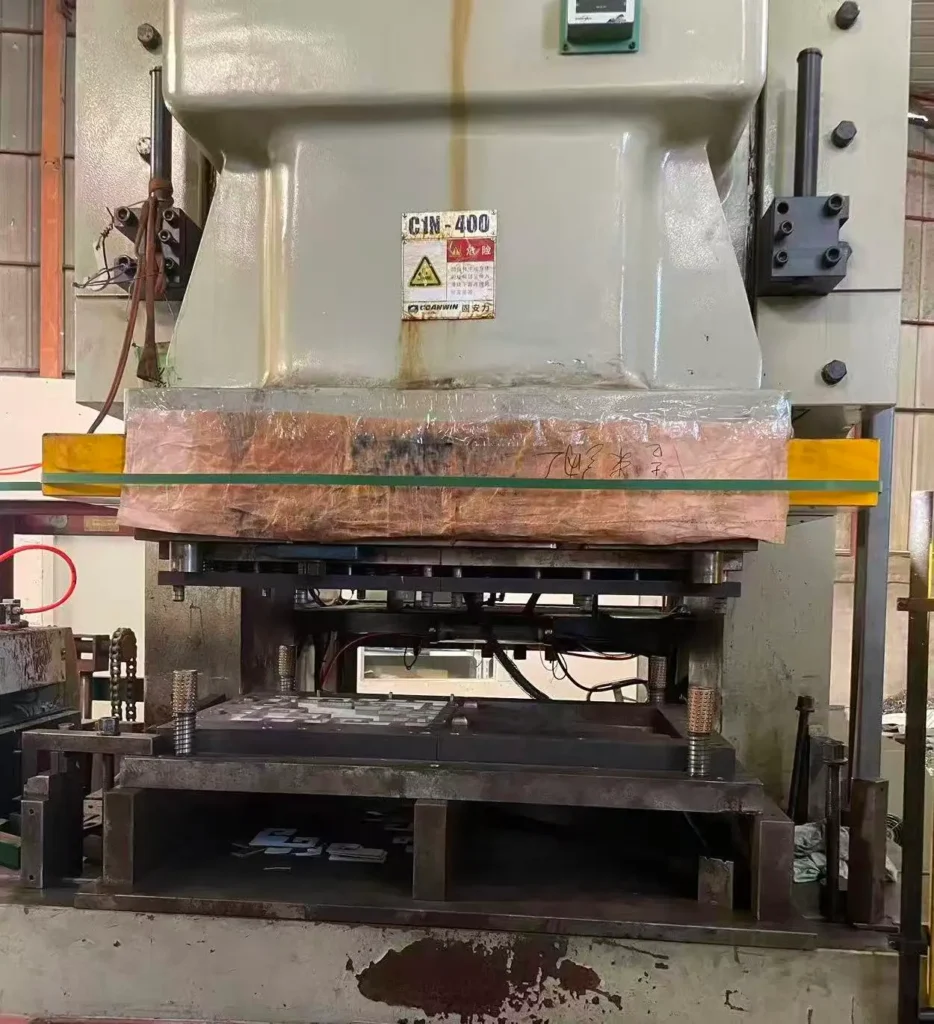
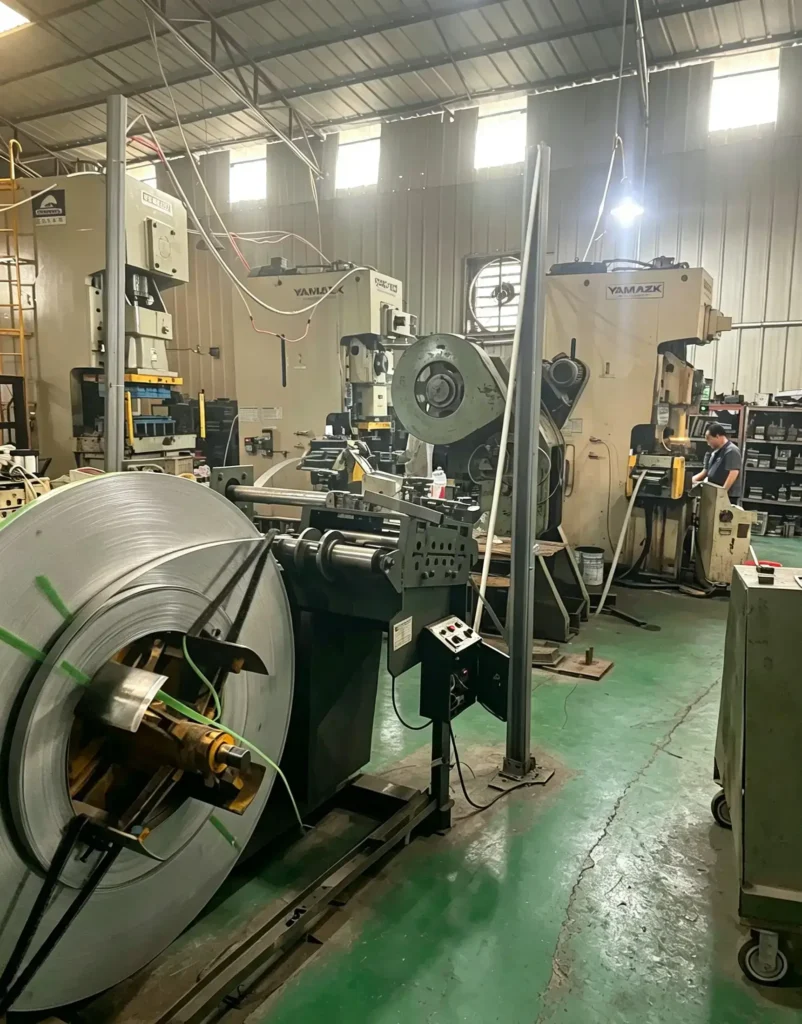
In continuous production, coiled sheet metal is fed into mechanical or hydraulic stamping presses selected according to material thickness, part geometry, and forming requirements. Progressive die stations perform inline operations—including piloting, hole punching, notch blanking, rib embossing, edge flanging, and final cut-off—within structured press strokes to achieve specified component profiles.
Quality Control & Dimensional Verification
During press runs, initial sample inspection verifies key physical dimensions—including hole center spacing, bend angles, flange heights, and material thickness—against customer drawings using calipers, height gauges, and micrometers. Routine checks help ensure die edges remain clear and maintain consistent geometry across production batches.
| Manufacturing Stage | Main Activities |
|---|---|
| Engineering Review | Drawing review, DFM analysis, process planning |
| Tooling Development | Die design, machining, tryout |
| Stamping Production | Punching, bending, forming, blanking |
| Secondary Processing | Welding, fastener insertion, deburring, finishing |
| Inspection | Dimensional checks and quality verification |
Industrial Hardware Secondary Operations & Assembly Integration
For OEM buyers, stamped metal parts often serve as base components that require additional operations. Metal stamping suppliers coordinate or execute secondary processing options to deliver parts aligned with customer assembly requirements.
Fastener Integration (Nut & Rivet Insertion)
Industrial mounting brackets often require threaded attachment points or inserted hardware. Secondary fastener integration processes help add functional hardware to stamped sheet metal parts:
- Clinch Nut & Stud Insertion: Press equipment is used to install self-clinching nuts, threaded studs, or standoffs into pre-punched metal holes based on engineering drawings.
- Rivet Installation: Structural rivets and pin retainers can be mechanically clinched to combine sub-assembly components when required by part designs.
Secondary Welding & Joint Processing
When multi-piece bracket designs or complex 3D hardware geometries require joining separate stamped parts, secondary welding processes can be coordinated or performed:
- Spot Welding (Resistance Welding): Suitable for joining overlapping sheet metal flanges, corner gussets, and reinforcement plates.
- MIG/TIG Welding: Applied to structural joints, corner seams, and mounting bases where specified continuous welded joints are needed.
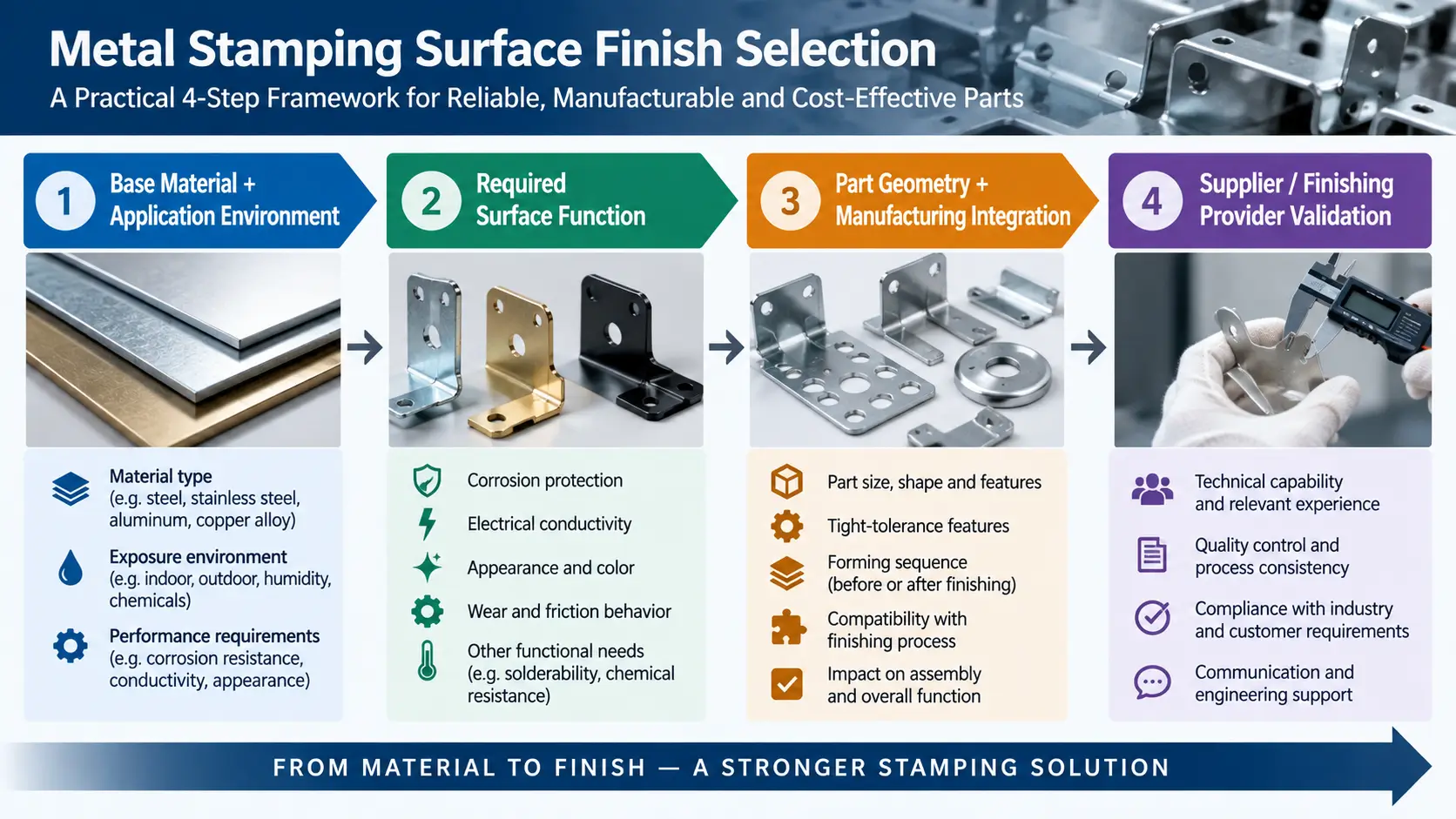
Surface Finishing & Corrosion Protection
Industrial hardware components operate in various environments, often requiring secondary surface finishing for corrosion protection or aesthetic requirements:
- Powder Coating & Painting: Applies a protective polymer coating resistant to surface wear and environmental exposure.
- Zinc Plating (Galvanization): Provides functional corrosion protection with clear, yellow, or black chromate options for steel parts.
- E-Coating (Electrophoretic Deposition): Applies a uniform corrosion-resistant primer coating across metal surfaces and recessed features.
- Deburring & Vibratory Tumbling: Mechanical deburring removes sharp punching burrs and sharp edges to facilitate safe handling during handling and assembly.
| Secondary Operation | Purpose |
|---|---|
| Clinch Nuts / Studs | Add threaded attachment points |
| Rivet Assembly | Join stamped components |
| Spot Welding | Create structural connections |
| MIG/TIG Welding | Support larger welded assemblies |
| Powder Coating | Improve corrosion resistance and appearance |
| Zinc Plating | Provide steel corrosion protection |
| Deburring | Improve safety and assembly fit |
Metal Stamp Factory Industrial Hardware Manufacturing Experience
Established in 2014 in Xiamen, China, Metal Stamp Factory focuses on custom metal stamping, tooling development, and OEM hardware component manufacturing. Founder Shengtong Chen began learning mold making and metal stamping at the age of 17, accumulating over 25 years of hands-on manufacturing experience in die design, sheet metal forming, and custom OEM cooperation.
Case Evidence: Bed-Frame Locking Brackets & Heavy-Duty Hardware
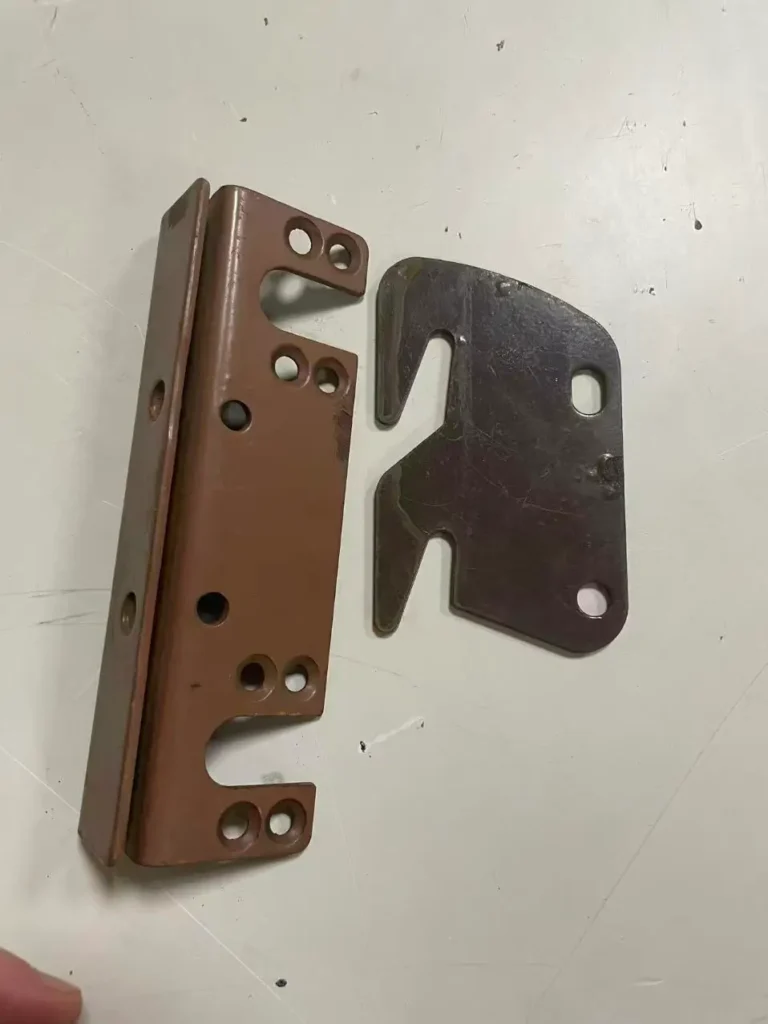
Metal Stamp Factory has confirmed OEM manufacturing experience producing custom bed-frame locking brackets and structural metal hardware components according to customer designs. Our team evaluates customer drawings, develops custom stamping dies, and carries out forming operations to meet part specifications.
Confirmed Manufacturing Experience:
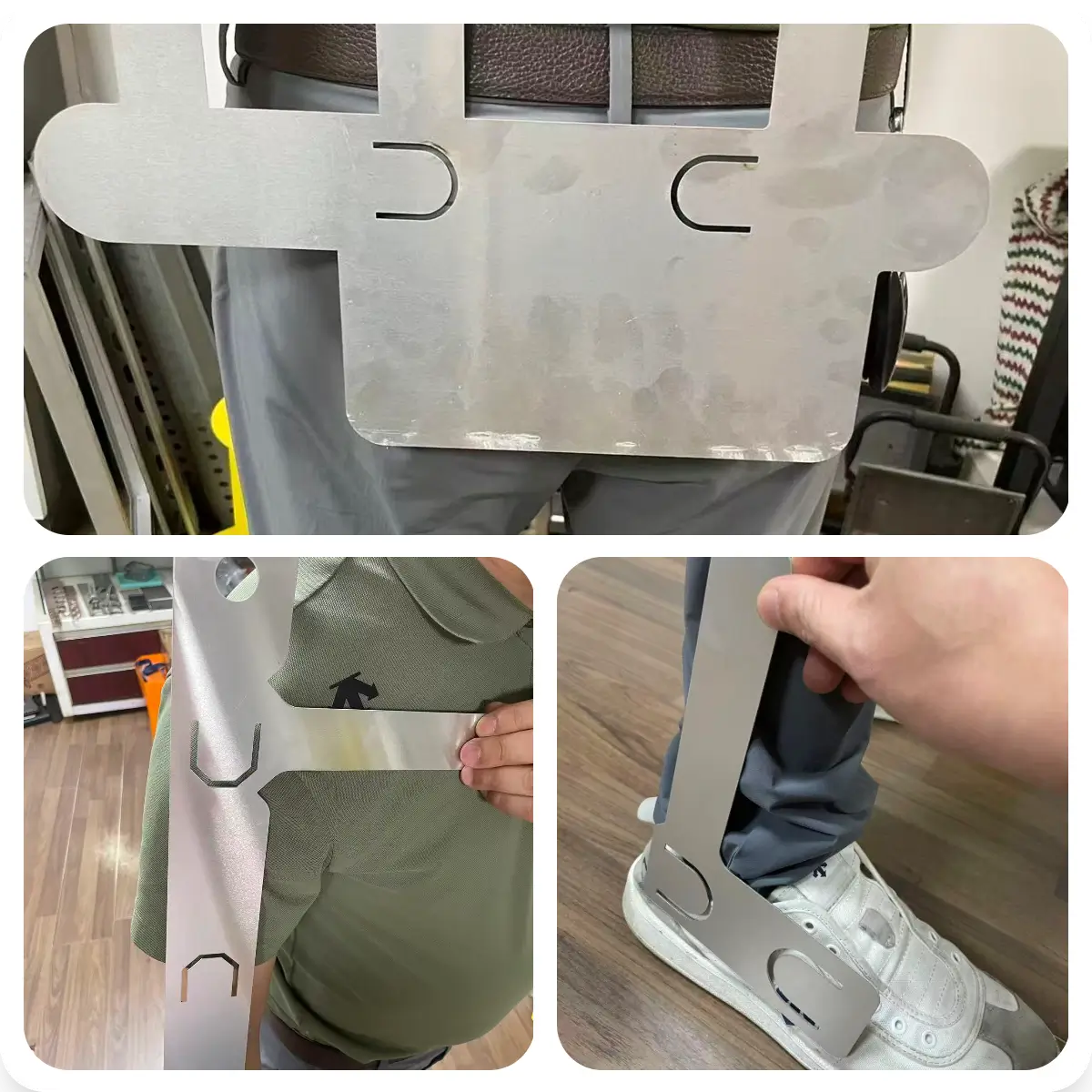
- Bed-Frame Locking Brackets: Precision-stamped multi-bend locking brackets produced based on customer drawings for functional joint engagement in furniture systems.
- Heavy-Duty Hardware Components: Custom structural braces and mounting brackets manufactured from carbon steel and galvanized sheet stock, with options for secondary fastener insertion and surface treatment according to order requirements.
Factory Capabilities & Profile
- Established: 2014 in Xiamen, Fujian, China.
- Founder Experience: Shengtong Chen — 25+ years of hands-on experience in tooling design, press operations, and custom hardware manufacturing.
- Tooling Support: Engineering capabilities to design and maintain progressive, compound, or single-stage stamping dies tailored to customer drawings.
- OEM Supply Model: Providing bare stamped metal components or secondary-processed hardware parts based on confirmed project requirements.
Applications of Industrial Hardware Metal Stamping Parts
Custom stamped hardware components serve various functional roles across industrial and commercial sectors:
- Industrial Equipment & Machinery: Chassis mounting brackets, motor base plates, housing covers, and control cabinet hardware components.
- Commercial & Furniture Systems: Bed-frame locking connectors, office panel brackets, workstation hinges, shelving mounts, and corner plates.
- Construction & Building Hardware: Timber connection brackets, joist support hangers, anchor plates, ductwork suspension components, and frame retainers.
- Transportation & Material Handling: Conveyor guide brackets, mounting plates, sliding rail retainers, and attachment hardware.
How to Choose an Industrial Hardware Stamping Manufacturer
Selecting a qualified OEM manufacturing partner for custom industrial hardware requires evaluating technical capabilities, engineering support, and processing options.
Evaluate Tooling & Press Capability
Verify that the manufacturer maintains tooling design and die maintenance capabilities. Technical experience helps ensure dies are designed with appropriate springback allowances and punch clearances. Confirm that the factory operates stamping presses suitable for your specified material thickness and part dimensions.
Verify Secondary Assembly & Finishing Options
Review the supplier’s secondary processing options. A supplier capable of coordinating fastener insertion, rivet assembly, spot welding, and surface treatment helps streamline the procurement workflow and manage production schedules.
Check Quality Control & Inspection Discipline
Ensure the factory follows structured quality checks, including initial sample inspection, material specification review, and process dimensional checks. Confirm that measurement tools—such as height gauges, calipers, and micrometers—are regularly used to verify parts against technical drawings.
Assess OEM Communication & Engineering Support
Effective OEM cooperation depends on clear technical communication. Choose a supplier that conducts thorough Design for Manufacturability (DFM) reviews on your 2D and 3D drawings, providing feedback on bend radii, hole clearances, and material utilization prior to tooling production.
| Evaluation Area | What OEM Buyers Should Verify |
|---|---|
| Tooling Capability | Die design, maintenance, and engineering support |
| Press Capacity | Suitable equipment for material thickness and part size |
| Secondary Processing | Welding, fasteners, finishing capabilities |
| Quality System | Inspection methods and drawing control |
| OEM Experience | Ability to support custom projects from drawings |
Frequently Asked Questions About Industrial Hardware Metal Stamping Parts
What are industrial hardware metal stamping parts?
Industrial hardware metal stamping parts are custom metal components—such as mounting brackets, connecting plates, locking hardware, and structural braces—manufactured by punching, blanking, bending, and forming sheet metal using press tooling for industrial machinery, equipment, and furniture applications.
What types of industrial hardware components can be produced by stamping?
Stamping can manufacture a broad range of hardware components, including L/Z/U mounting brackets, structural gussets, corner connecting plates, bed-frame locking brackets, sliding rail retainers, hinges, and enclosure mounting panels based on customer drawings.
Which materials are commonly used for industrial stamped hardware?
Common materials include carbon steel for practical structural applications, stainless steel (304/316) for corrosion resistance, aluminum alloys for lightweight parts, and pre-galvanized steel for cost-effective protection.
Can stamped hardware parts include secondary operations?
Yes. Stamped hardware parts can include secondary operations such as clinch nut and rivet insertion, spot/MIG welding, edge deburring, and surface finishing options like powder coating, zinc plating, or e-coating based on project requirements.
How does metal stamping improve industrial hardware production?
Metal stamping can provide consistent part geometry and efficient repeat production once dedicated tooling is developed, offering cost-effective unit manufacturing compared to manual fabrication for volume production.
Can manufacturers produce custom hardware parts from drawings?
Yes. OEM stamping manufacturers produce custom hardware components based directly on customer engineering drawings (2D PDF/CAD and 3D STEP files), designing tooling dies to meet specified dimensions, material grades, and design requirements.
What information is needed for an industrial hardware stamping quote?
To receive an accurate quotation, buyers should provide 2D/3D engineering drawings with dimensions and tolerances, material specifications, sheet thickness, target quantities, secondary processing requirements (nuts/rivets/welding), and desired surface finishes.
How do I choose a reliable industrial hardware stamping supplier?
Choose a manufacturer with demonstrated tooling design experience, suitable press capacity, secondary operation support (fasteners, welding, finishing), practical quality inspection routines, and clear OEM engineering communication.