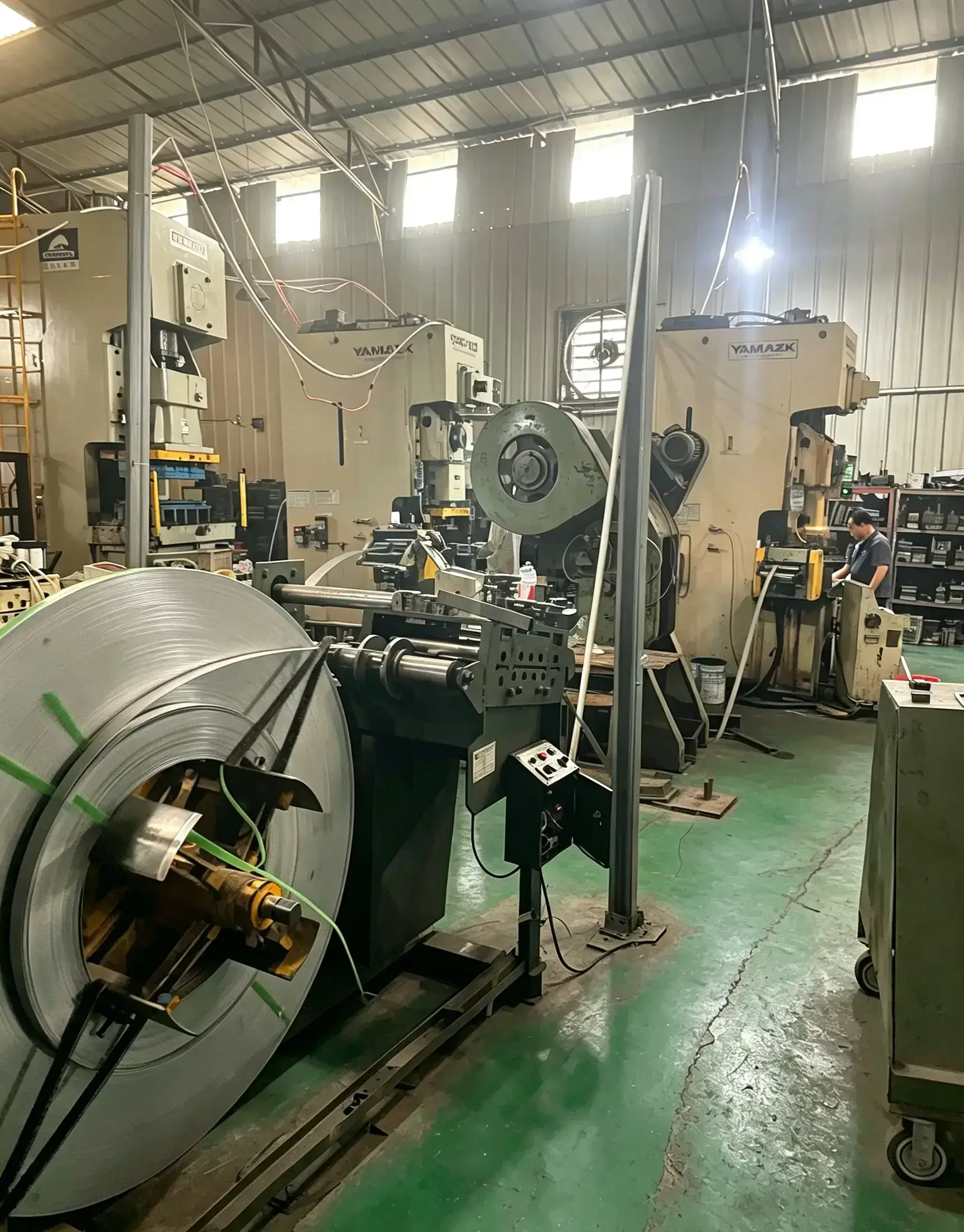
Answer Summary: Metal stamping materials determine part strength, corrosion resistance, formability, surface finish, and production cost. The most common materials include stainless steel, carbon steel, galvanized steel, aluminum, copper, and brass. OEM buyers should select materials based on application requirements, the stamping process involved, production volume, and required performance — not on raw material price alone.
Material choice can affect strength, corrosion resistance, formability, and overall project cost.
What Are Metal Stamping Materials?
Metal stamping materials are the metals — supplied as coil or sheet — that get punched, bent, or formed into a finished part inside a stamping die. If you’re new to the broader metal stamping concept, that guide covers the process itself; this one focuses specifically on material selection. The material isn’t just a raw input; it directly shapes what the die can do, what tolerances are achievable, and how the part performs in its final application.
Different materials behave differently under the press. A material’s thickness, hardness, and ductility determine how tight a bend radius it can handle, how much it will spring back after forming, and how much force the press needs to shape it — which is why material selection happens before die design, not after. See our full metal stamping process guide for how this fits into the complete production sequence, from drawing review through mass production.
Why Material Selection Is Important for OEM Metal Stamping Parts
Choosing the wrong material shows up as a production problem, not a paperwork problem. Common consequences include:
Cracking — when a material’s ductility limit is exceeded during forming
Deformation — when strength or thickness doesn’t match the application’s load requirements
Higher tooling cost — harder materials wear dies faster, requiring more maintenance or rework
Poor surface quality — some materials don’t take plating or coating evenly
Getting material selection right the first time avoids re-tooling, wasted samples, and delayed production — all more expensive than the material cost difference itself.
Common Types of Materials Used in Metal Stamping
Material
Properties
Applications
Stainless Steel (SUS304/316)
Corrosion resistance, hygiene
Outdoor hardware, food/medical
Carbon Steel / Iron (Q235, SPHC, SPCC)
Cost-effective, easy to form
Brackets, industrial parts
Galvanized Steel (SGCC+Z) / ZAM
Weather and corrosion resistance
Solar mounting, outdoor hardware
Aluminum
Lightweight, corrosion resistance
Electronics, automotive
Copper / Brass
Electrical conductivity
Terminals, connectors, contacts
Spring Steel
High yield strength, elasticity
Clips, retainers, spring contacts
How to Choose the Right Material for Metal Stamping Parts
Step 1 — Define application environment Indoor, outdoor, corrosive, or high-temperature? This narrows the material family immediately.
Step 2 — Check strength requirements Structural load vs. light-duty bracket — different tensile and yield strength needs.
Step 3 — Evaluate formability Deep draws, tight bend radii, or multiple forming stations all demand different ductility.
Step 4 — Consider surface treatment Some materials take plating well; others (like stainless steel) may not need coating at all.
Step 5 — Balance cost and volume At high volume, a slightly more expensive material with better formability can lower total cost by reducing scrap and tooling wear.
Material Selection Decision Guide for OEM Metal Stamping Parts
Requirement
Recommended Material
Reason
Corrosion resistance
Stainless Steel
Suitable for outdoor, medical, and harsh environments
Cost-effective structural parts
Carbon Steel
Good formability and economical for high-volume parts
Outdoor protection
Galvanized Steel / ZAM
Improved corrosion resistance
Lightweight components
Aluminum
Weight reduction and corrosion resistance
Electrical conductivity
Copper / Brass
Suitable for terminals and connectors
Elastic components
Spring Steel / Phosphor Bronze
Provides spring performance
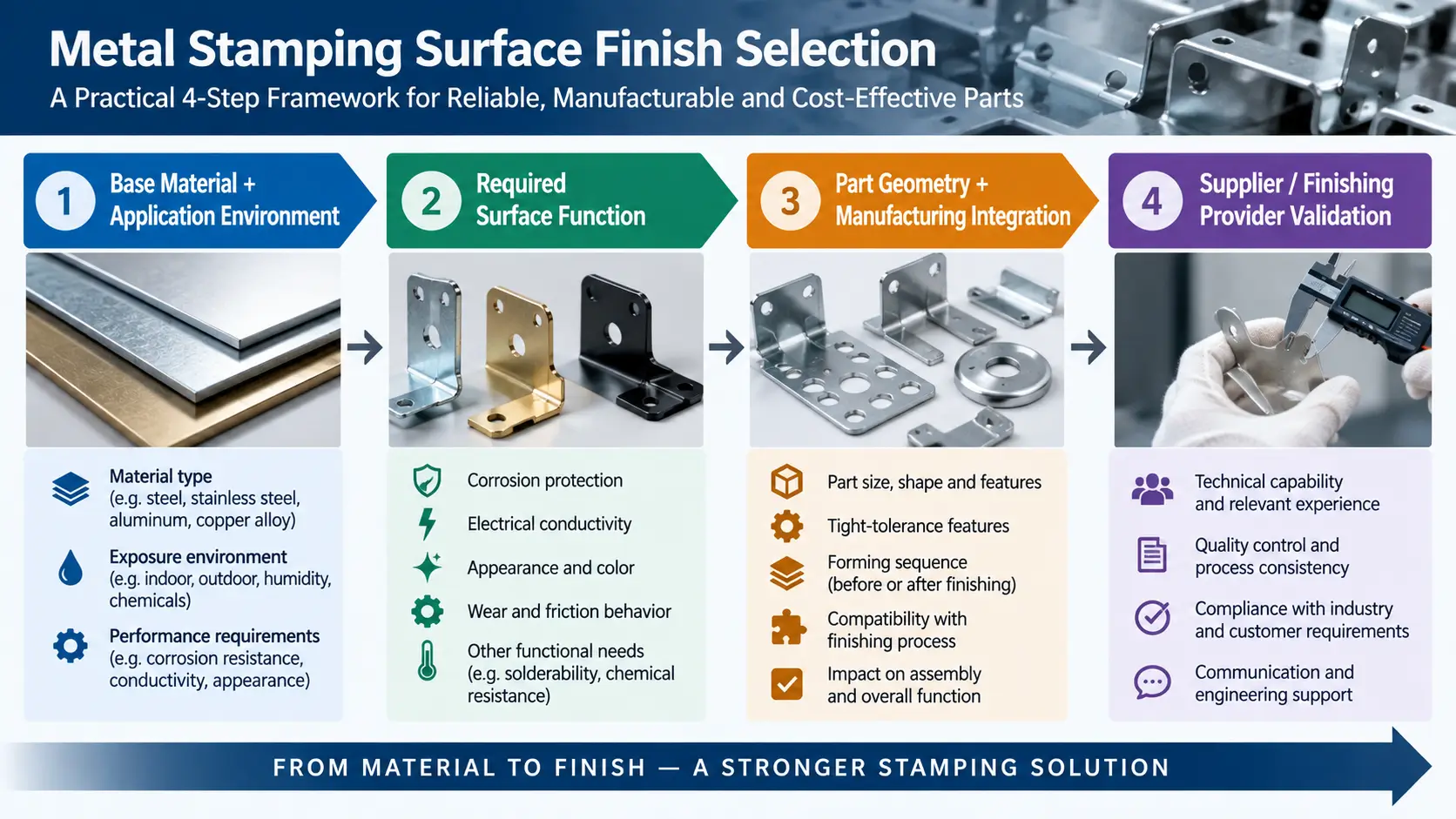
For a more detailed decision framework covering application requirements, material properties, manufacturability, surface finishing, and production considerations, see our metal stamping material selection guide.
Stainless Steel Materials for Precision Metal Stamping
Stainless steel is common in metal stamping for its corrosion resistance and clean surface finish:
SUS301 — higher strength, used where spring properties matter
SUS304 — widely used where corrosion resistance and formability are important considerations
SUS316 — better corrosion resistance for harsher environments (marine, chemical exposure)
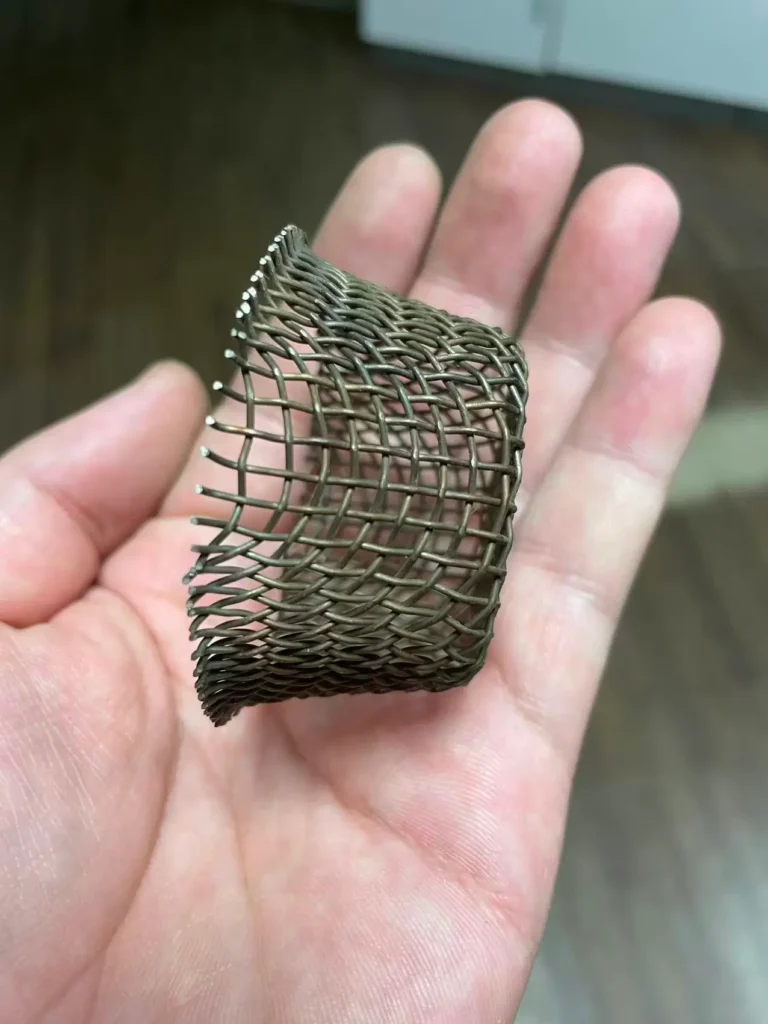
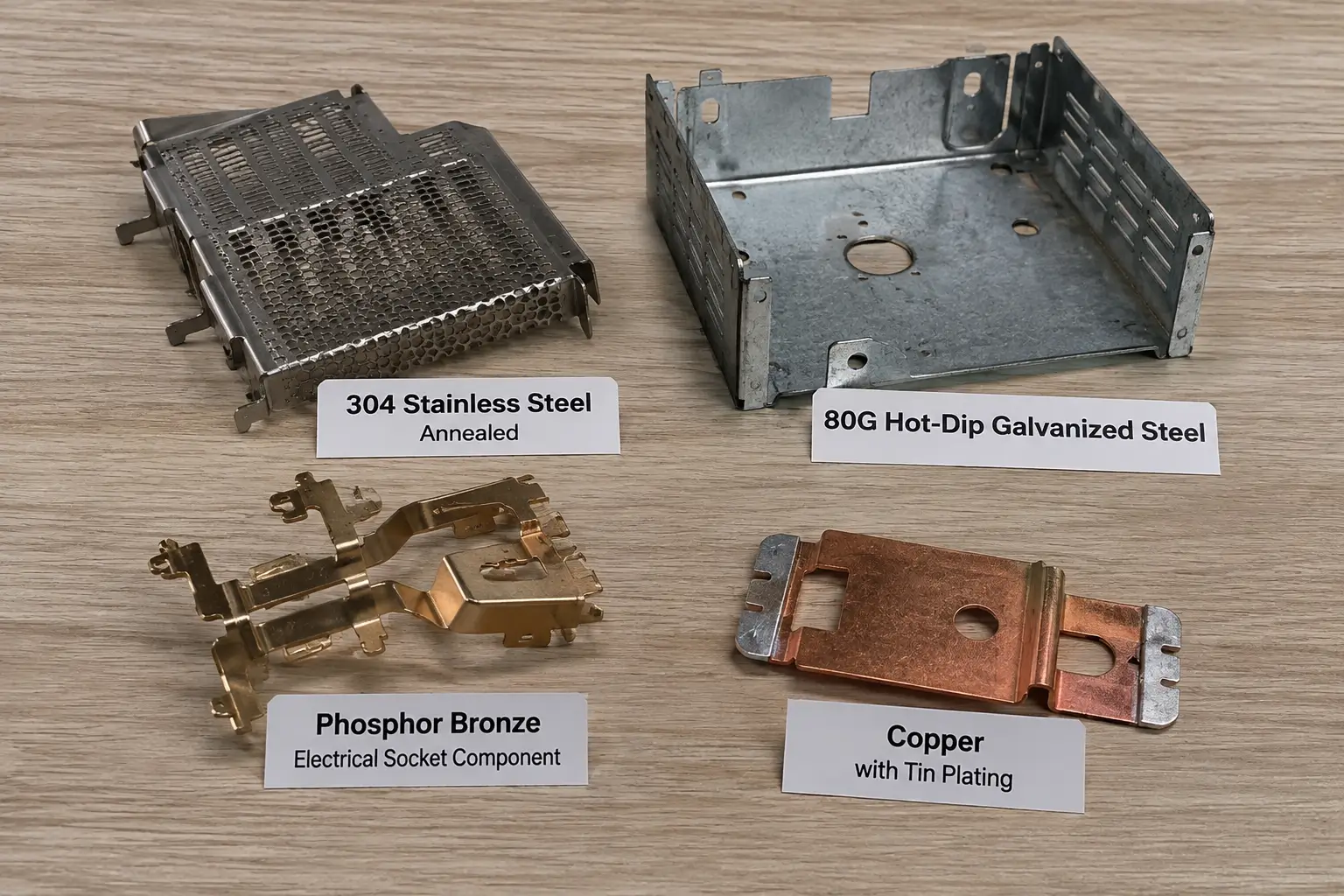
From the factory floor – 304 forming experience: We have manufactured a formed SUS304 stainless steel mesh component for which annealed material was required to meet the forming requirements. In this specific project, the non-annealed material could not achieve the required forming result. This is a project-specific manufacturing example rather than a general requirement for all 304 stainless steel stamped parts.
One practical risk buyers should know about: 200-series stainless (such as 201) is sometimes substituted for 304 to cut cost, since it looks identical but performs differently under corrosion and forming stress. See our grade verification guide for how to check this before it becomes a finished-part problem.
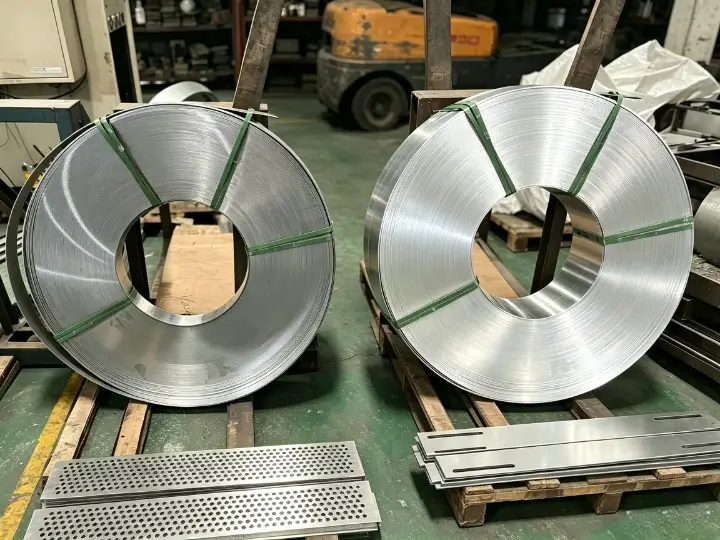
SUS304 stainless steel coil stock used for metal stamping applications.
Cold Rolled Steel (SPCC) for High Volume Metal Stamping
Cold rolled steel such as SPCC is widely used for stamped brackets and structural components. Q235 and hot-rolled steel grades such as SPHC may also be used depending on the part design, forming requirements, surface requirements, and project specification.
Cost — can be a cost-effective option for many structural stamped parts
Formability — predictable bending and forming behavior
Weldability — compatible with common welding processes for secondary assembly
Coating compatibility — takes zinc plating, painting, and powder coating well
For high-volume automotive and industrial bracket production, SPCC is frequently run through progressive die stamping, where tooling cost amortizes across a large unit count.
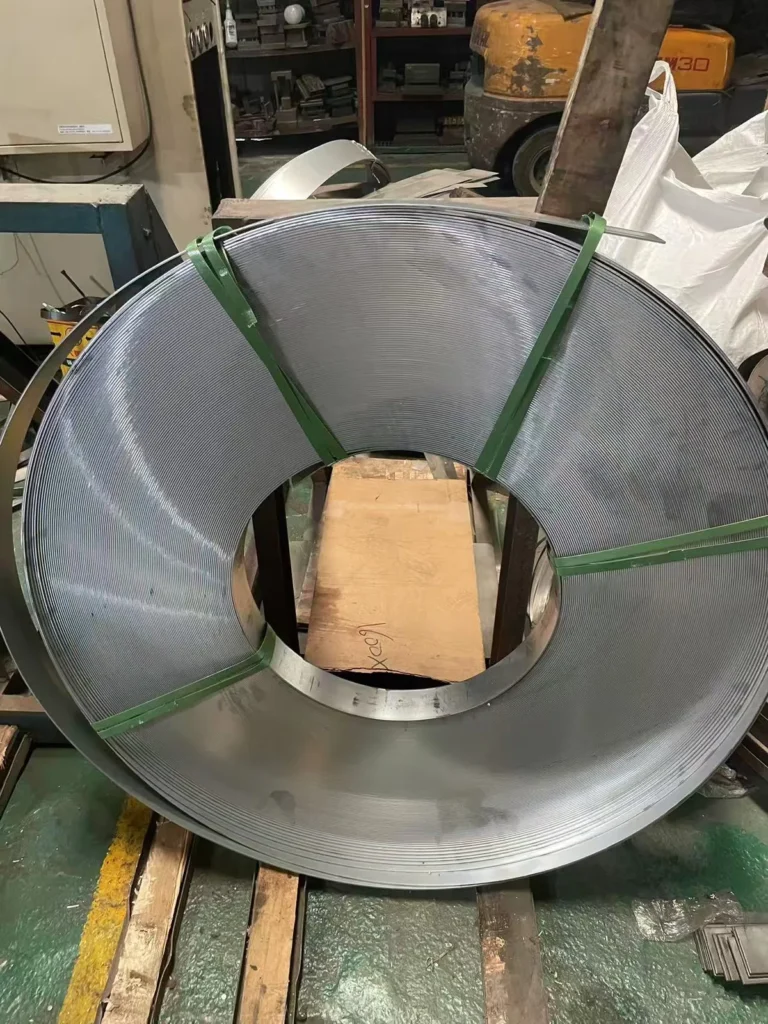
SPCC cold rolled steel coil used for stamped brackets and structural components.
Galvanized Steel (SGCC) and ZAM for Corrosion-Resistant Applications
Galvanized and other metallic-coated steel sheet can be used for stamped components where the project requires a coated steel substrate.
Hot-dip galvanized steel – zinc-coated steel sheet used in applications such as stamped housings, brackets, and other structural components.
Zinc-Aluminum-Magnesium coated steel (ZAM) – another coated steel option that may be specified for stamped components according to the project’s material and environmental requirements.
Material grade, coating designation, coating weight, forming requirements, exposed edges, and the application environment should be confirmed against the project specification rather than selected from the coating name alone.
Aluminum Alloys Used in Metal Stamping
Common aluminum grades in stamping include A1050, A3003, and A5052, chosen for:
Weight reduction — significantly lighter than steel for the same part volume
Thermal conductivity — useful for heat sink and enclosure applications
Corrosion resistance — a naturally forming oxide layer protects the surface
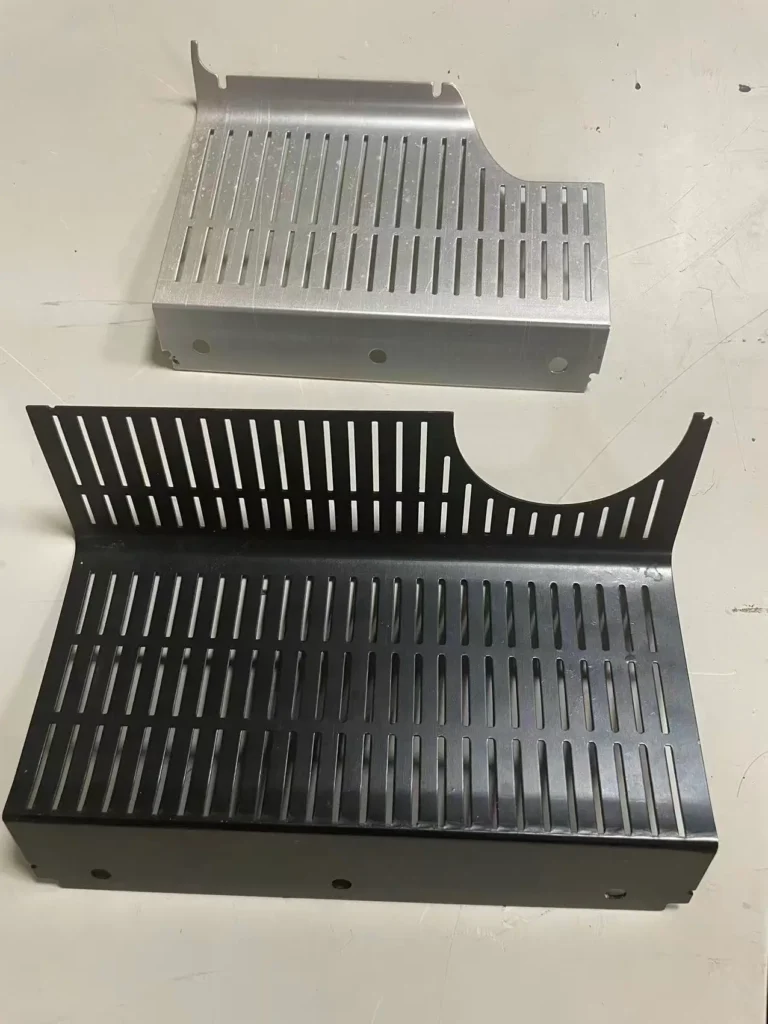
For electronic and lighting applications, anodizing is one surface finish that may be specified for aluminum components. Our actual production examples include aluminum-alloy components with black and natural anodized finishes.
Actual aluminum-alloy stamped components manufactured with black and natural anodized finishes.
Copper and Brass Materials for Electrical Stamping Components
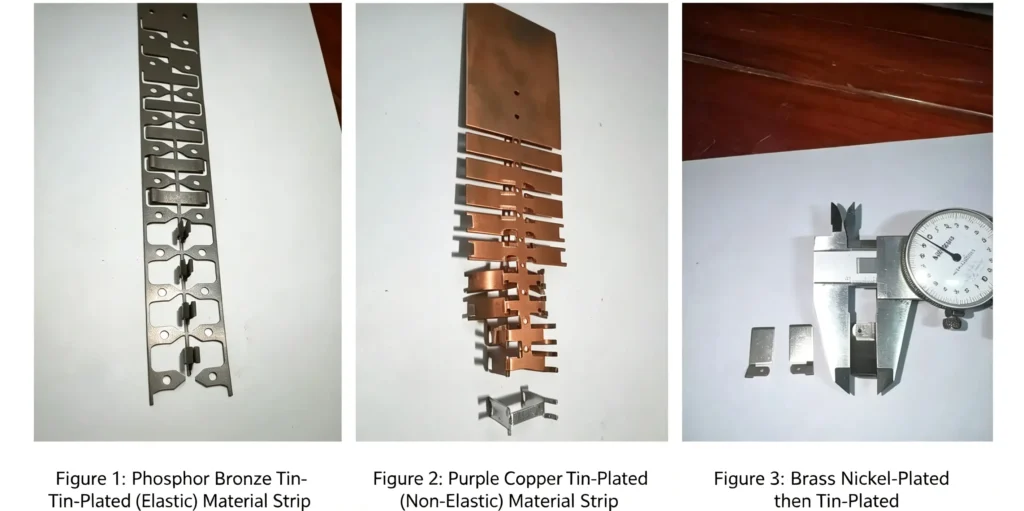
Copper, phosphor bronze, and brass are used for stamped electrical components depending on the required electrical, mechanical, forming, and surface finish requirements.
Phosphor bronze – used in electrical components where spring behavior is an important requirement. One of our actual production examples is a phosphor bronze spring contact used inside a power strip.
Pure copper — used for electrical components where conductivity is an important requirement. We manufacture copper terminal components by progressive die stamping followed by tin plating according to the project specification.
Brass– used for electrical connector and terminal components. Our actual production examples include male and female brass terminal components for household electrical products with nickel and tin plated finishes.
From the factory floor: These are actual material and manufacturing examples from our electrical stamping work. The appropriate material and finish should be selected according to the drawing, component function, forming requirements, electrical requirements, environment, and project specification.
Actual stamped electrical components manufactured from copper, phosphor bronze, and plated brass.
How Material Thickness Affects Metal Stamping Performance
Material thickness is an important input to stamping and tooling design. Its effect cannot be evaluated independently from the material grade, temper or condition, part geometry, forming depth, bend requirements, and production process.
Thinner sheet may require careful control of flatness, feeding, and forming behavior, while thicker or higher-strength material can increase the force required for cutting and forming. The appropriate die clearance, forming radii, press requirements, and tooling construction therefore depend on the actual combination of material and thickness.
For an OEM project, material grade and thickness should be confirmed before tooling is finalized because changing either can affect the stamping process and die design.
Important Material Properties for Metal Stamping
Property
Why It Matters
Tensile strength
Determines how much load the finished part can handle
Yield strength
The point at which the material permanently deforms
Hardness
Affects tool wear and forming difficulty
Elongation / Ductility
How much the material can stretch or bend before cracking
Corrosion resistance
Determines coating needs and service life in the application environment
A material with higher strength is not always the better stamping choice — higher hardness can improve durability but also increases forming difficulty and tooling wear. For OEM parts, the right material is a balance between performance requirements, manufacturability, and total project cost, not a search for the single “strongest” option.
Material Surface Treatment After Metal Stamping
Material
Common Surface Treatment
Steel
Zinc plating, powder coating, painting
Stainless Steel
Passivation (often no coating needed)
Aluminum
Anodizing (natural or black)
Copper / Brass
Nickel plating, tin plating
Surface treatment requirements depend on more than the base material alone. Application environment, electrical requirements, appearance, dimensional requirements, manufacturing sequence, and secondary operations may also affect the decision.
How Metal Stamping Materials Affect Tooling Design
Material choice changes the die itself, not just the part:
Die clearance — harder or thicker materials need different punch-to-die clearance to cut cleanly without excessive burr
Tool wear — abrasive or high-hardness materials wear punches and dies faster, affecting maintenance schedules
Forming force — higher-strength materials require more press tonnage to achieve the same bend or draw
This is why our engineering team reviews material grade and thickness before finalizing die design — the same part geometry in two different materials can require two different tooling approaches.
Metal Stamping Material Standards and Quality Requirements
Material quality control includes:
Material certificates (MTC) — verifying grade against the mill test certificate rather than trusting a coil label
Thickness tolerance — checked on incoming material before production
Hardness testing — confirming material condition matches what the forming process requires
Material specifications and testing requirements may reference standards published by ASTM International.
Common Material Problems During Metal Stamping
Cracking — usually from exceeding the material’s formability limit, often at tight bend radii or in deep draws without proper material condition (see the annealing example above)
Springback — the material’s tendency to partially return to shape after bending, which die design has to compensate for based on the specific material’s yield strength
Burrs — related to die clearance not being matched correctly to material hardness and thickness
Deformation — material strength not matching the part’s load requirements in its final application
Deep Drawing Materials: Stainless Steel Case Study
Case 1 – 304 Stainless Steel Mesh: In this specific project, annealed SUS304 stainless steel mesh material was required to meet the forming requirements. The non-annealed material could not achieve the required forming result. This should not be interpreted as a general requirement that all 304 stainless steel stamped parts require annealing.
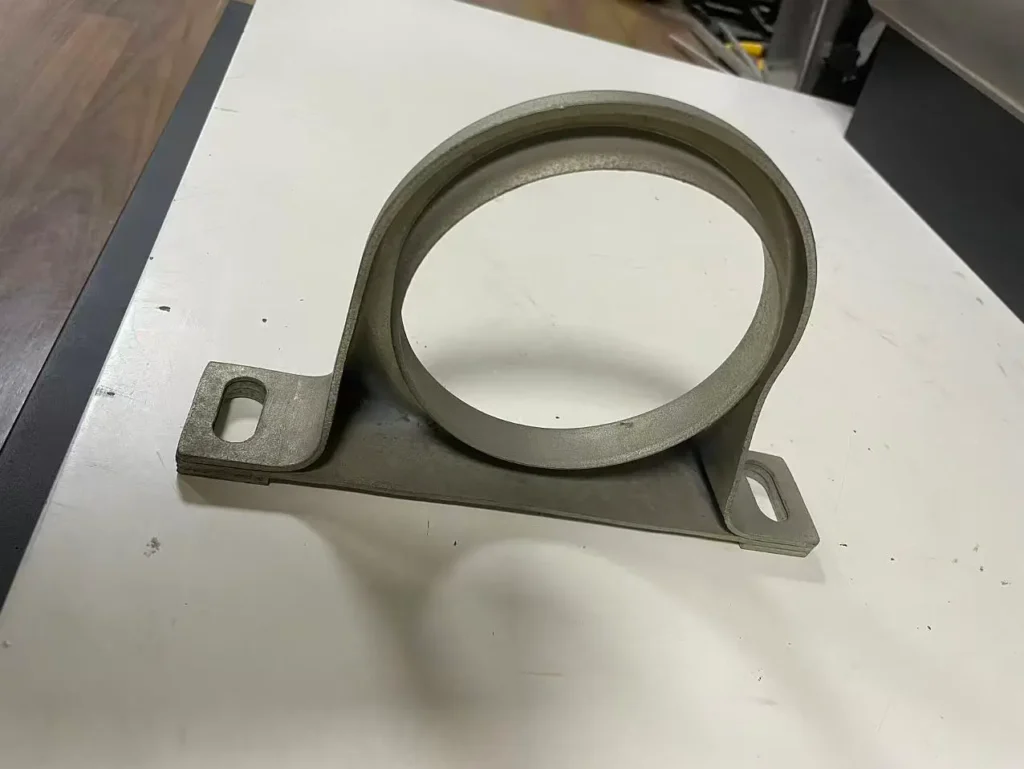
Case 2 — Heavy-Duty Truck Bearing Housing: This part was produced from steel sheet through drawing and stamping, followed by projection welding, zinc plating, and plastic overmolding. This is an actual factory example showing how material choice and downstream manufacturing processes must be considered together for a stamped component.
These two cases point to the same lesson for OEM buyers: the material grade alone does not determine stamping success. Material condition, thickness, tooling design, and forming process all affect the final result. You can see more real production examples on our case studies page.
Heavy-duty truck bearing housing produced through drawing, stamping, welding, zinc plating, and plastic overmolding.SUS304 stainless steel mesh component manufactured using annealed material to meet the forming requirements of this specific part.
How OEM Buyers Can Reduce Cost Through Material Selection
Cost reduction in material selection isn’t about picking the cheapest raw material — it’s about:
Material utilization — a die layout that minimizes strip scrap lowers effective material cost per part
Scrap rate — a material poorly matched to the forming process increases reject rate, which costs more than a slightly pricier material would have
Production volume alignment — at high volume, a material with better formability can reduce tooling wear and maintenance cost over the life of the die
Metal Stamp Factory Material Capabilities
Metal Stamp Factory was established in 2014 in Xiamen, China, focusing on custom metal stamping and precision hardware manufacturing. The founder of Metal Stamp Factory, Shengtong Chen, started learning mold making and metal stamping at the age of 17 and has accumulated more than 25 years of hands-on manufacturing experience in tooling development, metal stamping, and OEM production.
Our material experience covers stainless steel, carbon steel, galvanized steel and ZAM-coated steel, aluminum (including anodized finishes), and copper/brass alloys (including phosphor bronze, pure copper, and nickel/tin-plated brass) for OEM customers across solar, automotive, electrical, and industrial applications. Learn more about our custom metal stamping services and production capabilities.
How We Help Customers Select the Right Material Before Production
Before production, we review customer drawings, material requirements, tolerance requirements, and application conditions. In many OEM projects, customers provide drawings with dimensions and functions but don’t always know which material grade is the most suitable — our engineering team reviews the working environment, forming requirements, strength requirements, surface treatment needs, and production volume before recommending a material, based on manufacturing feasibility rather than only comparing spec sheets.
If you are unsure which material is suitable for your metal stamping project, send us your drawings or samples. Our engineering team can provide material recommendations based on manufacturing feasibility and application requirements.
Material selection is only one part of a successful project — OEM buyers should also know how to choose a metal stamping manufacturer before starting production.
Request a Free Material Consultation
Not sure which material fits your part? Send your drawing, application environment, and target quantity — our engineering team will review it and recommend a material and forming approach before you commit to tooling.
What are the most common materials used in metal stamping? Stainless steel, carbon steel, galvanized steel, aluminum, copper, and brass are the most common — material choice depends on strength, corrosion resistance, conductivity, and cost requirements for the specific part.
What is the best material for metal stamping parts? There’s no single best material — it depends on the application. Carbon steel suits cost-sensitive structural parts, stainless steel suits corrosion resistance, aluminum suits lightweight applications, and copper/brass suit electrical conductivity.
Can stainless steel be used for deep drawing? Yes. Stainless steel can be used for drawing and forming applications, but material grade, condition, thickness, part geometry, and forming requirements must be evaluated for the specific part. In one of our SUS304 mesh projects, annealed material was required to achieve the required forming result.
How do I choose the right material for OEM stamped parts? Start with the application environment (indoor/outdoor/corrosive), then check strength and formability requirements, surface treatment needs, and production volume — material selection should happen before die design, not after.
Does material selection affect metal stamping cost? Yes, both directly (raw material cost) and indirectly — a material poorly matched to the forming process increases scrap rate and tooling wear, which often costs more over a production run than choosing a slightly more expensive, better-suited material upfront.