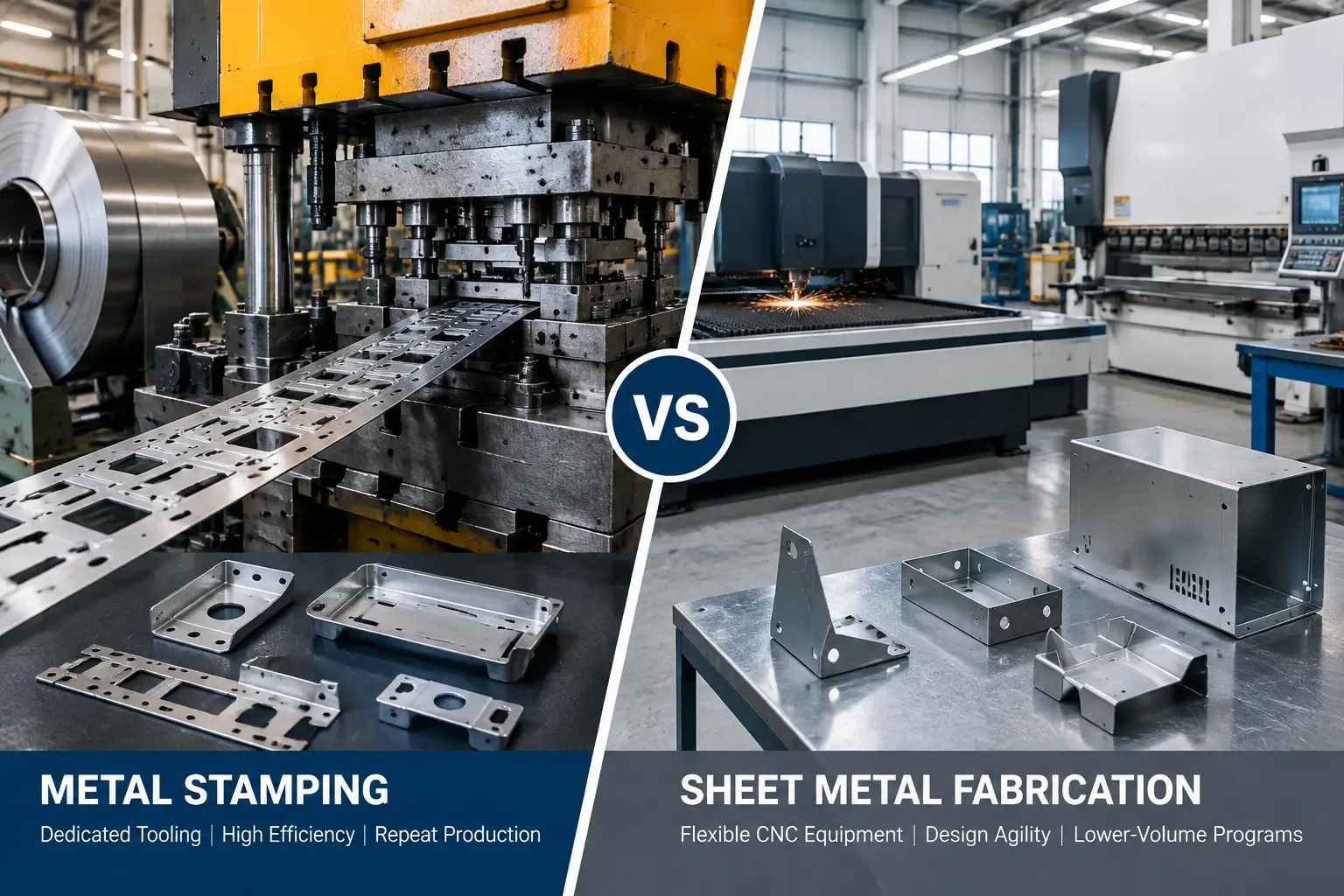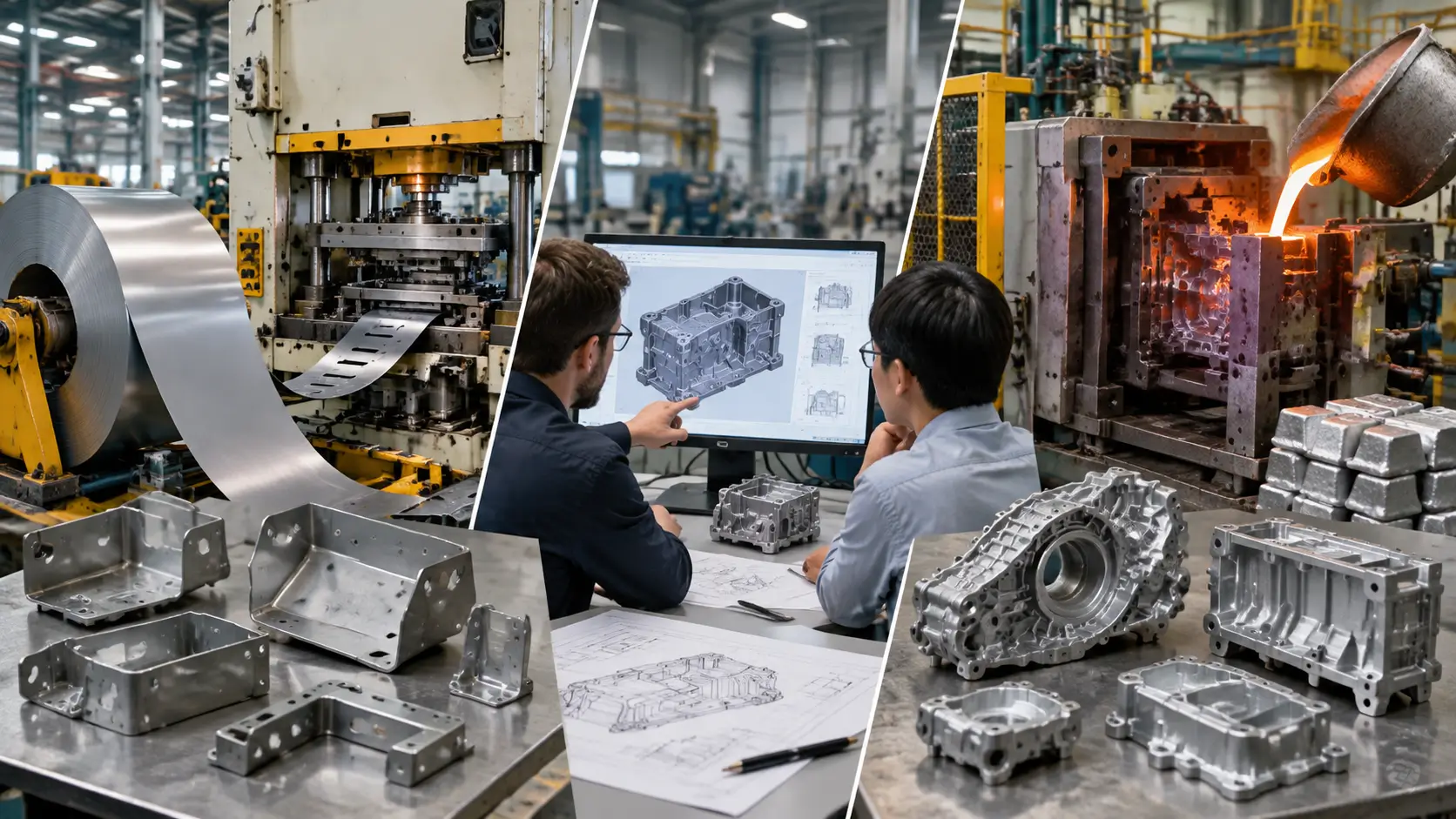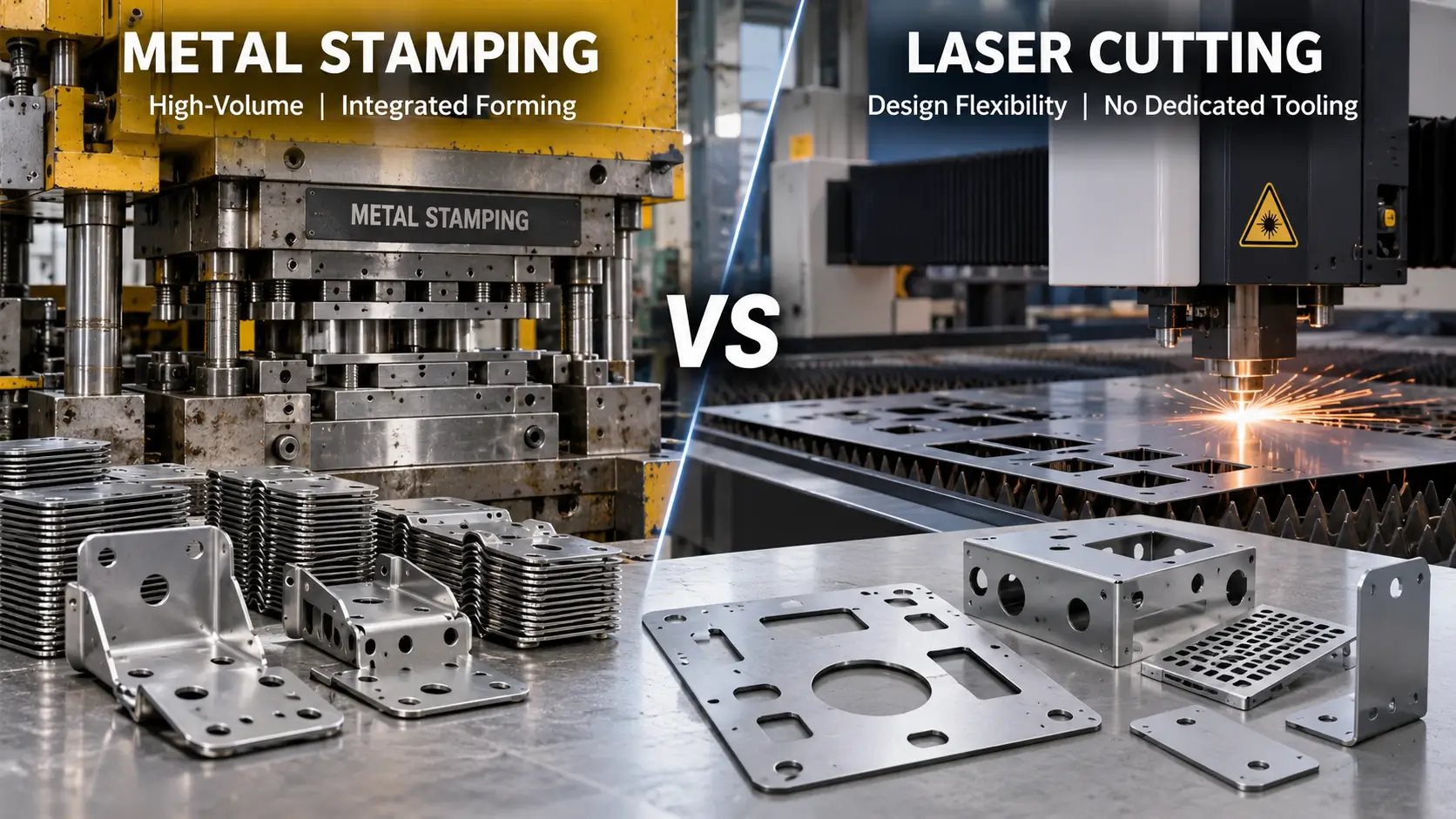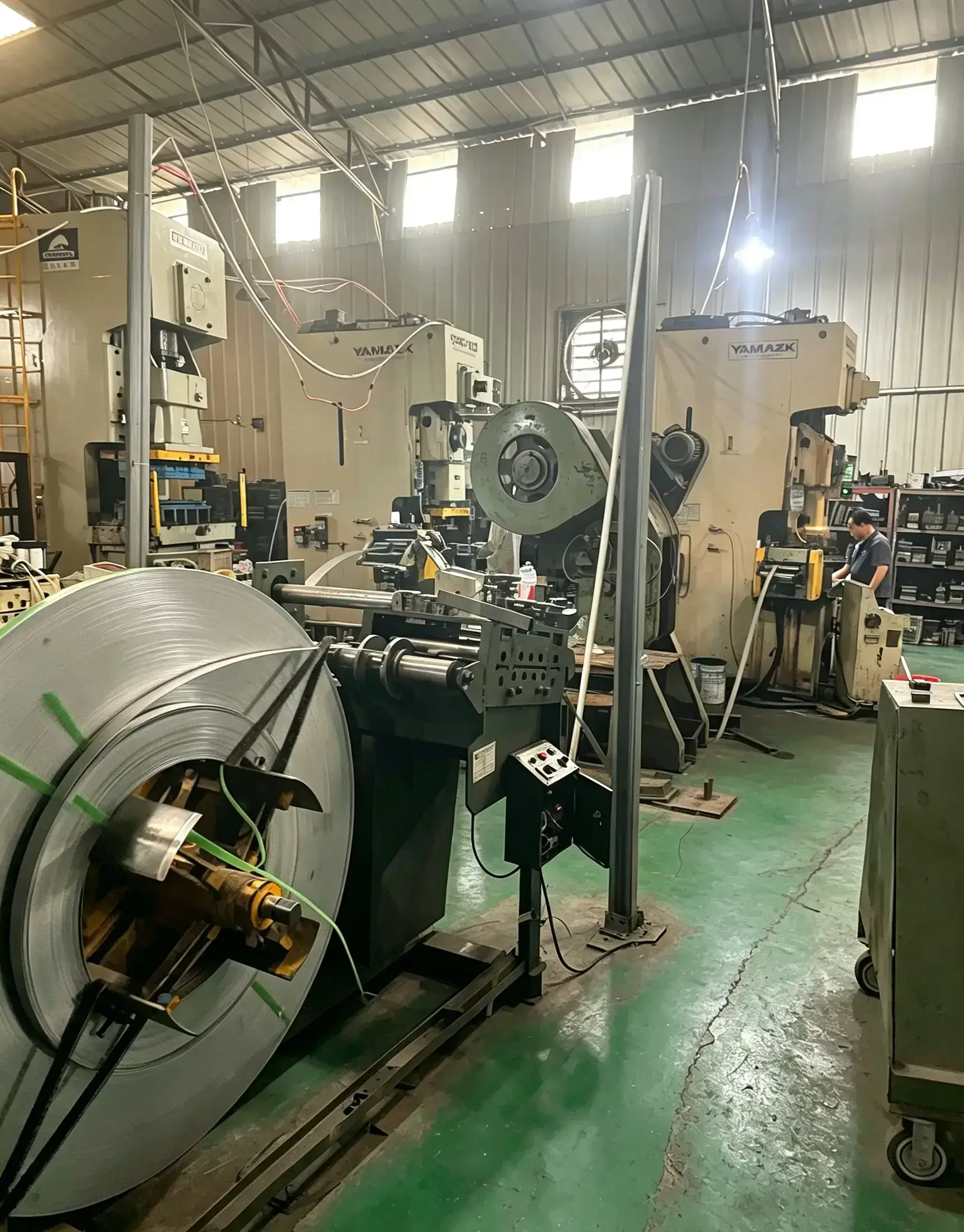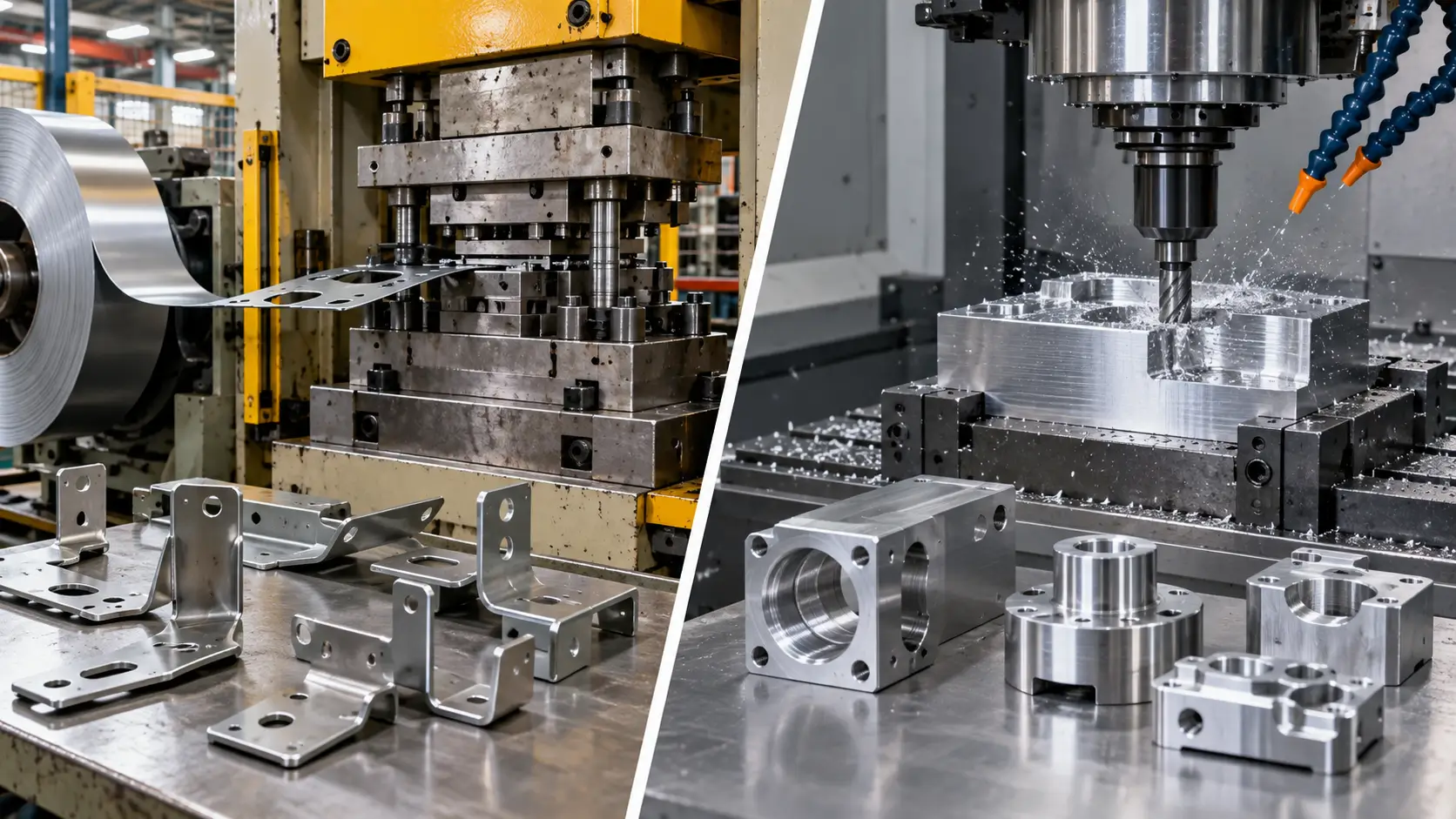
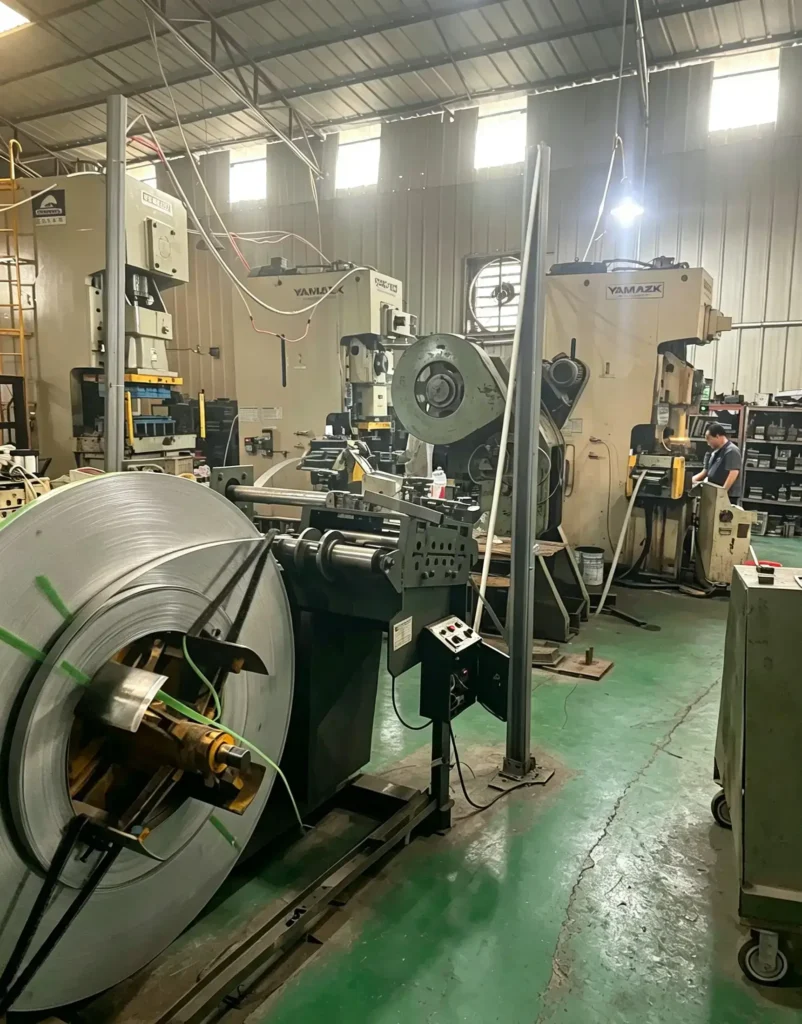
Lighting metal stamping parts are customized metal components produced through stamping processes for lighting fixtures and related hardware. These components include structural mounting brackets, support plates, and fixture housings manufactured from steel, stainless steel, or aluminum according to custom engineering drawings.
What Are Lighting Metal Stamping Parts?
Lighting metal stamping parts are custom hardware components manufactured by feeding metal sheet or coil stock through stamping presses, where specialized dies perform punching, blanking, bending, piercing, and forming operations. These structural and mounting parts serve as the internal backbone or external attachment hardware for commercial, industrial, and residential lighting systems.
For OEM buyers and product engineers, understanding the role of stamped parts is crucial for ensuring assembly speed, fixture rigidity, and long-term structural integrity. Rather than producing delicate optical elements, metal stamping primarily delivers the precision structural components that hold lighting assemblies together:
- Mounting Components: Structural plates, ceiling mounting brackets, and junction box adaptors that bear the physical weight of lighting fixtures.
- Structural Brackets: Internal mounting frames, LED module support plates, and driver housing channels.
- Support Parts: Hanger brackets, corner braces, and sliding track clips designed for precise dimensional alignment.
- Fixture Hardware: Custom enclosures, heat sink baseplates, and protective covers.
Custom metal stamping provides repeatable physical dimensions, consistent hole-pattern positioning, and reliable manufacturing consistency across high-volume production runs.
Common Types of Metal Stamping Parts Used in Lighting Products
Metal stamping is utilized across diverse lighting sectors to produce durable, high-precision hardware components. Below are the primary component categories produced for OEM lighting manufacturers.
Stamped Steel Lighting Brackets
Stamped steel lighting brackets are among the most critical structural elements in commercial and industrial light fixtures. These brackets support internal electronics, secure LED drivers, and align optical housings within the main enclosure.
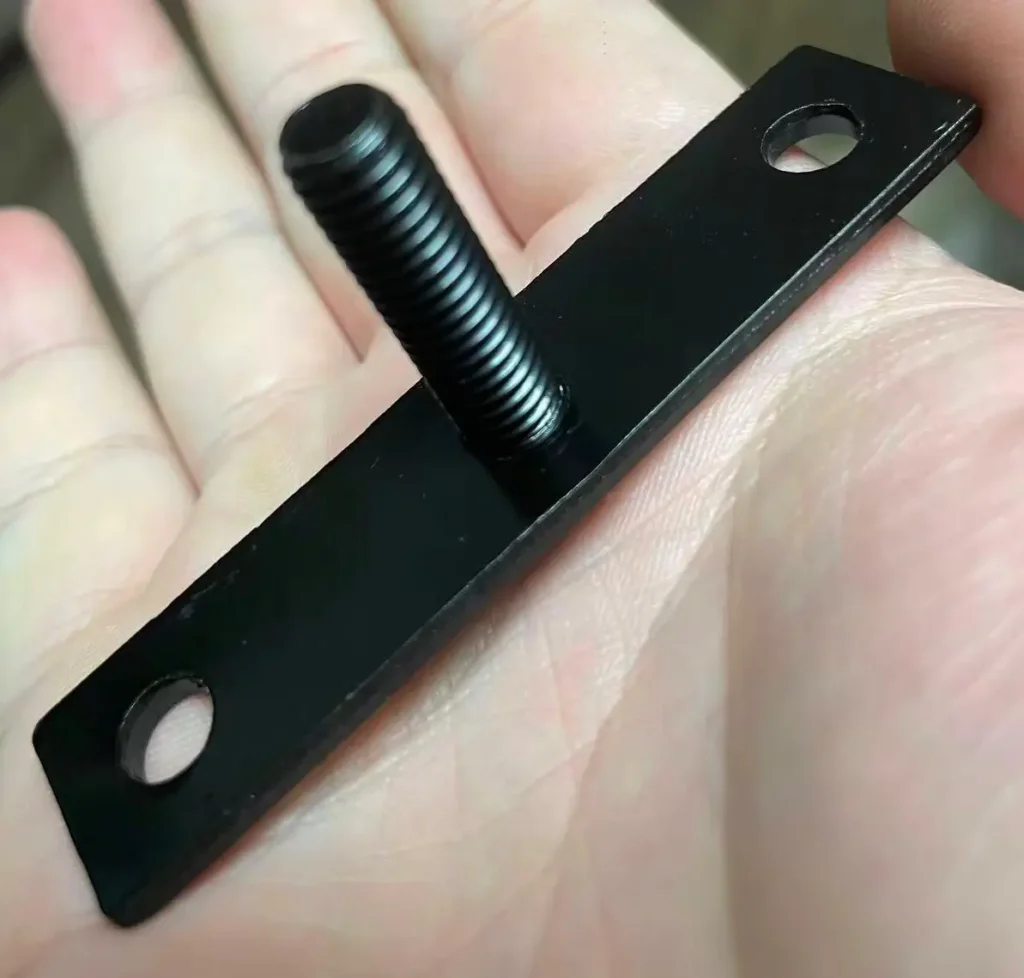
Stamped Steel Lighting Bracket Structural Workflow:
- Mounting Features: Precision pierced holes for fast, accurate job-site mounting.
- Structural Body: Formed steel channel engineered for mechanical rigidity.
- Secondary Fasteners: Press-fit nuts or rivets installed according to project requirements for seamless downstream integration.
- Downstream Lighting Fixture Application: Provides structural support for LED driver mounting, housing alignment, and final fixture installation.
In structural applications, steel provides high yield strength and dimensional stability under thermal load. Metal Stamp Factory has confirmed OEM manufacturing experience in producing custom stamped steel lighting brackets designed to meet customer drawing requirements and mounting specifications.
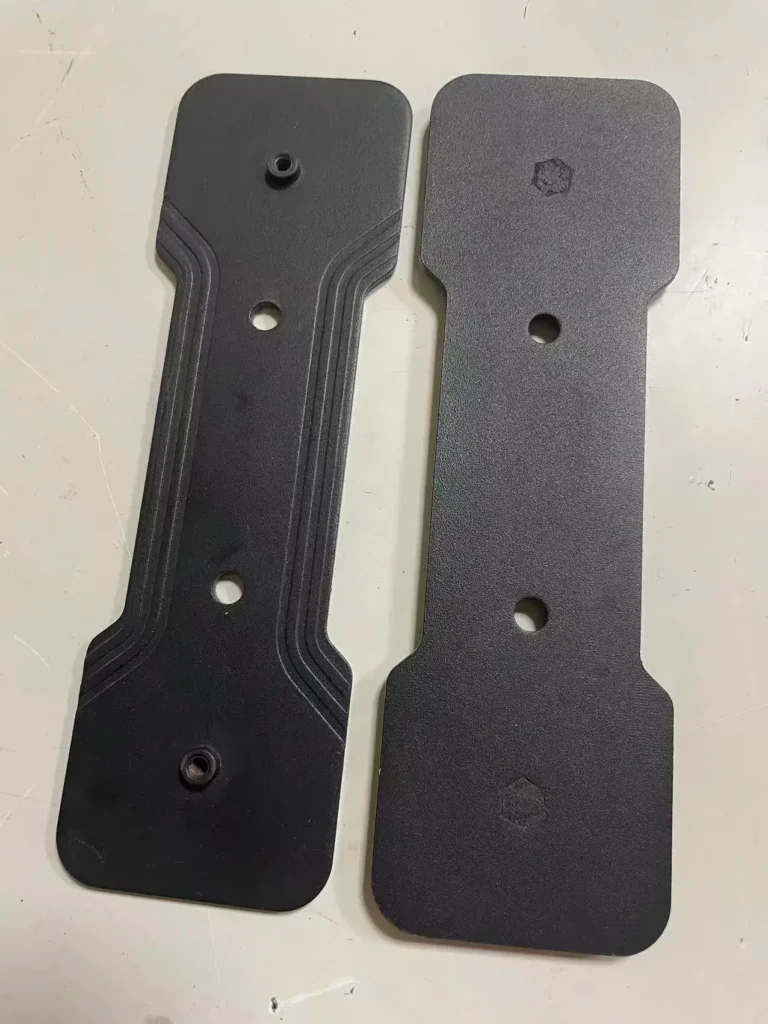
Lighting Fixture Mounting Components
Mounting components bridge the physical gap between the architectural ceiling or wall structure and the lighting fixture. These components include:
- Mounting Plates: Flat or shallow-formed steel plates that secure flush-mount ceiling fixtures.
- Support Brackets: Heavy-gauge steel arms that hold high-bay industrial lights or outdoor pole fixtures.
- Connecting Parts: Interlocking clips and slide brackets that enable fast, tool-free field installation for linear architectural luminaires.
Painted Steel Lighting Parts
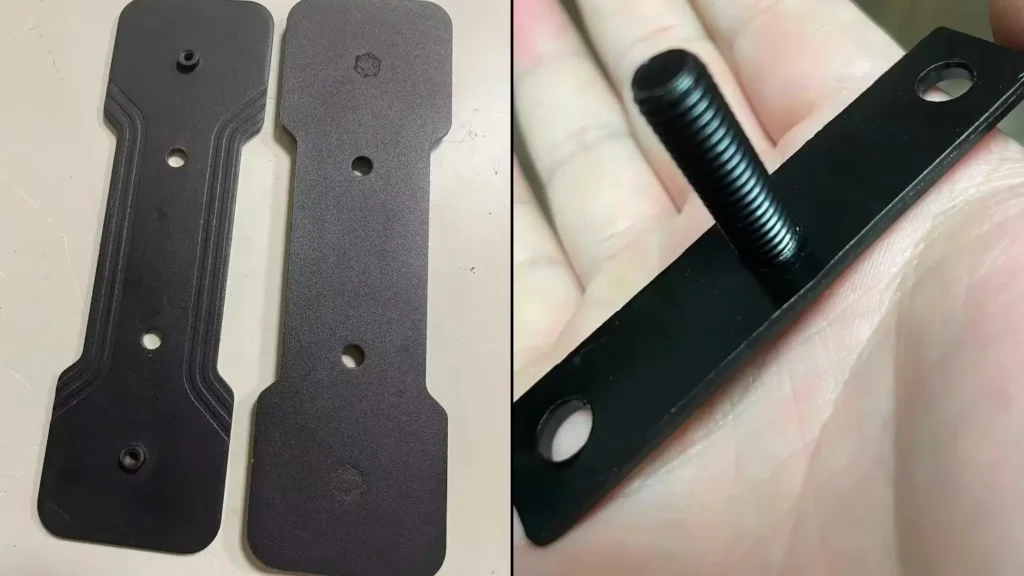
Many stamped lighting components serve dual roles as both structural support and visible exterior elements. Painted steel lighting parts undergo secondary surface finishing—such as powder coating or wet painting—to provide both visual aesthetics and corrosion protection.
When producing parts intended for subsequent painting, stamping factories must maintain pristine surface conditions during press operations. Scratches, severe tool marks, or oil residue can impair paint adhesion and compromise the final cosmetic finish required for architectural applications.
Lighting Metal Stamping Parts Classification Guide
| Component Type | Typical Examples | Main Function |
|---|---|---|
| Mounting Brackets | Ceiling brackets, LED support brackets, hanger brackets | Fixture mounting and structural support |
| Driver & Housing Supports | LED driver trays, internal frames, chassis plates | Internal component positioning |
| Heat Sink Plates | Aluminum thermal plates | Heat dissipation management |
| Decorative Metal Parts | Painted covers, trim rings | Appearance and protection |
| Connection Hardware | Clips, adapters, mounting plates | Assembly integration |
Materials Used for Lighting Metal Stamping Parts
Selecting the correct raw material balances structural load requirements, total component weight, corrosion exposure, and manufacturing cost.
| Material | Common Lighting Applications | Key Manufacturing Advantages |
|---|---|---|
| Carbon Steel | Structural brackets, internal chassis, mounting plates | High mechanical strength, cost-efficient, accepts protective coatings |
| Stainless Steel | Outdoor fixture hardware, wet-location mounting clips | Corrosion resistance, high structural rigidity |
| Aluminum | Architectural trim rings, lightweight brackets, heat sink plates | Good strength-to-weight ratio, high thermal conductivity, corrosion-resistant |
Raw material selection directly influences press tonnage requirements, springback compensation during bending, and tooling die clearance calculations.
Manufacturing Process of Lighting Metal Stamping Components
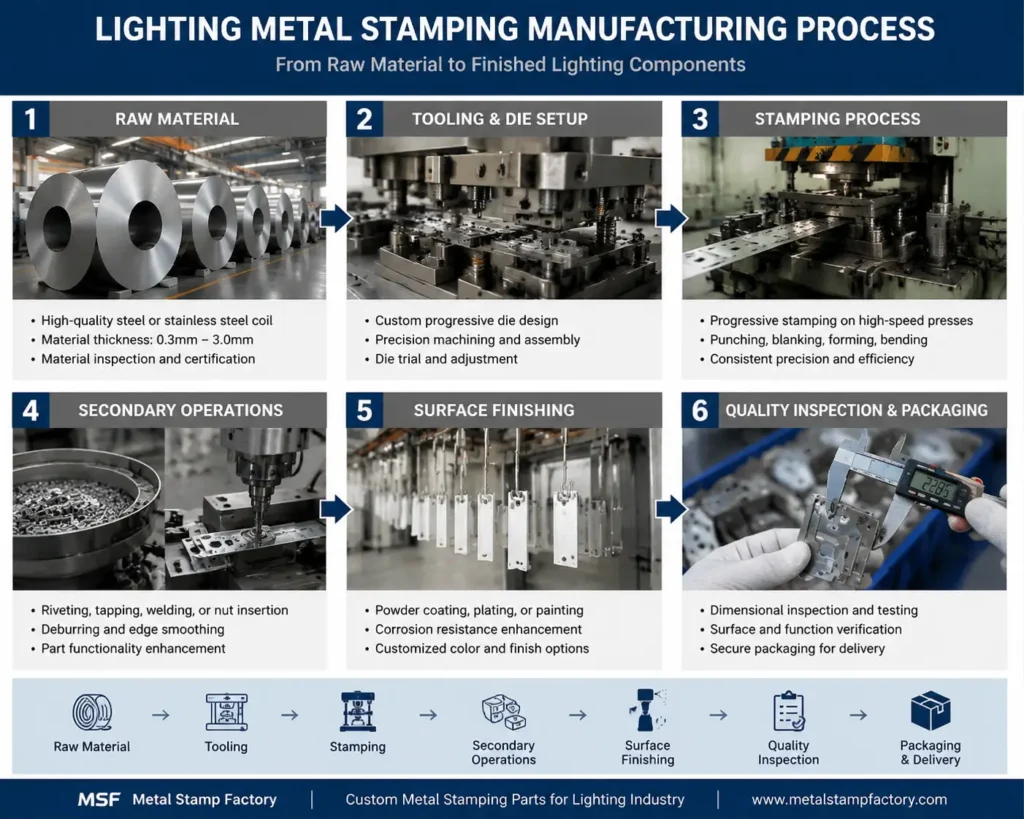
Producing consistent stamped hardware for lighting fixtures requires a disciplined, step-by-step manufacturing workflow from initial engineering design through final packaging.
Step 1: Material Preparation Coiled or sheet metal stock (carbon steel, stainless steel, or aluminum) is verified for thickness consistency, surface quality, and mechanical properties before being fed into the production line.
Step 2: Tooling Design and Die Development Engineers analyze 2D/3D part drawings to design custom tooling. Progressive dies or stage tooling are built using hardened die steel to handle punching, blanking, and forming operations.
Step 3: Stamping and Forming The raw metal strip is fed into mechanical or hydraulic stamping presses. Progressive die stations sequentially punch mounting holes, form bend radii, and shear the finished profile.
Example Progressive Die Inline Stations
- Station 1: Pilot hole punching to index the coil strip precisely.
- Station 2: Internal piercing for mounting holes and wire pass-throughs.
- Station 3: Forming and bending to create structural channels or flanges.
- Station 4: Side notching and flanging for interlocking tabs.
- Station 5: Final cut-off and part drop for individual component separation.
Step 4: Secondary Operations Stamped bare components undergo deburring, hardware installation (such as press-fit nuts or rivets), and secondary machining when specified by customer drawings.
Step 5: Surface Finishing Depending on project specifications, bare stamped parts are routed to secondary finishing processes including powder coating, e-coating, or zinc plating to meet environmental durability standards.
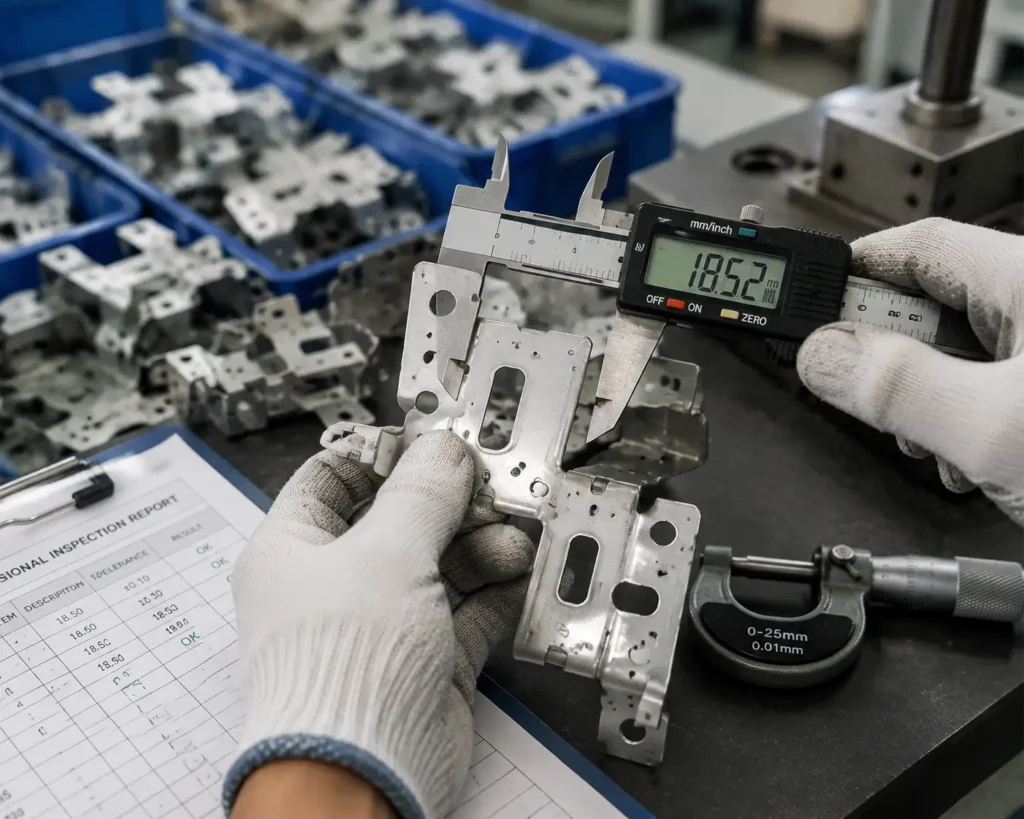
Step 6: Quality Inspection Initial sample inspection and in-line dimensional checks verify hole-center distances, thread integrity, and paint coating thickness meet drawing parameters before final packaging.
Need custom lighting metal stamping parts for your project? Contact Metal Stamp Factory to discuss your drawings, materials, and manufacturing requirements.
Lighting Metal Stamping Manufacturing Workflow
| Manufacturing Stage | Key Activities |
|---|---|
| Material Preparation | Verify thickness, material grade, surface condition |
| Tooling Development | Die design, machining, trial production |
| Stamping Forming | Punching, blanking, bending, forming |
| Secondary Operations | Rivet, nut insertion, deburring, machining |
| Surface Finishing | Powder coating, plating, anodizing |
| Quality Inspection | Dimensional checks and drawing verification |
Secondary Operations for Lighting Stamped Parts
While primary stamping forms the basic geometry of a part, secondary operations transform raw stampings into complete, assembly-ready hardware solutions. For OEM lighting manufacturers, sourcing pre-assembled components dramatically reduces job-site assembly labor and unit production time.
Rivet and Nut Installation
Modern lighting fixtures rely heavily on threaded fasteners for rapid driver installation and field mounting. Performing secondary hardware assembly after stamping eliminates manual thread-tapping or separate job-site fastener handling.
Secondary Fastener Integration Process:
- Bare Stamped Part: Features pre-pierced holes manufactured with controlled diameter clearances.
- Fastener Insertion: Press-fit nuts or rivets are installed according to customer project requirements.
- Ready Sub-Assembly: Provides stronger fastening capability for downstream assembly requirements, ready for direct mounting on the customer’s assembly line.
Key secondary features include:
- Press-Fit Nut Insertion: Installing self-clinching nuts (such as PEM style nuts) into pre-pierced holes on stamped steel brackets provides high-strength, reusable load-bearing threads in thin sheet metal.
- Rivet Assembly: Joining multiple stamped brackets or attaching spring clips using dedicated riveting processes to deliver ready-to-use sub-assemblies directly to the client’s assembly line.
Metal Stamp Factory provides rivet and nut secondary operations according to customer project requirements, allowing OEM buyers to receive functional hardware components ready for assembly.
Surface Finishing Coordination
Bare steel components used in lighting applications require protective coatings to prevent oxidation and meet aesthetic standards. Surface finishing processes can be coordinated based on project needs:
- Powder Coating & Painting: Essential for visible painted steel lighting parts, providing durable, color-matched architectural finishes.
- Zinc & Electro-Plating: Ideal for internal structural brackets where cost-effective corrosion protection is needed without heavy decorative paint.
- Anodizing: Applied to aluminum lighting components to enhance surface hardness and oxidation resistance.
Surface finishing processes such as powder coating, painting, and plating can be coordinated through trusted partner facilities when required by the customer’s engineering drawing.
Secondary Processing Options for Lighting Stamped Parts
| Secondary Process | Application |
|---|---|
| Press-Fit Nuts | Add threaded mounting points |
| Rivet Assembly | Join multiple stamped components |
| Deburring | Remove sharp edges after stamping |
| Powder Coating | Decorative and corrosion protection |
| Zinc Plating | Steel corrosion resistance |
| Anodizing | Aluminum surface protection |
Metal Stamp Factory Lighting Metal Stamping Experience
Metal Stamp Factory was established in 2014 in Xiamen, China, focusing on custom metal stamping, tooling development, and OEM hardware manufacturing. The founder of Metal Stamp Factory, Shengtong Chen, started learning mold making and metal stamping at the age of 17 and has accumulated more than 25 years of hands-on manufacturing experience.
Our factory has verified production experience supplying custom stamped steel lighting brackets, painted steel lighting parts, and coordinating rivet and nut secondary operations for OEM clients.
Factory Capabilities & Profile
- Established: 2014 in Xiamen, China.
- Founder Experience: Shengtong Chen started learning mold making and metal stamping at the age of 17 and has accumulated more than 25 years of hands-on manufacturing experience.
- Core Focus: Custom metal stamping, tooling development, and OEM hardware assembly.
- Confirmed Lighting Experience: Production of stamped steel brackets, painted steel hardware, and secondary rivet/nut insertion operations.
- Supply Model: OEM custom component manufacturing according to customer drawing specifications.
When evaluating new lighting hardware projects, our engineering team works closely with OEM buyers to review critical manufacturing parameters:
- Material Thickness & Tolerance: Ensuring raw coil gauge matches structural load specifications while accounting for material springback.
- Drawing Requirements: Verifying hole-to-edge clearances, bend radii, and mounting hole positions against CAD models.
- Assembly Method: Recommending press-fit nut insertion or riveting to streamline downstream fixture assembly.
- Surface Finishing Requirements: Defining precise paint coating requirements and pre-treatment protocols to support paint adhesion.
Metal Stamp Factory supplies custom stamped components strictly according to customer engineering drawings and specifications.
How to Choose a Lighting Metal Stamping Manufacturer
Selecting the right OEM manufacturing partner ensures stable part quality, reliable delivery schedules, and optimized unit production costs. OEM buyers should evaluate prospective stamping suppliers against four essential criteria:
Check Tooling Capability Tooling design and mold maintenance capabilities are critical. A factory that designs and maintains its own stamping dies can adjust for material springback, make drawing modifications, and ensure long die life over production runs.
Review Manufacturing Process Confirm whether the manufacturer utilizes modern progressive die stamping presses and automated coil feeding equipment to ensure dimensional consistency across order volumes.
Confirm Material and Finishing Requirements Ensure the supplier has verified experience handling your specified raw materials (carbon steel, stainless steel, aluminum) and can manage secondary operations like rivet/nut installation and surface finishing.
Evaluate Communication and OEM Support A reliable supplier conducts thorough Design for Manufacturability (DFM) reviews prior to tooling production, helping identify potential bend cracking or hole deformation issues before die steel is processed.
Lighting Metal Stamping Supplier Evaluation Checklist
| Evaluation Area | What OEM Buyers Should Check |
|---|---|
| Tooling Capability | Die design, maintenance, engineering support |
| Press Capacity | Suitable equipment for material thickness and part size |
| Material Experience | Steel, stainless steel, aluminum forming capability |
| Secondary Processing | Fasteners, welding, finishing options |
| Quality Control | Inspection methods and drawing verification |
| OEM Support | DFM feedback and technical communication |
Lighting Metal Stamping Parts Applications
Custom metal stamped components are utilized across a broad spectrum of commercial, industrial, and residential lighting systems:
- Commercial Lighting: Mounting frames, T-grid ceiling clips, troffer housing brackets, and architectural downlight brackets.
- Industrial Lighting: Heavy-duty high-bay hanger brackets, explosion-proof fixture supports, and adjustable mounting arms.
- Outdoor & Street Lighting: Weather-resistant pole attachment brackets, wall-pack mounting plates, and floodlight pivot hardware.
- Fixture Manufacturing: Internal LED driver trays, reflector retention springs, and junction box adaptors.
Frequently Asked Questions About Lighting Metal Stamping Parts
What types of lighting components can be manufactured using metal stamping?
Metal stamping is used to produce structural and mounting components for lighting fixtures. Common stamped parts include LED mounting brackets, driver chassis plates, ceiling attachment plates, housing channels, mounting clips, and custom structural hardware made from steel or aluminum.
Why do lighting manufacturers choose metal stamping instead of other manufacturing methods?
OEM lighting manufacturers choose metal stamping for its high production efficiency, exceptional dimensional repeatability, and low unit costs during volume production. Stamping allows complex hole patterns, bend radii, and structural features to be formed in a single automated process.
What materials are suitable for custom lighting metal stamping parts?
The most common materials are carbon steel, stainless steel, and aluminum. Material selection depends on structural load requirements, total weight limits, thermal demands, and environmental exposure (indoor vs. outdoor wet locations).
What secondary operations can be added to stamped lighting components?
Secondary operations include press-fit nut insertion (such as PEM nuts), rivet installation, deburring, tapping, and secondary assembly. Additionally, surface finishing such as powder coating, wet painting, zinc plating, or anodizing can be coordinated to complete the finished component.
How does a stamping manufacturer control the quality of lighting metal parts?
Quality control involves initial drawing reviews, material specification verification, initial sample inspection before volume production, and in-line dimensional checks on hole positions, bend angles, and secondary hardware installation.
Can a metal stamping factory produce custom lighting brackets based on drawings or samples?
Yes. Custom metal stamping factories produce parts strictly based on customer-provided 2D/3D CAD drawings or physical engineering samples, developing custom tooling dies specifically tailored to the part geometry.
What information should buyers provide before requesting a quote for lighting stamped parts?
Buyers should provide 2D/3D engineering drawings (indicating dimensions, tolerances, and material specifications), estimated order quantities, required surface finishes (e.g., raw, zinc plated, or powder coated), and any secondary assembly requirements such as rivets or press-fit nuts.
How long does tooling development take for custom lighting stamped parts?
Tooling development lead time depends on part complexity, die structure (single-stage vs. progressive die), and specific drawing requirements. Simple stage dies require less fabrication time, while complex multi-station progressive dies require additional design, machining, and trial sampling phases.