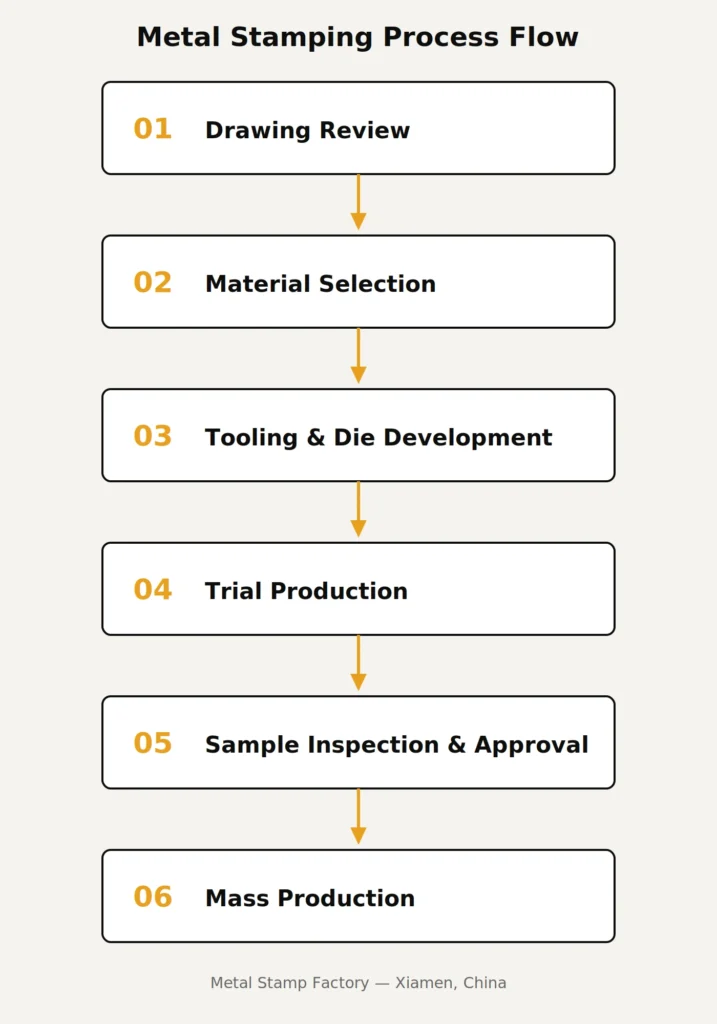
Answer Summary: The metal stamping process turns a flat metal coil or sheet into a finished part through engineering drawing review, material selection, die design and tooling, trial production, sample approval, and mass production with quality inspection at each stage. Tooling is usually the longest step — for many custom projects, die development takes around 35–40 days before sample parts are ready for approval.
New to the topic? Start with our guide on what metal stamping is.
What Is the Metal Stamping Process?
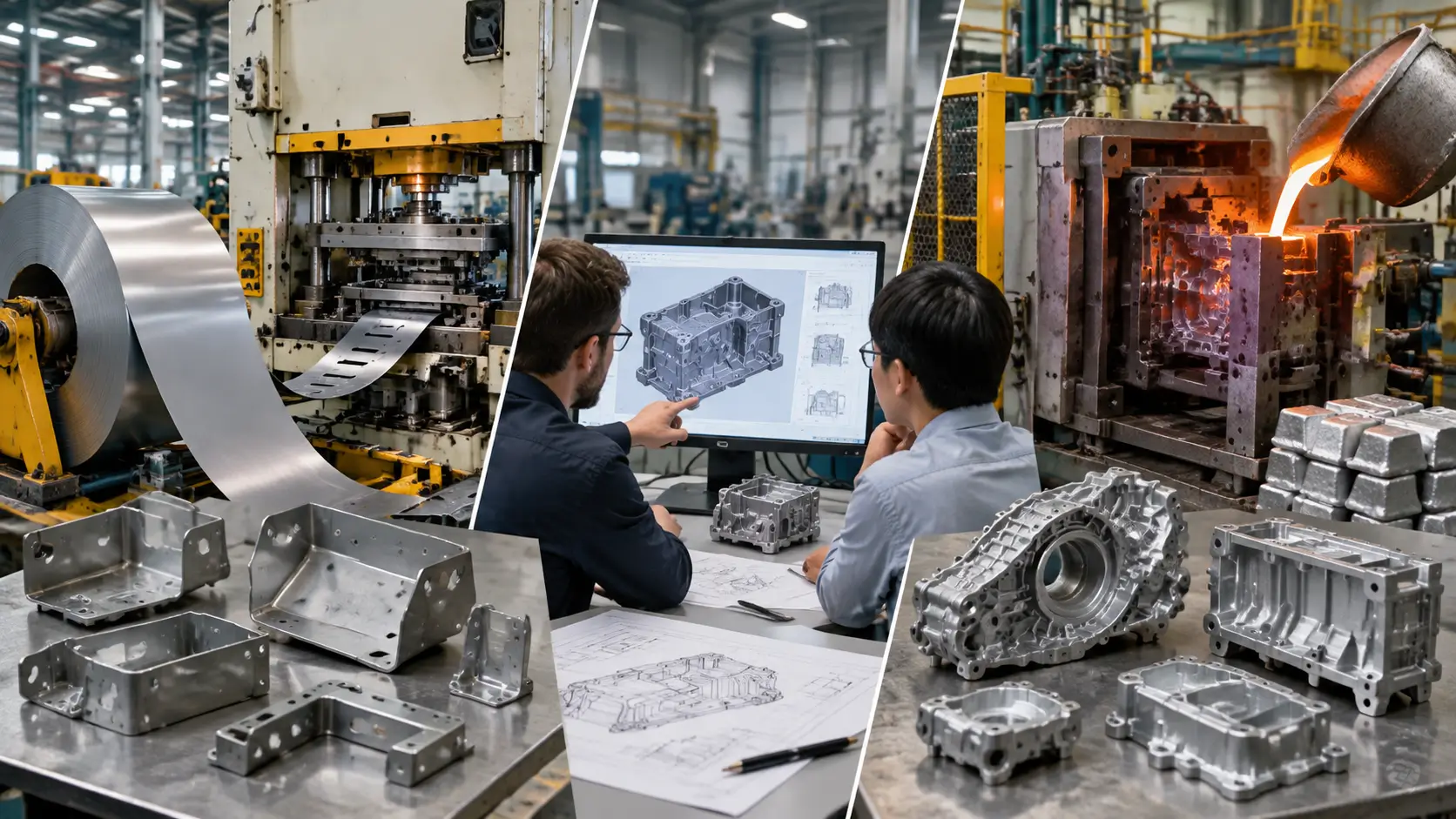
The metal stamping process is a sequence of manufacturing steps that turns flat sheet metal into a finished part using a stamping press and a custom-built die. It covers everything from reviewing the customer’s engineering drawing and selecting the right material, through designing and building tooling, to running trial production, approving samples, and scaling into mass production with quality checks along the way.
Unlike a single manufacturing operation, metal stamping process usually refers to the full project lifecycle — not just the moment the press stamps the part.
How Does Metal Stamping Work?
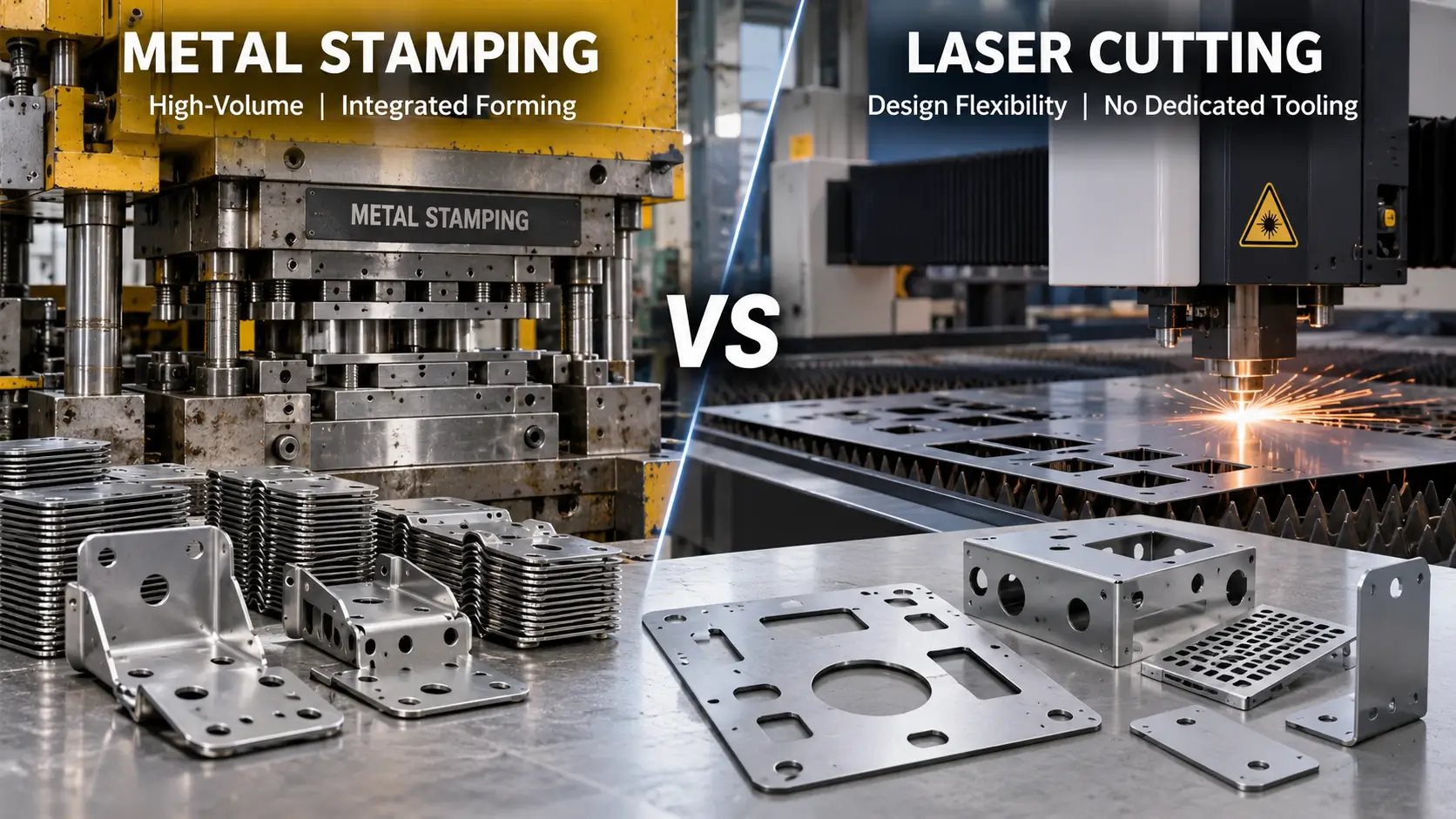
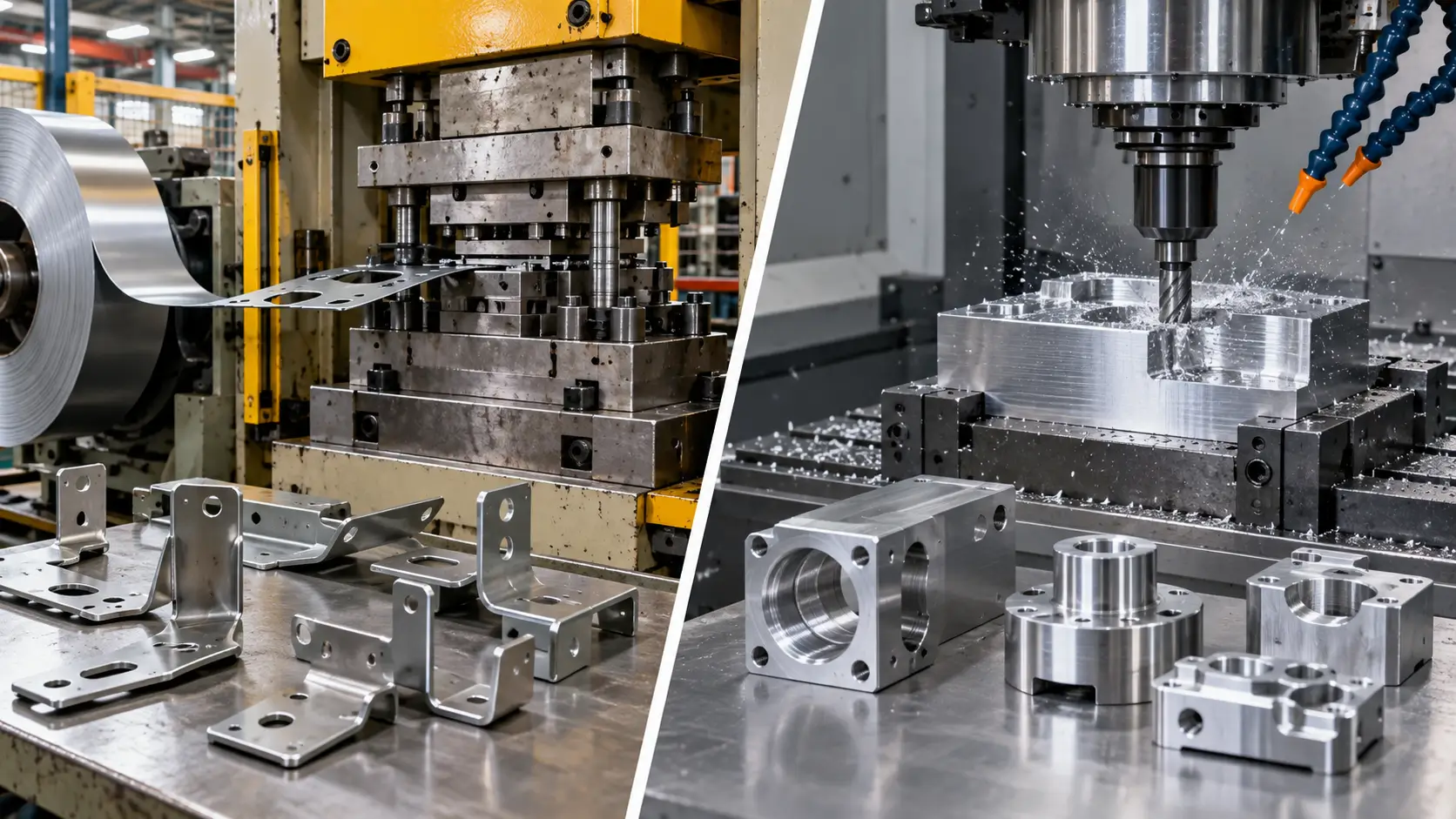
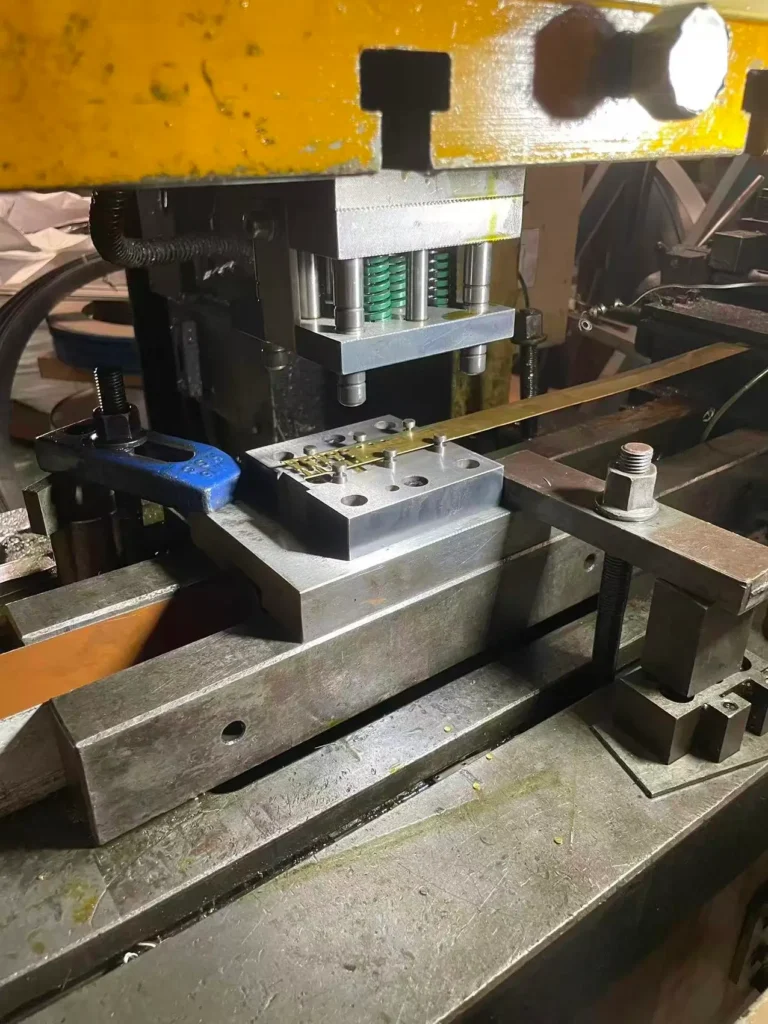
At a basic level, the stamping process works in three stages: material goes in, a die shapes it, and a finished part comes out. A coil or sheet of metal feeds into a press, where a die closes on the material to cut, bend, or form it. Depending on part complexity, this happens in a single stroke or across multiple stations within one die, with each station performing a different operation as the material advances.
The die is the variable that determines everything else — part accuracy, how many operations happen per stroke, and how consistent output stays across a full production run.
Metal Stamping Process Overview
| Stage | Main Purpose |
|---|---|
| Engineering Review | Confirm drawing feasibility and manufacturing requirements |
| Material Selection | Choose suitable metal grade and thickness |
| Tooling Development | Design and build stamping dies |
| Trial Production | Verify tooling performance and sample quality |
| Mass Production | Run stable production with inspection control |
| Secondary Processing | Add finishing or assembly operations |
Step-by-Step Metal Stamping Manufacturing Process
Here’s how a typical custom metal stamping project moves from drawing to finished parts:
Step 1 — Engineering Drawing Review
Step 2 — Material Selection
Step 3 — Progressive Die and Tooling Design
Step 4 — Die Manufacturing and Trial Production
Step 5 — Sample Inspection and Approval
Step 6 — Mass Production and Quality Control
Step 7 — Secondary Operations
Step 8 — Surface Treatment
Step 9 — Packaging and Delivery
Each of these is covered in detail below.
Metal Stamping Manufacturing Process Checklist
| Process Stage | Key Considerations |
|---|---|
| Drawing Review | Geometry, tolerance, forming feasibility |
| Material Selection | Grade, thickness, formability |
| Tooling Design | Die structure and production method |
| Trial Production | Sample verification before mass production |
| Quality Control | Dimensional and surface inspection |
| Delivery | Packaging and shipment requirements |
Engineering Drawing Review Before Production
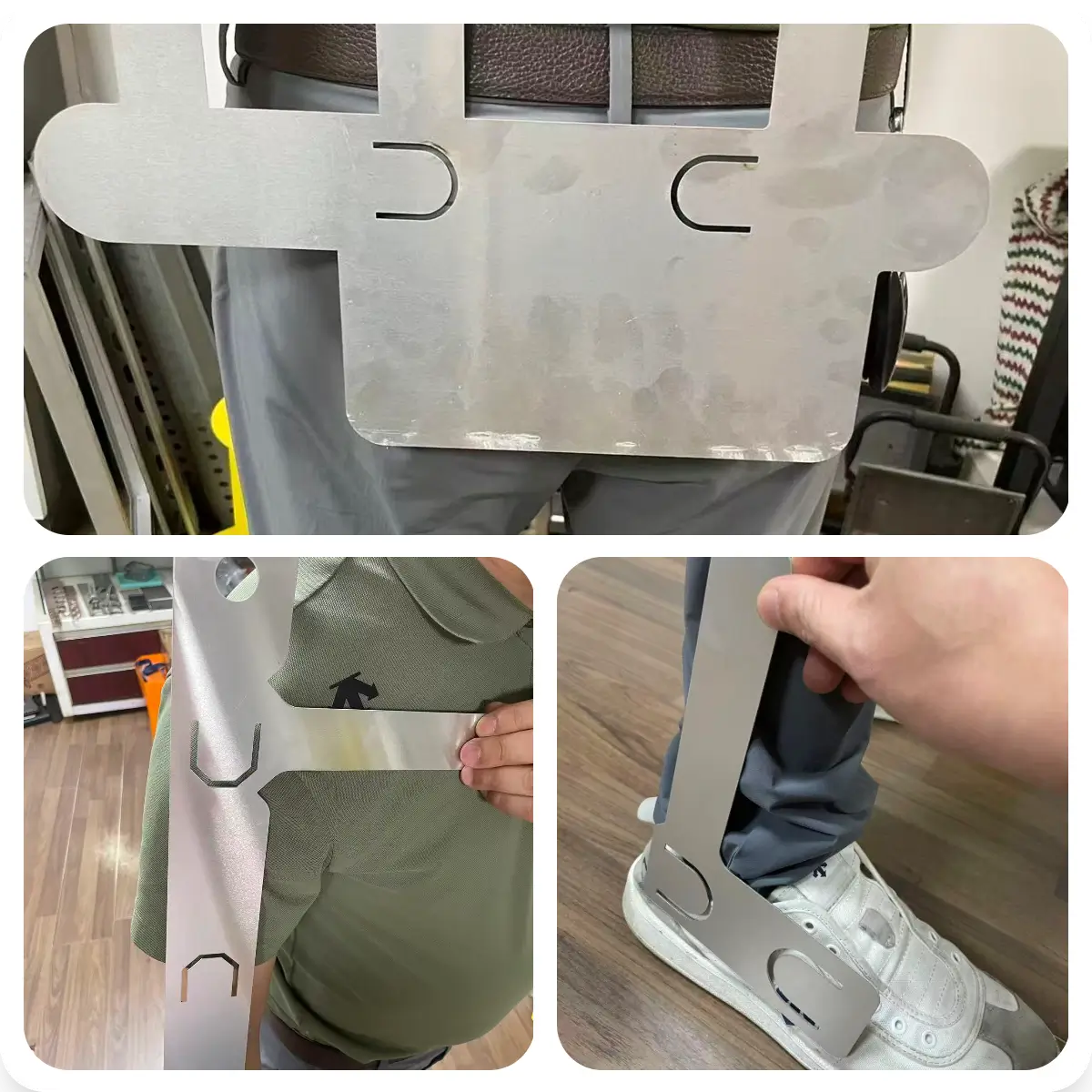
Before any tooling work starts, the customer’s drawing needs a full technical review. At Metal Stamp Factory, when a customer sends a drawing for quotation, our engineering team checks:
1.Material requirements and thickness
2.Part structure and forming direction
3.Tolerance requirements
4.Forming feasibility
5.The right tooling approach — simple die vs. progressive die
From the factory floor: A drawing that looks simple — a single bracket with two bends — can still require checking bend allowance, spring-back, and forming direction before we can commit to a die structure. Drawings that skip tolerance callouts are the most common reason a quotation gets delayed, because we go back and ask before quoting rather than guessing.
Material Selection for Metal Stamping
Material choice affects formability, strength, corrosion resistance, and cost — and it has to be confirmed before die design starts, since different materials behave differently under the press (work hardening, spring-back, and minimum bend radius all vary by material and thickness).
Common materials include carbon steel, galvanized steel, stainless steel, aluminum, and copper alloys. See our full metal stamping materials guide for a breakdown of properties and typical uses across these materials. Material specifications may also reference standards published by ASTM International.
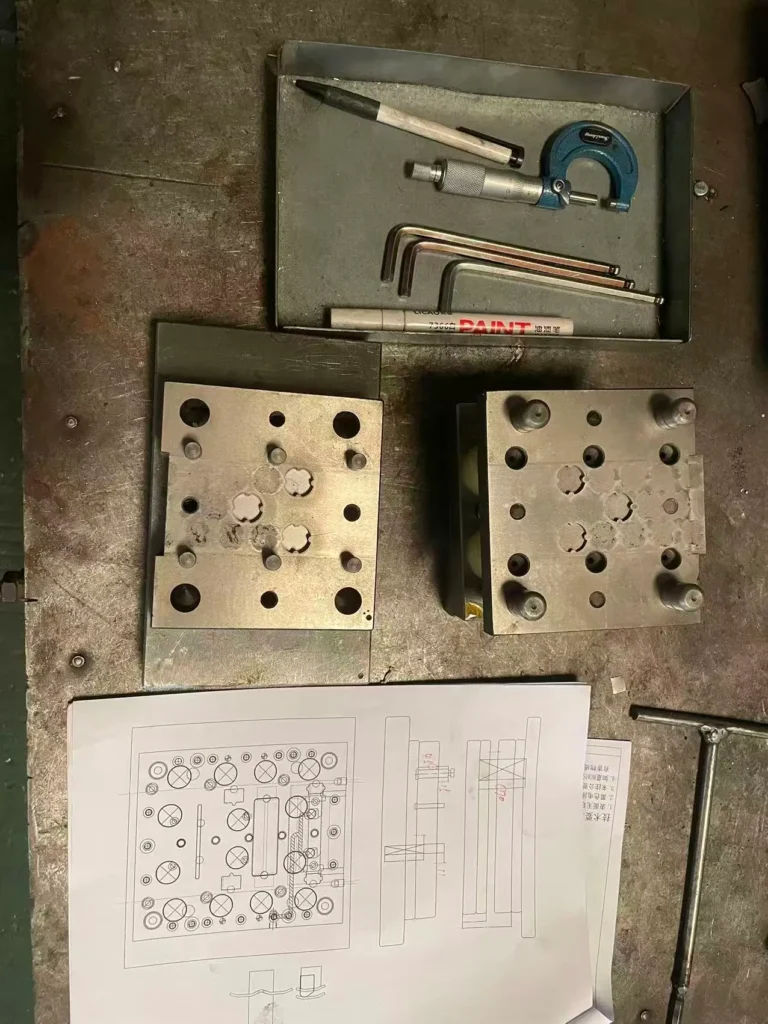
Die Design and Tooling Development
Tooling is usually the longest and most consequential stage of the whole process — the die determines part accuracy, production stability, and long-term cost more than any other factor.
Metal Stamp Factory was established in 2014 in Xiamen, China, and designs and builds all tooling in-house. Tooling development time depends on part complexity and die structure. A simple single-station die typically completes in around 15–25 days, while a progressive die for a more complex custom project usually takes around 35–40 days before sample production begins.
Trial Production and Sample Approval
Once tooling is complete, the die runs a trial batch to check forming accuracy, dimensions, and part consistency. Sample parts are then sent to the customer for dimensional approval before mass production begins — this step catches issues while they’re still cheap to fix, rather than after a full production run.
Mass Production and Quality Control
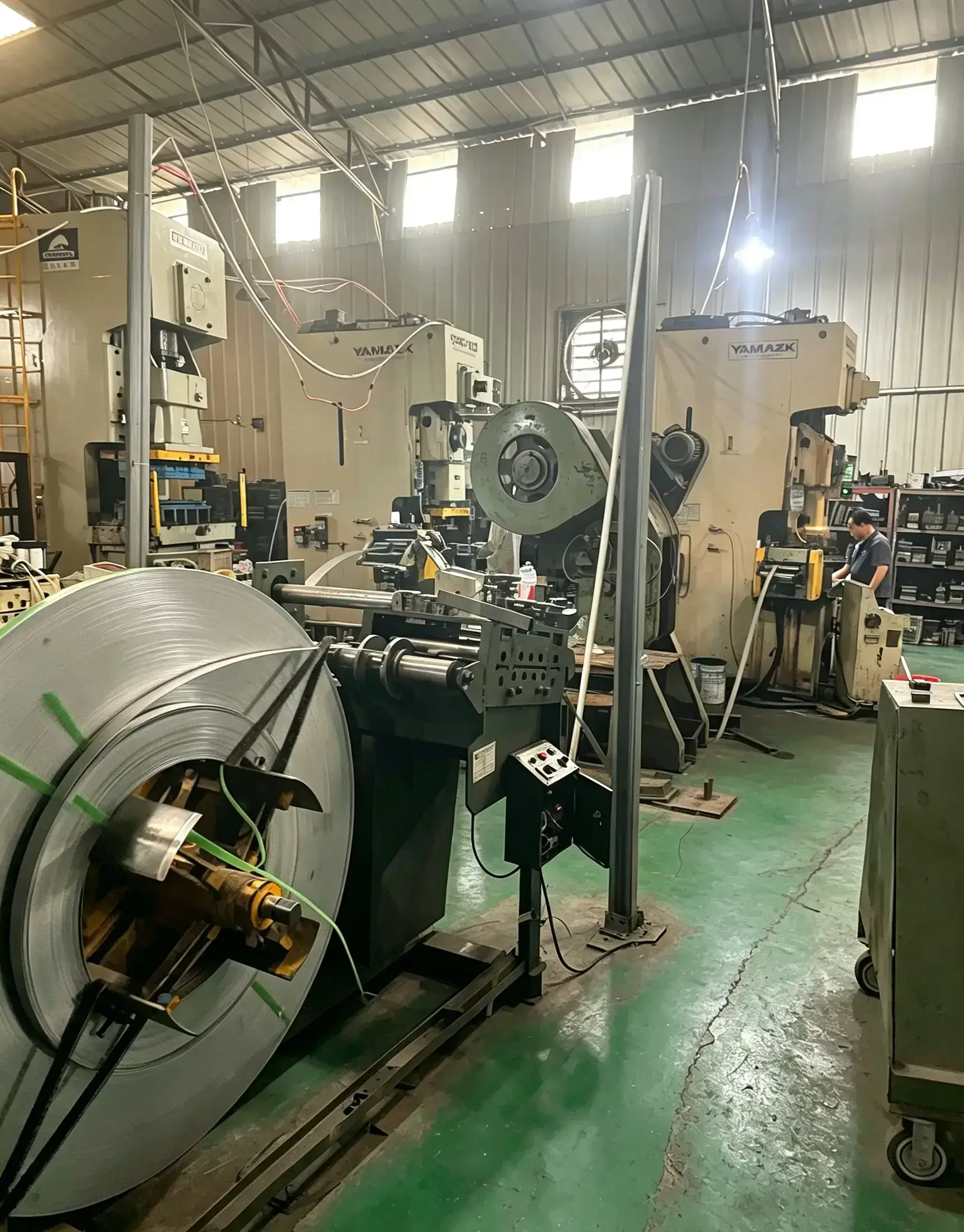
Once samples are approved, the die moves into full production. Automatic coil feeding systems feed raw material continuously into the press for consistent, high-speed output. Quality control at this stage includes:
Incoming material inspection — confirming grade, thickness, and coating against the mill test certificate
First article inspection (FAI) — checking the first parts off the die against the drawing
Dimensional inspection — periodic sampling during the run to catch tool wear early
Surface inspection — checking finish and appearance where applicable
We don’t rely on a certification logo to describe this — it’s the actual sequence of checks every batch goes through before shipment.
Types of Metal Stamping Processes
Different part geometries and production volumes call for different stamping methods:
| Type | Best For | Production Volume |
|---|---|---|
| Progressive Die | High-volume small/medium parts | Very high |
| Transfer Die | Larger or more complex geometry | High |
| Deep Draw | Cylindrical or hollow parts | Medium–high |
| Four-Slide | Small precision parts with multiple bends | Medium |
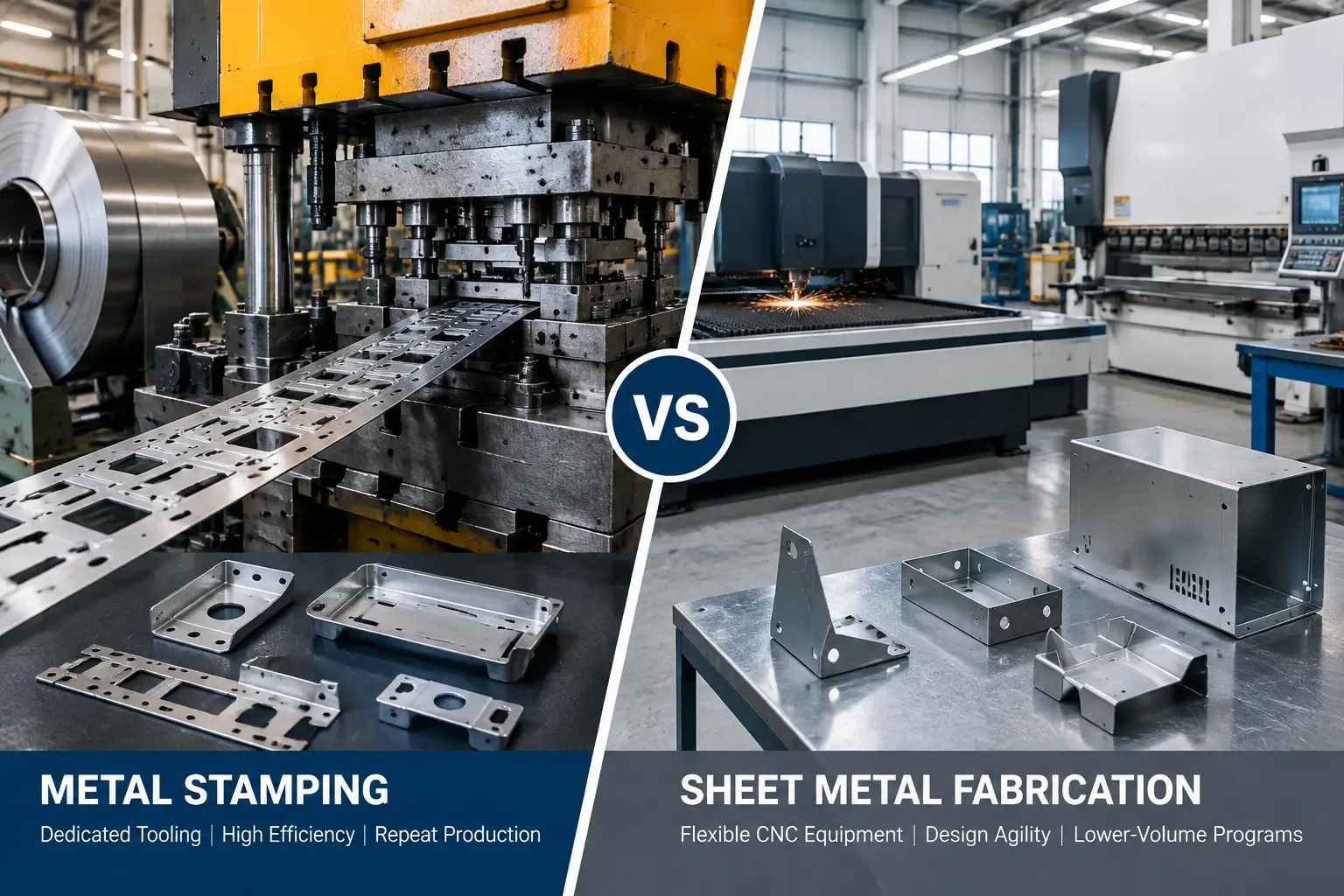
Progressive die stamping is one of the most common methods for OEM parts — a continuous metal strip feeds through multiple stations in a single die, with each station performing a different operation as the strip advances.
Deep Draw Stamping Explained
Deep draw stamping pulls a flat blank into a die cavity, forming it into a hollow shape such as a cylinder or enclosure. Two real examples from our production experience show what this looks like in practice:
Case 1 — Heavy-duty truck bearing housing: The part starts as a flat metal sheet and is formed through deep drawing and stamping. After forming, the component requires additional processes including projection welding, zinc plating, and plastic overmolding to meet the final application requirements.
Case 2 — 304 stainless steel mesh component: Cold working during deep drawing increases hardness and reduces the material’s ductility. For this part, annealing is required between forming stages to restore ductility before further drawing can continue — and annealing can cause surface oxidation, which sometimes requires additional surface treatment afterward.
Custom Metal Stamping Process for OEM Buyers
For OEM buyers, the practical version of this process starts with a drawing and ends with a signed-off production part. Metal Stamp Factory provides custom metal stamping services covering the full path — drawing review, tooling, sample approval, and mass production — for parts built to customer specifications rather than a fixed catalog.
OEM Metal Stamping Project Timeline
| Project Stage | Typical Activity |
|---|---|
| RFQ Review | Drawing, material, volume evaluation |
| Engineering Review | DFM feedback and process planning |
| Tooling Development | Die design and manufacturing |
| Sample Approval | Customer validation |
| Production Launch | Mass production and quality control |
Metal Stamping Cost Factors
| Cost Factor | Impact |
|---|---|
| Tooling | Largest upfront cost; amortized per part as volume increases |
| Material | Grade, thickness, and coating affect raw material cost |
| Production Volume | Higher volume lowers per-part cost |
| Part Complexity | More stations, tighter tolerances increase cost |
| Surface Treatment | Plating, coating, or anodizing add per-part cost |
Metal Stamping Lead Time
| Stage | Estimated Time |
|---|---|
| Drawing review and quotation | 1–3 days |
| Tooling development | Depends on part complexity and die structure — around 35–40 days for many custom projects |
| Sample production and approval | After tooling completion |
| Mass production | Depends on order quantity and press capacity |
Lead time depends on part design, material, tooling structure, and production requirements — we confirm a realistic schedule during drawing review rather than quoting a single fixed number for every project.
How to Choose a Metal Stamping Manufacturer
The process above only works reliably with the right manufacturing partner. We cover how to evaluate that in full detail in our companion guide: Buyer Guide: How to Choose a Metal Stamping Manufacturer, which walks through capability, tooling experience, quality control, and cost evaluation for OEM buyers.
Frequently Asked Questions About the Metal Stamping Process
What is the metal stamping process? It’s the full sequence of steps used to turn flat sheet metal into a finished part — drawing review, material selection, die design and tooling, trial production, sample approval, and mass production with quality inspection.
How long does metal stamping tooling take? Tooling time depends on part complexity and die structure. For many custom projects, tooling development takes around 35–40 days before sample parts are ready for approval.
What materials can be stamped? Common materials include carbon steel, galvanized steel, stainless steel (SUS304/SUS316), aluminum, and copper alloys — material choice depends on strength, corrosion resistance, and formability requirements.
What is the difference between progressive and transfer stamping? Progressive die stamping keeps the part attached to a continuous metal strip as it moves through multiple stations in one die. Transfer stamping moves individual blanks between separate stations, which allows more flexibility for larger or more complex parts.
How do manufacturers control stamping quality? Through incoming material inspection, first article inspection on new or adjusted dies, in-process dimensional checks during the run, and a final inspection before shipment.
Working With an Experienced Metal Stamping Manufacturer
Metal Stamp Factory was established in 2014 in Xiamen, China, focusing on custom metal stamping and precision hardware manufacturing. The founder of Metal Stamp Factory, Shengtong Chen, started learning mold making and metal stamping at the age of 17 and has accumulated more than 25 years of hands-on manufacturing experience in tooling development, metal stamping, and OEM production.
Send your drawing, material requirement, and estimated quantity. Our engineering team will review the project and provide feedback on tooling requirements and production feasibility.