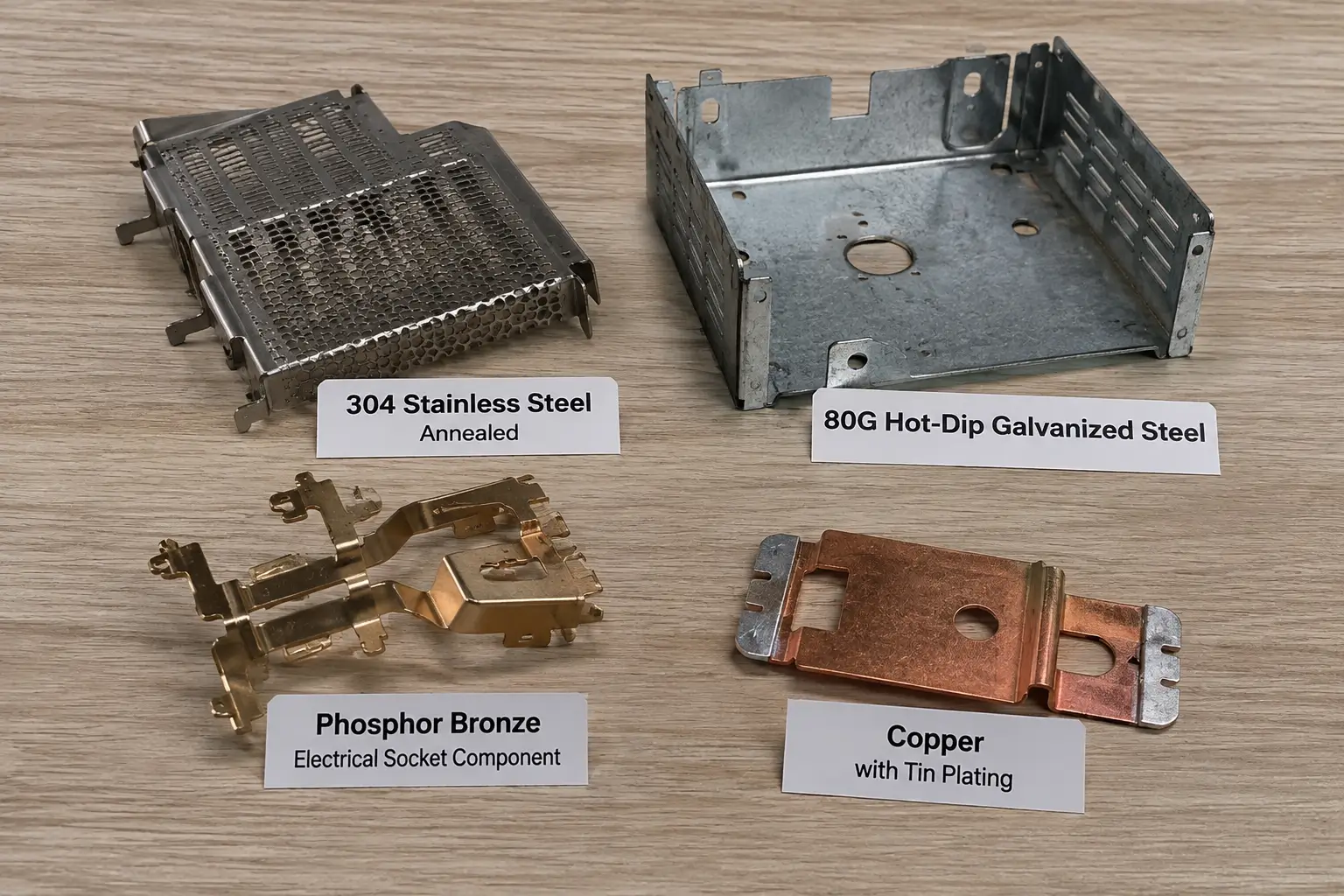
Answer Summary: Electrical metal stamping parts include terminals, spring contacts, connector pins, brackets, and housings — produced from copper, phosphor bronze, brass, aluminum, and steel depending on whether the part needs to conduct, flex, or simply provide structure. This guide covers materials, plating options, and real OEM case studies, from tin-plated copper terminals to phosphor bronze spring contacts.
What Are Electrical Metal Stamping Parts?
Electrical metal stamping parts are components formed from metal coil using a stamping die — metal stamping applied specifically to parts that carry current, make contact, or provide structure inside electrical products. This covers terminals, spring contacts, connector components, brackets, and enclosures. Unlike general structural stamping, electrical parts are selected primarily on conductivity and contact behavior — the shape matters, but the material’s electrical properties usually matter more.
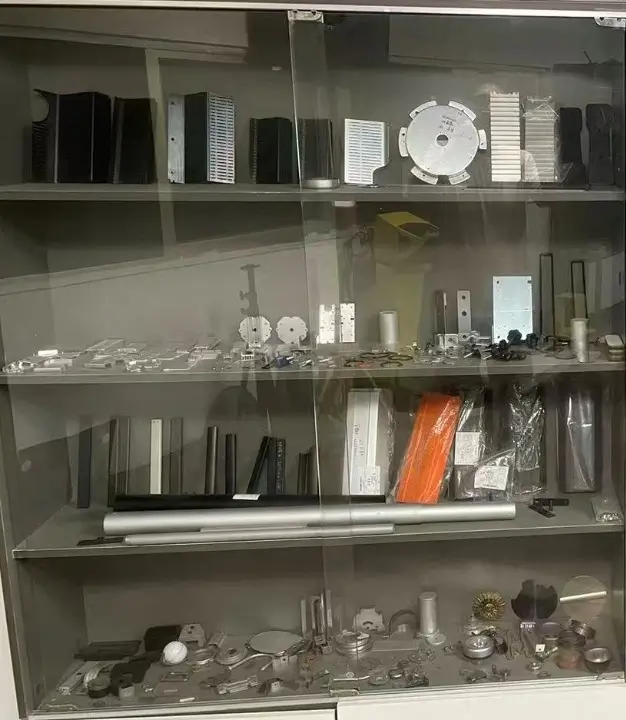
Common Electrical Components Made by Metal Stamping
Electrical stamping covers a wide range of part types:
- Electrical terminals
- Spring contacts
- Connector components (male and female pins)
- Heat sink parts
- Electronic brackets
- Power equipment hardware and enclosures
The sections below walk through five real production examples across these categories.
| Component Type | Typical Materials | Main Function |
|---|---|---|
| Electrical Terminals | Copper, Brass | Current transmission and connection |
| Spring Contacts | Phosphor Bronze | Elastic contact force and conductivity |
| Connector Pins | Brass, Copper Alloys | Electrical connection and signal transfer |
| Heat Sink Parts | Aluminum | Thermal management |
| Housings and Brackets | Steel, Stainless Steel | Structural support and protection |
Materials Used for Electrical Metal Stamping Parts
| Material | Key Property | Typical Application |
|---|---|---|
| Copper | Electrical conductivity | Terminals |
| Phosphor Bronze | Elasticity + conductivity | Spring contacts |
| Brass | Balance of cost and performance | Plug/connector terminals |
| Aluminum | Lightweight, thermal conductivity | Heat sinks |
| Steel | Strength, structure | Electrical housings and enclosures |
See our full metal stamping materials guide for how these compare on formability and cost. Material specifications may also reference standards published by ASTM.
Electrical Metal Stamping Material Selection Guide
| Requirement | Recommended Material | Reason |
|---|---|---|
| Maximum conductivity | Copper | Highest electrical conductivity |
| Spring contact performance | Phosphor Bronze | Elastic recovery with conductivity |
| Connector balance | Brass | Cost and performance balance |
| Lightweight thermal parts | Aluminum | Low weight and heat dissipation |
| Structural support | Steel | Strength and rigidity |
Copper Terminal Stamping Parts for Electrical Applications
Pure copper is chosen for terminal components specifically for its electrical conductivity — it doesn’t have spring elasticity, so it’s used where the part just needs to conduct, not flex.
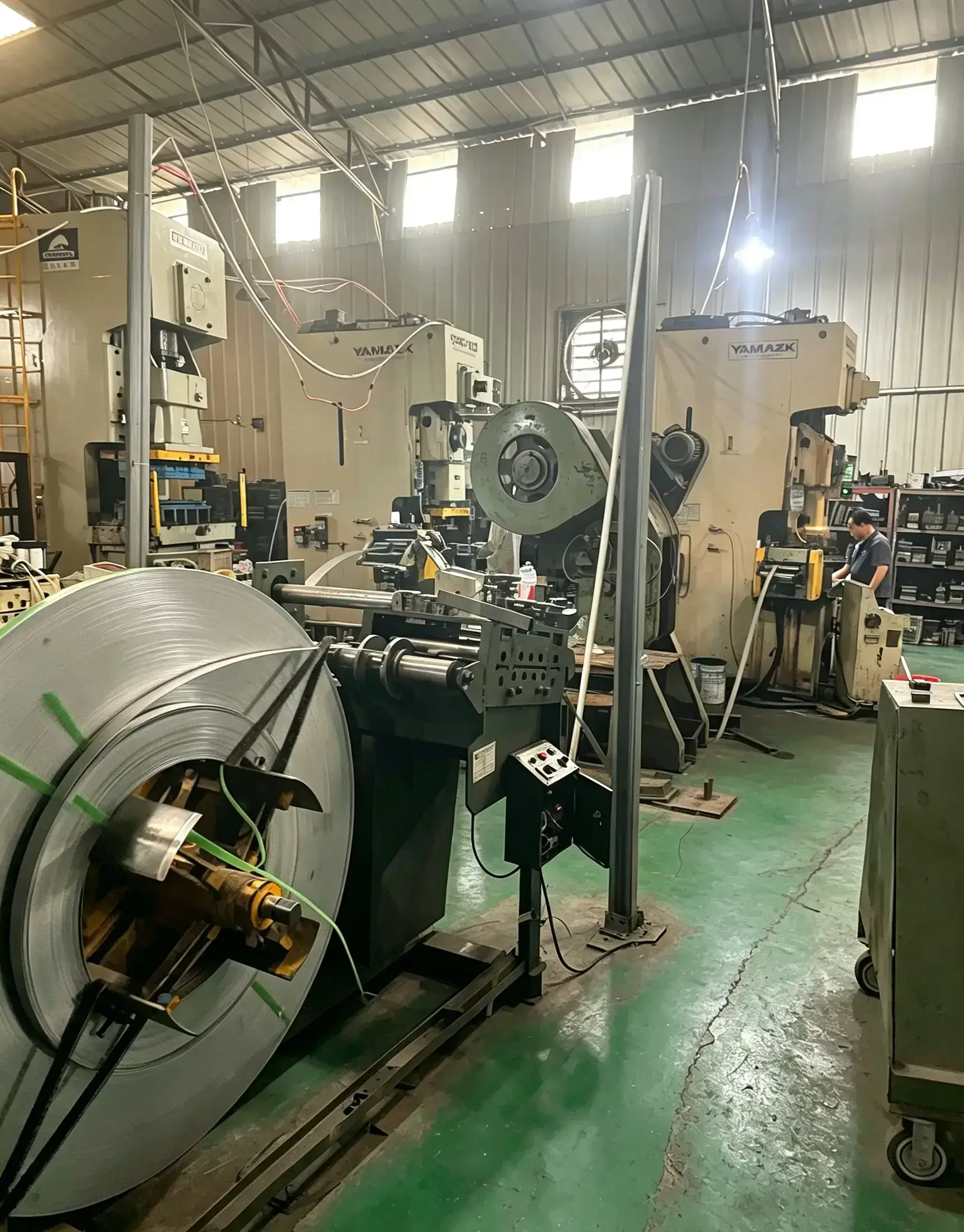
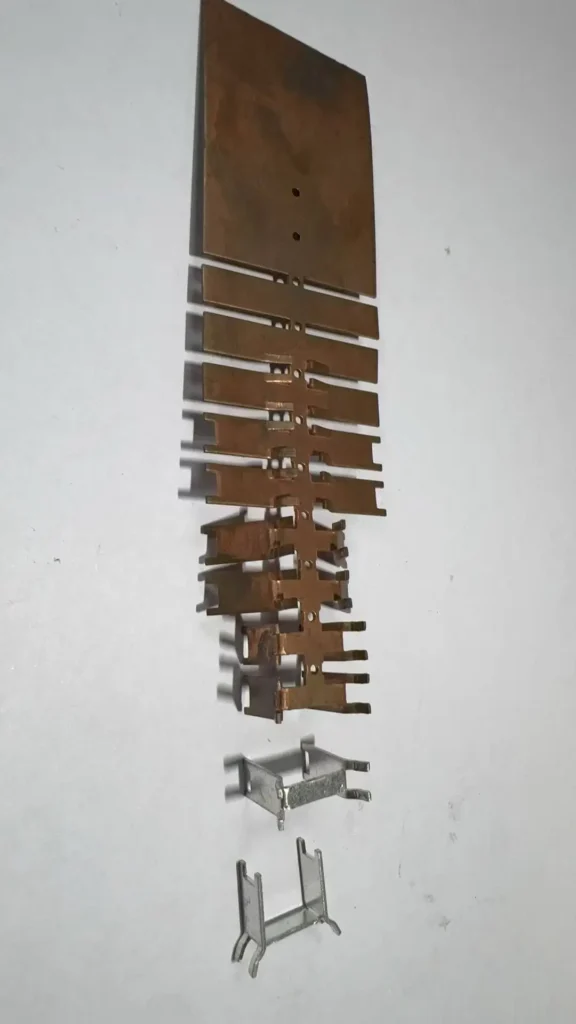
From the factory floor: We produce copper terminal components starting from copper coil, using progressive die stamping to form the parts, followed by tin plating. This is an actual production example from our electrical component manufacturing work.
Phosphor Bronze Stamping Parts: Combining Spring Performance and Conductivity
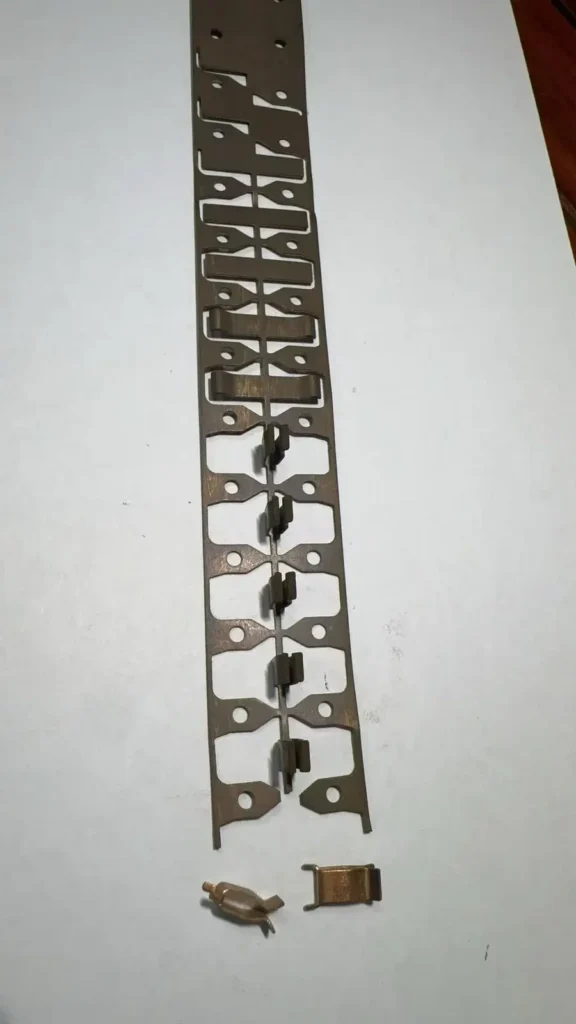
Phosphor bronze is selected specifically when an electrical component needs both conductivity and spring recovery — a part that has to flex under contact pressure and return to shape, not just sit rigid.
From the factory floor: One example we manufacture is a spring contact used inside power strips. The part is made from phosphor bronze and produced from coil using progressive die tooling. In this application, the component needs to flex under contact pressure and return toward its original shape, making spring behavior an important material requirement.
Brass Stamping Parts for Electrical Connectors
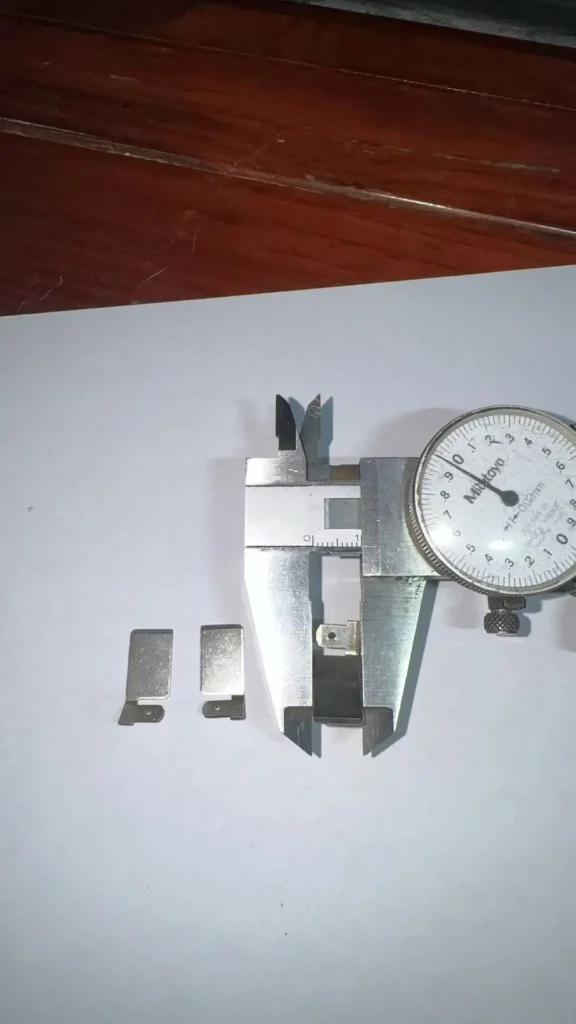
Brass is widely used for electrical connector and terminal components. When evaluating brass for a stamped electrical part, engineers should consider the required electrical performance, mechanical behavior, forming requirements, and any subsequent surface finish specification.
From the factory floor: We manufacture brass connector components for terminal socket plugs used in household electrical products. The parts include male and female terminal components and are produced with nickel and tin plated finishes according to the project requirements.
Progressive Die Stamping Process for Electrical Components
Progressive die stamping is commonly used for high-volume electrical terminals, contacts, and connector components when the part geometry and production requirements are suitable. Multiple forming, cutting, and other stamping operations can be integrated into sequential die stations as the strip advances through the tool.
- Coil feeding
- Progressive die forming across multiple stations
- Cutting and separation from the carrier strip
- Finished part
Because the strip advances through a defined sequence of die stations, progressive tooling can support repeatable production of electrical components when the tooling, material, feeding, and process controls are properly matched to the part requirements.
Electrical Stamping Manufacturing Workflow
| Manufacturing Stage | Key Activity |
|---|---|
| Material Preparation | Select coil material and verify specifications |
| Progressive Die Forming | Perform piercing, bending, and forming operations |
| Separation | Remove parts from carrier strip |
| Secondary Processing | Apply plating or additional operations |
| Inspection | Verify dimensions, finish, and functional requirements |
Key Design and Manufacturing Requirements for Electrical Stamped Parts
Electrical stamped parts should be evaluated according to their actual function and assembly requirements rather than by part name alone. A terminal, spring contact, connector component, bracket, or housing may require different materials, tolerances, surface finishes, and manufacturing controls.
For an OEM project, important information to define during drawing and manufacturing review can include:
- Material grade and material thickness
- Conductivity or spring requirements where applicable
- Critical dimensions and stamping tolerances
- Burr direction or edge requirements where relevant
- Plating or other surface finish requirements
- Mating, insertion, or assembly requirements
- Secondary operations such as plating, riveting, welding, or hardware insertion
- Expected production quantity or annual demand
- Drawing, inspection, and other project-specific quality requirements
These requirements should be reviewed together because one decision can affect another. For example, material selection can influence forming behavior, while a post-stamping surface finish may need to be considered when evaluating critical dimensions.
For projects where material choice is still being evaluated, see our metal stamping material selection guide.
For dimensions that are critical to fit or assembly, see our metal stamping tolerances and quality standards guide.
Surface Treatments for Electrical Metal Stamping Parts
Material | Common Surface Treatment | Application |
|---|---|---|
| Copper | Tin plating | Terminals |
| Brass | Nickel plating (sometimes plus tin) | Connectors |
| Aluminum | Anodizing | Electronic housings |
| Steel | Zinc plating | Enclosures and structural parts |
Surface finish requirements should be evaluated together with the base material, application environment, electrical requirements, dimensional requirements, and manufacturing sequence.
We use nickel and tin plating for our electrical stamped parts — we don’t offer gold or silver plating, so if your application specifically requires a precious-metal finish, let us know upfront so we can confirm whether we’re the right fit.
Aluminum Stamping Parts for Electronics and Heat Dissipation
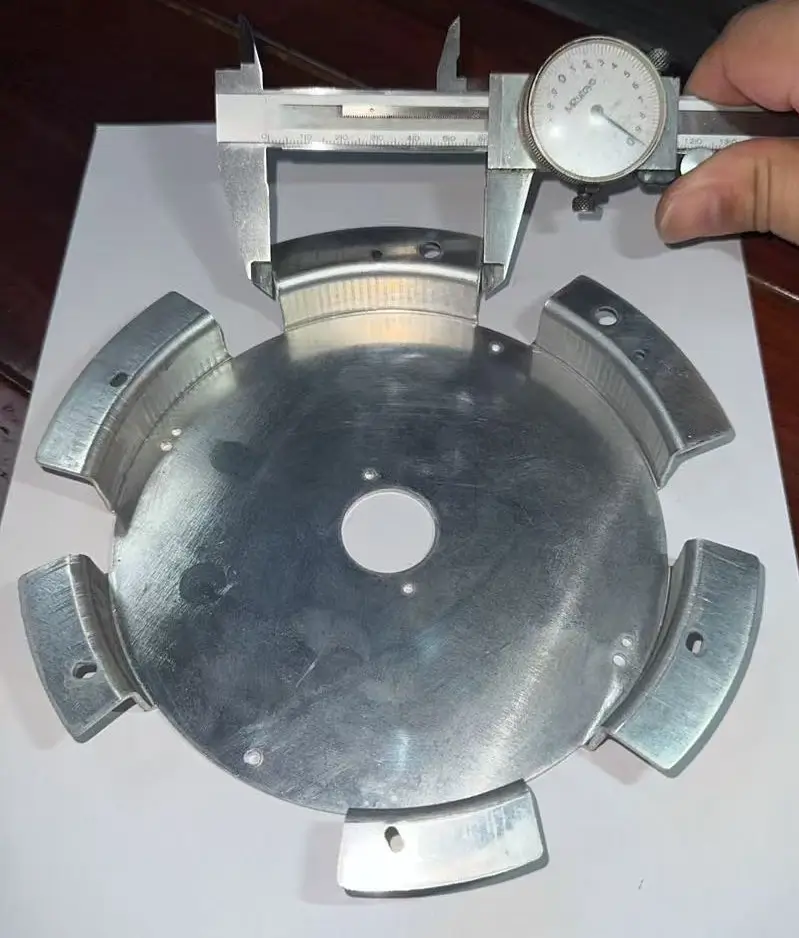
For thermal management applications, we produce stamped aluminum heat sink components — taking advantage of aluminum’s light weight and thermal conductivity compared to steel. These parts are typically simpler geometrically than terminals or contacts, but the material choice still comes down to the same principle: pick the material for what the part actually needs to do, not just what’s cheapest.
Electrical Metal Stamping Applications Across Industries
Electrical stamped parts show up well beyond dedicated connector manufacturing:
- Consumer electronics
- Household electrical appliances (including power strip components)
- Power equipment and enclosures
- Lighting products
- Industrial electronics
The common thread isn’t the industry — it’s that all of these need small, precise, repeatable metal components that either conduct current or provide structure around something that does.
Case Study: Electrical Power Box Made from Galvanized Steel
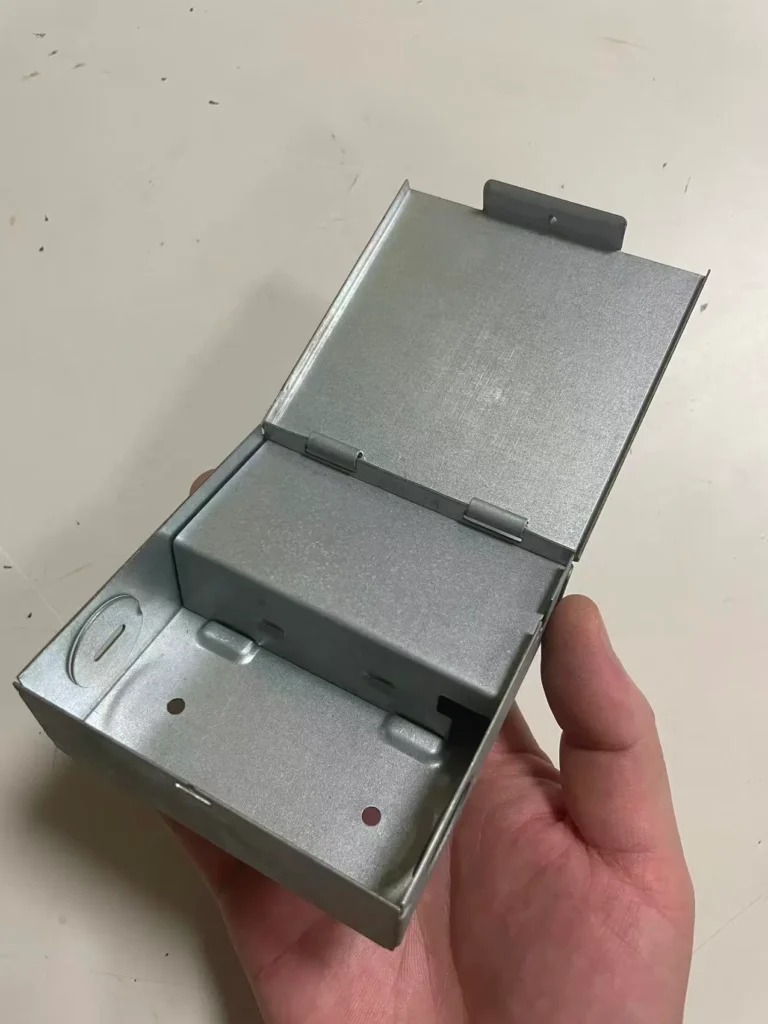
From the factory floor: One of our production examples is an electrical power box housing made from hot-dip galvanized steel. The part is produced through progressive die stamping and forming operations. This example shows the use of pre-galvanized steel sheet in an actual stamped electrical enclosure project.
Quality Control for Electrical Stamping Components
Our quality process for electrical stamped parts includes:
- Material certificate verification
- Thickness confirmation
- Plating appearance inspection
- Dimensional inspection
- Functional fit checks where applicable (e.g., connector mating)
We describe this as our actual process rather than referencing certifications we don’t hold — if your project needs a specific quality system certification, tell us upfront so we can confirm fit before quoting.
How OEM Buyers Choose an Electrical Stamping Supplier
For electrical components specifically, material experience matters more than it does for general structural parts — ask whether a supplier has actually run the material you need (copper, phosphor bronze, brass) rather than just listing it on a capability page. Also check tooling capability, plating cooperation (in-house or through partners), quality control process, and communication. We cover the complete evaluation framework in our Buyer Guide: how to choose a metal stamping manufacturer.
Electrical Stamping Supplier Evaluation Checklist
| Evaluation Area | What OEM Buyers Should Verify |
|---|---|
| Material Experience | Actual experience with copper, brass, and phosphor bronze |
| Tooling Capability | Progressive die design and production capability |
| Plating Coordination | Tin, nickel, and other finishing support |
| Quality Control | Material verification, dimensions, and functional checks |
| Engineering Support | Drawing review and manufacturing feedback |
Electrical Metal Stamping Manufacturing Process From Drawing to Finished Part
A typical electrical stamping project moves through:
Drawing review → Material selection → Die design → Trial production → Stamping → Surface treatment → Inspection
For the complete production sequence in more detail, see our full metal stamping process guide.
Metal Stamp Factory Electrical Metal Stamping Capabilities
Metal Stamp Factory was established in 2014 in Xiamen, China, focusing on custom metal stamping and precision hardware manufacturing. The founder of Metal Stamp Factory, Shengtong Chen, started learning mold making and metal stamping at the age of 17 and has accumulated more than 25 years of hands-on manufacturing experience in tooling development, metal stamping, and OEM production.
Our electrical stamping experience covers copper, phosphor bronze, brass, aluminum, and galvanized steel — from terminals and spring contacts to enclosures. Learn more about our custom metal stamping services, or browse more real production examples in our case studies.
Ready to start your electrical stamping project? Send us your drawing, material requirement, and estimated quantity.
Electrical Metal Stamping Parts FAQ
What materials are commonly used for electrical metal stamping parts? Common materials include copper, phosphor bronze, brass, aluminum, and steel. The appropriate material depends on the component’s electrical, mechanical, forming, environmental, and assembly requirements.
Can copper be used for electrical stamping components? Yes. Copper is used for stamped electrical components where electrical conductivity is an important requirement. In one of our actual production examples, copper terminal components are produced by progressive die stamping and then tin plated according to the project specification.
What is phosphor bronze used for in electrical stamping? Phosphor bronze can be used for electrical contacts and spring components where both electrical and spring properties are required. One of our actual production examples is a phosphor bronze spring contact used inside a power strip.
What surface finishes can be used for electrical stamped parts? Surface finish options depend on the base material, application, electrical requirements, environment, and manufacturing sequence. Our actual production examples include tin-plated copper components, nickel- and tin-plated brass components, anodized aluminum components, and galvanized steel parts. Finish requirements should be confirmed for the specific drawing and application.
How do OEM buyers select an electrical stamping supplier? Check whether the supplier has real experience with your specific material (not just a listed capability), their tooling and plating capabilities, quality control process, and communication. See our full Buyer Guide for the complete framework.