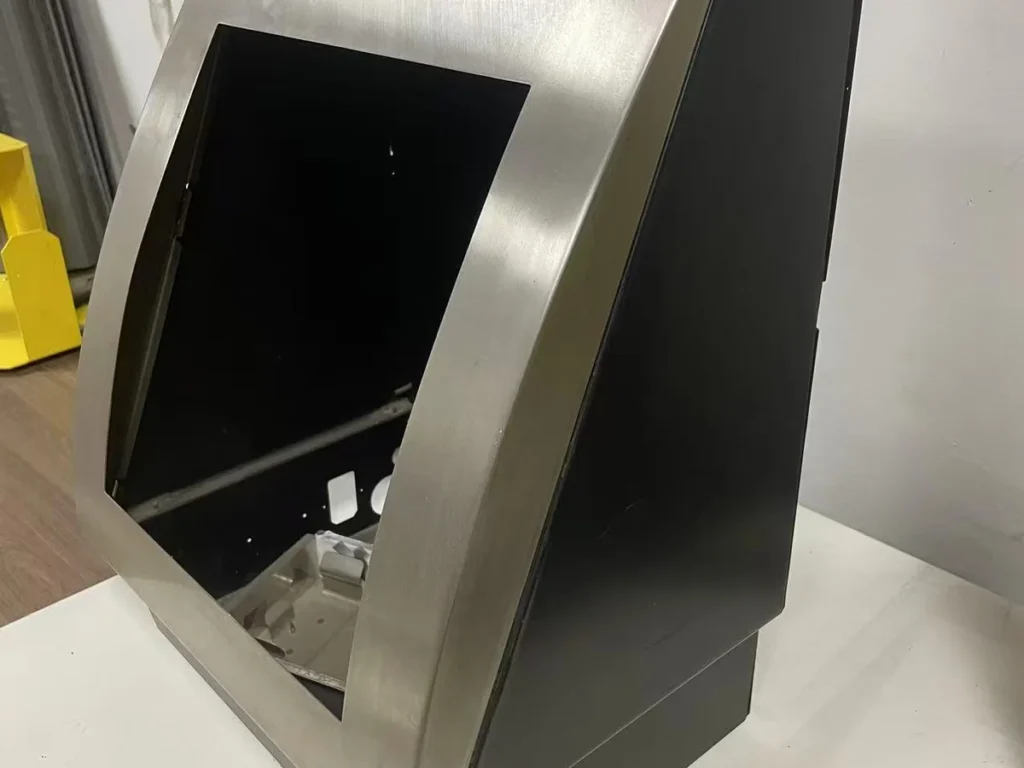
304 and 316 look identical. They feel the same, they machine almost the same, and to the naked eye, a finished bracket in one grade is indistinguishable from the other. But before we even get to 304 vs 316, there’s a bigger and more common problem buyers run into — one that costs them a lot more than a Mo percentage difference.
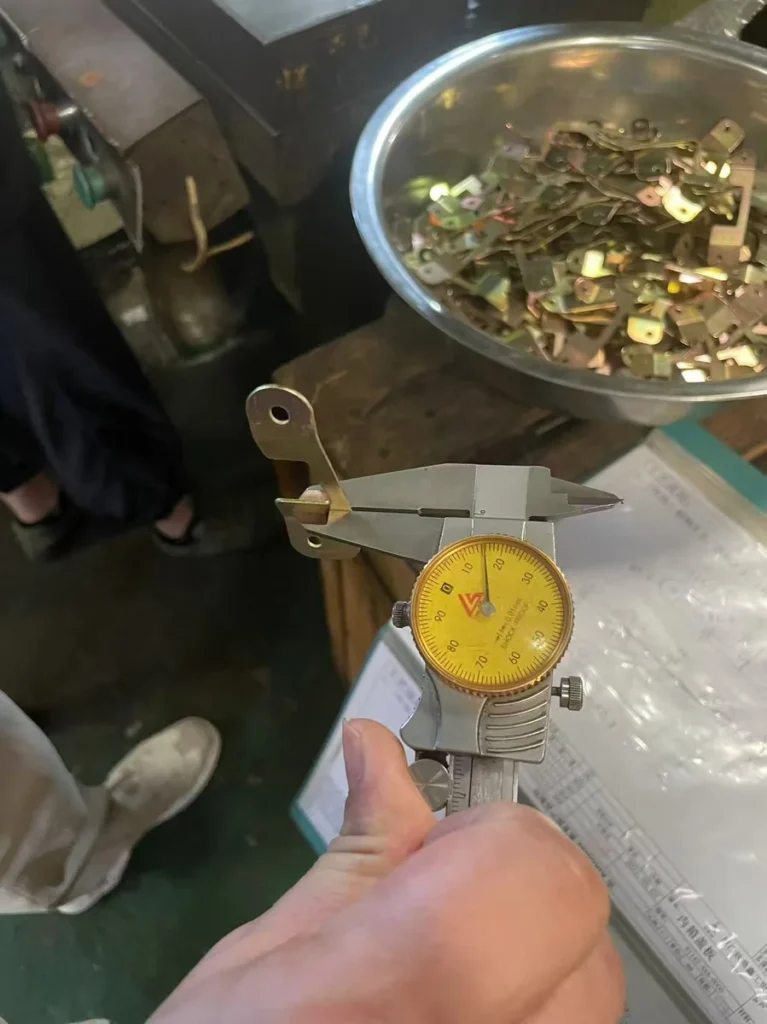
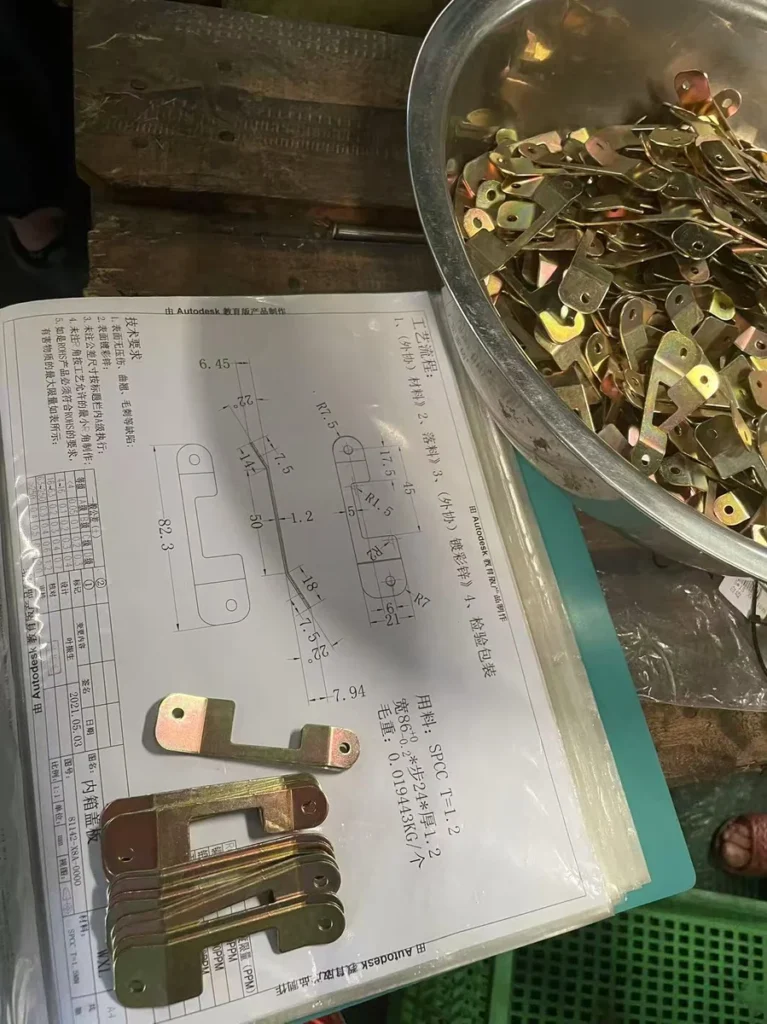
Verification starts on the shop floor, not just on paper.
1. The Bigger Risk First: 200-Series vs. 300-Series Stainless Steel
Stainless steel isn’t one material — it’s a family of grades, grouped into series by their alloy composition. The two series buyers run into most often:
300 series (304, 316, 321, etc.) – austenitic stainless steels commonly alloyed with chromium and nickel. Grades such as 304 and 316 are widely specified for applications where corrosion resistance and material grade requirements are important.
200 series (201, 202, etc.) — a lower-cost alternative where much of the nickel is replaced with manganese and nitrogen. 201 in particular has become common in cost-driven manufacturing because it’s noticeably cheaper than 304.
The problem: 201 is sometimes sold, quoted, or labeled simply as “stainless steel” without the grade being specified — and to an untrained eye or a quick visual check, it can pass for 304. But its corrosion resistance is meaningfully lower. Parts made from 201 can start showing rust, especially at cut edges or in humid/coastal/outdoor environments, well before a genuine 304 or 316 part would.
For buyers, the important point is that a generic “stainless steel” description is not enough when a specific grade is required. If your drawing specifies 304, 316, or another grade, the material grade should be verified rather than assumed from appearance alone.
How to catch it: a nickel spot test kit (similar in concept to the molybdenum test below) reacts to nickel content on a lightly abraded surface — 300 series shows a strong positive reaction due to its higher nickel content, while 200 series shows a weak or negative reaction. This is a fast, low-cost way to confirm you’re at least in the right series before worrying about 304 vs 316 specifically.
2. Once You’ve Confirmed 300 Series: 304 vs 316
For projects where stainless steel grade verification and traceability are important, buyers should request a Mill Test Certificate (MTC) or equivalent material documentation showing the chemical composition and relevant properties of the supplied batch.
The limitation: an MTC proves what the raw material supplier sold. It doesn’t prove that the specific coil referenced in the certificate is the one that actually went into your parts. Paperwork and physical material can come apart at any point in the supply chain if nobody is checking. An MTC is necessary, but on its own it isn’t sufficient.
3. Spark Testing: Useful, But Don’t Expect Too Much From It
You may have heard of spark testing — grinding a piece of metal against an abrasive wheel and reading the material grade from the pattern, color, and length of the sparks. This is a real, widely used method, especially in scrap and recycling yards.
Here’s what it’s actually good for: Spark testing can provide a quick preliminary indication when comparing some stainless steels with plain carbon steels because their spark characteristics can differ. However, the result depends on the alloy and the operator’s experience, and spark testing should not be treated as a definitive stainless steel grade verification method.
4. Molybdenum Spot Testing: The Practical Way to Tell 304 From 316
This is the method most buyers and inspectors actually rely on for a fast, on-site check. The chemical difference between 304 and 316 is molybdenum — 316 contains roughly 2–3% Mo, while 304 contains essentially none.
A molybdenum spot test kit uses a reagent that changes color when it reacts with molybdenum on a lightly abraded metal surface. No color change generally indicates 304 (no Mo); a positive color reaction indicates 316. These kits are inexpensive, portable, and fast enough to use during a factory visit or incoming goods inspection — many experienced buyers carry one.
A handheld X-ray fluorescence (XRF) analyzer can provide rapid, non-destructive elemental analysis of a metal surface, including elements such as chromium, nickel, and molybdenum. It is a useful method for positive material identification and for distinguishing many stainless steel grades when the instrument, calibration, test method, and material are appropriate.
We’ll be straightforward here: we don’t own an XRF spectrometer in-house — a unit costs upward of 10,000+ RMB, which isn’t justified for our regular production volume. For orders where a customer specifically needs spectrometer-verified material certification, we arrange it — either by borrowing access to a unit or engaging a third-party inspection service at the customer’s request. We’d rather tell you exactly what we have and don’t have than claim a capability we don’t actually use day to day.
6. Busting a Common Myth: “It’s Magnetic, So It Must Be Fake”
This one causes a lot of confusion. 304 and 316 are both austenitic stainless steels, which in their normal annealed state are non-magnetic or only very weakly magnetic. Buyers often test parts with a simple magnet, and when it sticks, they assume the part must be a cheaper “stainless-look” material, not genuine 304/316.
Here’s the metallurgical reality: cold working — stamping, bending, punching — can cause a real, well-documented phenomenon called strain-induced martensite transformation. The mechanical deformation at a bend line or a punched hole can locally convert some of the austenite into a magnetic martensite phase, even though the base material is genuine, correctly certified 304 or 316. This is not a defect and it is not evidence of substitution — it’s a normal metallurgical response to forming.
In practice, this means a stamped bracket can show noticeable magnetism right at the bend or punch, while the flat, unformed sections of the same part remain non-magnetic. If you test with a magnet, check multiple locations on the part, not just the corners — and don’t treat a magnetic reading at a formed edge as proof of fake material.
Method
Can Confirm
Limitation
Nickel Spot Test
200 vs 300 series (Ni content)
Confirms series only, not 304 vs 316 within 300 series
Mill Test Certificate
Composition of the certified batch
Doesn’t prove traceability to your specific parts
Spark Test
Stainless vs. carbon steel
Cannot reliably distinguish 304 vs 316
Molybdenum Spot Test
304 vs 316 (Mo presence)
Surface-level only, not full composition
XRF Spectrometer
Full elemental composition
Equipment cost; often arranged via 3rd party
Magnet Test
Rough series screen (with caveats — see article)
Cold-worked 300 series can show false positives at bends
This isn’t theoretical for us — we tested it ourselves. On a genuine 304 stamped part, the magnet holds firmly at the bend/punch location and drops off immediately on the flat, unformed surface. For comparison, we ran the same magnet test on a 316 sample (no attraction anywhere, including at a threaded nut) and a 201 sample (attracted immediately, across the whole piece, not just at formed edges) side by side. The practical takeaway is that magnetism alone should not be used to identify a stainless steel grade. A strongly magnetic response across an entire part may justify further material verification, but the grade should be confirmed using an appropriate chemical or instrumental test rather than a magnet alone.
7. Surface Finish: A Helpful Clue, Not a Verification Method
Surface texture can tell you something about how the material was processed, though not definitively about its grade. Cold-rolled stainless steel sheet (typically thinner gauges) often shows faint, parallel lines running in the rolling direction — visible under angled light.
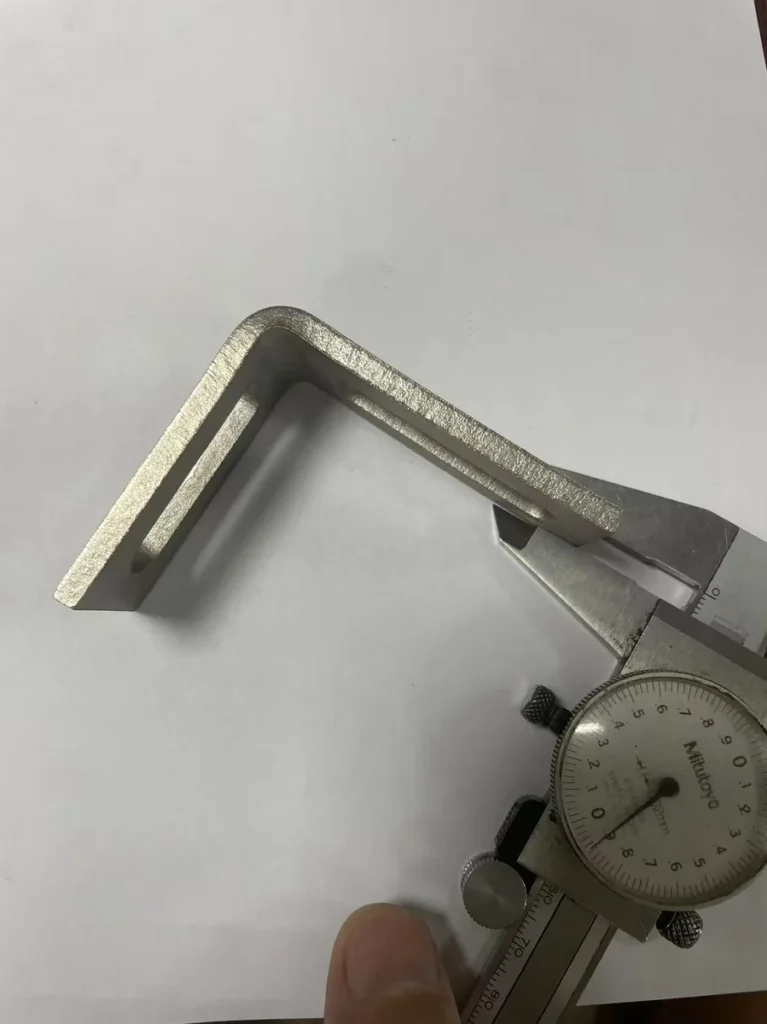
Hot-rolled stainless steel generally has a rougher, duller surface than cold-rolled sheet. In our own production, some thicker 304 stainless steel components, including 3.0 mm and above solar mounting brackets, use hot-rolled material and show this characteristic surface.
Neither finish proves grade on its own — surface texture is a byproduct of the rolling process, not a chemical test — but it’s a useful sanity check: if a supplier ships you a “thin, smooth cold-rolled look” part when you ordered a thick, structural hot-rolled component, or vice versa, that mismatch is worth asking about.
At 3.0mm+, hot-rolled 304 shows a rougher, duller surface than thinner cold-rolled sheet.Cold-rolled surface lines like these are a helpful visual clue, but not proof of grade on their own.
How We Handle Material Verification
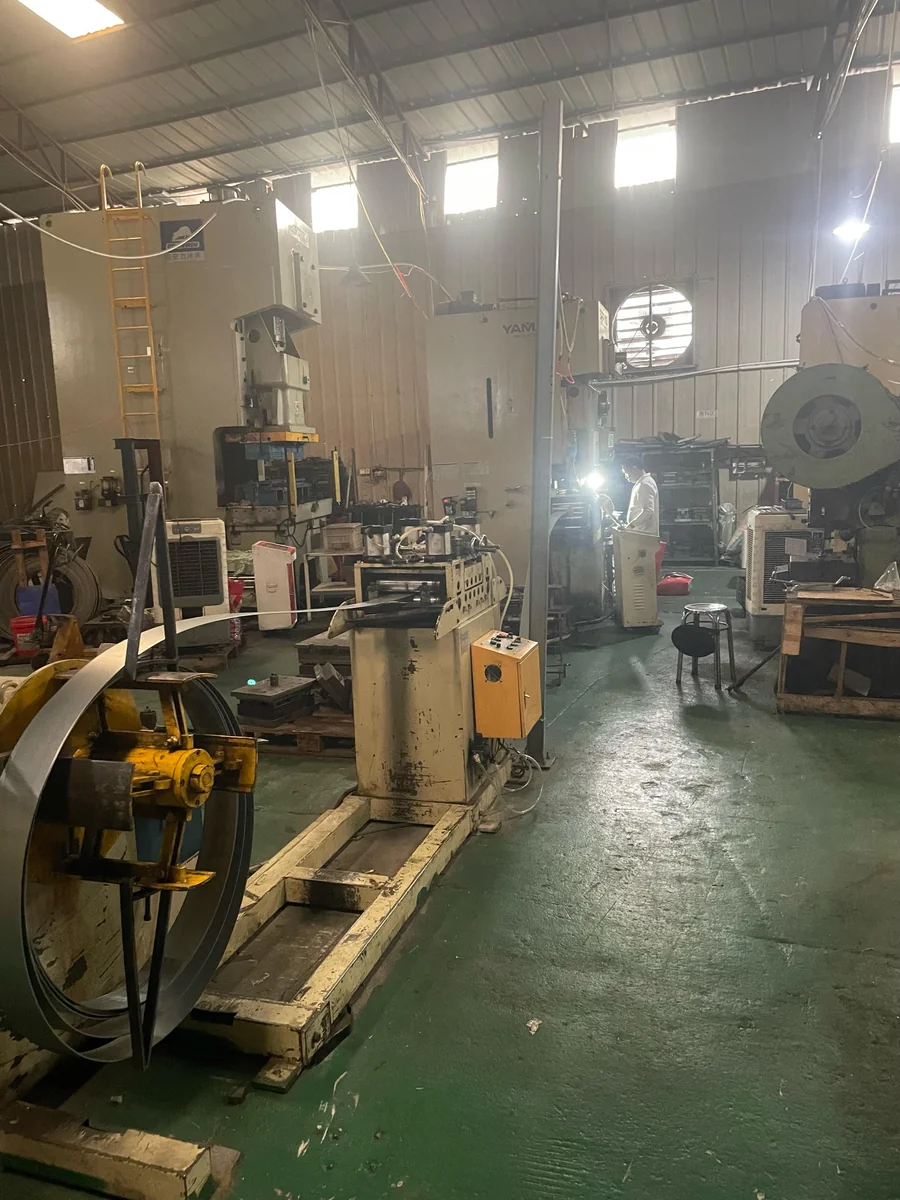
Every incoming coil is checked against its Mill Test Certificate before it enters production. Dimensional and visual inspection happens at first article and again during batch production, checking bend angles and dimensions with calipers as standard practice.
Material and dimensions are both checked against the drawing before mass production.
For orders where grade certainty matters most — marine hardware, food-grade equipment, chemical-adjacent applications — tell us up front, and we’ll arrange molybdenum spot testing or third-party XRF verification as part of the order, rather than relying on paperwork alone.
Ordering Stainless Steel Parts? Ask the Right Questions Upfront
If 304 vs 316 matters for your application, don’t just ask for a quote — ask what verification method the supplier actually uses, and whether they can provide test documentation alongside the parts. A supplier who can answer that clearly, the way we just did above, is generally one worth trusting with the order.