What Are Medical Device Metal Stamping Parts?
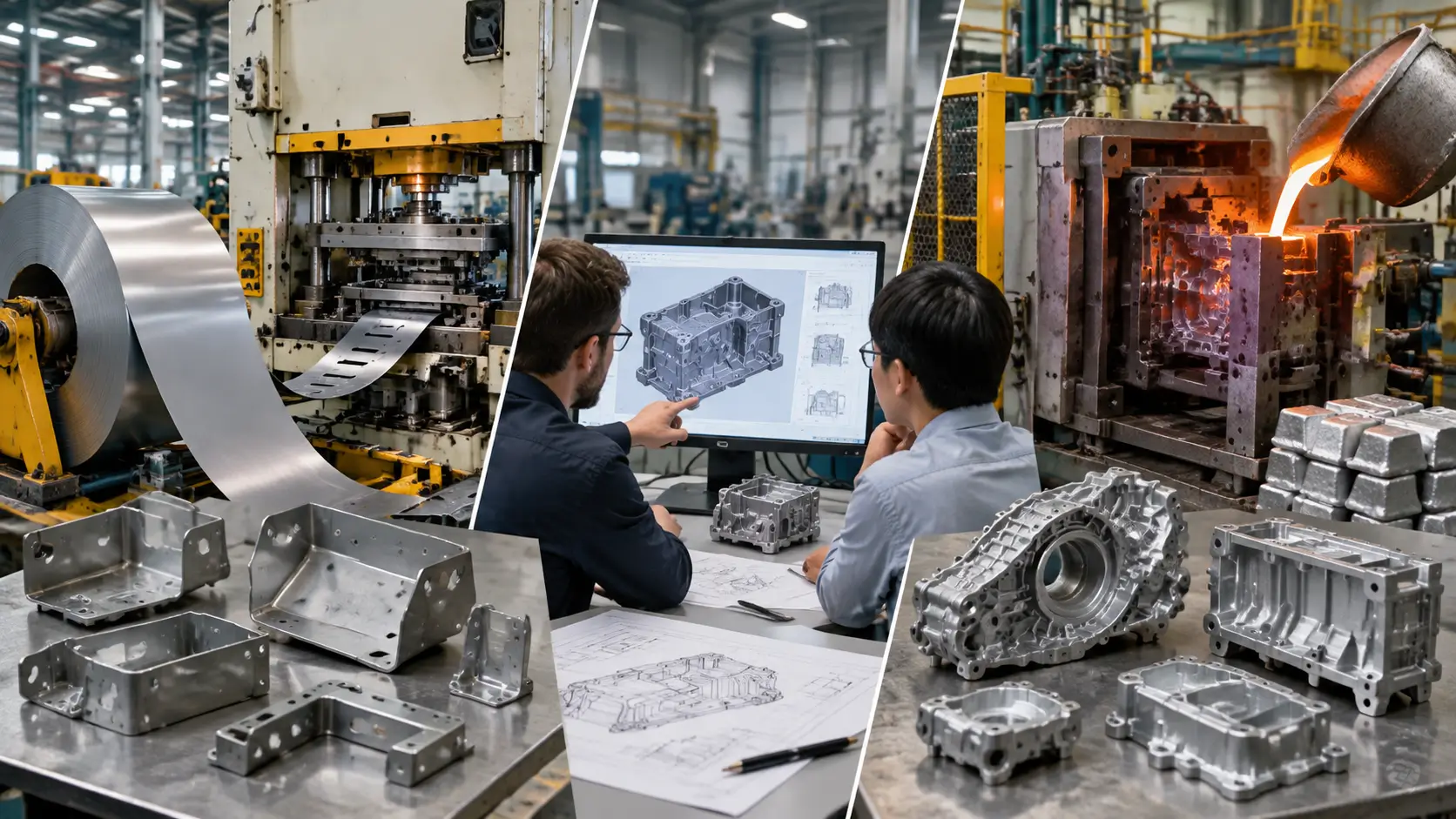
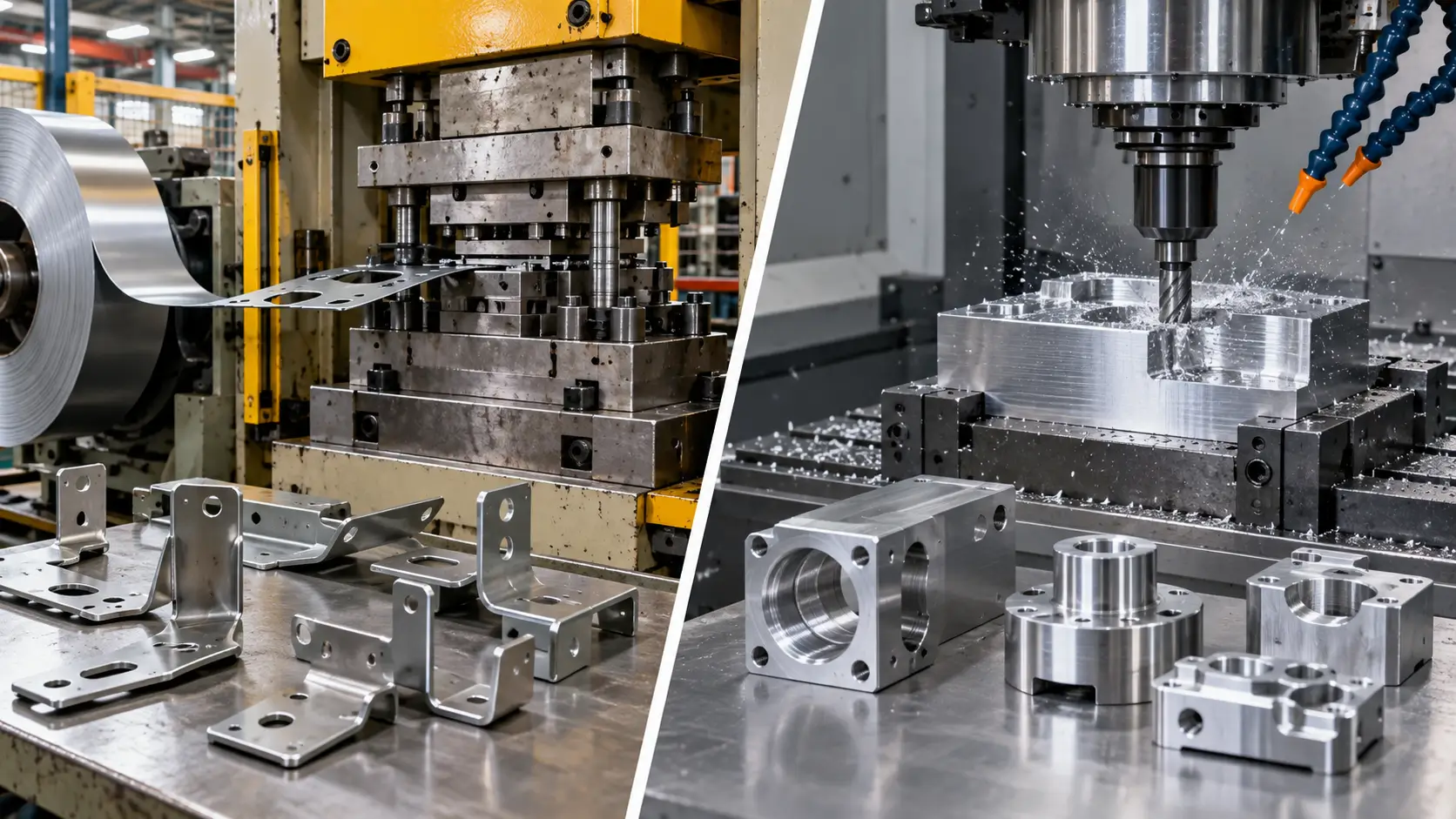
Medical device metal stamping parts are custom components manufactured by feeding sheet metal or coiled stock through stamping presses, where specialized dies perform punching, bending, blanking, piercing, and forming operations. These process steps transform raw metal material into structural elements, enclosures, brackets, and functional hardware used in healthcare and medical equipment applications.
It is critical for OEM buyers and engineering teams to understand that stamped metal components are not complete medical devices. Instead, they serve as sub-assemblies, structural frames, mounting hardware, or protective housings that integrate into larger equipment, diagnostic units, or orthopedic assemblies.
Manufacturing Process Overview
- Step 1: Raw Metal Material — Sheet or coil stock (Stainless Steel, Aluminum, Steel).
- Step 2: Stamping Press & Tooling Dies — Punching, bending, piercing, blanking, and forming.
- Step 3: Stamped Metal Component — Bare semi-finished metal part.
- Step 4: Downstream OEM Integration — Secondary finishing, padding, assembly, and packaging.
In OEM manufacturing, custom medical metal stamping parts provide repeatable dimensions, structural stability, and cost-effective scalability for production runs compared to manual or labor-intensive fabrication methods.
Where Are Metal Stamping Parts Used in Medical Devices?
Metal stamping can be used for structural brackets, mounting hardware, covers, panels, retainers, and orthopedic support components in medical equipment and healthcare products. Rather than housing internal delicate electronics or direct biological implants, metal stamping primarily provides structural integrity, external protection, and mechanical alignment for sub-systems:
- Support Components & Brackets: Mounting brackets, internal chassis plates, and structural braces that secure sub-assemblies and internal mechanical linkages within diagnostic machinery and healthcare equipment.
- Housings, Covers & Panels: Protective metal enclosures, side panels, shielding covers, and outer casings that protect internal systems from external impact, environmental dust, and wear.
- Fixation & Position Hardware: Clamps, retainers, hinges, and sliding tracks used in adjustable medical carts and positioning mechanisms.
- Orthopedic Support Components: Rigid or semi-rigid metal plates and structural inserts integrated into external bracing systems for limbs and joint stabilization.
Medical Device Metal Stamping Application Guide
| Component Type | Typical Examples | Manufacturing Considerations |
|---|---|---|
| Structural Brackets | Equipment frames, internal supports | Strength, rigidity, dimensional consistency |
| Housings & Covers | Protective panels, enclosures | Surface quality and appearance requirements |
| Positioning Hardware | Clamps, retainers, hinges | Repeatable dimensions and assembly fit |
| Orthopedic Supports | Metal inserts, support plates | Lightweight materials and controlled forming |
Because equipment components undergo frequent movement, handling, and stress, stamped structural parts must maintain geometric consistency and mechanical performance throughout their service lifecycle.
Common Materials for Medical Device Metal Stamping
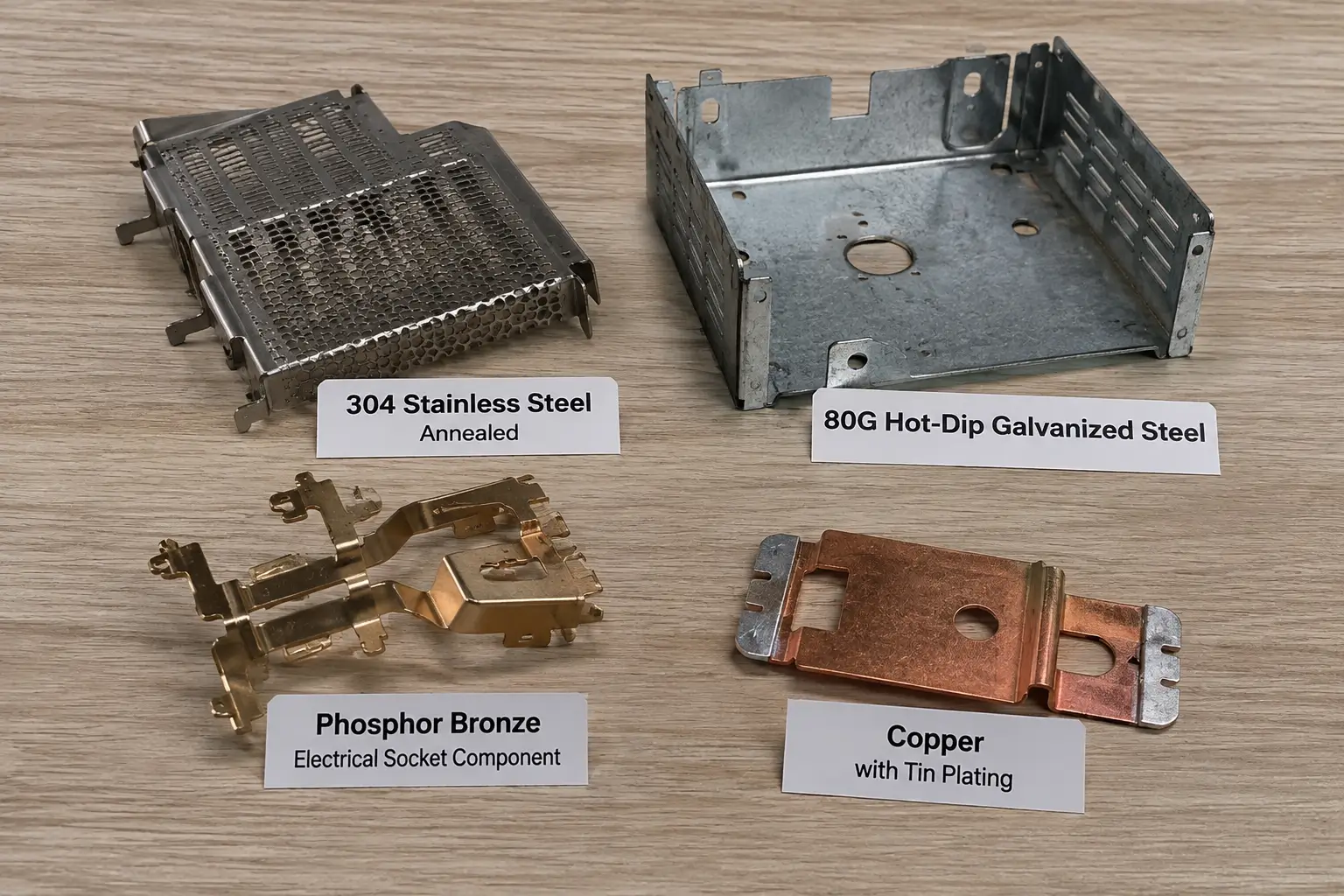
Selecting the right raw material is fundamental to achieving the desired mechanical strength, formability, and corrosion resistance for structural metal components. Across the stamping industry, three primary metal families are utilized for healthcare hardware applications:
| Material | Key Considerations | Potential Applications |
|---|---|---|
| Stainless Steel | Strength, corrosion resistance, and formability | Structural brackets, chassis hardware, and mounting plates |
| Aluminum | Low weight and good formability | Lightweight support components, housings, and support panels |
| Steel | Strength and structural stability | Brackets, structural frames, and equipment bases |
When evaluating materials for custom metal stamping parts, engineering teams must weigh physical requirements—such as weight limitations, ductility for deep bends, and environmental exposure—against stamping tool wear and component production costs. Metal Stamp Factory has confirmed experience producing thin aluminum stamped components for orthopedic support applications.
Aluminum Metal Stamping Parts for Orthopedic Supports
While stainless steel provides high strength, lightweight aluminum plays a pivotal role in external medical support hardware where user comfort and weight reduction are essential. Thin aluminum sheet can help reduce component weight while providing the formability needed for the required stamped shape.
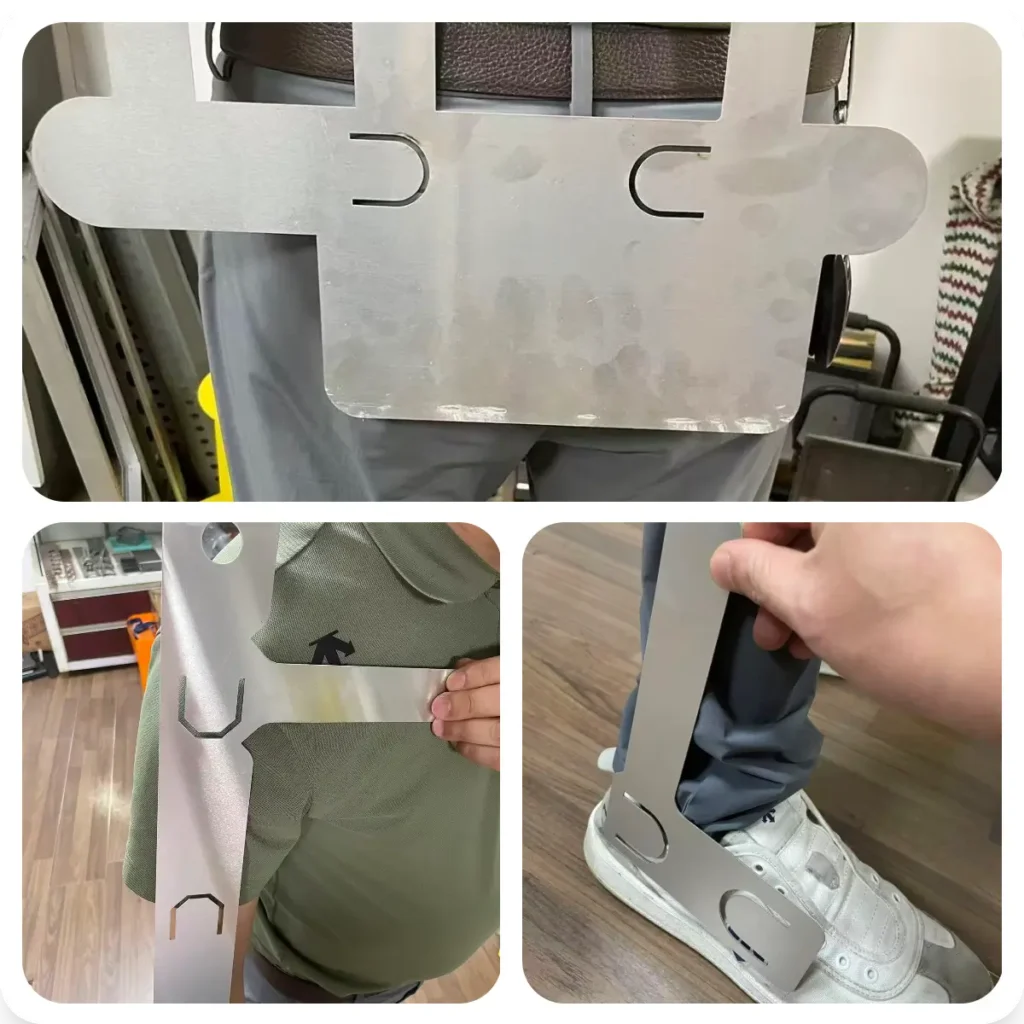
A key application of custom aluminum stamping is the production of semi-finished structural inserts for orthopedic support products. These thin aluminum stamped components are formed according to customer drawings to provide necessary rigidity for joint and limb immobilization.
Orthopedic Support Supply Workflow
- Targeted Body Regions: Ankle support, arm support, and hip support components.
- Stamped Semi-Finished Component: Delivered as a bare metal stamped and formed part.
- Downstream Customer Processing: Padding, assembly, and final packaging are completed downstream according to the customer’s product requirements.
Key features of aluminum orthopedic support components include:
- Targeted Body Regions: These thin aluminum stamped components are used in orthopedic support products for ankle, arm, and hip applications.
- Thin Material Stock: Processed from thin aluminum sheet to balance formability, structural support, and overall product weight.
- Semi-Finished Supply: Delivered as bare metal stamped and formed components, designed specifically for downstream integration where OEM manufacturers apply soft padding, textile straps, and outer packaging.
Why Material Selection Matters in Medical Metal Stamping
Material selection directly impacts both manufacturing feasibility and end-product performance. A material that is optimal for structural strength may present forming challenges during progressive stamping or press operations.
When specifying materials for medical stamped components, consider these core engineering parameters:
- Strength-to-Weight Ratio: Portable equipment and body-worn orthopedic supports require low mass without sacrificing mechanical stability under load.
- Formability & Ductility: Ductile metals withstand tight bend radii without cracking along the bend grain.
- Corrosion Resistance: Components subjected to routine sanitation, humidity, or outdoor transportation require materials that resist oxidation or accept protective surface treatments.
- Thickness Consistency: Variations in raw coil thickness can affect springback during bending and alter dimensional stability across production batches.
A thorough evaluation of these factors during the component design stage can help identify potential forming and tooling issues before production begins.
How Thickness Affects Medical Metal Stamping
Material sheet thickness fundamentally dictates press tonnage, tooling design, and process parameters required for the stamping operation. Thin aluminum sheet can present different forming behavior from heavier-gauge steel.
Key Thin Sheet Metal Forming Challenges
- Wrinkling Risk: Unsupported thin areas can buckle under compression during forming.
- Material Stretch: Excessive tension during bending or forming can cause thinning or cracking around tight radii.
- Springback: Elastic recovery can alter the final geometry after forming.
- Tooling Considerations: Tooling design and forming parameters need to account for material thickness, geometry, and springback according to the part requirements.
When processing thin aluminum or thin stainless steel sheet for support hardware, stamping engineers evaluate specific forming phenomena:
- Deformation and Wrinkling: Thin sheet stock can buckle under compressive stress during drawing or flange-forming operations. Tooling must incorporate controlled pressure pads to hold material flat.
- Material Cracking: Excessive forming stress can cause cracking around bend areas.
- Springback and Elastic Recovery: Thin metals exhibit elastic recovery after punching or bending. Tooling may need to account for springback during forming so that the finished geometry remains within the customer’s drawing requirements.
- Dimensional Stability: Maintaining flat surfaces across broad thin panels demands uniform blanking pressure and correct die clearances.
Forming and Bending Considerations for Medical Stamped Parts
Forming complex geometry from flat sheet metal requires correct tool geometry and calculated forming sequences. Stamping factories evaluate part drawings to identify potential manufacturing risks before cutting die steel.
Critical forming parameters include:
- Bend Radius Alignment: Designing bend radii that respect the material’s grain structure prevents surface tears and stress concentration points.
- Springback Compensation: Tooling design needs to account for material springback based on the material, thickness, bend geometry, and forming conditions.
- Punching and Piercing Clearance: Die clearance between punch and matrix must match material hardness and gauge to minimize burr formation.
- Forming Sequence: Multi-bend components require a logical progression of die stations to allow material flow without interfering with previously formed flanges.
Properly addressing these mechanical factors during initial DFM (Design for Manufacturability) review prevents expensive modifications to hardened tooling later in the project.
Progressive Die Stamping for High-Volume Medical Components
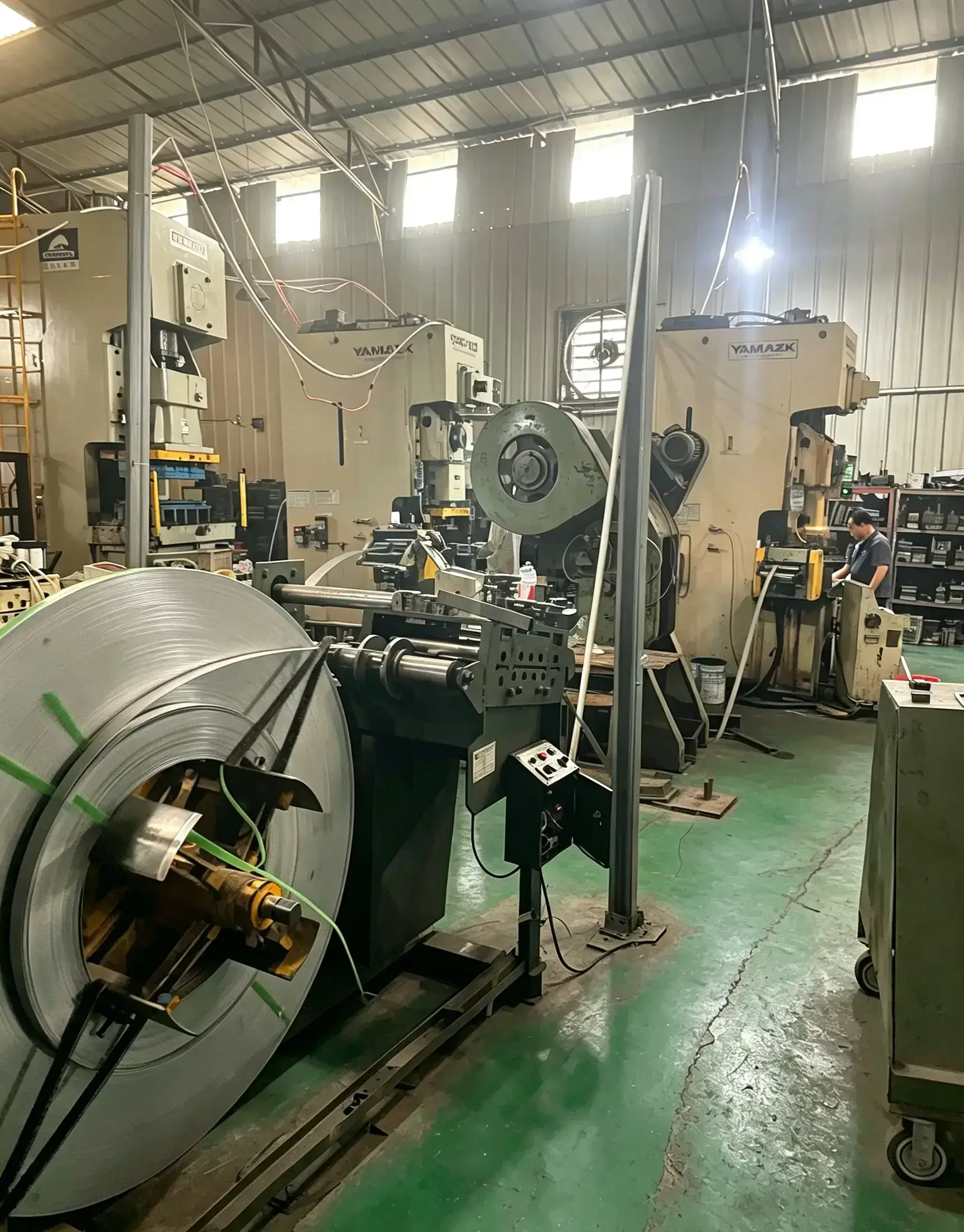
When part geometries allow and volume requirements are sufficient, progressive die stamping provides an automated manufacturing method. In progressive stamping, a continuous strip of coiled sheet metal is fed through a series of inline die stations.
A progressive die may use multiple stations to perform different operations as the strip advances through the tool. The exact station sequence depends on the part geometry and tooling design.
Example Progressive Die Station Sequence
- Station 1: Pilot hole punching or initial piercing.
- Station 2: Additional piercing or blanking operations.
- Station 3: Forming and bending.
- Station 4: Additional forming, notching, or flanging where required.
- Station 5: Final cut-off and part separation.
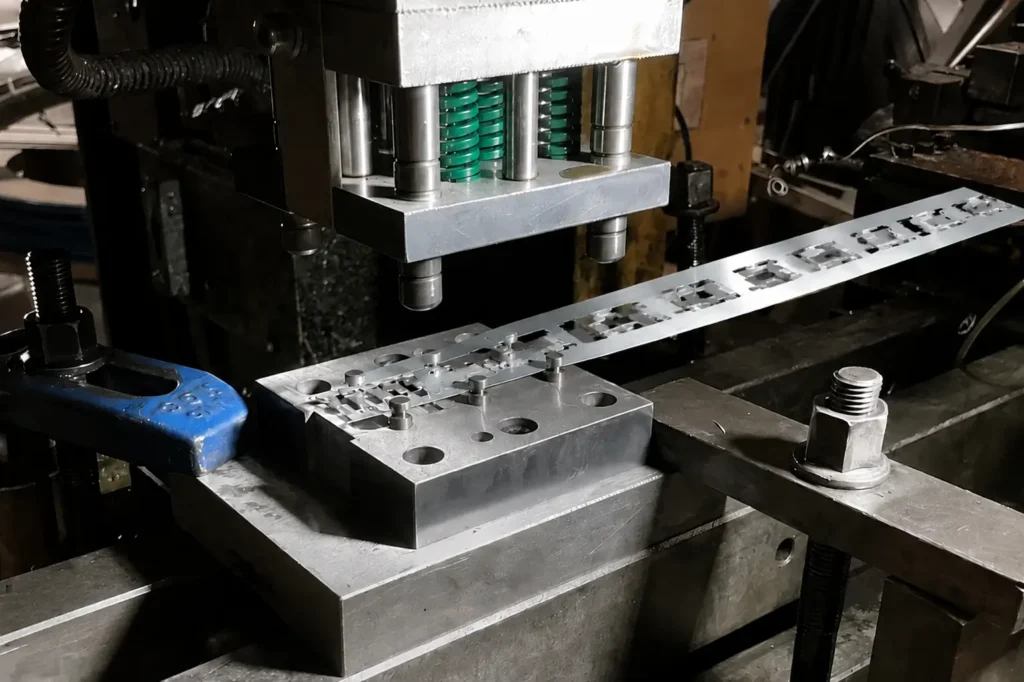
Advantages of progressive die stamping for suitable healthcare hardware components include:
- High Production Efficiency: Multiple operations—including piercing, blanking, bending, and embossing—occur simultaneously with every stroke of the press.
- Consistent Dimensional Features: Precise pilot pins index the metal strip through each station, helping maintain consistent part features across production runs.
- Reduced Manual Handling: Automated coil feeders feed stock into the tool, reducing manual handling during the stamping process.
Medical Metal Stamping Manufacturing Workflow
| Manufacturing Stage | Key Activities |
|---|---|
| Engineering Review | Drawing review, DFM analysis, material evaluation |
| Tooling Development | Die design, machining, testing |
| Stamping Production | Punching, bending, forming operations |
| Secondary Processing | Deburring, finishing, assembly support |
| Inspection | Dimensional verification and quality checks |
Secondary Processes After Medical Metal Stamping
Depending on the project, stamped components may undergo additional downstream processing before final assembly. These processes can be handled by the customer or coordinated separately according to project requirements.
Common downstream processing steps across the industry include:
- Deburring and Edge Finishing: Vibratory tumbling or edge trimming removes burrs created during punching, preparing parts for downstream assembly.
- Surface Coating and Protection: Anodizing for aluminum or powder coating for steel parts provides improved wear resistance, corrosion protection, and visual appearance.
- Sub-Assembly Integration: Joining stamped metal frames with plastic inserts, fasteners, or structural rivets.
- Padding and Soft-Good Attachment: For orthopedic support components, bare metal stampings are subsequently laminated or wrapped with foam padding, fabric liners, and straps by the downstream manufacturer.
- OEM Packaging: Protective packaging to prevent scratching or distortion during transit.
Quality Considerations for Medical Metal Stamping Parts
Maintaining dimensional conformity and mechanical integrity is essential when producing stamped components for hardware applications. Quality verification protocols focus on key physical parameters defined in customer engineering drawings:
- First Article Inspection (FAI): Verifying initial production samples against 2D drawings and CAD models using calipers, micrometers, and other inspection tools as required by the drawing before approving full production runs.
- Raw Material Verification: Where required by the project, material documentation can be reviewed to confirm the specified material grade and thickness match drawing specifications.
- Burr Height Control: Monitoring punch die wear to ensure edge burrs remain within allowable drawing tolerances to meet the customer’s specified edge and burr requirements.
- Dimensional Consistency: Conducting periodic dimensional checks across production lots to monitor die wear and ensure uniform forming angles.
These inspection criteria help identify non-conforming parts before they move further through production.
Medical Metal Stamping Quality Control Checklist
| Quality Area | Verification Method |
|---|---|
| Material Verification | Check material grade and thickness documentation |
| First Article Inspection | Compare initial samples against drawings |
| Dimensional Control | Measure critical features and hole locations |
| Burr Management | Monitor punch wear and edge conditions |
| Process Stability | Perform periodic production checks |
Common Problems in Medical Metal Stamping
The following are common stamping issues that manufacturers may need to evaluate depending on material, geometry, and forming requirements:
| Stamping Issue | Potential Manufacturing Cause | Common Corrective Action |
|---|---|---|
| Material Cracking | Bend radius too tight or bending parallel to material grain | Increase bend radius or reorient part layout on coil strip |
| Excessive Burrs | Dull punch edges or die clearance exceeds material limits | Sharpen punch tooling and recalibrate die clearances |
| Springback Deviation | Variations in raw material hardness or sheet thickness | Adjust die punch depths and apply over-bend corrections |
| Surface Scratches | Metal galling on die surfaces or dirty raw stock | Polish die forming surfaces and implement strip cleaning |
| Part Distortion | Unbalanced stress distribution during forming | Redesign forming sequence or add pressure pad supports |
Stamping die wear can also contribute to excessive burrs when punch edges lose sharpness over repeated production cycles. See our guide on stamping die wear for common causes and prevention methods.
Medical Metal Stamping vs. Other Metal Fabrication Methods
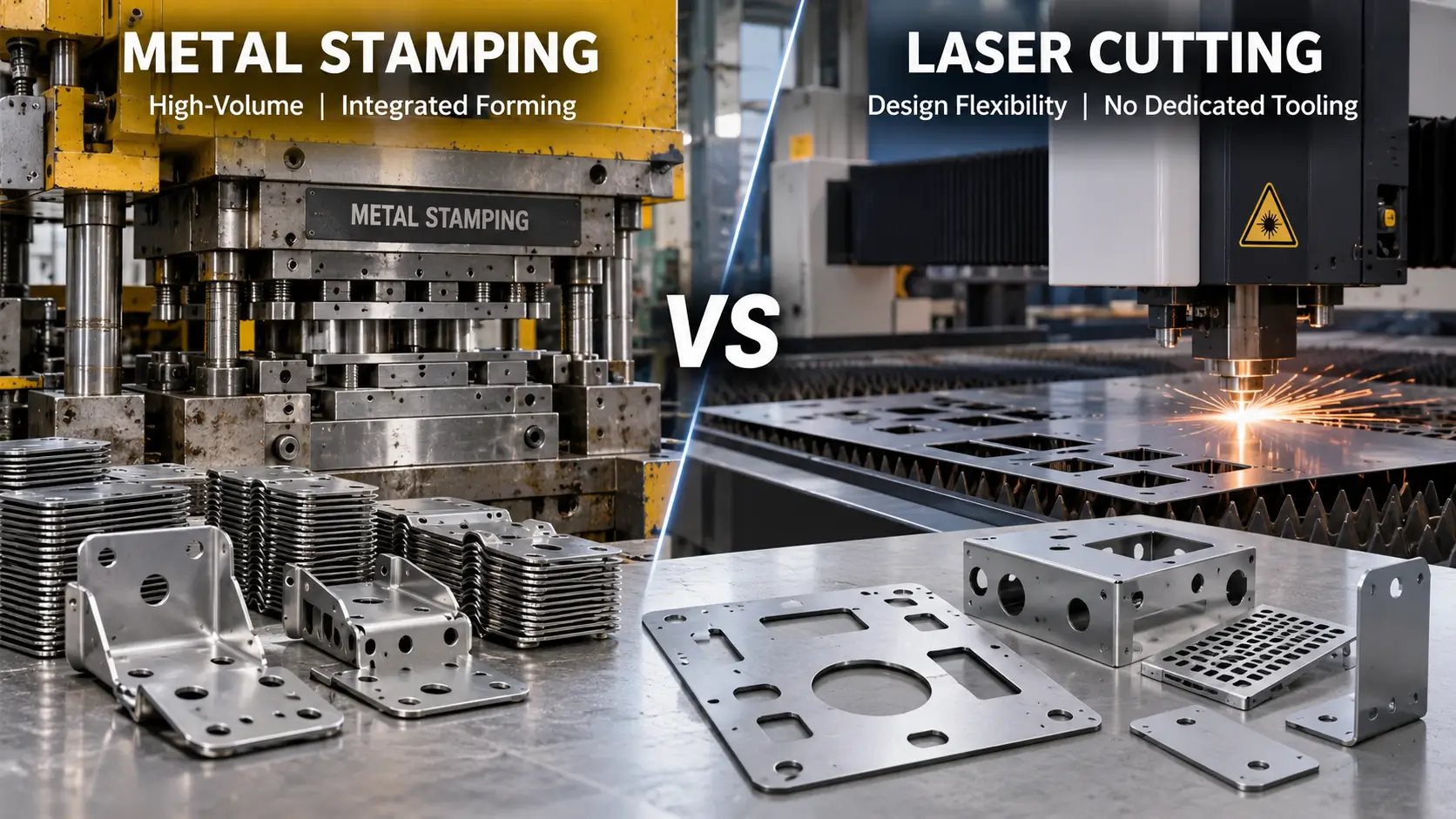
Selecting the correct manufacturing process for custom metal components depends on production volume, part geometry, material thickness, and unit cost targets. Stamping is one of several metalworking processes available to OEM buyers:
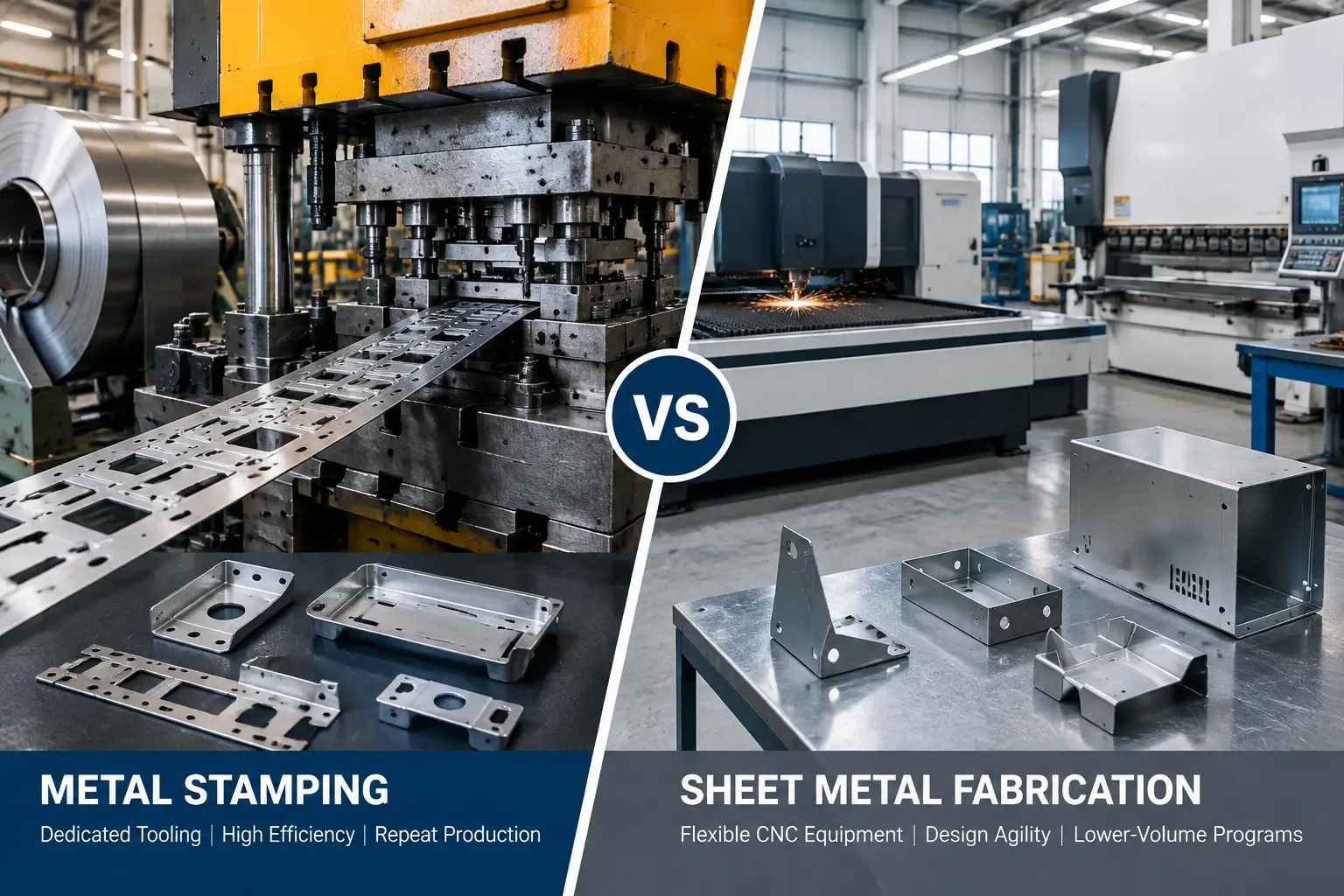
OEM buyers may need to compare metal stamping vs sheet metal fabrication based on part geometry, production volume, tooling requirements, and manufacturing needs.
| Manufacturing Method | Best Suited For | Key Advantages | Process Limitations |
|---|---|---|---|
| Metal Stamping | Medium-to-high volume repeated components | Low unit cost, fast cycle times, high repeatability | Initial tooling investment required |
| Laser Cutting | Low-volume prototypes, flat sheet profiles | No tooling cost, design flexibility | Slow cycle times, higher unit cost for volume |
| CNC Machining | Low-to-medium volume components | Suitable for complex machined geometries | Higher material waste, higher cost per part |
| Sheet Metal Fabrication | Large enclosures, low-volume assemblies | Low upfront tooling cost, suitable for large frames | Slower production speed, manual bending labor |
When geometric repeatability and production volumes are required, metal stamping generally offers an economical solution despite initial tooling development costs.
How OEM Buyers Should Choose a Medical Metal Stamping Manufacturer
Selecting a reliable OEM manufacturing partner for custom medical metal stamping parts requires an evaluation of technical capabilities, tooling experience, and quality protocols. OEM buyers should evaluate prospective suppliers using these key criteria:
- Tooling Design & Development Capabilities: Does the supplier possess hands-on tooling development expertise to evaluate part drawings and optimize die design for production?
- Material Processing Experience: Has the factory successfully processed similar metal grades and sheet thicknesses, particularly thin aluminum or steel alloys?
- Inspection & Quality Discipline: Does the factory perform First Article Inspections (FAI) and maintain process controls during production runs?
- Sample & Prototype Evaluation: Can the supplier produce prototype samples for physical verification prior to committing to full production tooling?
- Secondary Processing Coordination: Can the supplier coordinate required deburring, surface treatment, or packaging according to project specifications?
Medical Metal Stamping Supplier Evaluation Checklist
| Evaluation Area | OEM Buyer Consideration |
|---|---|
| Tooling Capability | Die design, tooling development, and engineering support capability |
| Material Experience | Experience processing similar alloys and material thickness ranges |
| Quality System | Inspection methods, drawing control, and production verification procedures |
| Prototype Support | Ability to produce samples for engineering evaluation before production |
| Secondary Operations | Capability to coordinate deburring, finishing, assembly, or packaging requirements |
Metal Stamp Factory Medical Metal Stamping Experience
Metal Stamp Factory was established in 2014 in Xiamen, China, focusing on custom metal stamping and precision hardware manufacturing. The founder of Metal Stamp Factory, Shengtong Chen, started learning mold making and metal stamping at the age of 17 and has accumulated more than 25 years of hands-on manufacturing experience in tooling development, metal stamping, and OEM production.
Our factory has produced custom thin aluminum stamped components used in orthopedic support products, including structural support components for ankle, arm, and hip bracing applications. These parts are processed from thin aluminum sheet stock, formed according to the customer’s drawings and component requirements, and delivered as bare stamped semi-finished components. Downstream processing steps, such as soft foam padding, textile attachment, and final packaging, are subsequently completed by the customer according to their end-product manufacturing requirements.
Factory Capabilities & Profile
- Established: 2014 in Xiamen, China.
- Founder Experience: Shengtong Chen started learning mold making and metal stamping at the age of 17 and has accumulated more than 25 years of hands-on manufacturing experience.
- Core Focus: Custom metal stamping, tooling development, and OEM production.
- Confirmed Medical Application: Thin aluminum stamped components for ankle, arm, and hip orthopedic support products.
- Supply Model: Bare semi-finished stamped components supplied for downstream processing and final assembly.
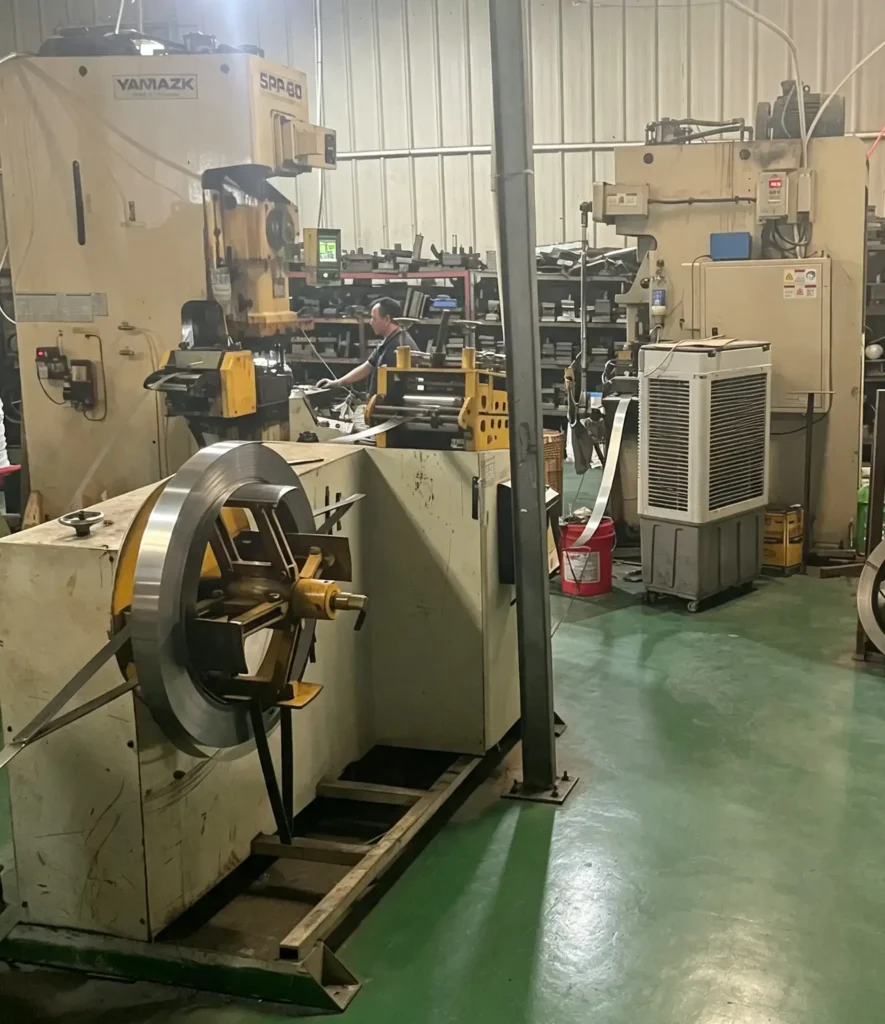
For thin aluminum orthopedic components, material thickness and forming behavior must be evaluated together. While thin aluminum sheet reduces overall component weight, it makes forming and dimensional stability more sensitive during bending operations. For this type of part, tooling clearance and forming sequences are evaluated directly against the customer’s engineering drawing to ensure consistent physical geometry.
Metal Stamp Factory supplies custom stamped metal components and semi-finished parts for OEM applications. We do not present these components as complete medical devices, allowing downstream processing, lamination, and final packaging to be managed separately by our customers in accordance with their production workflows.
Request a Quote for Medical Device Metal Stamping Parts
If you are sourcing custom metal stamping parts, structural brackets, housings, or semi-finished support components for your equipment line, Metal Stamp Factory provides OEM manufacturing services tailored to your technical requirements.
To receive an engineering review and quotation, please prepare and provide the following project information:
- 2D & 3D Engineering Drawings: Indicating dimensions, bend radii, tolerances, and critical feature callouts.
- Material Specifications: Material grade (e.g., Stainless Steel, Aluminum) and required sheet thickness.
- Target Quantities: Estimated batch sizes and annual volume requirements.
- Secondary Process Requirements: Any necessary deburring, surface finishing, or special packaging needs.
- Physical Samples (If Available): Existing part samples to assist in tooling evaluation and dimensional verification.
Frequently Asked Questions About Medical Device Metal Stamping Parts
What are medical device metal stamping parts?
Medical device metal stamping parts are custom metal components—such as brackets, housings, support plates, and structural hardware—manufactured by stamping, punching, bending, and forming metal sheet or coil stock using specialized press tooling.
What materials are commonly used for medical metal stamping?
Common materials include stainless steel for corrosion resistance and strength, aluminum alloys for lightweight structural and support parts, and steel for structural framing. Material selection depends on mechanical strength requirements, formability, and application environments.
Can aluminum be used for medical device metal stamping?
Yes. Aluminum is widely used for medical hardware components where low weight, good formability, and structural support are required. Metal Stamp Factory has produced thin aluminum stamped components used in orthopedic support products for ankle, arm, and hip applications.
Is progressive die stamping suitable for medical device parts?
Progressive die stamping is suitable for medium-to-high volume parts with consistent geometries. For lower-volume parts or flat brackets, single-stage punch dies or manual press operations may prove more economical.
What should OEM buyers provide when requesting medical metal stamping parts?
OEM buyers should provide detailed 2D/3D technical drawings, material specifications, sheet thickness, dimensional tolerances, target production quantities, required secondary finishing operations, and any physical samples available for manufacturing evaluation.