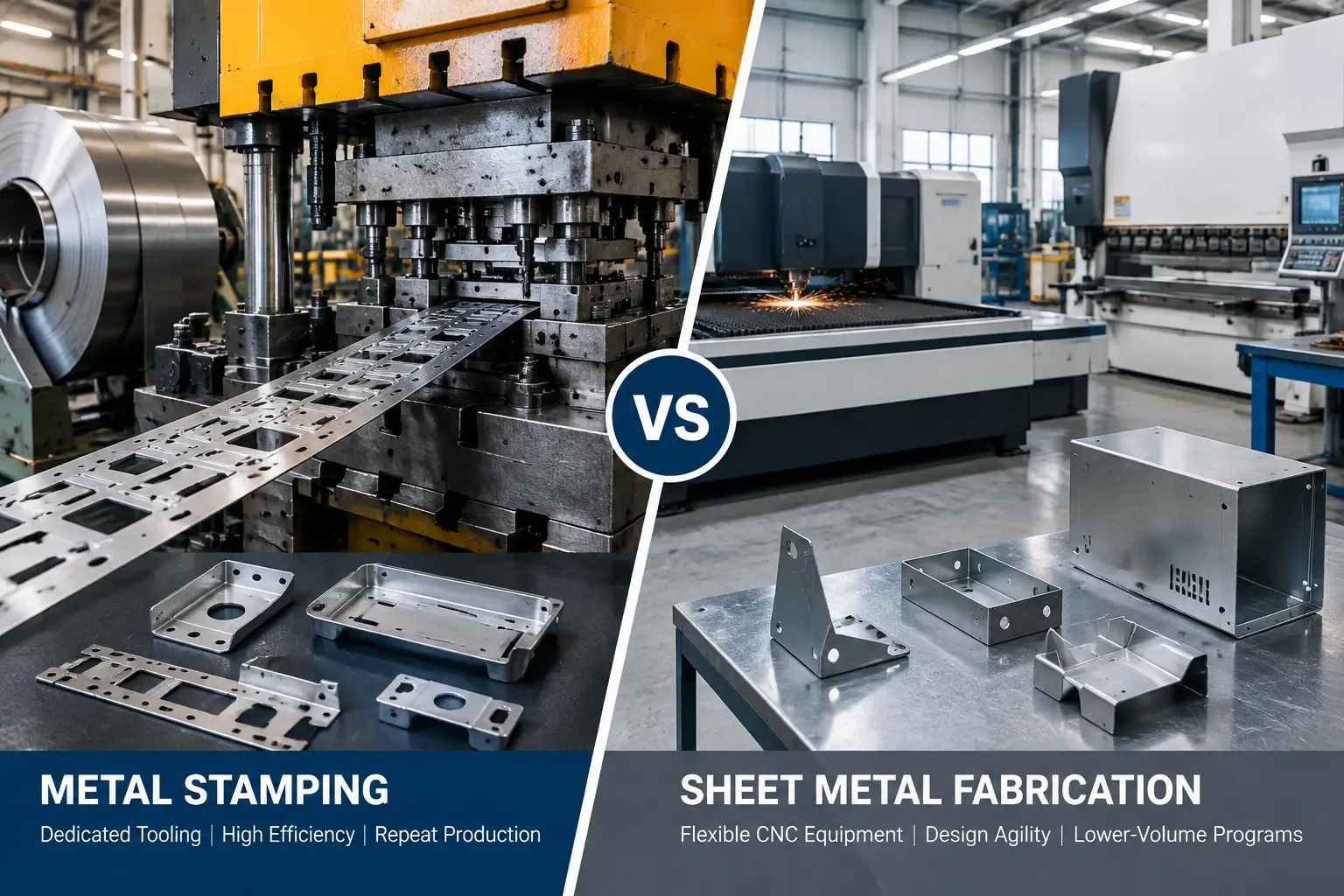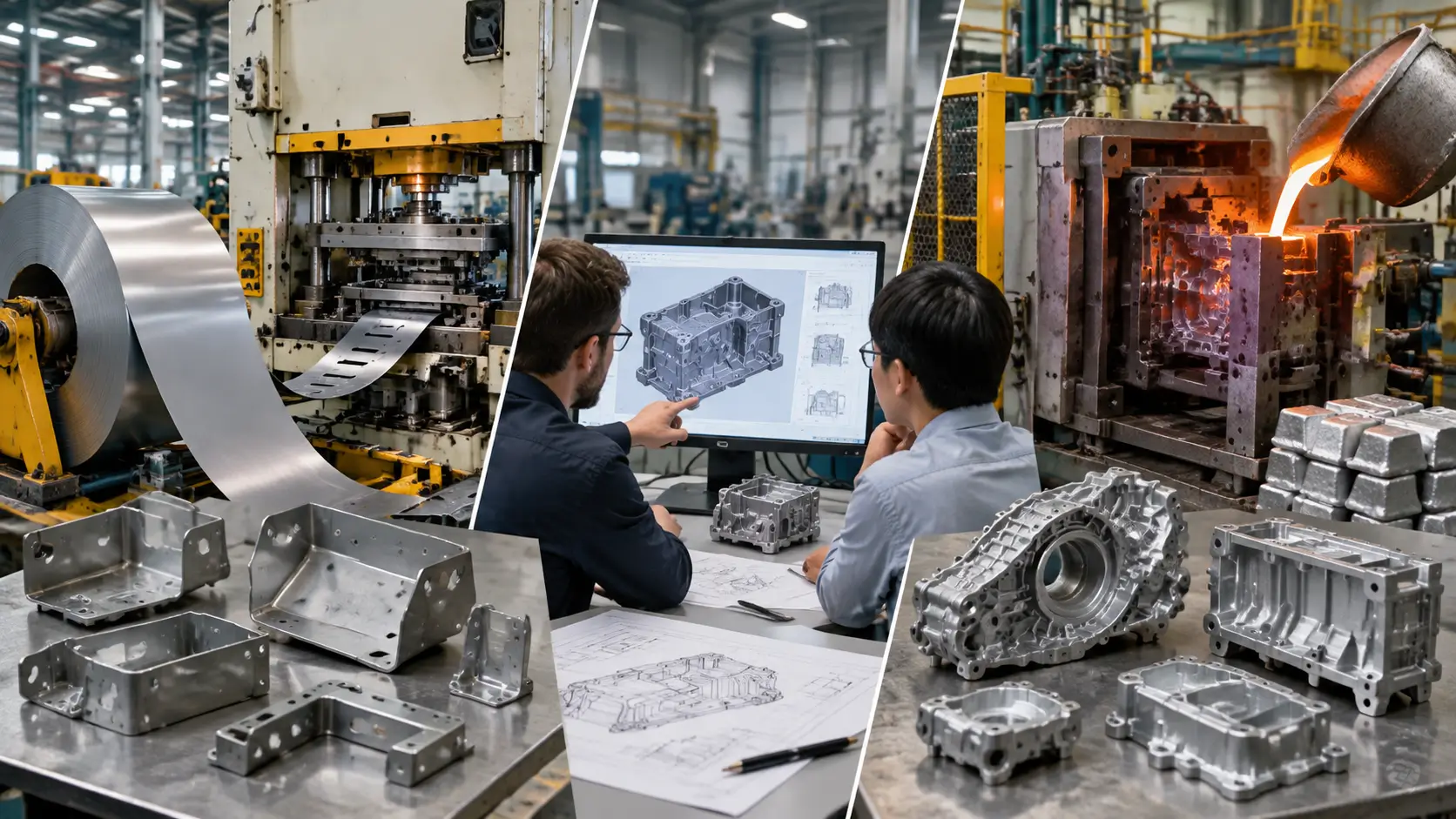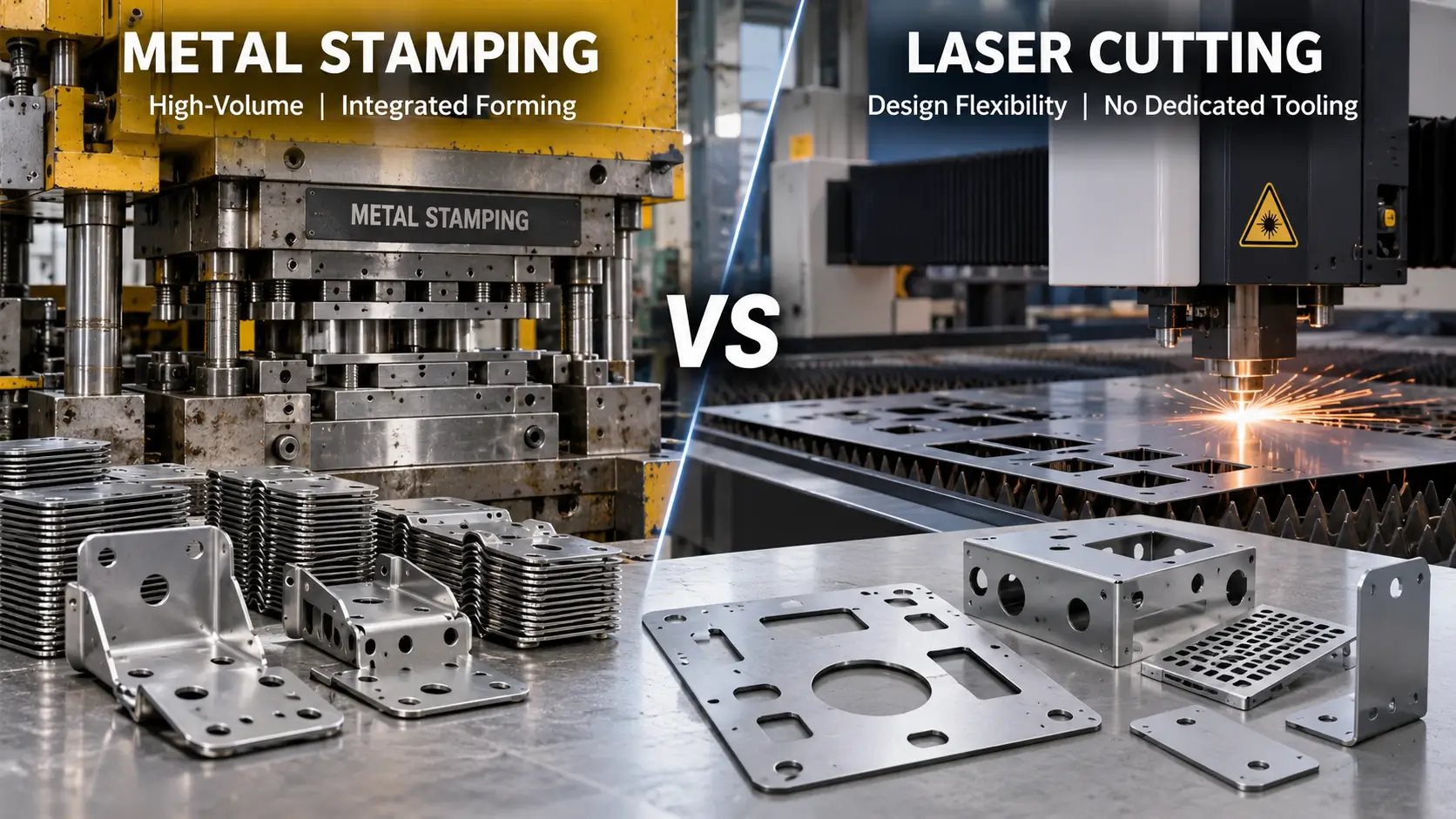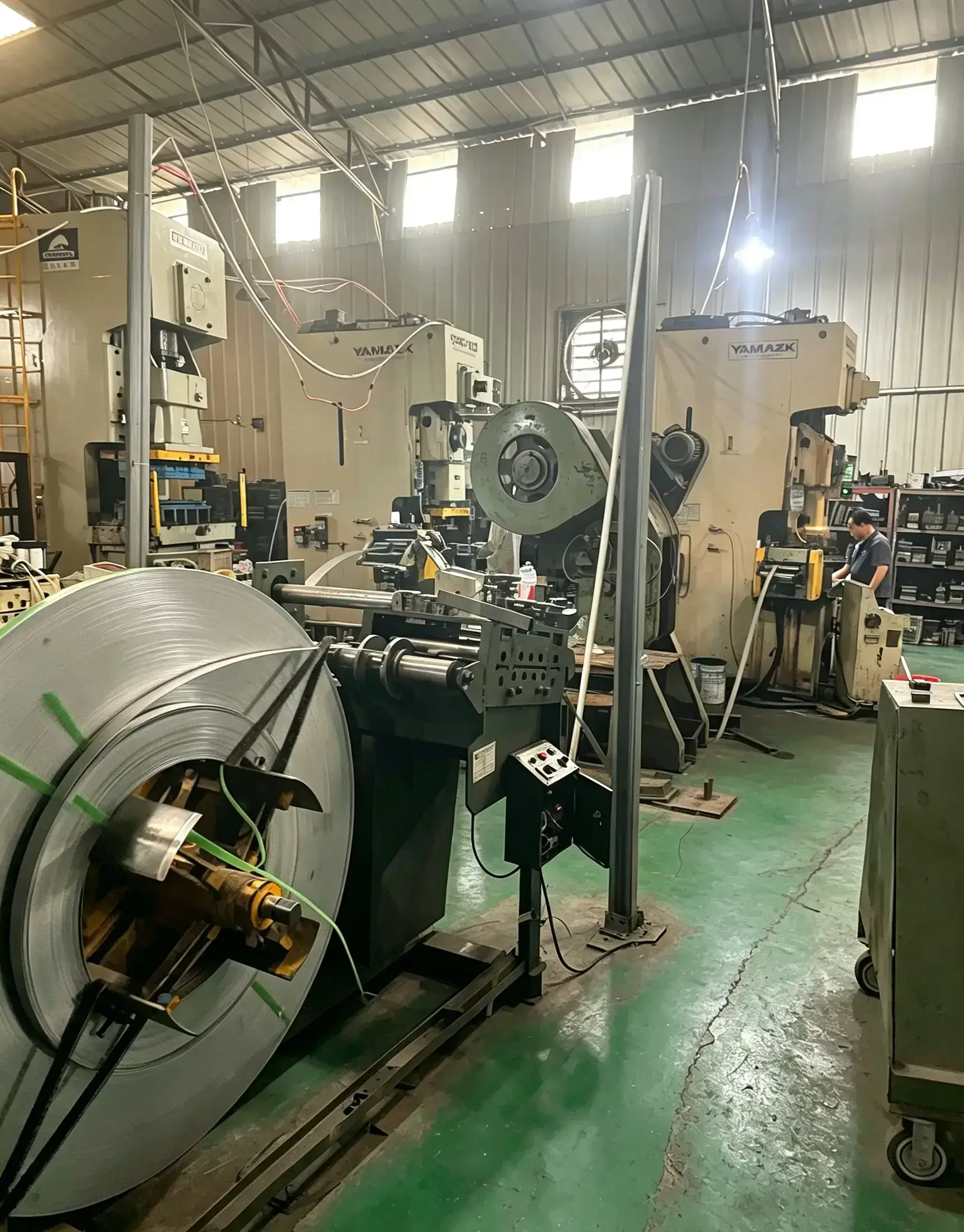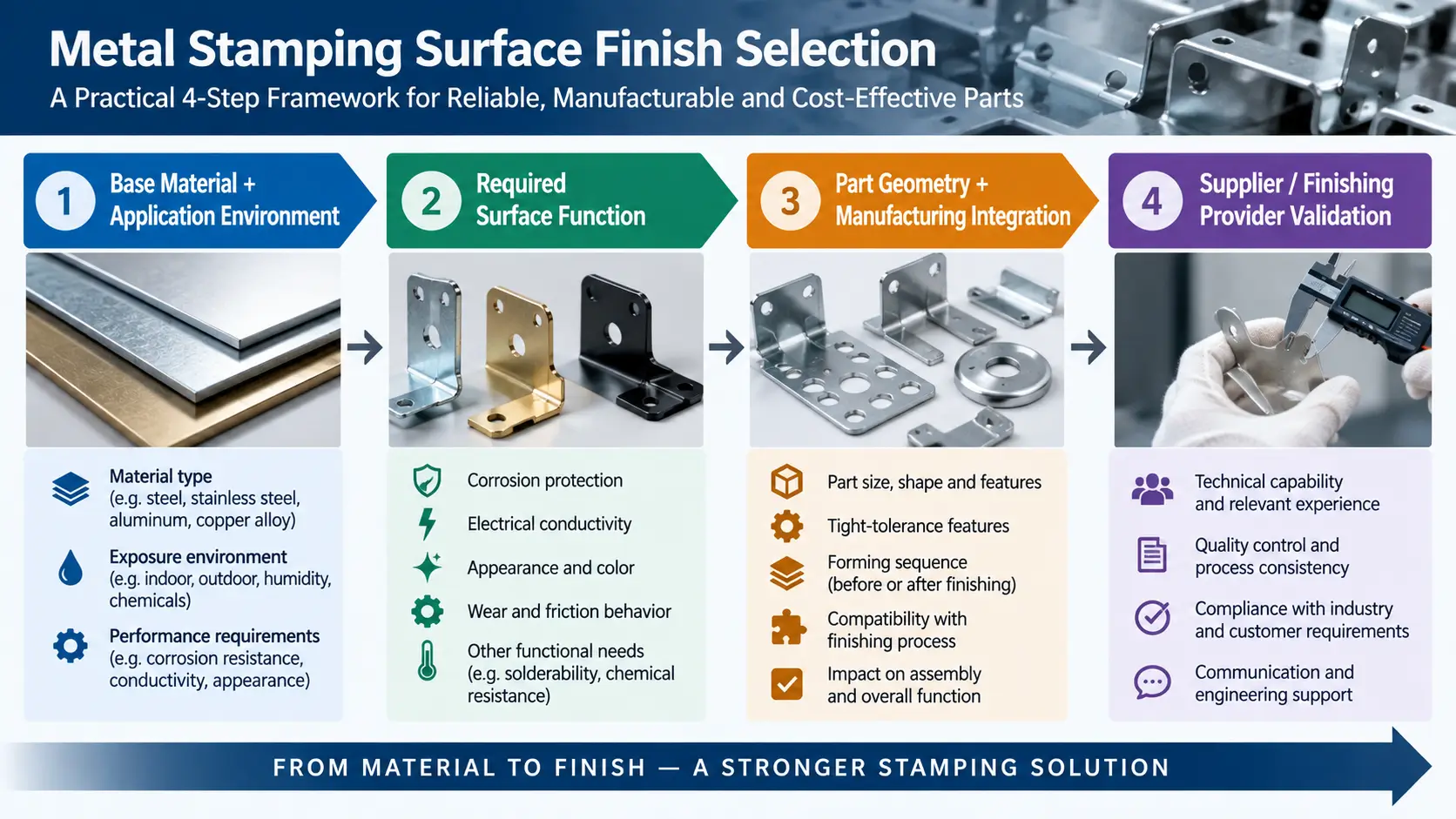
Answer Summary: Automotive metal stamping parts include brackets, battery cover plates, mounting hardware, reinforcement components, and structural housings — produced through progressive die stamping, deep drawing, and secondary operations like welding and plating. This guide covers materials, tooling considerations, and two real OEM case studies: a Q235 steel battery cover plate and a heavy-duty truck bearing housing.
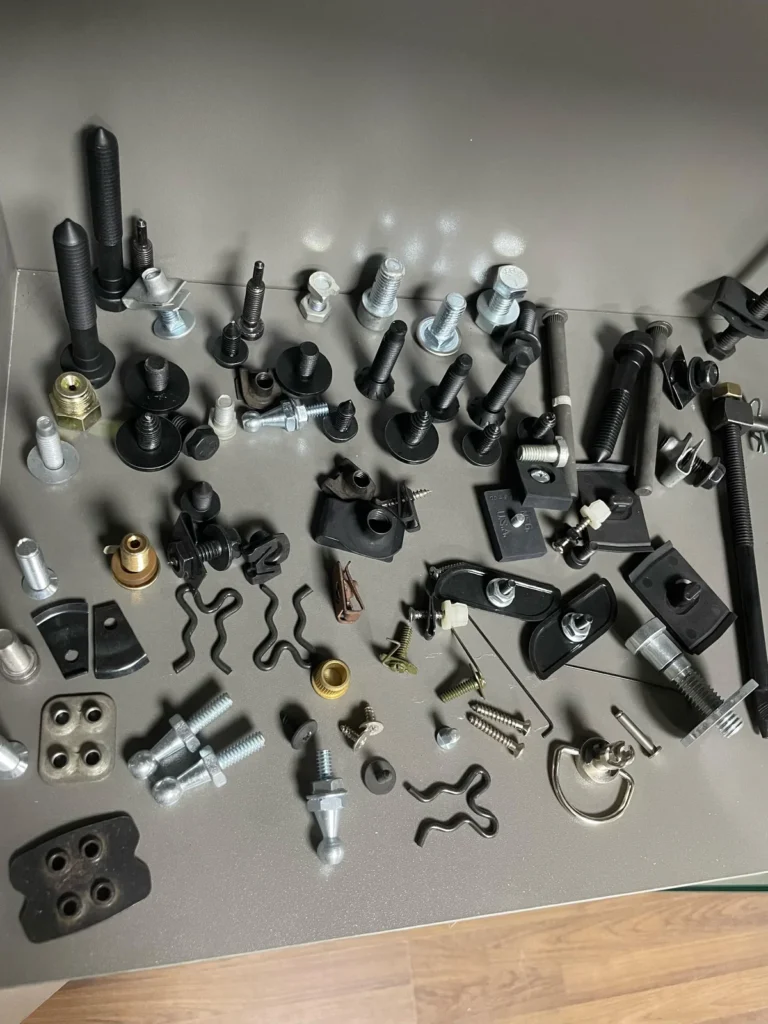
What Are Automotive Metal Stamping Parts?
Automotive metal stamping parts are components formed from coil or sheet metal using a stamping press and die — through operations like punching, bending, and forming — rather than machined or cast. Metal stamping is one of the standard manufacturing methods for automotive components because it delivers consistent dimensions across high production volumes at a controlled per-part cost, which is exactly what automotive supply chains need.
Common Automotive Parts Made by Metal Stamping
Common applications for automotive metal stamping include:
Structural and mounting brackets
Battery cover plates and enclosures
Reinforcement components
Terminals and electrical connectors
Housings and structural hardware
Clips and fasteners
Our actual production experience includes battery cover plates, structural brackets, and deep-drawn housing components — including motorcycle applications like our Motorcycle Parts Metal Stamping China case, where we produce color zinc-plated brackets for powersports applications.
Automotive Metal Stamping Parts Classification Guide
| Component Type | Examples | Main Function |
|---|---|---|
| Structural Brackets | Mounting brackets, reinforcement brackets | Support and positioning |
| Battery Components | Battery cover plates, protective housings | Protection and enclosure |
| Deep Drawn Components | Bearing housings, formed shells | Complex formed structures |
| Electrical Components | Terminals, connectors | Current connection |
| Hardware Components | Clips and fasteners | Assembly support |
Materials Used for Automotive Metal Stamping Parts
Material choice for automotive parts depends on strength, formability, and cost requirements:
- Q235 / carbon steel — cost-effective, good formability, common for structural brackets and cover plates
- Stainless steel — used where corrosion resistance matters
- Galvanized steel — adds corrosion protection for parts exposed to the elements
- Aluminum — used where weight reduction matters
- Copper / brass — for electrical terminals and connectors
See our full metal stamping materials guide for how these compare on strength, formability, and cost. Material specifications may also reference standards published by ASTM.
Automotive Metal Stamping Material Selection Guide
| Material | Typical Automotive Applications | Main Advantage |
|---|---|---|
| Q235 / Carbon Steel | Brackets, cover plates, structural components | Cost-effective with good formability |
| Galvanized Steel | Exterior brackets and exposed components | Corrosion protection |
| Stainless Steel | Corrosion-resistant components | Environmental durability |
| Aluminum | Lightweight automotive components | Weight reduction |
| Copper / Brass | Terminals and electrical connectors | Electrical conductivity |
Automotive Metal Stamping Processes
Automotive parts typically go through several stamping operations — blanking, punching, bending, forming, and deep drawing — often combined within a single die. These processes are used specifically because they deliver repeatable dimensions at the volumes automotive production requires. For the complete production sequence from drawing to mass production, see our full metal stamping process guide.
Automotive Metal Stamping Manufacturing Workflow
| Manufacturing Stage | Key Activities |
|---|---|
| Engineering Review | Drawing review, DFM analysis, process planning |
| Material Preparation | Coil/sheet verification and material confirmation |
| Tooling Development | Die design, machining, trial production |
| Stamping Operations | Blanking, punching, bending, forming, deep drawing |
| Secondary Processing | Welding, plating, coating, assembly |
| Inspection | Dimensional and visual verification |
Progressive Die Stamping for High-Volume Automotive Parts
For many higher-volume automotive parts, progressive die stamping can be a cost-effective approach — a continuous metal strip moves through multiple stations in a single die, with each station performing a different operation, until a finished part exits at the end. This keeps material utilization high and tooling cost spread across a large unit count, which matters for automotive programs with ongoing repeat orders.
Automotive Stamping Tooling and DFM Considerations
Tooling decisions for automotive parts start at the DFM (Design for Manufacturability) stage, not after the design is finalized. Our engineering team reviews:
- Material thickness and how it affects forming force
- Bend radius relative to material thickness
- Die clearance requirements
- Forming sequence and station layout
- Material utilization across the strip layout
Getting these right before tooling starts avoids rework later — a die designed around the wrong bend allowance or forming sequence causes problems that are expensive to fix once the tool is built.
Automotive Stamping DFM Review Checklist
| DFM Review Area | Engineering Consideration |
|---|---|
| Material Thickness | Confirm forming force and tooling requirements |
| Bend Radius | Prevent cracking and improve forming reliability |
| Die Clearance | Control cutting quality and tool life |
| Forming Sequence | Reduce deformation and improve process stability |
| Material Utilization | Optimize strip layout and reduce waste |
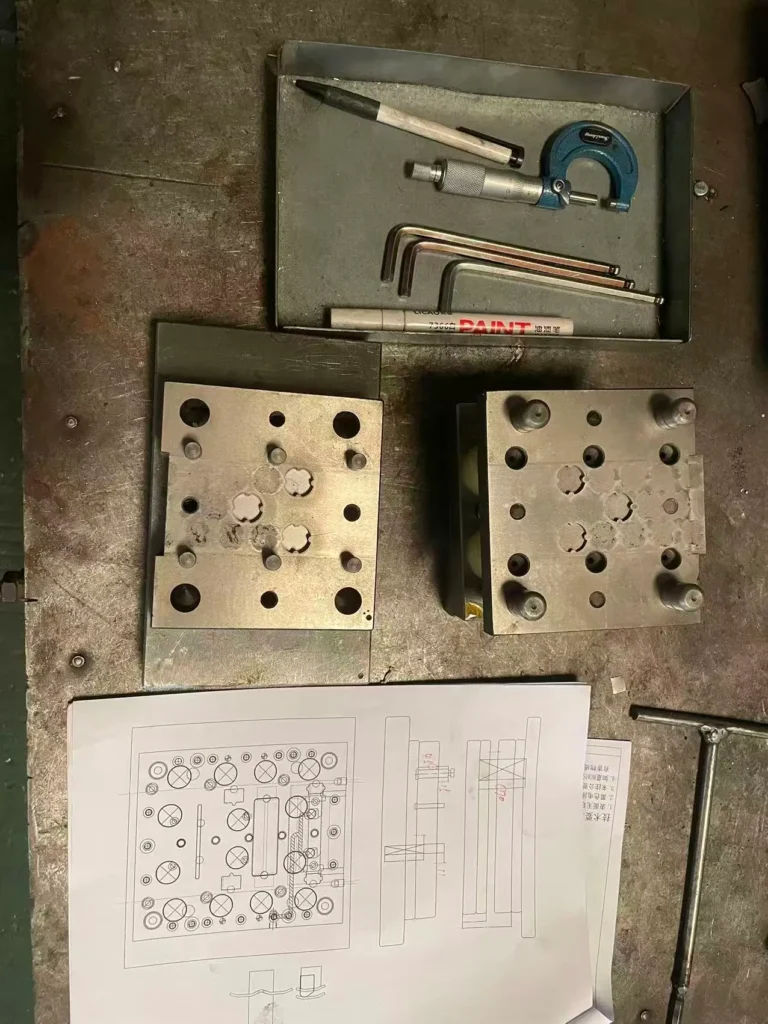
Secondary Operations for Automotive Stamped Parts
Many automotive stamped parts need more than one process before they’re finished. Based on our real production experience, this includes:
- Projection welding
- Zinc plating
- Powder coating
- Plastic overmolding
- Riveting
Our heavy-duty truck bearing housing case (below) is a good example — deep drawing and stamping are just the first two steps in a five-process sequence.
Secondary Processing Options for Automotive Stamped Parts
| Secondary Process | Typical Purpose |
|---|---|
| Projection Welding | Join stamped components |
| Zinc Plating | Improve corrosion resistance |
| Powder Coating | Protective and decorative finish |
| Plastic Overmolding | Add insulation or functional features |
| Riveting | Mechanical assembly connection |
Case Study: Q235 Steel Lithium Battery Cover Plate
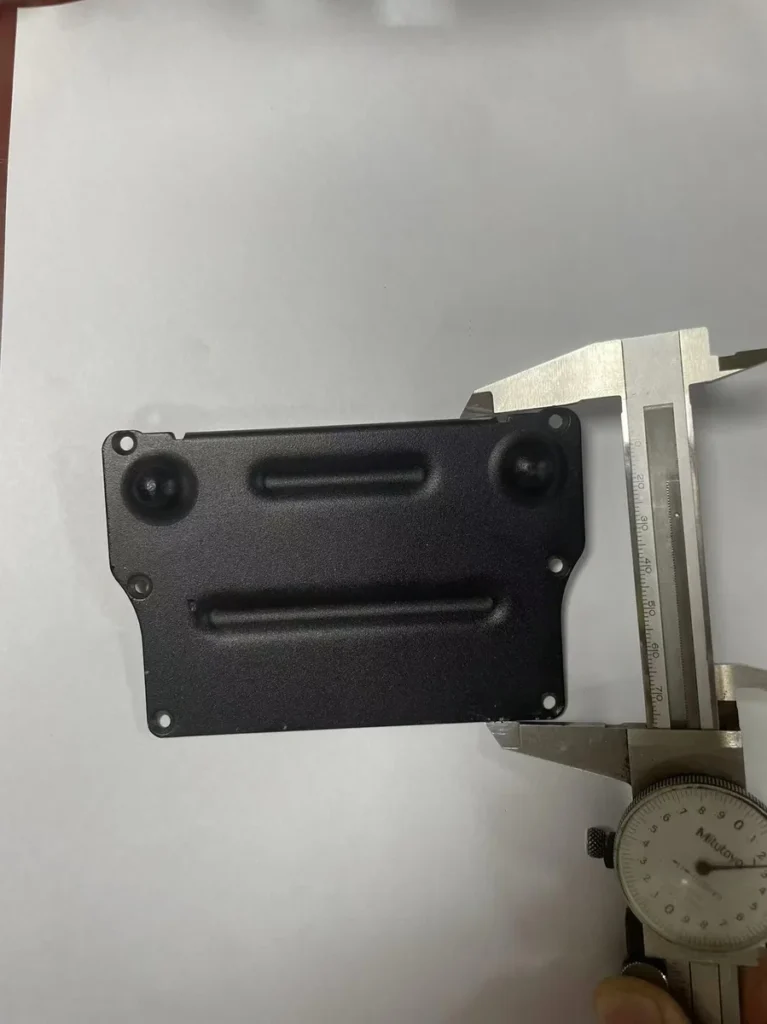
One of our published case studies covers a battery cover plate stamped from Q235 steel and finished with black powder coating. The part moves from flat coil stock through stamping and forming, then through a black powder coat finish — a process combination common to automotive and new-energy applications where cover plates need to be dimensionally consistent and hold a durable painted finish. Read the full case study: Lithium Battery Cover Plate Stamping: Q235 Steel with Black Powder Coat Finish.
Case Study: Heavy-Duty Truck Bearing Housing
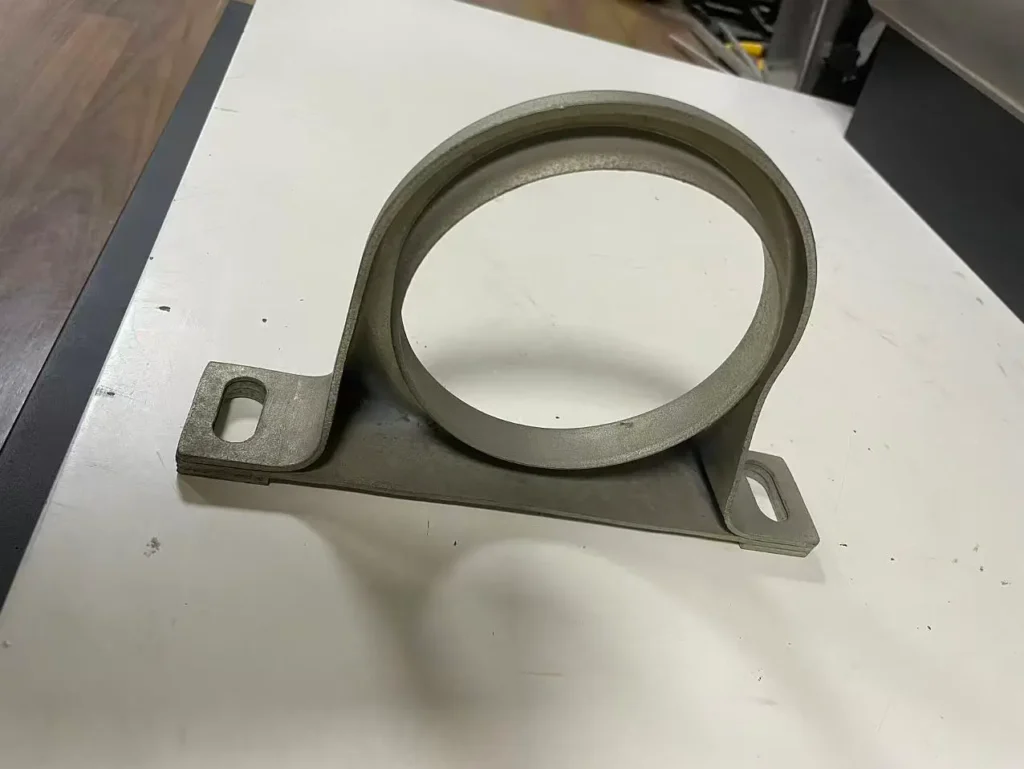
This is one of the most complete examples of what automotive OEM manufacturing actually involves. The part starts as a flat steel sheet and goes through:
- Deep drawing — pulling the flat blank into the cylindrical housing shape
- Stamping — forming the remaining features
- Projection welding — joining components together
- Zinc plating — corrosion protection
- Plastic overmolding — the final finishing step
Each stage depends on the one before it — the material and forming approach in the deep drawing stage has to account for what the welding and plating stages will require later. This is a realistic picture of automotive stamped-part manufacturing: the stamped part is rarely the finished product on its own.
Automotive Stamping Parts for EV and New Energy Applications
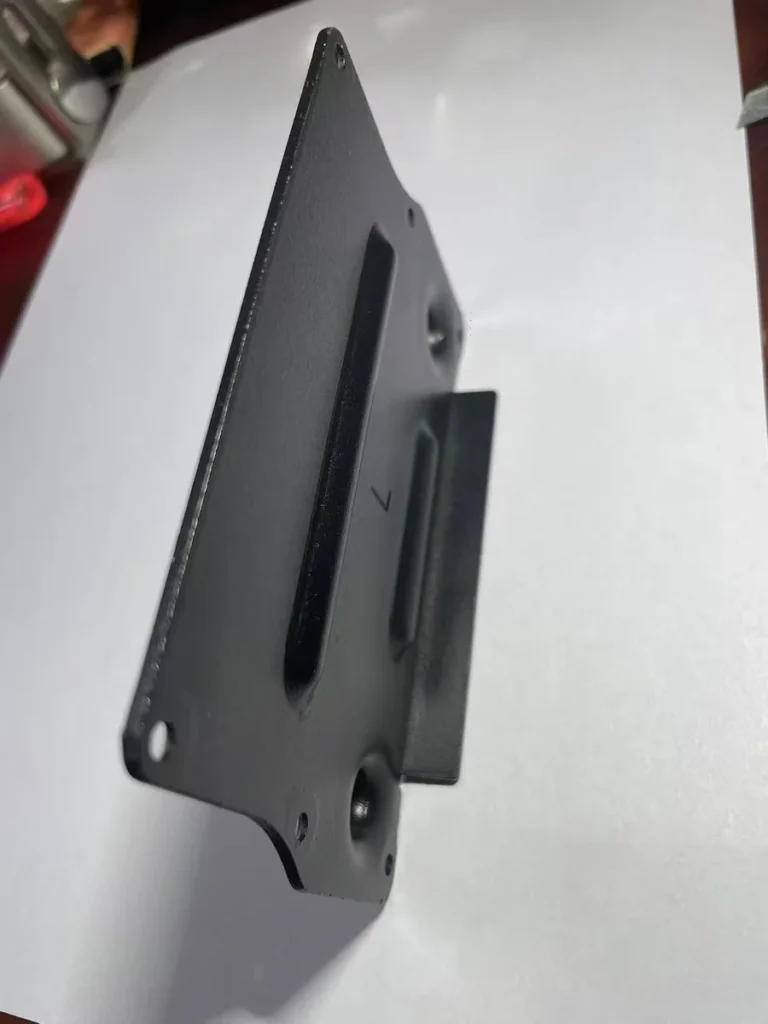
Stamped components are also used in new-energy vehicle manufacturing, including battery covers, conductive components, and protective brackets. Our Q235 lithium battery cover plate is one real example of this application. for other new-energy-related parts, we’ll add those case studies here as well.
Automotive Stamping Quality Control
Our quality process for automotive stamped parts includes:
- Incoming material verification against the mill test certificate
- First-piece inspection before a production run continues
- Periodic dimensional inspection using calipers
- Visual and burr inspection
- Final inspection before shipment
We describe this process honestly rather than listing certifications we don’t hold — if your project requires a specific automotive quality system certification, tell us upfront so we can confirm whether we’re the right fit.
How OEM Buyers Choose an Automotive Stamping Supplier
When evaluating a supplier for automotive stamped parts, look at material capability, tooling experience, forming capability, quality control process, whether they handle secondary operations in-house or through partners, and how clearly they communicate through sample approval and production. We cover the complete evaluation framework in our Buyer Guide: how to choose a metal stamping manufacturer.
Automotive Stamping Supplier Evaluation Checklist
| Evaluation Area | What OEM Buyers Should Verify |
|---|---|
| Material Capability | Experience with required steel, aluminum, and alloys |
| Tooling Experience | Progressive die and forming capability |
| Manufacturing Process | Stamping, welding, coating, and assembly capability |
| Quality Control | Inspection process and production verification |
| Engineering Communication | DFM feedback and sample approval support |
Automotive Metal Stamping RFQ Process
A typical project moves through these stages:
Drawing or sample → Material review → DFM → Tooling → Trial production → Sample approval → Mass production
For many custom progressive die projects, tooling may take approximately 35–40 days, depending on part complexity and die structure — we confirm a realistic timeline during the drawing review stage rather than quoting a fixed number for every project.
Automotive Stamping RFQ Information Checklist
| Required Information | Why It Matters |
|---|---|
| Part Drawing / CAD | Defines geometry and tooling requirements |
| Material Specification | Determines forming feasibility |
| Production Volume | Supports tooling strategy |
| Critical Tolerances | Defines quality requirements |
| Secondary Operations | Plans complete manufacturing process |
Metal Stamp Factory Automotive Stamping Capabilities
Metal Stamp Factory was established in 2014 in Xiamen, China, focusing on custom metal stamping and precision hardware manufacturing. The founder of Metal Stamp Factory, Shengtong Chen, started learning mold making and metal stamping at the age of 17 and has accumulated more than 25 years of hands-on manufacturing experience in tooling development, metal stamping, and OEM production.
Our automotive-related work includes battery cover plates, structural brackets, and deep-drawn housing components — much of it supplied through domestic Tier 1 manufacturers and trading partners, a common arrangement in China’s manufacturing supply chain. Learn more about our custom metal stamping services, or browse more real production examples in our case studies.
Ready to start your automotive stamping project? Send us your drawing, material requirement, and estimated quantity.
Automotive Metal Stamping Parts FAQ
What automotive parts can be made by metal stamping? Common automotive stamped parts include structural and mounting brackets, battery cover plates, reinforcement components, terminals, housings, and clips — anywhere consistent, high-volume metal components are needed.
What materials are commonly used for automotive stamped parts? Q235 and carbon steel are common for structural brackets and cover plates; stainless and galvanized steel add corrosion resistance; aluminum reduces weight; copper and brass are used for electrical terminals and connectors.
Is progressive die stamping suitable for automotive parts? Yes — progressive die stamping is well-suited to high-volume automotive parts, since a continuous strip moves through multiple stations in one die, keeping tooling cost and material utilization efficient across large production runs.
Can automotive stamped parts be welded or surface treated? Yes — many automotive stamped parts require secondary operations such as projection welding, zinc plating, powder coating, or plastic overmolding after stamping, as shown in our heavy-duty truck bearing housing case study.
How do I choose an automotive metal stamping supplier? Evaluate material capability, tooling experience, forming capability, quality control process, and whether they handle secondary operations in-house. See our full Buyer Guide for the complete framework.