If you’ve sourced motorcycle parts made through metal stamping in China before, you already know the fear. You’ve either lived through it, or you’ve heard about it from someone else in the trade:
1.A supplier quotes low, then quietly swaps material grade or skips a finishing step to protect their margin.
2.The factory doesn’t really understand export documentation, packaging standards, or what “international quality” actually means — and every email back and forth adds a week to your timeline.
3.Even when the parts arrive fine, you look at your landed cost and realize you have no room left to compete, because ten other importers are selling the exact same bracket.
These three problems — quality risk, poor communication/export readiness, and thin margins — are the real reasons sourcing motorcycle parts from China feels like gambling. This article is about how we build XB1 color zinc-plated motorcycle brackets at our own factory in Amoy (Xiamen), and why doing it this way removes most of that risk.
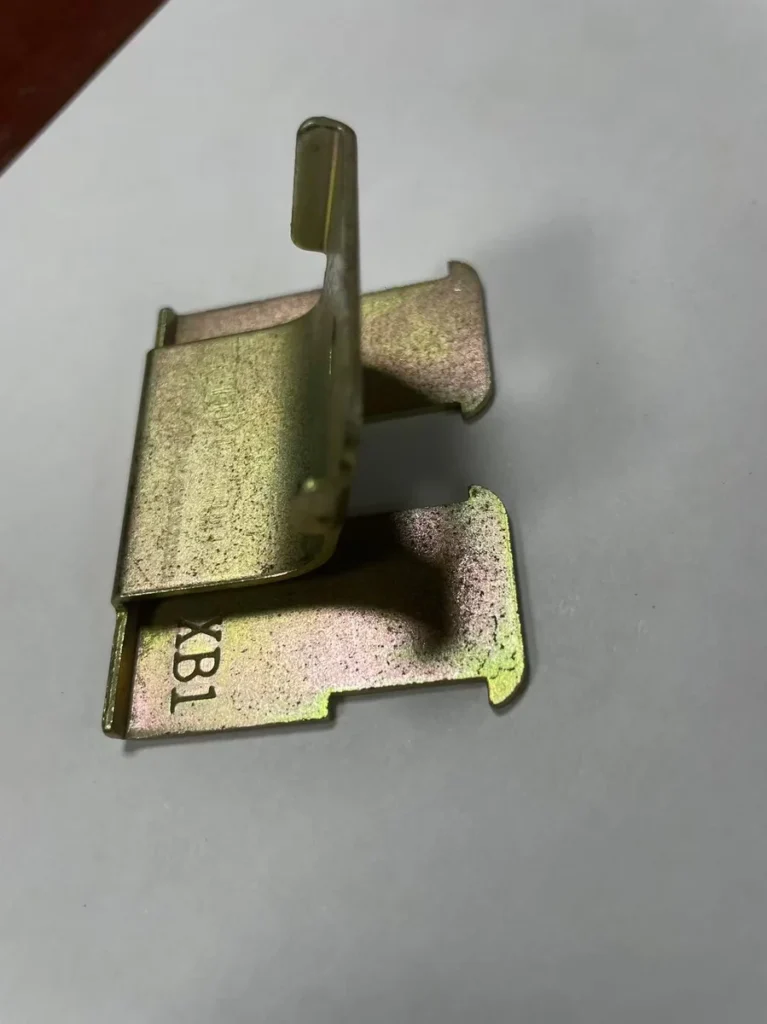
Finished XB1 motorcycle bracket in color zinc plating, ready for export packaging.
Who’s Actually Making Your Parts?
A lot of “manufacturers” you find online are trading companies that outsource to whoever is cheapest that month. That’s exactly the setup that leads to inconsistent quality — this batch is fine, the next isn’t, and there’s no one accountable in between.
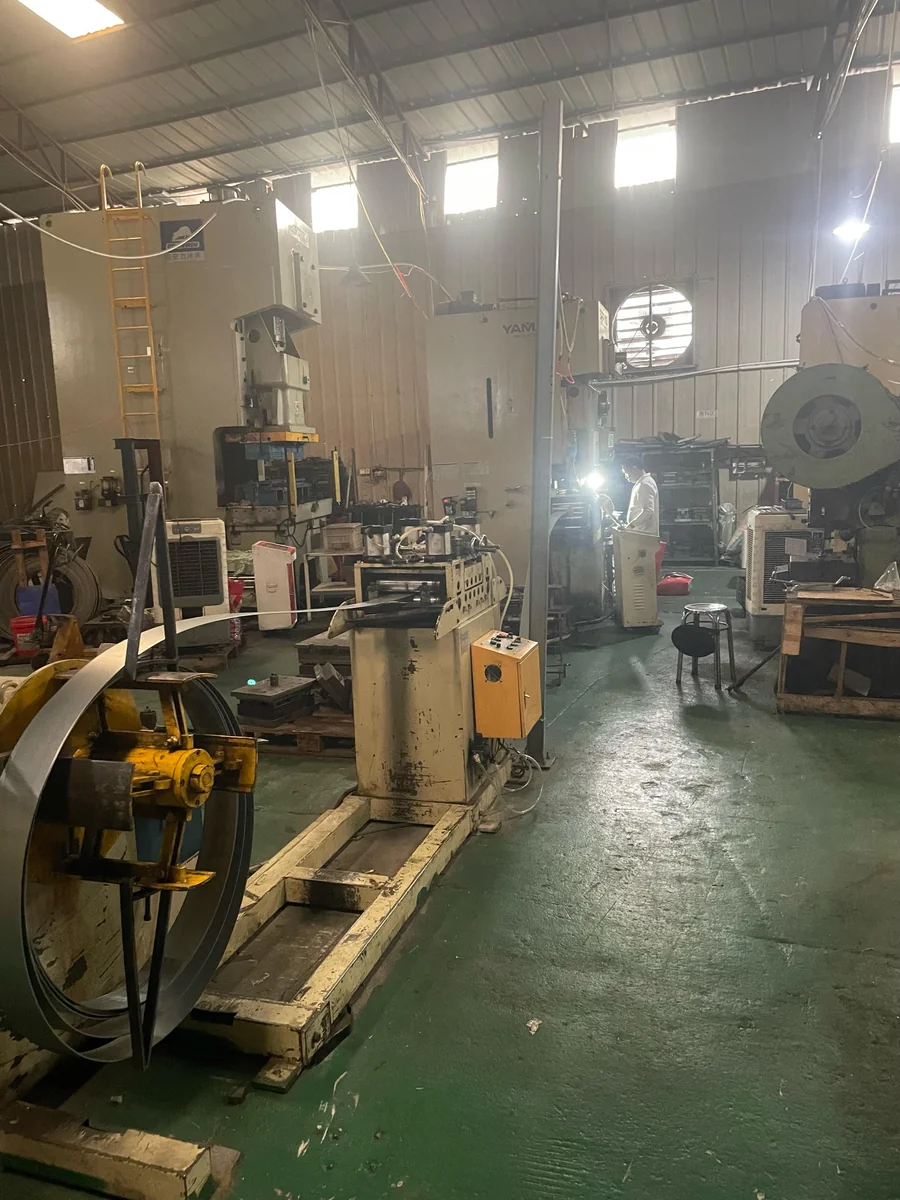
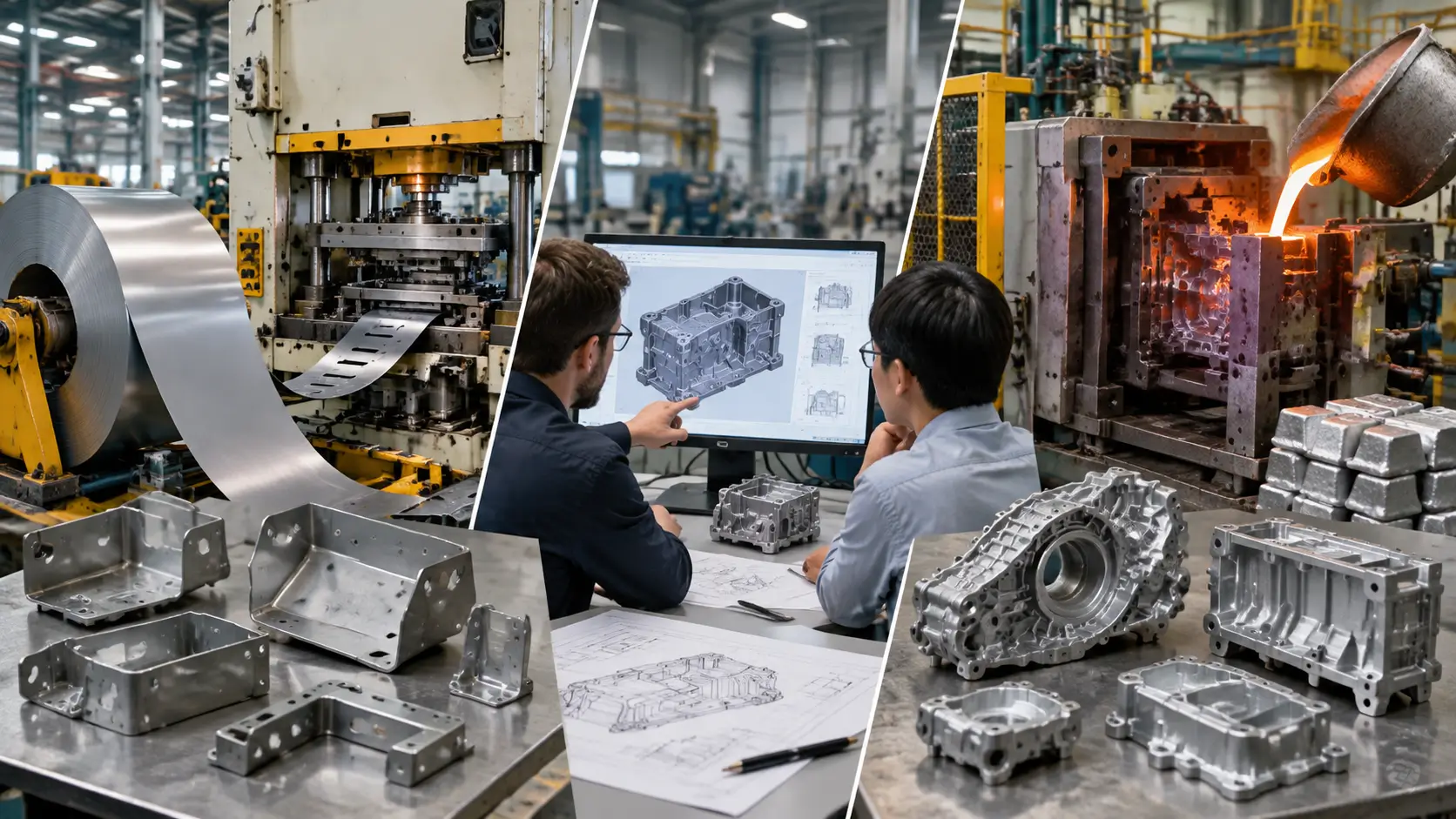
We are a real stamping factory in Amoy, Fujian, running our own presses from 16 to 400 tons, with in-house tooling design and die-making. When you order the XB1 bracket, it’s made on our floor, on our dies, checked by our own QC — not subcontracted out to a shop we’ve never visited.
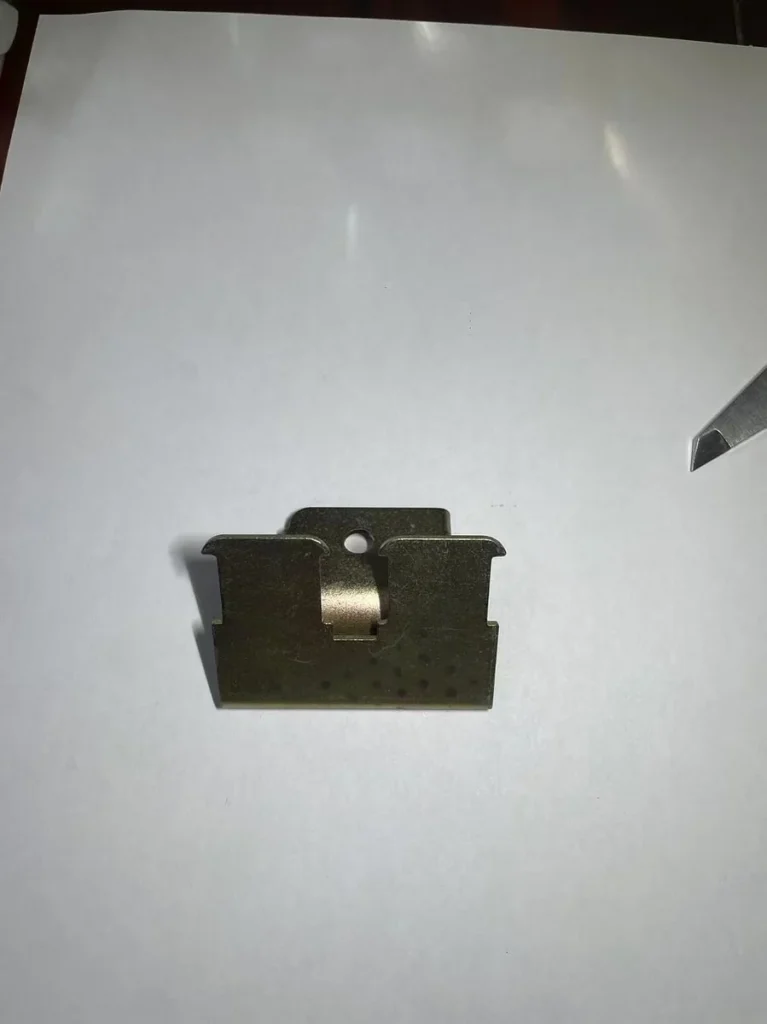
Progressive die setup — the XB1 bracket is blanked, bent, and formed in one continuous pass.
The XB1 Bracket: A Real Production Case
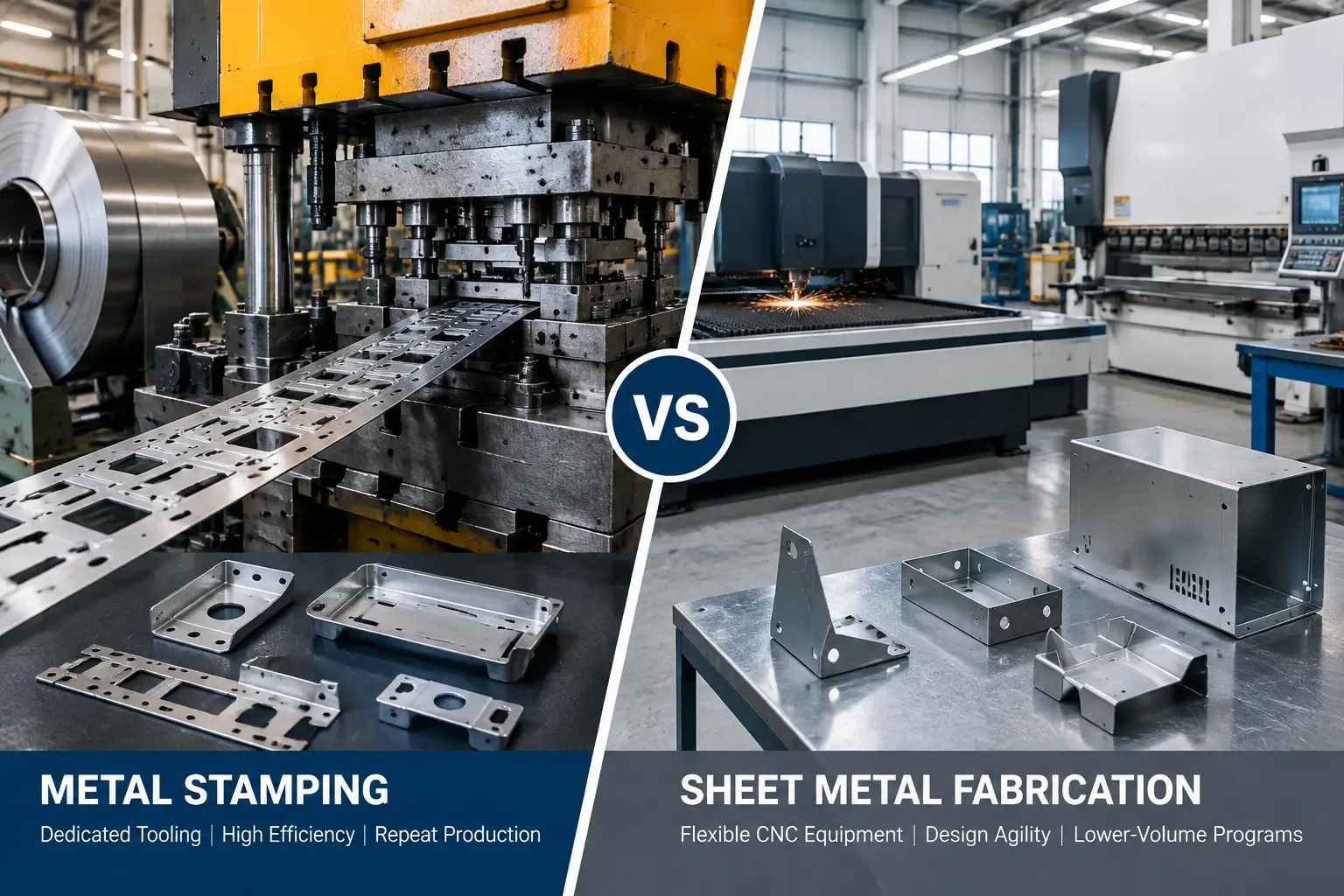
The XB1 motorcycle bracket is stamped and formed using a progressive die — meaning blanking, piercing, and bending all happen in one continuous stroke of the press, instead of multiple separate operations. This matters for two reasons buyers actually care about:
1.Consistency — every bracket comes off the die the same way, part after part, batch after batch.
2.Cost — fewer manual handling steps means a lower cost per piece at volume, without cutting corners on material or finish.
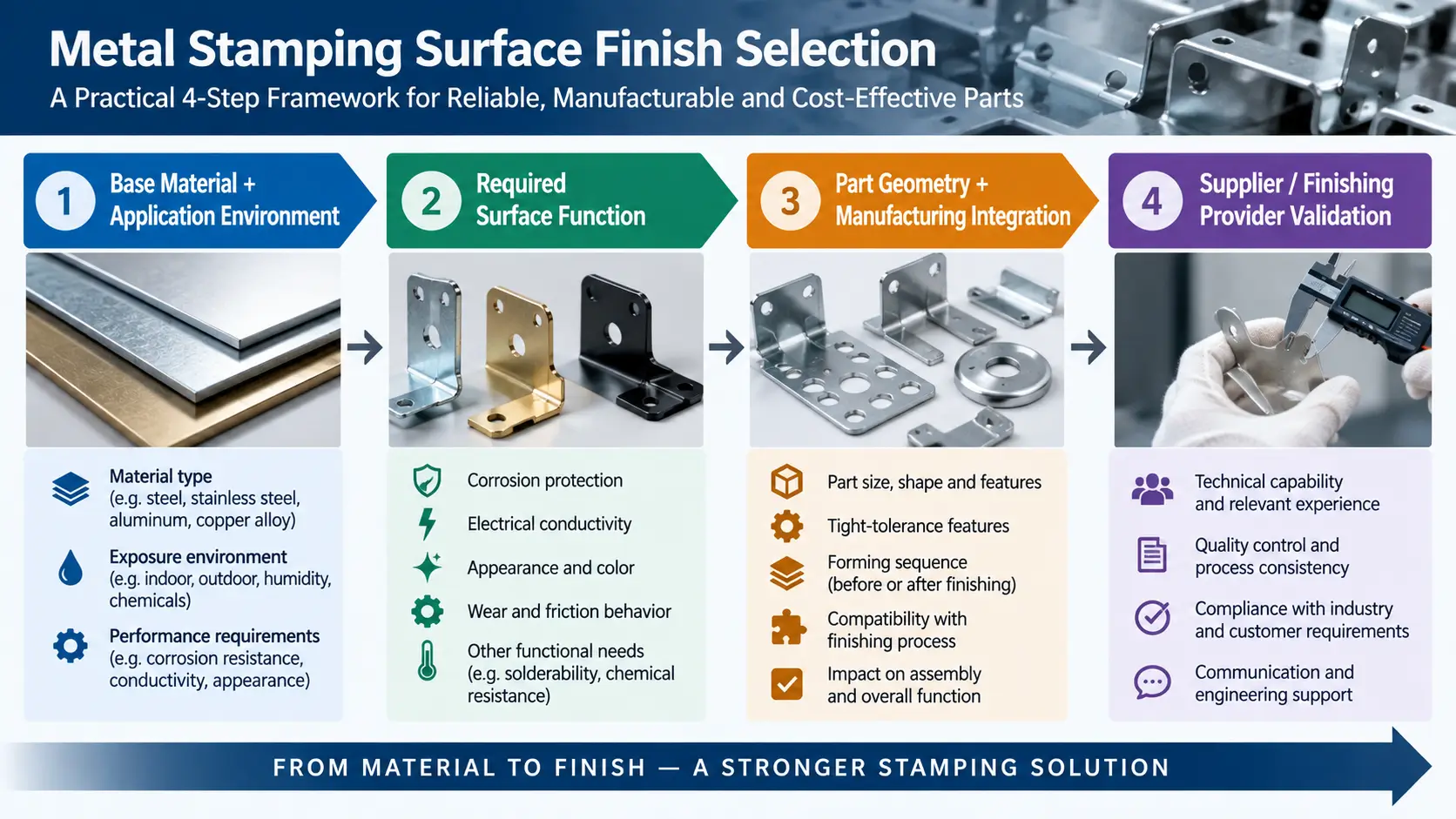
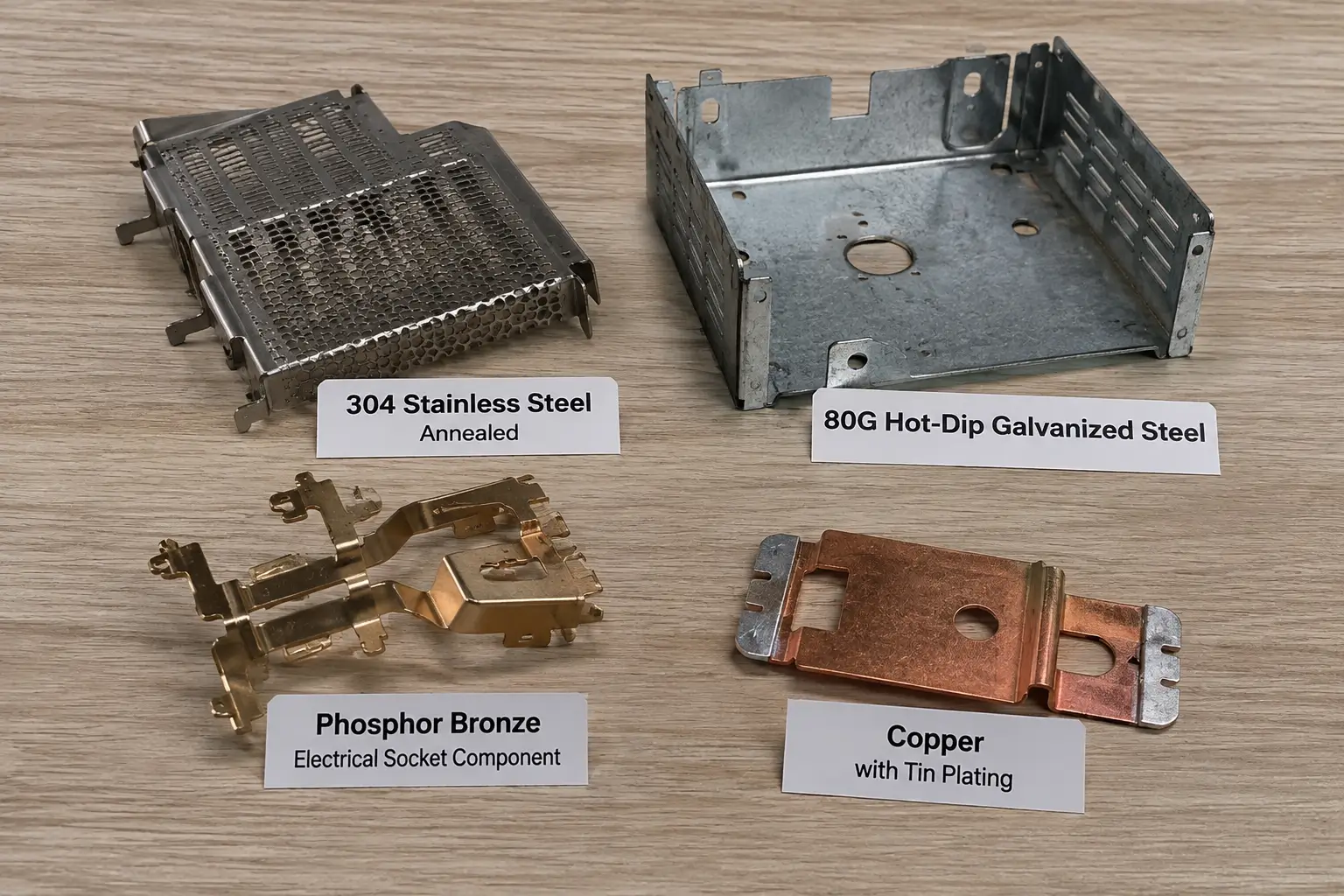
After stamping, the bracket goes through color zinc plating, which gives it corrosion resistance for motorcycles that will spend their life outdoors — a requirement that changes depending on which country and climate the parts are headed to. We’ve adjusted plating thickness and post-treatment for customers shipping to humid coastal markets versus drier inland regions, based on what actually held up in the field.
Quality Control You Can Verify, Not Just Trust
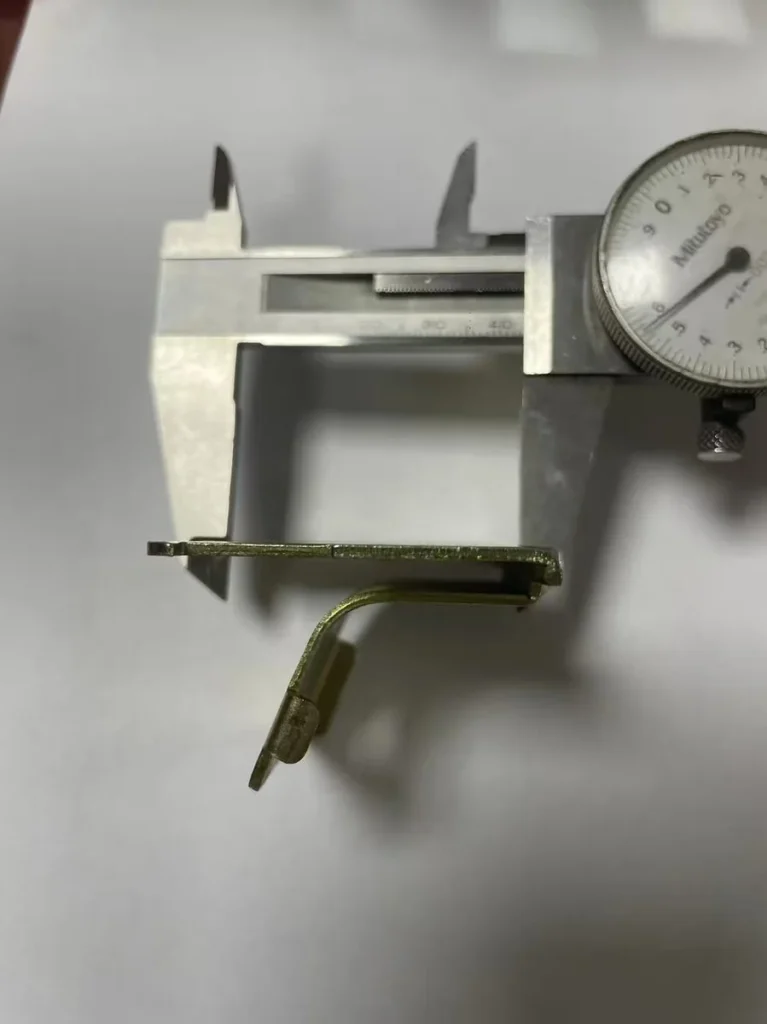
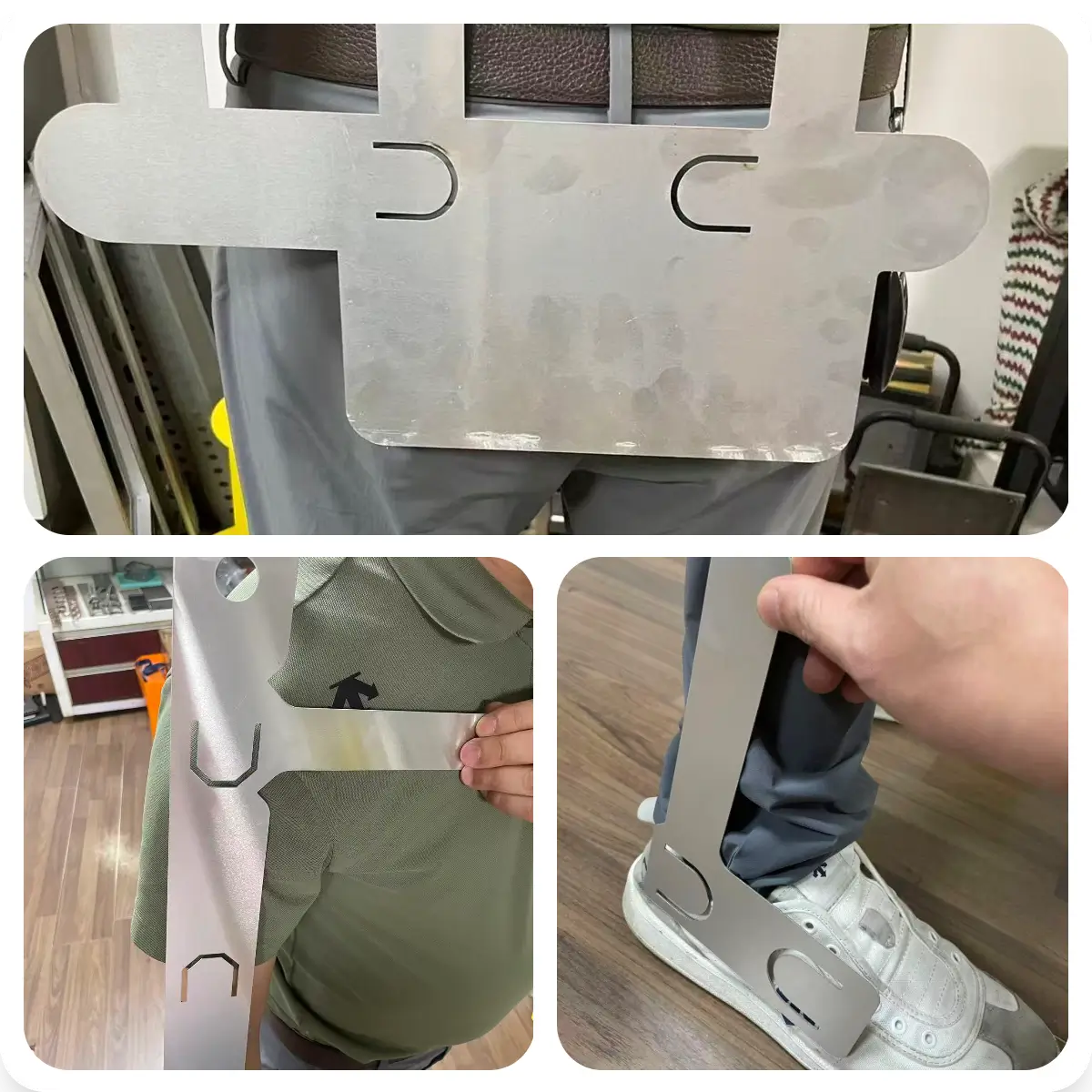
This is where the second fear — “the factory doesn’t understand international standards” — gets addressed directly. Every batch goes through first article inspection (FAI) before mass production starts, and critical dimensions like bend angle are checked with calipers against the engineering drawing, not by eye.
Bend angle checked with a precision caliper during first article inspection (FAI).
We don’t ask you to take our word for it. We can send FAI reports, in-process photos, and — for larger orders — a short factory video showing your actual parts coming off the press, before they’re packed.
Low-Quality vs. Quality-Controlled Production: What Actually Changes
Aspect
Low-Cost / Uncontrolled Supplier
Our Process
Die Type
Simple single-operation die, more manual handling
Progressive die — consistent, fewer variables
Material Verification
Often unverified, grade may be substituted
Material certs checked against PO spec
Plating Consistency
Varies batch to batch
Adjusted per climate/market, checked each batch
Inspection
Visual only, no documented data
FAI + in-process dimensional checks (calipers)
Communication
Slow, English proficiency limited
Direct factory-to-buyer, export documentation handled
This isn’t about claiming we’re the cheapest — we’re not always. It’s about showing you exactly where the cost difference comes from, so you can decide what’s worth paying for.
A Real Case: Motorcycle Brackets for an Overseas Distributor
One of our customers, an auto/motorcycle parts distributor in Southeast Asia, came to us after a previous supplier’s brackets started showing plating failure within months of installation — well before their retail customers expected it. We reworked the plating process and adjusted bend tolerance based on their actual assembly line feedback, ran a new FAI sample, and got sign-off before mass production. They’ve since reordered for three consecutive quarters.
We’re not sharing this to say every project is perfect from day one — it’s rarely that simple. What we can say is that when something isn’t working, it gets fixed based on real data, not guesswork, and the relationship continues because the parts perform.
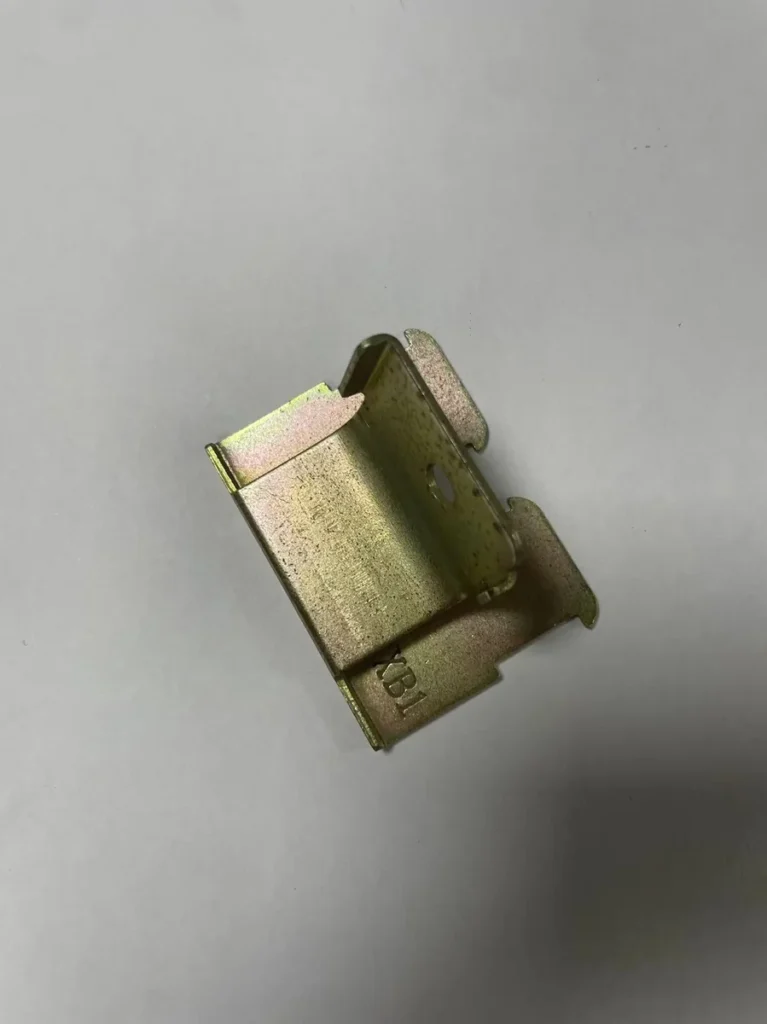
Rear profile of the XB1 bracket, showing clean stamped edges with no burrs.
See the Process for Yourself
We’ve recorded the XB1 bracket’s full stamping and plating process on our own production floor — you can watch it here:
Sourcing Motorcycle Parts? Let’s Talk About Your Specific Bracket
Every motorcycle model has different bracket geometry, load requirements, and finish needs. If you send us a drawing or sample, we’ll tell you honestly whether progressive die stamping is the right fit, what the realistic cost per piece looks like at your volume, and what lead time to expect.