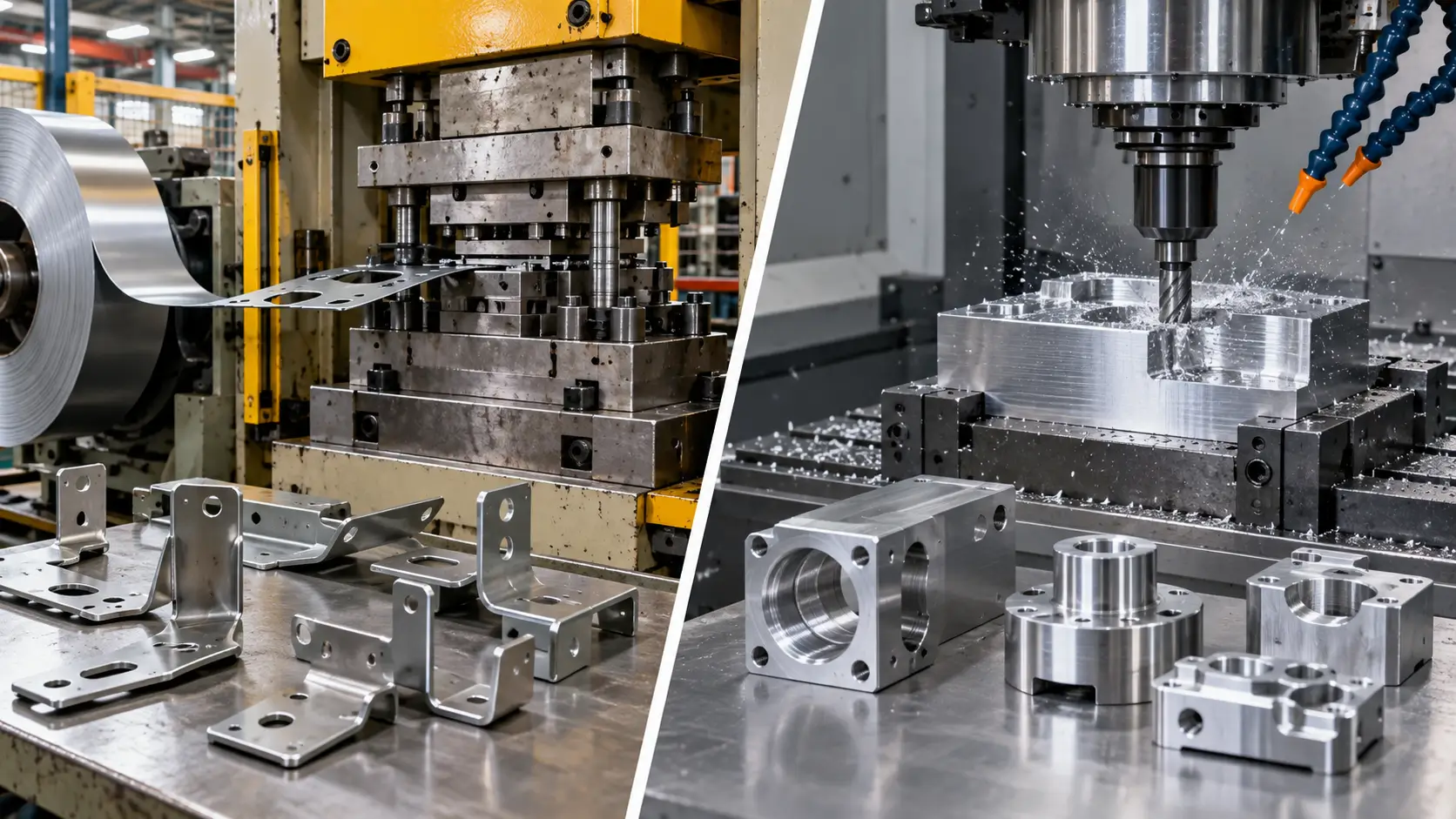
Choosing a metal stamping manufacturer in China requires more than comparing unit prices. Sourcing stamped metal components internationally can expand the supplier options available to an OEM project, but evaluating an overseas vendor also introduces additional communication and process-control considerations. When placing an order with a new supplier in China, comparing unit piece price alone is rarely sufficient. A low quote can become costly if the supplier lacks suitable equipment, uses material that does not match the agreed specification, or fails to establish clear terms regarding tooling ownership and drawing modifications.
To protect your project from delays, unexpected expenses, and quality issues, you need to conduct a structured pre-order verification. Evaluating a potential vendor requires looking beyond basic commercial proposals to inspect their physical factory status, machine capabilities, material control processes, sample approval workflows, and downstream process management. For a broader framework on vendor evaluation, RFQ preparation, and supplier management across global markets, see our metal stamping manufacturer buyer guide.
Asking the seven targeted questions below will help you gather concrete evidence, verify supplier claims, and mitigate risk before committing to tooling fees or production runs.
Question 1: Are You a Direct Metal Stamping Factory or a Trading Company?
Understanding whether you are dealing with a direct manufacturing plant or an intermediary is an important step when assessing a potential partner. Both business models can serve useful roles in international trade, but understanding your supplier’s actual structure helps prevent unexpected communication gaps or operational misalignments.
Why the Distinction Matters
Working directly with the manufacturing plant can provide clearer visibility into press capability, tooling development, production scheduling, and quality troubleshooting. If technical issues arise, direct communication with the engineering and press shop team helps ensure drawing requirements are understood and tooling adjustments are addressed without unnecessary delays.
An intermediary or trading company can still be a workable sourcing model, especially when coordinating multiple product categories or managing low-volume orders across several suppliers. However, when working through an intermediary, technical instructions, drawing revisions, and quality feedback must pass through a third party. The buyer should understand:
- Who actually performs the stamping
- Who controls the tooling
- Who purchases the material
- Who handles quality issues
- Who manages engineering changes
What Evidence Should Buyers Request?
Business registration can be one verification point. Buyers can review:
- Registered company name
- Official registered address
- Business scope listed on registration documents
However, documentation should be checked together with practical factory-floor evidence and direct communication with the manufacturing team:
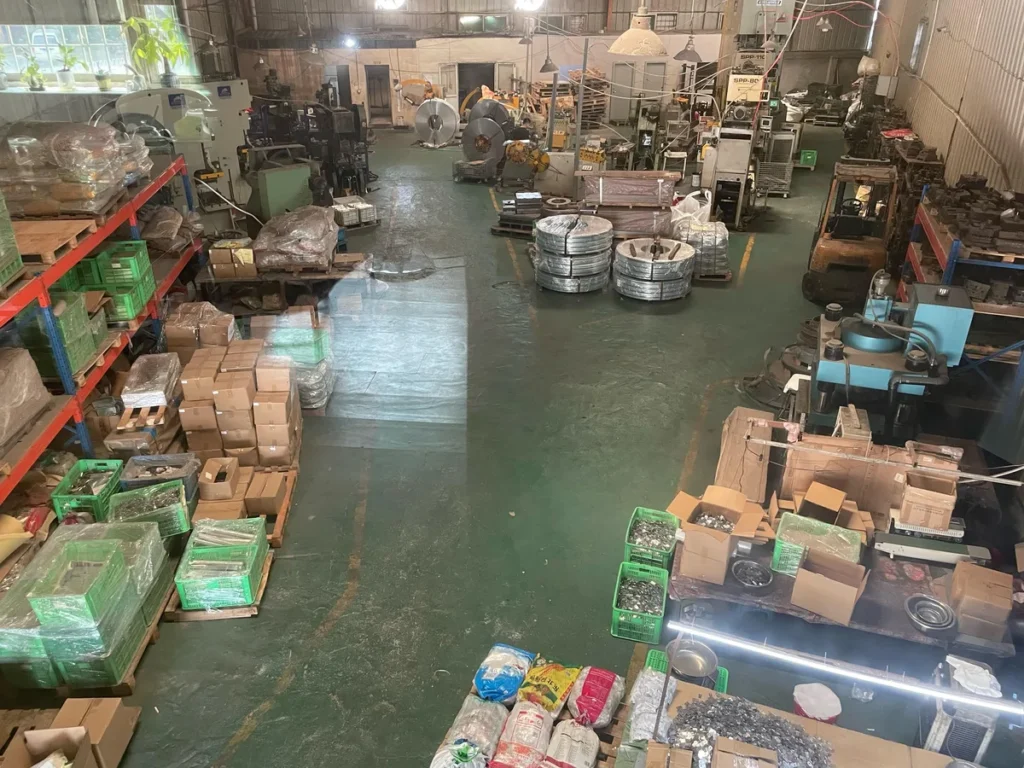
- Factory Floor Evidence: Request photos or unedited video showing the active production area, press lines, coil feeders, and material storage.
- Tooling Area Photos: Ask to see the toolroom or die maintenance area where stamping dies are assembled, serviced, and stored.
- Equipment List: Ask for a list of available machinery, including press capacities and auxiliary feeding equipment.
- Direct Walkthrough or Visit: For major projects, arrange a live video walkthrough of the workshop or conduct a physical factory audit.
Question 2: Do Their Presses and Production Equipment Fit Your Part?
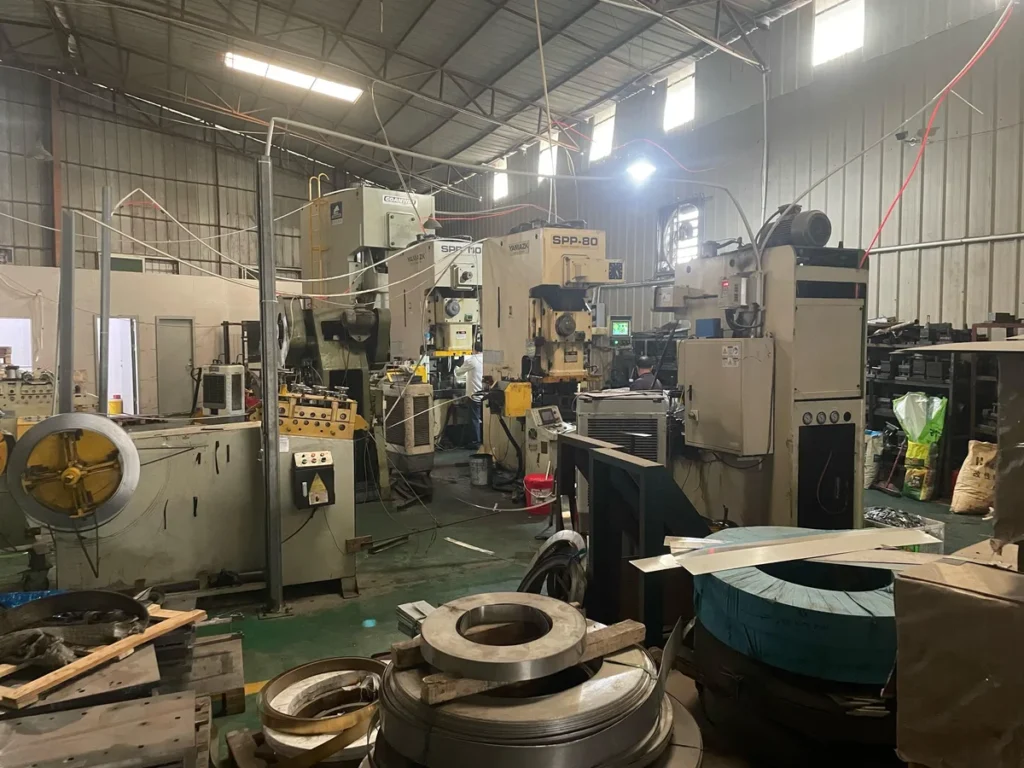
A supplier may operate a functional press shop, but that does not guarantee their machinery matches your component design. Stamping presses vary significantly in bed size, stroke length, tonnage capacity, press speed, and feeding mechanisms.
Why Press Tonnage Alone Is Not Enough
Buyers sometimes focus strictly on total press tonnage, assuming any press with sufficient force rating can produce their part. However, mechanical press selection depends on several interrelated factors:
- Forming and Blanking Force: Deep drawing, thick-gauge bending, and high-strength alloy blanking require specific force distribution across the press stroke.
- Press Bed Dimensions: High-speed progressive dies feature multiple inline stations and require sufficient bed length. If a die is poorly matched to the press bolster, force distribution can become uneven, accelerating die wear and causing dimensional variation.
- Material Feeding Method: Continuous production runs often rely on coil feeders and straighteners, whereas manual sheet feeding may be used for specific low-volume or structural components.
- Stroke Length and Shut Height: Deep-formed parts require adequate press stroke length and adjustable shut height to allow proper part ejection without damaging the die or the component.
When evaluating equipment fit, share your exact drawing specifications—including material thickness, grade, and overall dimensions—to confirm the factory has machinery suitable for the job. For continuous, automated high-volume production runs using multi-station tooling, ask whether your component is suitable for progressive die stamping.
Question 3: Who Owns the Stamping Die, and Who Handles Maintenance?
Tooling terms are a common focal point in custom metal stamping. Because custom stamping dies require upfront capital, establishing clear commercial terms for die ownership, maintenance responsibility, storage, and potential tooling transfers before paying a deposit helps ensure alignment between both parties.
Tooling Ownership
Paying a tooling fee does not by itself define ownership, storage rights, transfer rights, or maintenance responsibility. These terms depend on the commercial agreement between buyer and supplier. Before tooling begins, confirm in writing:
- Who owns the die
- Where it will be stored
- Who handles routine maintenance
- Who pays for design-driven modifications
- What happens if tooling later needs to be transferred
Tooling Maintenance and Repairs
During volume production, stamping dies experience continuous friction and mechanical stress. Clarify the following responsibilities in advance:
- Routine Maintenance Responsibility: Clarify how routine die sharpening, polishing, and minor punch replacement are managed during regular production runs.
- Unexpected Tooling Damage: Establish terms for handling major tooling wear or unexpected die failures during production.
- Buyer-Requested Modifications: If the buyer submits a drawing revision after the die is completed, confirm the tooling modification cost, responsibility, and schedule impact before the changes are made.
- Production Delay Handling: Confirm how schedule adjustments are communicated if tooling requires unexpected maintenance.
Tooling Storage and Transfer Terms
Inquire about how dies are identified, protected, and stored between production runs. Buyers can ask:
- How dies are identified and labeled with part numbers or customer records
- How dies are protected against rust and damage between production runs
- How tooling is matched to the correct customer and part revision
- What procedures apply after long periods of inactivity
If future tooling relocation may be important to your company’s supply chain strategy, discuss the transfer procedure, tooling condition, documentation, packaging, and applicable costs before the project begins. For more detail on selecting tooling structures, consult our stamping tooling selection guide.
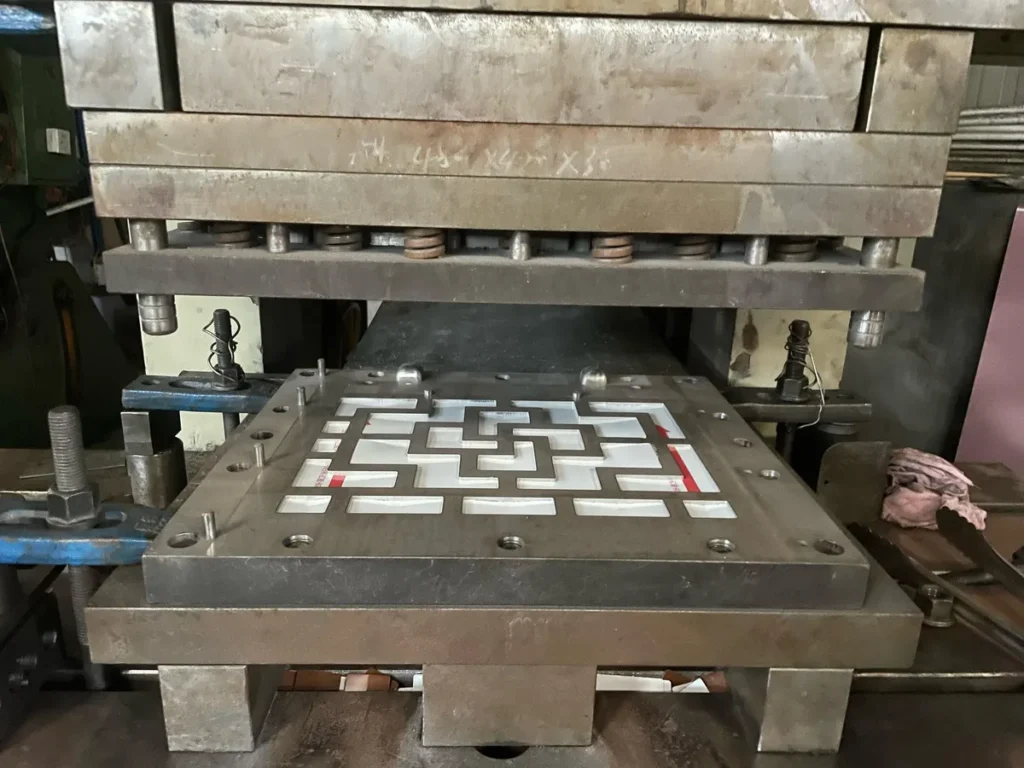
Question 4: How Do They Verify Material Grade and Thickness Before Production?
Raw material costs represent a substantial portion of the overall unit price in custom metal stamping. Material substitution or specification mismatch is a sourcing risk that buyers should control regardless of supplier location. Using an incorrect material grade, temper, coating, or thickness can affect forming behavior, springback, structural strength, and final part performance.
Material Verification Practices to Request
Where material certification is required by the project, ask whether the supplier can provide the applicable mill certificate or material documentation and relate it to the purchased material. In addition, discuss incoming inspection practices before production begins:
- Purchase Specification Matching: Confirm that incoming material orders are cross-referenced directly against drawing requirements (such as carbon steel, stainless steel alloys, aluminum grades, or copper alloys) before processing.
- Thickness Verification: Ask how incoming material thickness is checked against the drawing or purchase specification before production. Checking raw material thickness across the coil or sheet helps verify that tolerances match engineering requirements.
- Batch Identification: Inquire how raw material batches are tracked on the shop floor during production.
To review common metal options and mechanical properties used in custom stamping, refer to our metal stamping materials guide.
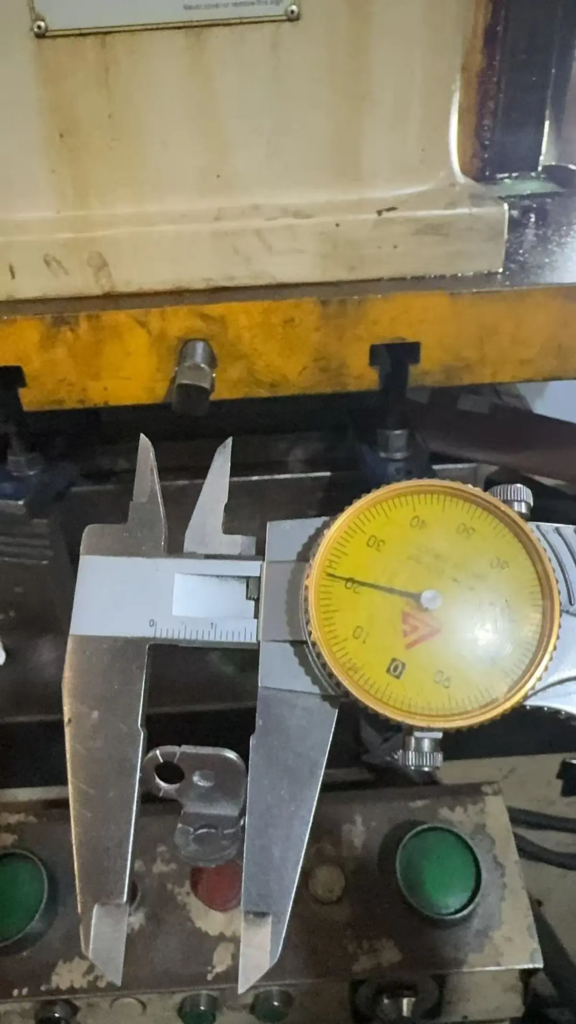
Question 5: What Happens Before Mass Production Is Approved?
For a new custom stamping tool, buyers should agree on a pre-production approval process before volume production begins. Establishing clear approval checkpoints helps verify that the tooling and forming sequence deliver parts that conform to drawing specifications.
Trial Production
Once a new die is ready for trial, sample parts are produced so the tooling, forming sequence, dimensions, and visible part condition can be evaluated. If adjustments are required, the tooling is corrected before sample approval moves forward.
First Sample and Pre-Production Approval
After trial adjustments are complete, pre-production samples are prepared for review. The exact approval package depends on drawing requirements, the intended application, and customer preferences. Sample approval may include:
- Physical Samples: Representative stamped parts for visual inspection and hands-on review.
- Dimensional Inspection Records: Verification of key dimensions identified on the approved 2D engineering drawing.
- Material Confirmation: Documentation confirming the raw material grade used for the sample lot.
- Surface and Edge Checks: Inspection for edge condition, burr limits, and surface finish.
- Functional Fit Verification: Physical mating checks with co-dependent parts, housings, or assembly fixtures.
Once samples are reviewed and approved according to the agreed project criteria, production can proceed. To learn more about dimensional verification methods, measurement tools, and edge condition standards, see our metal stamping quality inspection guide.
Question 6: Which Processes Are In-House and Which Are Managed Through Partners?
Custom metal stamping components often require secondary operations after leaving the main press line. Depending on the part, downstream work may include:
- Deburring
- Tapping
- Fastener insertion
- Welding
- Machining
- Plating
- Powder coating
- Anodizing
- Heat treatment
- Assembly
A stamping supplier does not need to perform every single process inside its own facility. Specialized secondary operations—such as electroplating, heat treatment, or chemical coating—may be handled by partner facilities depending on the project.
Buyers should ask which required operations are performed by the stamping supplier itself and which are coordinated through partner facilities. Before placing the order, clarify:
- Who coordinates external processes
- Who checks returned parts
- Who handles nonconforming work
- Who communicates schedule impact
- Who performs final acceptance before shipment
These responsibilities should be clear even when a specialized process is performed by a partner facility.
Question 7: How Do They Handle DFM, Drawing Changes, Pricing, MOQ, and Lead Time?
Clear communication regarding engineering feedback, drawing updates, and commercial terms helps prevent project delays and unexpected expenses. Evaluate how a potential supplier handles these key workflow areas before committing to production.
DFM Before Tooling
Before finalizing tooling arrangements, ask the supplier’s engineering team to review your drawings for Design for Manufacturability (DFM). Practical engineering feedback can highlight potential manufacturing challenges, such as tight bend radii, holes positioned near bend lines, or feature tolerances that significantly increase tooling complexity.
Drawing Revision Control
Engineering modifications often occur during product development. Confirm how the supplier maintains revision control on the shop floor so toolmakers and press operators always work from the latest approved drawing revision. If a design change occurs after tooling fabrication has started, discuss how tooling modifications, cost adjustments, and schedule impacts will be evaluated and agreed upon.
Tooling Cost and Unit Price Breakdown
Ask for a transparent commercial proposal that clearly separates individual cost elements, including:
- Upfront tooling or die fabrication costs
- Raw material unit cost
- Stamping production labor and overhead
- Secondary operations (such as tapping, deburring, or surface treatment)
- Packaging and agreed delivery terms
For a detailed overview of factors that influence unit costs, refer to our metal stamping cost guide.
Minimum Order Quantity (MOQ)
Minimum order quantities in metal stamping are generally influenced by press setup time, material coil purchase minimums, and manufacturing economics. Ask the supplier about their MOQ requirements, batch options, and setup considerations for your specific part.
Lead Time Structure
Do not compare suppliers using one headline lead-time number alone. Ask for the schedule to be separated into distinct project stages:
- Drawing review and quotation
- Tooling design and manufacturing
- Trial production and sample approval
- Tooling adjustment if required
- Mass production
- Secondary processing if required
- Packaging and shipment preparation
The actual timeline depends on part geometry, tooling structure, material, order quantity, secondary operations, and customer sample-approval requirements.
Metal Stamping Manufacturer in China Pre-Order Checklist
Use the following checklist to evaluate and document a Chinese metal stamping vendor’s capabilities before transferring tooling deposits or signing production contracts:
| Check | What to Confirm | Evidence / Document to Request |
|---|---|---|
| ☐ | Factory Status | Registered company details, press floor video or photos, equipment list. |
| ☐ | Equipment Fit | Press specifications (tonnage, bed dimensions, stroke length, feeding method). |
| ☐ | Tooling Terms | Ownership, storage, maintenance, modification, and transfer terms written in tooling agreement or quotation. |
| ☐ | Material Verification | Applicable mill test certificate or material documentation, incoming thickness check procedure. |
| ☐ | Pre-Production Approval | Agreed sample approval process (physical samples, dimensional inspection records, material confirmation). |
| ☐ | Secondary Processes | Clear identification of in-house operations vs. partner-managed processes and quality coordination responsibility. |
| ☐ | Commercial & DFM Terms | DFM feedback, itemized price breakdown, drawing revision change workflow, and phased schedule. |
Frequently Asked Questions
FAQ 1: How do I verify whether a Chinese metal stamping supplier is a real factory?
When evaluating a metal stamping manufacturer in China, verify factory status by reviewing their business registration details, registered address, and business scope. Request unedited video footage or photos of the active press floor and toolroom, ask for an itemized equipment list, or arrange a live video call or third-party audit. Note that working through a trading company or intermediary can also be a workable model, provided there is clear transparency regarding who manufactures the parts and controls the tooling.
FAQ 2: Who owns a stamping die after the buyer pays for the tooling?
Tooling ownership depends on the commercial agreement between buyer and supplier. The tooling fee alone does not define ownership. Buyers should confirm ownership, storage, maintenance, modification, and transfer terms in writing before tooling construction begins.
FAQ 3: What should I ask for before approving mass production?
Before approving mass production, review the agreed sample parts and confirm that they meet the approved drawing and project requirements. Depending on the project, the approval package may include dimensional inspection records, material confirmation, surface or edge checks, and functional fit verification.
FAQ 4: Should all secondary processes be performed in-house?
No. Specialized secondary operations—such as electroplating, heat treatment, and specialized coating—may be managed through partner facilities depending on the project. The key requirement is transparency and clear responsibility for process control, quality inspection, and schedule management.
FAQ 5: What information should I provide when requesting a stamping quote?
To receive an accurate quotation, provide complete 2D engineering drawings (with tolerances), 3D CAD models, material specifications (grade, temper, thickness), required surface finish or secondary operations, estimated order quantities, and target timelines.
FAQ 6: What is the most important question to ask a metal stamping supplier in China?
There is no single universal question. Buyers should verify factory status, equipment fit, tooling control, material verification, sample approval workflows, secondary process management, and commercial terms together. A complete pre-order verification process protects your project far better than relying on any single metric.
Metal Stamp Factory was established in 2014 in Xiamen, China, focusing on custom metal stamping and precision hardware manufacturing. The founder of Metal Stamp Factory, Shengtong Chen, started learning mold making and metal stamping at the age of 17 and has accumulated more than 25 years of hands-on manufacturing experience in tooling development, metal stamping, and OEM production.
Contact our engineering team to send us your technical drawings for project review.