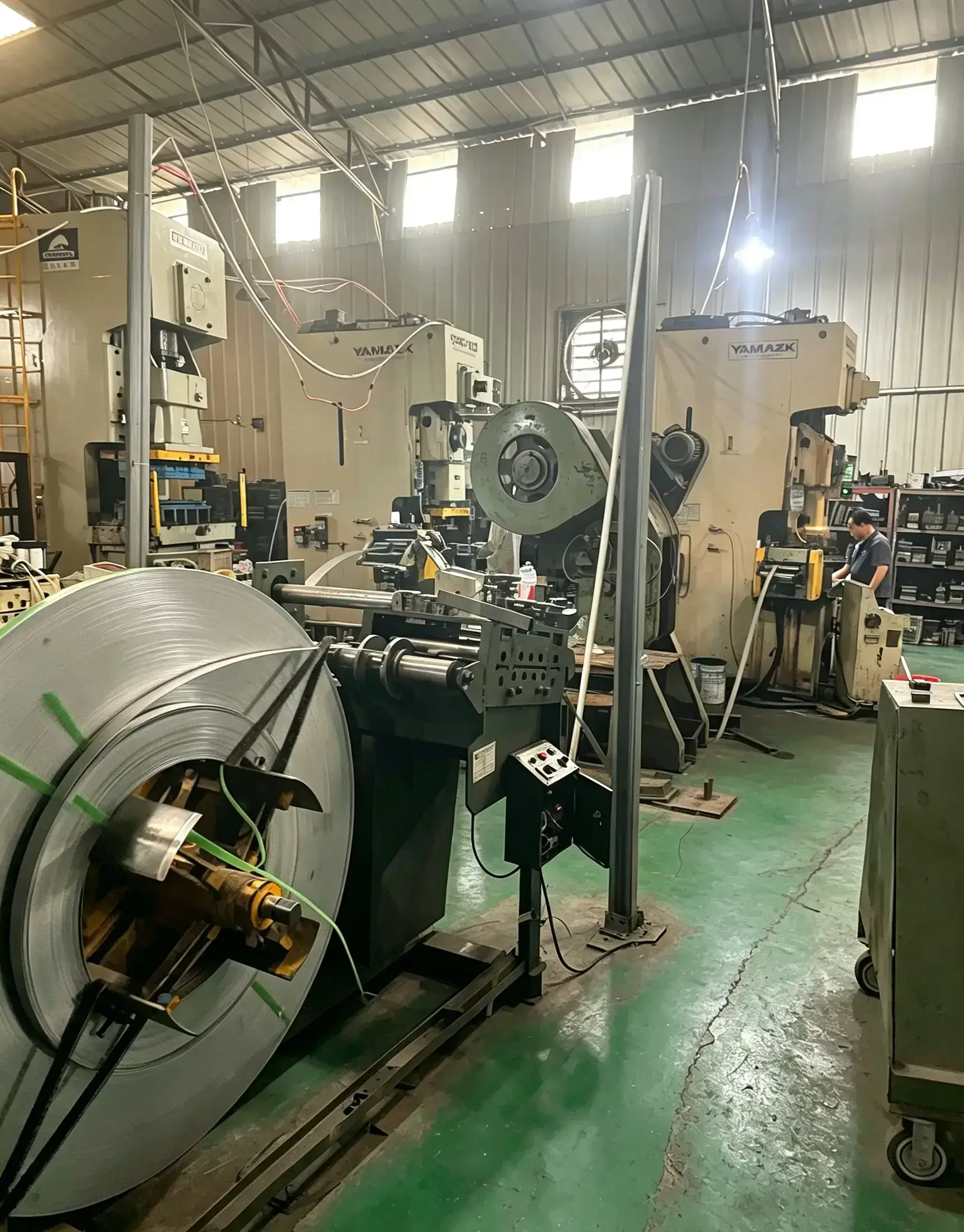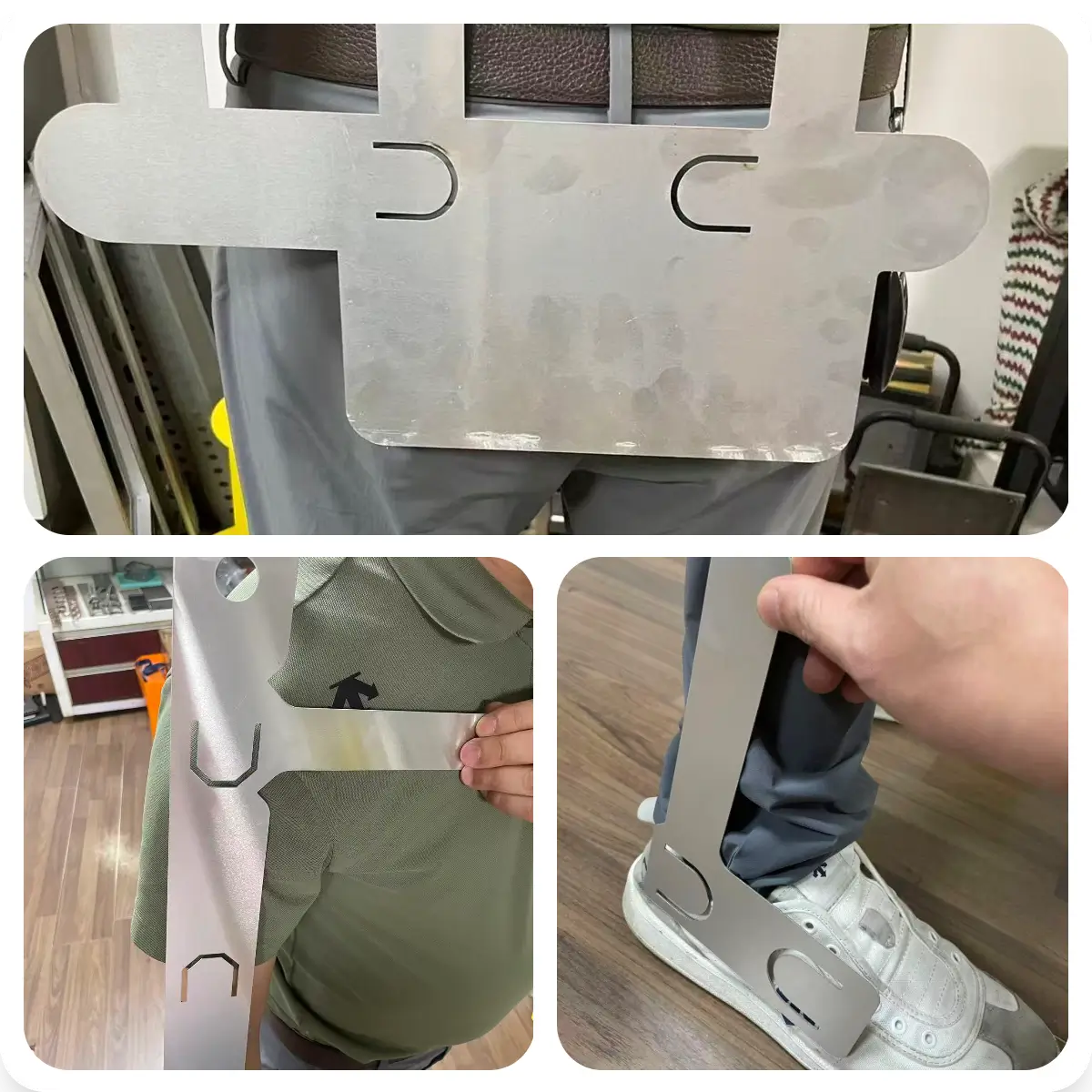
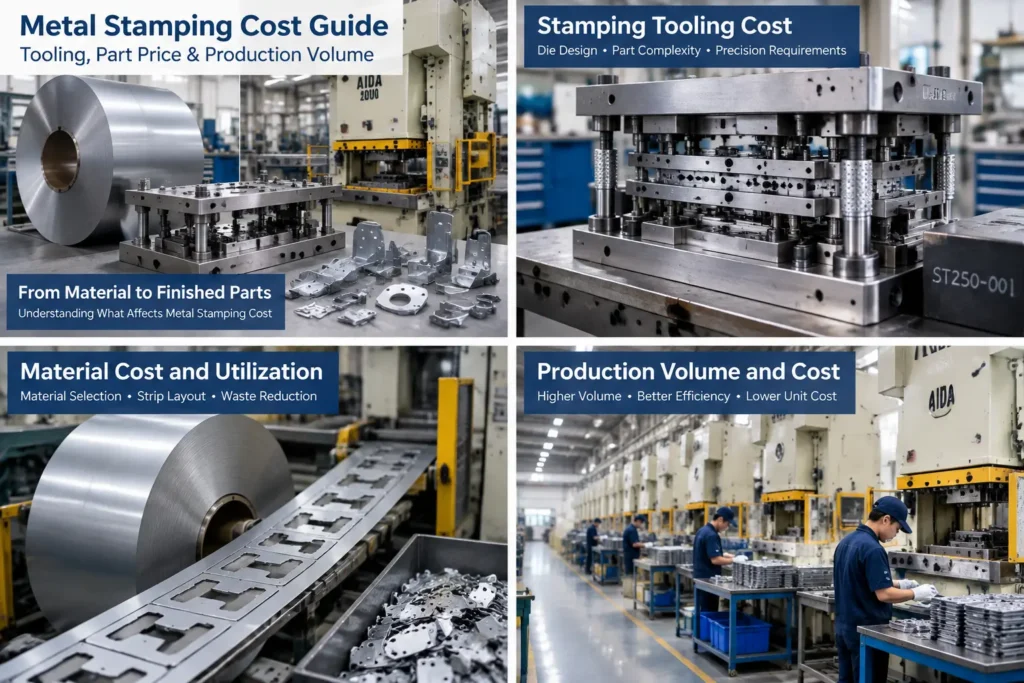
Understanding metal stamping cost is important for OEM buyers before starting a custom stamping project.
Unlike standard products with fixed prices, custom stamped parts are quoted based on several manufacturing factors, including tooling requirements, material selection, part complexity, production volume, secondary operations, and quality requirements.
For most custom metal stamping projects, the total investment includes two major cost areas:
- Initial tooling cost
- Recurring part production cost
| Cost Factor | How It Influences Cost |
|---|---|
| Tooling Investment | Die design, machining, testing, and validation affect upfront cost |
| Material Selection | Material grade, thickness, and utilization influence part cost |
| Part Geometry | Complex forming, bending, and features increase manufacturing requirements |
| Production Volume | Higher volume can distribute fixed tooling costs across more parts |
| Tolerances | Tight dimensional requirements increase tooling and inspection needs |
| Secondary Operations | Finishing, assembly, and additional processing add cost |
Understanding how these costs are calculated helps procurement teams compare supplier quotations, evaluate manufacturing options, and make better sourcing decisions.
A stamping quotation should not be judged only by the unit price or only by the tooling investment. The correct evaluation method is to understand how tooling, production quantity, and manufacturing requirements work together throughout the entire project.
What Makes Up the Total Cost of Metal Stamping?
Tooling Cost vs. Part Production Cost
For custom metal stamping projects, tooling cost is normally quoted separately from the stamped part price.
The tooling investment covers the engineering, machining, fitting, testing, and adjustment required to create a stamping die that can consistently produce the required component.
The recurring part price covers the cost of producing each stamped component after the tooling has been completed.
Separating tooling cost and part cost gives OEM buyers clearer visibility into the total project investment.
For example, a project with a higher initial tooling investment may still have a lower long-term unit cost if the production volume is high enough to distribute the tooling cost across more parts.
Why Custom Metal Stamping Does Not Have a Fixed Price
There is no universal price for custom stamped metal parts because every project has different manufacturing requirements.
Factors that influence the final price include:
- Material type and thickness
- Part size and geometry
- Number of stamping operations
- Tooling requirements
- Production quantity
- Surface finishing
- Packaging requirements
- Quality inspection requirements
A simple flat bracket and a complex formed component may both be classified as metal stamping parts, but their manufacturing approach and cost structure can be completely different.
For OEM buyers, the most accurate quotation normally starts with complete technical information, including drawings, materials, quantities, tolerances, and finishing requirements.
What Determines Metal Stamping Tooling Cost?
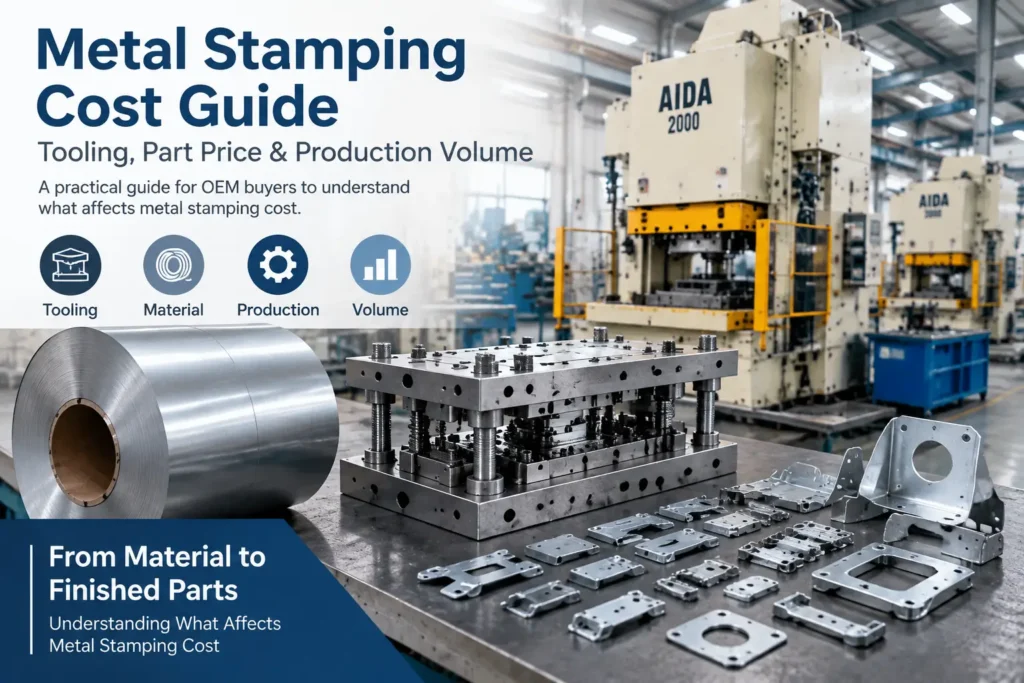
Die Type and Tooling Design Requirements
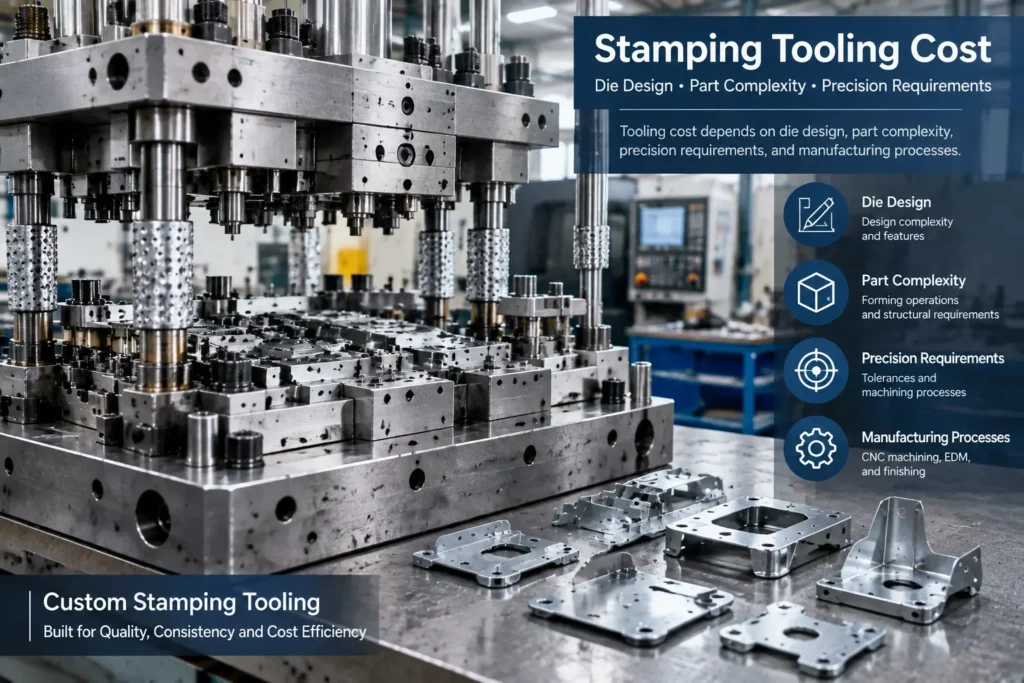
The type of stamping die required is one of the major factors affecting tooling cost.
Different part structures and production requirements may require different tooling approaches. The correct die solution depends on part geometry, production volume, material characteristics, and the expected production process.
Common tooling approaches include:
- Single-operation stamping dies
- Compound dies
- Progressive dies
| Die Type | Tooling Cost Level | Typical Application |
|---|---|---|
| Single Operation Die | Lower initial investment | Simple parts with limited operations |
| Compound Die | Medium investment | Flat parts requiring simultaneous cutting operations |
| Progressive Die | Higher initial investment | High-volume parts requiring multiple operations |
Simple single-operation dies usually require less engineering and development work compared with more complex tooling systems.
Progressive dies combine multiple stamping operations into one continuous production process. They normally require higher initial tooling investment because of the additional engineering, precision requirements, and manufacturing complexity involved.
However, for suitable high-volume production, progressive tooling can become economical because the tooling investment is distributed across a larger number of produced parts.
For more information about progressive tooling, see our guide on progressive die stamping.
Tooling Development Time and Manufacturing Complexity
Tooling development time depends on:
- Part complexity
- Number of forming operations
- Material requirements
- Precision requirements
- Tool testing and adjustment requirements
As a general reference:
- Single-operation stamping dies may require around 15–20 days
- Progressive die projects may require around 30–45 days
These are typical reference timeframes and may vary depending on project requirements, tooling complexity, and production validation.
A simple part with loose requirements may require a shorter development process, while a complex component requiring multiple forming steps and tighter control may require additional engineering work.
Part Complexity and Forming Requirements
Part geometry directly affects tooling design and manufacturing cost.
Parts requiring:
- Multiple forming operations
- Deep drawing
- Complex bending
- Tight feature control
may require more advanced tooling solutions.
Material behavior is also important.
Different materials have different forming characteristics, springback behavior, and processing requirements. A part that appears simple from a drawing may require a more complex tooling approach to achieve stable production results.
During quotation review, engineers need to evaluate not only the final shape of the part but also how the part will be produced consistently in volume.
Precision Requirements and Tool Manufacturing Methods
Higher precision requirements can increase tooling requirements.
For parts with critical dimensions or strict edge requirements, precision manufacturing processes may be required during tooling development.
Examples include:
- Wire EDM (wire electrical discharge machining)
- Precision machining
- Additional tooling inspection processes
These processes can increase tooling development complexity, but they help improve:
- Die accuracy
- Production consistency
- Long-term manufacturing stability
Tolerance requirements should be reviewed during the quotation stage because they directly influence:
- Die design
- Tool manufacturing method
- Inspection requirements
- Production control
For more information, see our guide on metal stamping tolerances.
What Determines Metal Stamping Part Cost?
Material Cost and Material Utilization
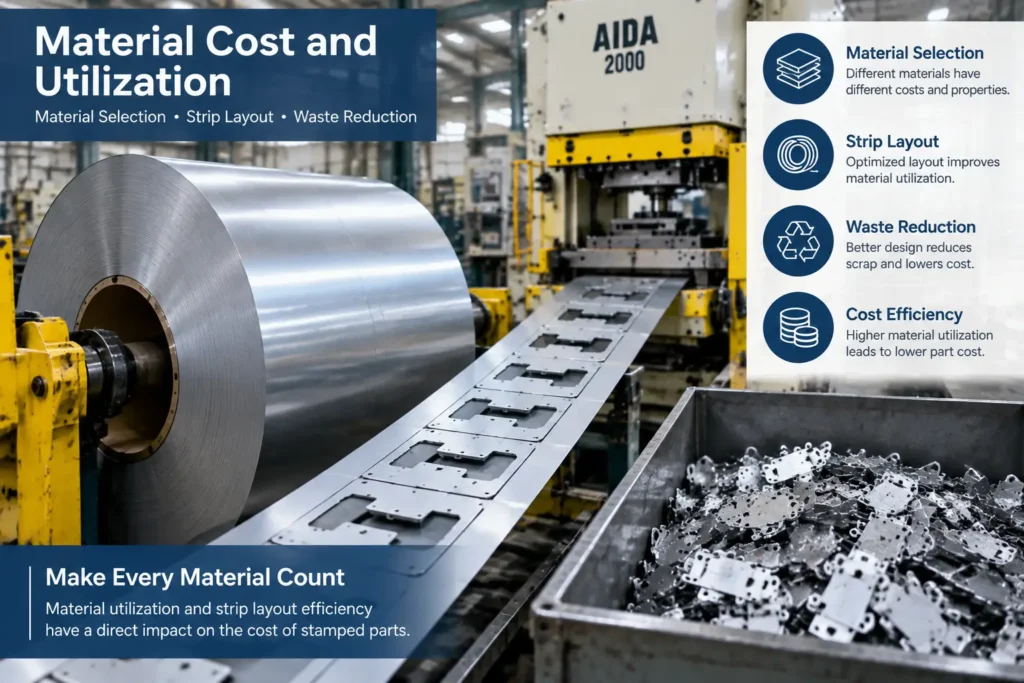
Material cost is often one of the major contributors to stamped part pricing.
However, the material impact on final cost is not determined only by the raw material price. The actual cost also depends on how efficiently the material is converted into usable parts during production.
Important factors include:
- Material grade
- Material thickness
- Part weight
- Strip layout efficiency
- Material availability
- Current market conditions
Material utilization is especially important in stamping production because the process creates scrap during cutting and forming operations.
A well-designed strip layout can improve material usage by increasing the number of usable parts produced from each sheet or coil.
For OEM buyers, material selection is not only a performance decision but also a cost decision.
Choosing a material that meets the application requirements while maintaining good manufacturing efficiency can help control the overall project cost.
For more information about material selection, see our guide on metal stamping materials.
Production Process, Press Requirements, and Labor
The production method directly affects the final stamped part cost.
Important cost factors include:
- Number of stamping operations
- Press capacity requirements
- Production speed
- Machine setup requirements
- Labor involvement
Different parts may require different manufacturing approaches.
A component produced through a simple stamping operation may have a different cost structure compared with a part requiring:
- Multiple forming stages
- Additional trimming operations
- Secondary processing
- Higher precision control
Machine selection also influences cost.
The required press capacity depends on factors such as:
- Material thickness
- Part size
- Forming requirements
- Die design
A suitable production process helps balance tooling investment, production efficiency, and final unit price.
For more information about selecting the right manufacturing method, see our guide on metal stamping process selection.
Secondary Operations, Surface Treatment, and Packaging
Some stamped parts require additional operations after the main stamping process.
Examples include:
- Deburring
- Surface treatment
- Plating
- Coating
- Assembly
- Special packaging
These additional requirements can influence both production planning and final pricing.
Surface finishing requirements should be considered during the quotation stage because different finishing processes may require different suppliers, processing methods, inspection procedures, and lead times.
Packaging requirements can also affect the final quote.
Standard packaging may include:
- Kraft cartons
- Protective wrapping
However, some customers may require additional packaging methods, such as:
- Individual PVC bags
- Special protective packaging
- Customer-specific labeling requirements
These requirements should be confirmed before production because they can affect both cost and handling processes.
For more information about finishing options, see our guide on metal stamping surface finish.
How Production Volume Changes Metal Stamping Cost
Production volume has a major influence on the relationship between tooling investment and part price.
The same tooling investment, machine preparation, and engineering work may have a very different cost impact depending on the number of parts produced.
Higher-volume production can reduce average unit cost because fixed preparation costs are distributed across more parts.
Lower-volume production may have a higher unit cost because setup activities and preparation time represent a larger portion of the total project cost.
Production Volume Cost Comparison
| Cost Factor | Lower Volume Production | Higher Volume Production |
|---|---|---|
| Tooling Investment | May require simpler tooling solutions depending on quantity and requirements | Higher tooling investment can become economical when distributed across many parts |
| Tooling Cost Distribution | Higher impact on each individual part | Spread across larger production quantities |
| Setup Impact | Setup and preparation time represent a larger percentage of total cost | Setup impact becomes smaller per part during continuous production |
| Unit Price | Usually higher because fixed preparation costs are spread across fewer parts | Often lower because production efficiency improves |
For lower-volume projects, the cost of installing tooling, preparing machines, and organizing production represents a larger share of the total cost.
In some cases, alternative manufacturing methods may be considered when the production quantity does not justify dedicated stamping tooling.
For higher-volume projects, the same tooling investment can be distributed across a much larger production quantity.
Additional advantages may include:
- More efficient production scheduling
- Reduced setup frequency
- Better material purchasing efficiency
- More stable production planning
For a deeper comparison of production strategies, see our guide on low-volume and high-volume metal stamping strategy.
Total Cost of Ownership (TCO) Considerations
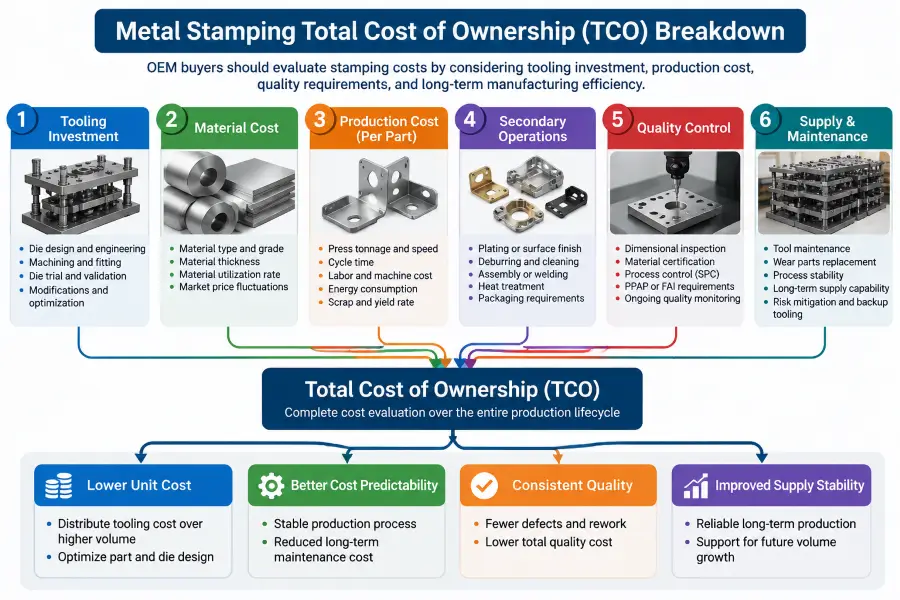
OEM buyers should evaluate metal stamping cost based on total program cost rather than initial quotation price alone.
Total cost may include tooling investment, production unit price, maintenance requirements, secondary operations, quality control, and long-term supply stability.
| TCO Factor | Cost Impact |
|---|---|
| Tooling Investment | Initial development cost |
| Unit Production Cost | Recurring manufacturing expense |
| Maintenance | Long-term tooling stability |
| Quality Control | Inspection and process control requirements |
| Secondary Operations | Additional processing costs |
| Supply Stability | Risk reduction for long-term programs |
How OEM Buyers Can Reduce Metal Stamping Cost
Reducing metal stamping cost does not always mean choosing the lowest supplier quotation.
The most effective cost reductions usually come from improving the manufacturing approach during the design stage and selecting the right production strategy for the specific part.
A lower initial quote may not always represent the lowest total project cost if it creates problems with:
- Tooling reliability
- Production stability
- Quality requirements
- Long-term supply consistency
Simplify Part Geometry Before Tooling Development
Complex part geometries often require:
- More tooling operations
- More complicated die structures
- Additional production steps
Reviewing part features early in the design stage can help identify opportunities to simplify manufacturing.
Examples include:
- Reducing unnecessary forming steps
- Combining features where practical
- Avoiding difficult-to-produce geometries
A design that is easier to manufacture usually requires less complicated tooling and can improve production efficiency.
Select Practical Materials and Tolerances
Material selection should balance:
- Performance requirements
- Availability
- Manufacturing characteristics
- Overall project cost
The highest specification material is not always the most economical choice if another material can meet the application requirements.
Tolerance requirements should also be carefully reviewed.
Tighter tolerances can increase:
- Tooling precision requirements
- Inspection requirements
- Production controls
Critical dimensions should be clearly defined, while non-critical features should avoid unnecessary precision requirements.
Reduce Unnecessary Secondary Operations
Additional operations may increase:
- Processing time
- Production handling
- External processing costs
During design review, engineers should evaluate whether each finishing or secondary operation is functionally required.
A practical manufacturing approach can help balance:
- Part performance
- Appearance requirements
- Production efficiency
- Total cost
What OEM Buyers Should Prepare Before Requesting a Quote
Providing complete information during the RFQ stage helps suppliers prepare a more accurate quotation.
OEM buyers should normally provide:
- 2D drawing
- 3D CAD model if available
- Material specification
- Material thickness
- Required quantity
- Surface finishing requirements
- Critical tolerance requirements
- Packaging requirements
Additional application information can also help suppliers better understand production requirements.
However, the basic quotation evaluation normally starts with the technical requirements of the part itself.
A complete RFQ helps suppliers evaluate:
- Suitable tooling approach
- Manufacturing process
- Production requirements
- Expected cost structure
Metal Stamp Factory Tooling Ownership and Maintenance Policy
When customers pay tooling costs, the tooling belongs to the customer.
If production of a specific part stops, Metal Stamp Factory can store the tooling for up to three years.
After this period, customers can arrange tooling collection if required.
During active production orders, normal tooling maintenance during manufacturing is handled by the factory.
This approach helps customers avoid unexpected tooling maintenance responsibilities during regular production.
The purpose of this policy is to provide clearer ownership and responsibility expectations between the customer and manufacturer.
Frequently Asked Questions
How much does metal stamping cost?
There is no universal price for custom metal stamping.
The final cost depends on:
- Tooling requirements
- Material selection
- Part geometry
- Production quantity
- Surface finishing
- Packaging requirements
- Quality requirements
A supplier quotation should be evaluated based on the complete project requirements rather than unit price alone.
Why is tooling cost separate from part price?
Tooling cost covers the engineering and manufacturing of custom stamping dies.
Part price covers the recurring production cost of manufacturing each stamped component.
Separating these costs gives OEM buyers clearer visibility into the total project investment.
Does production volume reduce stamping cost?
Higher production volume can reduce average cost because tooling investment, setup preparation, and production preparation are distributed across more parts.
However, the most suitable production approach depends on:
- Part requirements
- Quantity
- Tooling investment
- Manufacturing conditions
What factors increase stamping tooling cost?
Tooling cost can increase because of:
- Complex part geometry
- Multiple forming operations
- Higher precision requirements
- Advanced tooling processes
- Additional machining requirements
The final tooling approach depends on the balance between part requirements and production objectives.
How can engineers reduce metal stamping cost?
Engineers can reduce cost by:
- Optimizing part geometry
- Selecting practical materials
- Avoiding unnecessary tolerances
- Reducing unnecessary secondary operations
Early communication between designers and manufacturers can help identify cost-saving opportunities before tooling development begins.
What information is needed for a metal stamping quote?
A supplier normally needs:
- Drawings
- Material specifications
- Thickness
- Quantity
- Surface finish requirements
- Tolerance requirements
- Packaging requirements
This information allows the supplier to evaluate the manufacturing approach and tooling requirements accurately.
Need a Metal Stamping Cost Review for Your Part?
Understanding metal stamping cost factors helps OEM buyers evaluate tooling investment, unit pricing, and long-term production efficiency.
Send your drawing, material, quantity, and requirements.
Our engineering team can review the manufacturing approach and provide feedback on:
- Tooling requirements
- Production methods
- Cost considerations