A bird spike that bends out of shape after one winter, or corrodes within two seasons, isn’t a bird problem — it’s a material and manufacturing problem. If you’re sourcing bird spikes for resale or distribution, the difference between a product that generates returns and one that builds repeat orders comes down to what happens on the factory floor before the product ships. Here is exactly what that process looks like.
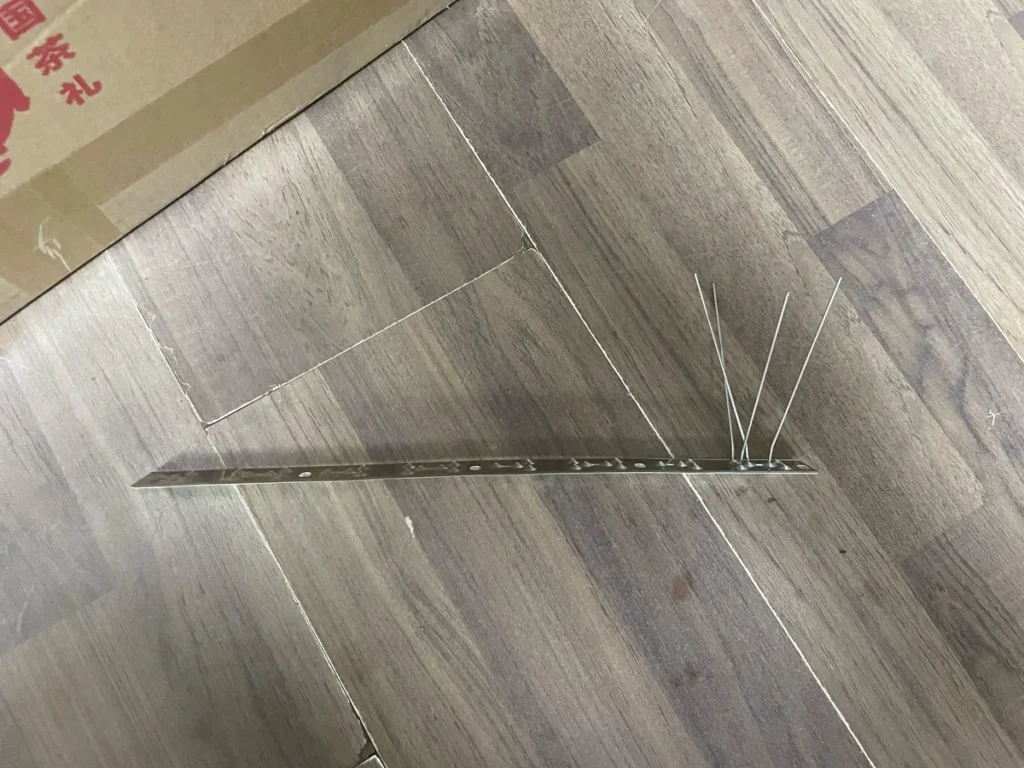
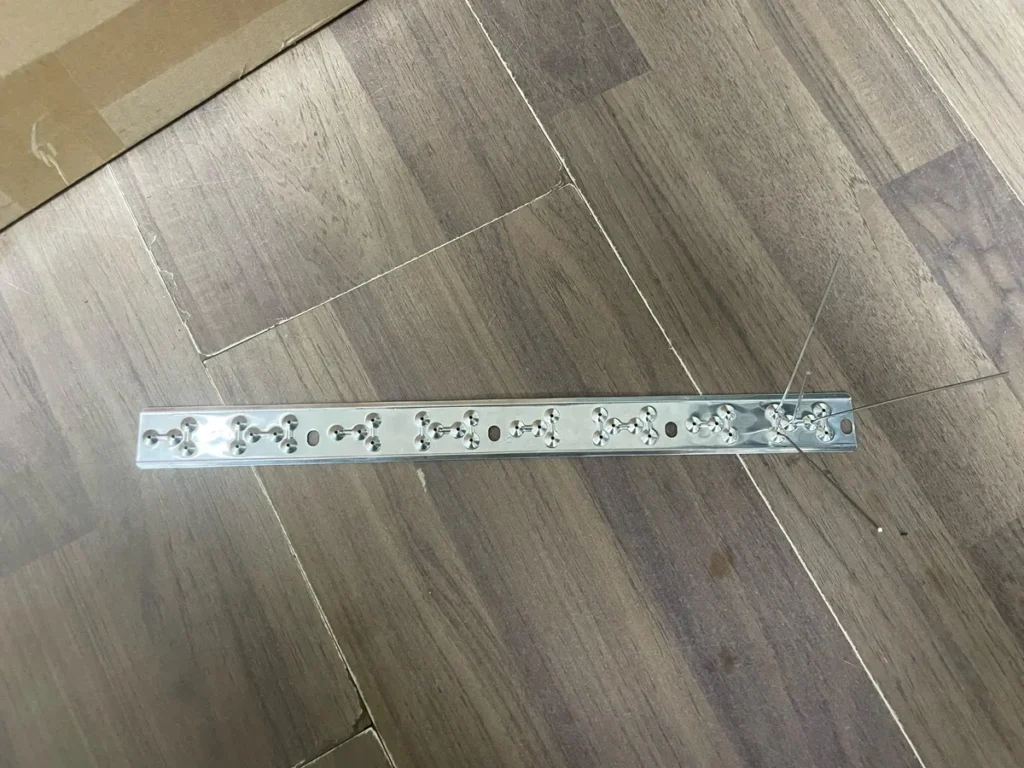
Finished SUS304 stainless steel bird spike — base plate stamped, wire spikes inserted and secured
Why Material Grade Is the First Decision — Not the Last
Most bird spike failures in the field start with a material substitution that happened before the product was even made. SUS304 stainless steel and lower-grade alternatives can look identical when new — same color, same finish, same feel. The difference only becomes visible after 12-18 months of outdoor exposure, by which point your customer has already complained and your reputation has taken the hit.
SUS304 contains 18% chromium and 8% nickel, which forms a stable oxide layer that resists salt air, UV exposure, and temperature cycling. This is why SUS304 remains the standard material for bird deterrent products sold into coastal European markets, where cheaper alternatives consistently fail within two seasons.
At Metal Stamp Factory, SUS304 is the only material we use for bird spike base plates. Material confirmation is provided in writing before production begins.
Step 1: Coil Preparation and Blank Cutting
Production starts with SUS304 stainless steel coil stock, typically 0.8mm to 1.2mm thickness depending on the spike specification. The coil is loaded onto an automatic feeder connected to the stamping press. Consistent coil quality — uniform thickness, no edge burrs, correct temper — is essential at this stage, because any variation in the raw material shows up as dimensional inconsistency in the finished parts.
The feeder advances the strip at a precise pitch with each press stroke, ensuring every blank is cut from exactly the same position in the die.
Step 2: Progressive Die Stamping — Base Plate Forming
The base plate is formed in a progressive die — a multi-station tool that performs several operations in a single continuous pass. As the metal strip advances through the die, each station performs a different operation:
Station 1 — Outer profile blanking: the overall base plate shape is punched out, including the characteristic pointed ends that help the spike strip conform to curved surfaces.
Station 2 — Hole piercing: the wire insertion holes are punched at precise spacing. Hole position accuracy directly determines whether the wire spikes sit vertical or at an angle — a common quality issue in lower-grade products.
Station 3 — Edge forming: minor edge radii are formed to eliminate sharp corners that could damage gloves during installation or scratch mounting surfaces.
The entire sequence happens in a single press stroke cycle, producing one finished base plate every stroke.
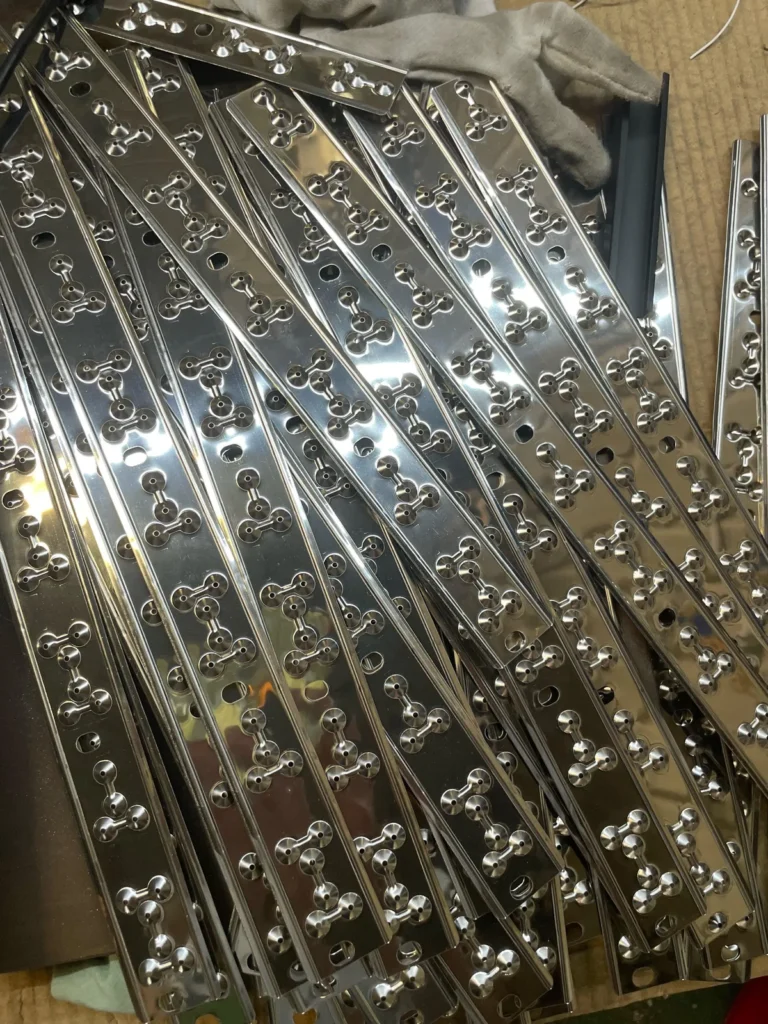
Base plates coming off the progressive die press — one finished plate per stroke
Step 3: Wire Spike Insertion and Securing
After stamping, the base plates move to the wire insertion stage. Stainless steel wire — typically 1.2mm to 1.5mm diameter depending on the target bird species — is cut to length and inserted through the punched holes.
Wire insertion quality determines how long the spikes stay upright in service. Spikes that are loose in their holes or secured with insufficient tension will lean over time under load, reducing deterrent effectiveness. We use a mechanical crimping and securing process rather than adhesive, which maintains spike integrity across a wider temperature range.
Step 4: Inspection Before Packaging
Every production batch goes through visual inspection before packaging. Inspection checks include:
Base plate dimensional check — width, length, and hole spacing verified against the approved drawing
Wire spike verticality — spikes checked to confirm they are seated upright, not leaning
Surface condition — no burrs, sharp edges, or surface contamination that would affect installation or end-user safety
Parts failing any check are removed from the batch before packaging. We do not pass marginal parts and let the customer sort them on arrival.
Finished bird spikes are bundled and wrapped for international shipping. Standard export packaging protects the wire spikes from bending during transit — a common damage point when packaging is not designed for the product geometry.
Custom packaging, private labeling, and retail-ready packaging options are available for OEM customers who distribute under their own brand.
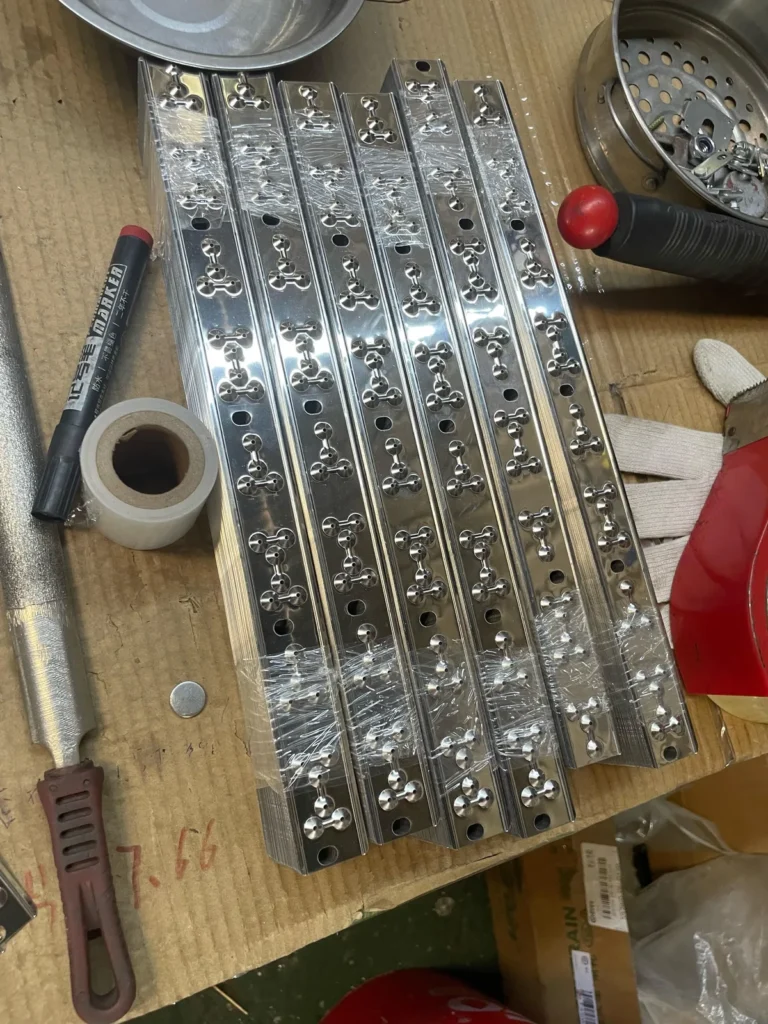
Finished bird spikes bundled and packed for sea freight export
What This Means for Buyers
SUS304 Stainless Steel
Lower-Grade Alternatives
Chromium content
18%
Often 10–13%
Nickel content
8%
Often 0–4%
Coastal / salt air
✅ Excellent resistance
❌ Corrodes within 1–2 seasons
Expected lifespan
10–20 years outdoors
2–5 years
Material verification
Mill cert available
Often unverifiable
Price difference
Higher upfront
Lower upfront, higher return rate
Understanding the manufacturing process helps you ask better questions when evaluating suppliers. The steps most commonly skipped by lower-cost producers are material verification, hole position accuracy, and wire securing method — three factors that directly determine field performance and return rates.
If a supplier cannot explain their production process in specific terms, or cannot provide material confirmation in writing, that is a signal worth taking seriously before committing to a bulk order.
We manufacture SUS304 stainless steel bird spikes at our factory in Amoy (Xiamen), China, and provide free samples before mass production on all new specifications.