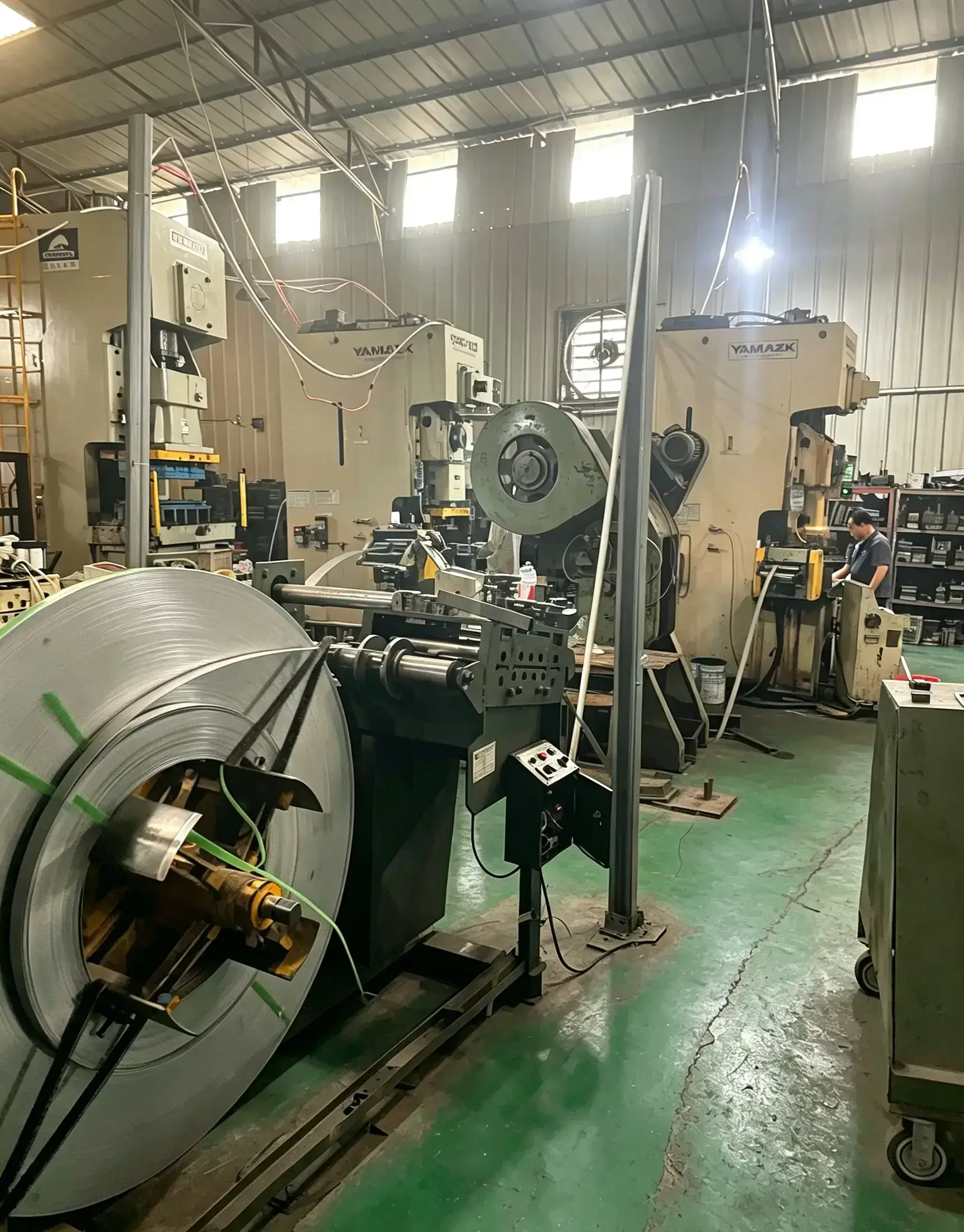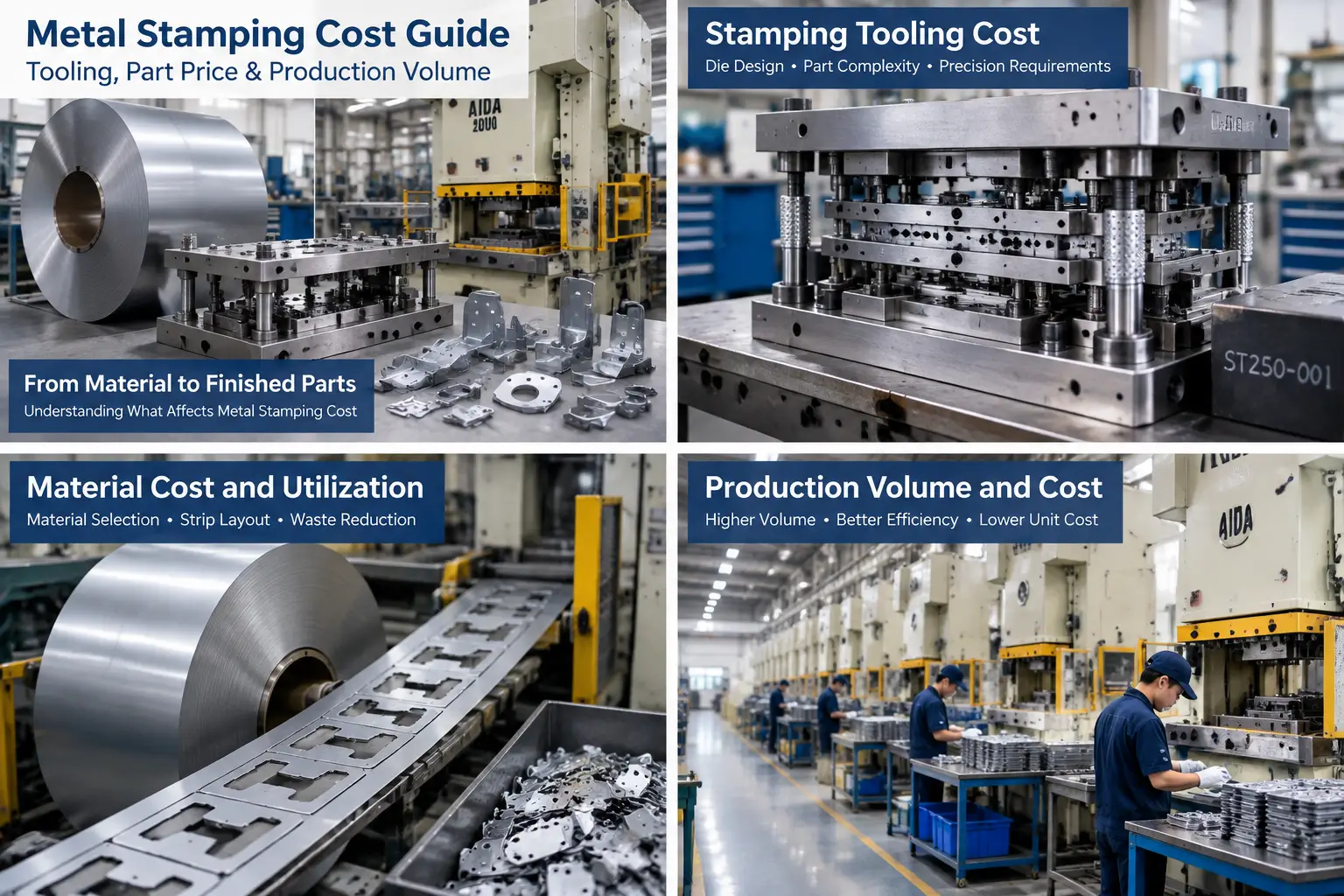
Selecting a metal stamping production strategy requires more than choosing a production route from a single forecasted piece count. Annual unit demand provides an important starting point, but relying on volume alone can create unnecessary tooling exposure or an inefficient production plan if release patterns, design requirements, or future demand change. A complete manufacturing strategy should consider batch release patterns, design maturity, tooling investment, engineering change risk, manufacturing flexibility, and total program duration. This guide explains how buyers and engineers can evaluate low volume vs high volume metal stamping options in the context of the complete program rather than volume alone.
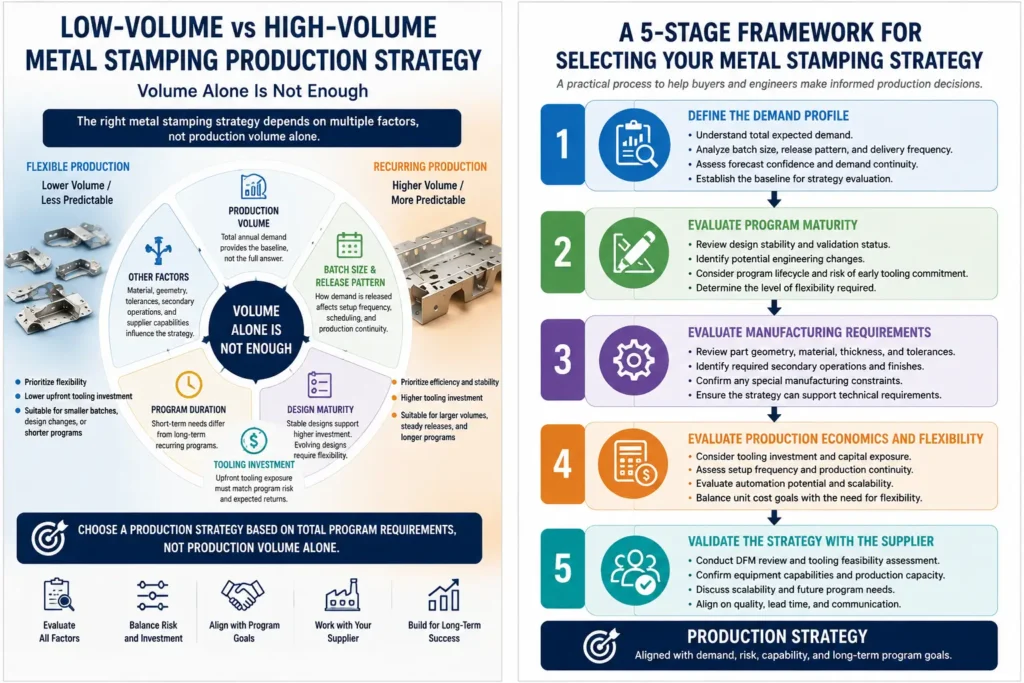
Beyond Unit Counts: Why Volume Alone Should Not Drive Your Stamping Strategy
In custom metal stamping, low volume and high volume are contextual manufacturing concepts rather than universal fixed numerical categories. Sourcing managers may look for a fixed quantity that separates low-volume from high-volume production, but supplier definitions can vary according to equipment, operating model, part requirements, and program conditions. For that reason, this guide does not use a universal numerical threshold to define either category.
Evaluating metal stamping production strategy requires looking beyond basic annual demand figures. Two programs with similar annual demand can still require different production strategies. One may use relatively large, predictable releases for a stable, longer-term product program, while another may divide demand into smaller or irregular releases while the component design remains subject to engineering changes.
Committing significant tooling investment while a design remains subject to change can increase commercial and schedule risk. Small or irregular releases can also make setup frequency more important relative to actual production run time. Conversely, a stable recurring program may justify evaluating a production approach designed for greater continuity and efficiency. Effective metal stamping production volume decisions therefore require analyzing how annual demand interacts with release cadence, forecast certainty, design stability, and capital exposure.
Core Strategic Trade-Offs in Metal Stamping Production Planning
Choosing between a lower-volume and higher-volume stamping approach involves balancing core commercial and technical trade-offs. Distinguishing core strategic drivers from supporting manufacturing constraints ensures that initial capital commitments align with long-term risk tolerance.
| Factor | Lower Volume Strategy | Higher Volume Strategy |
|---|---|---|
| Tooling Investment | Minimize upfront tooling exposure | Higher upfront investment for dedicated tooling |
| Design Changes | Better suited when geometry may change | Requires greater design stability |
| Unit Cost | Usually higher due to lower automation and setup impact | Lower unit cost when production runs are stable |
| Production Flexibility | Higher flexibility for changing requirements | Optimized for repeat production |
| Best Fit | Prototypes, uncertain demand, early programs | Mature products with predictable demand |
Demand Profile and Release Schedule
The operational cadence of part deliveries influences manufacturing efficiency just as much as aggregate annual volume. Sourcing teams must evaluate total expected demand alongside batch size, delivery frequency, and forecast confidence. A steady, predictable order stream allows stamping suppliers to plan material procurement, schedule press capacity efficiently, and amortize setup times over extended runs. Highly volatile or irregular order patterns increase operational friction, as frequent press changeovers consume press capacity and increase labor overhead per part.
Design Maturity and Engineering Change Risk
Design maturity represents one of the strongest boundaries between flexible short run strategies and dedicated production tooling. Early in a product lifecycle, components frequently undergo engineering change orders to resolve fitment issues, improve field performance, or adjust to downstream assembly updates. Committing capital to complex, dedicated stamping dies during active design revisions creates substantial financial exposure. Modifying hardened steel tooling components incurs expensive toolroom rework and delays production timelines. Where part geometry remains subject to revision, maintaining manufacturing flexibility takes precedence over achieving lower unit processing cost in suitable applications.
Upfront Tooling Exposure and Production Economics
The central economic trade-off in metal stamping balances upfront capital expenditure against ongoing unit processing costs. Dedicated production tooling requires significant initial capital investment but enables highly automated, rapid press cycles that reduce labor input and can lower unit processing cost in suitable recurring programs. Conversely, flexible lower-volume manufacturing strategies minimize or eliminate upfront tooling expense, lowering initial program risk. However, these methods typically involve higher unit processing costs due to manual intervention, longer cycle times, or secondary forming steps. Evaluating this trade-off requires analyzing total program budget constraints and cash flow priorities rather than looking at piece price in isolation.
Program Lifespan and Forecast Confidence
A short term program or a market-test release carries very different strategic requirements than a multi-year OEM platform program. When forecast confidence is low or program duration is limited, minimizing upfront capital expenditure protects the project against premature termination or volume shortfalls. When a program features multi-year demand visibility and high forecast certainty, greater production investment may become more reasonable when supported by the complete program requirements.
Manufacturing Constraints That Support the Strategy Decision
In addition to commercial and strategic factors, physical manufacturing constraints act as baseline boundaries for strategy selection. Part geometry complexity, sheet material grade, stock thickness, dimensional tolerance requirements, and secondary processing needs all influence equipment compatibility. While these physical attributes establish what is technically feasible on the press floor, they act as supporting constraints rather than standalone strategy drivers. Sourcing teams must evaluate technical feasibility alongside demand stability and design maturity to form a complete manufacturing plan.
Evaluating Operational Release Patterns: Batch Size vs Annual Volume
A common point of confusion in procurement is equating metal stamping batch size directly with total annual demand. Annual volume represents the total quantity of parts consumed across a twelve month period, whereas batch size defines the specific quantity produced and delivered in a single manufacturing release.
A program with substantial annual demand released in frequent, smaller batches presents different operational considerations from a program produced in fewer, larger releases. More frequent releases can increase the importance of setup, scheduling, inspection, and production coordination relative to actual run time.
When setup frequency is high relative to actual production time, setup and changeover requirements can have a greater influence on manufacturing efficiency. Fewer, larger releases may reduce setup frequency, but they can also change inventory and scheduling requirements. Buyers should therefore communicate expected release cadence during quotation and DFM review so the supplier can evaluate the production plan in the context of the complete program.
| Parameter | Annual Volume | Batch Size |
|---|---|---|
| Definition | Total parts required during a year | Quantity produced in each release |
| Main Impact | Influences long-term production strategy | Influences setup frequency and scheduling |
| Procurement Concern | Forecast confidence and program stability | Delivery frequency and inventory planning |
| Manufacturing Effect | Tooling and automation decisions | Changeover and production efficiency |
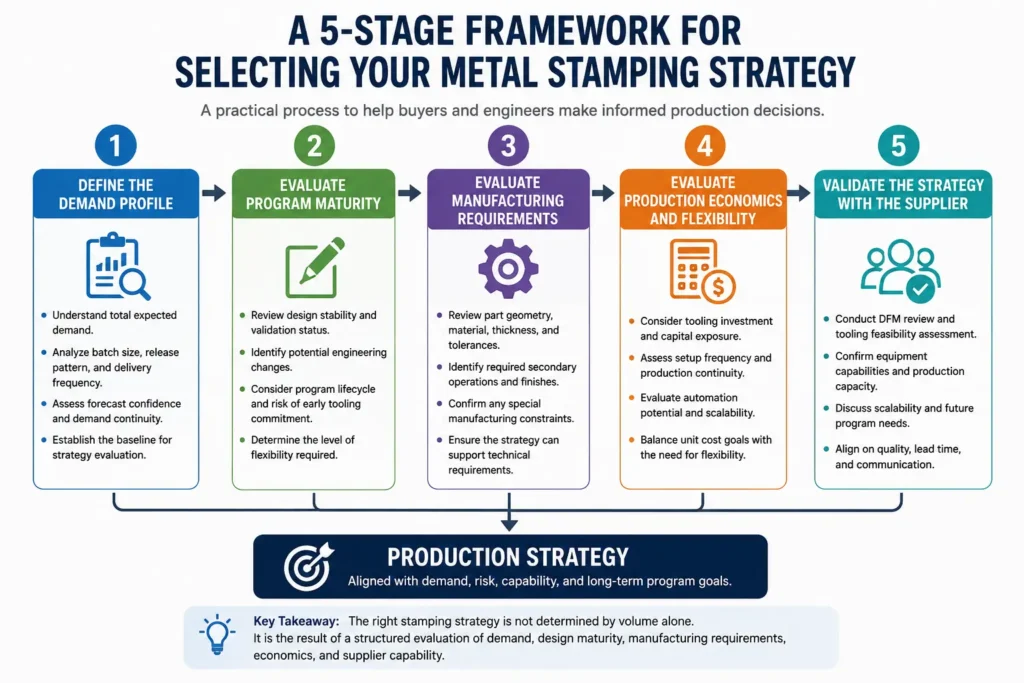
A 5-Stage Framework for Selecting Your Metal Stamping Strategy
To structure the decision-making process, OEM procurement teams and manufacturing engineers can apply a systematic five-stage evaluation framework before finalizing a metal stamping production strategy.
| Evaluation Area | Key Question |
|---|---|
| Demand | Is annual volume stable and predictable? |
| Release Pattern | Are orders frequent small batches or larger releases? |
| Design Maturity | Is the part design frozen? |
| Tooling Risk | Can the program support upfront die investment? |
| Manufacturing Needs | Are geometry and tolerances suitable for dedicated tooling? |
Stage 1 – Define the Demand Profile
The first stage focuses on compiling complete demand data beyond a single annual piece count. Procurement teams should define:
- Anticipated total annual component volume across the entire program lifecycle.
- Target batch release quantities and delivery intervals (for example, weekly, monthly, or quarterly releases).
- Degree of forecast confidence, identifying whether demand is backed by firm customer purchase orders or speculative projections.
- Expected demand continuity, establishing whether releases will be seasonal, steady, or subject to rapid promotional spikes.
Collecting these operational parameters ensures the supplier can model line capacity, press scheduling, and coil stock procurement accurately.
Stage 2 – Evaluate Program Maturity
The second stage assesses component design stability and potential exposure to engineering change orders. Engineers and buyers should review:
- Current product validation status, distinguishing early prototype stages from fully frozen production designs.
- Likelihood of impending geometry, material, or hole location revisions based on downstream testing or field feedback.
- Expected total program lifespan and planned product refresh schedules.
- Financial risk tolerance for modifying dedicated tooling if design revisions occur after tooling build sign-off.
If meaningful design modifications are still anticipated, the team should evaluate whether maintaining manufacturing flexibility is more appropriate than committing substantial capital before the design is stable.
Stage 3 – Evaluate Manufacturing Requirements
The third stage identifies physical component constraints that influence equipment and tooling selection. Technical teams should map:
- Overall part dimensions, blank layout, and geometric complexity.
- Sheet material specification, tensile strength, temper, and nominal thickness.
- Tolerances required for critical functional features, hole locations, and bend angles.
- Required secondary processing steps, such as deburring, tapping, surface plating, heat treating, or sub-assembly.
These manufacturing constraints define press tonnage requirements, bed size limits, and feed line parameters without dictating a final die architecture.
Stage 4 – Evaluate Production Economics and Flexibility
The fourth stage reviews commercial trade-offs qualitatively to match corporate budget structures. Sourcing teams should analyze:
- Upfront capital expenditure capacity and tooling budget availability.
- Unit processing cost sensitivity, determining how piece price impacts final end-product margins.
- Operational flexibility requirements, evaluating how easily the manufacturing setup can adapt to volume swings or minor design tweaks.
- Total risk exposure, comparing the cost of idle capital if volume falls short against the cost of higher piece prices during initial launch.
This qualitative evaluation balances capital protection against long term unit cost goals.
Stage 5 – Validate the Strategy with the Supplier
The final stage involves collaborative review with the metal stamping partner to align strategy with actual plant floor capabilities. Sourcing teams should review:
- Detailed Design for Manufacturability (DFM) reviews to identify opportunities for simplifying geometry, loosening non-critical tolerances, or optimizing material utilization.
- Equipment compatibility verification, ensuring press bed dimensions, stroke lengths, tonnage, and feed automation align with the part profile.
- Scalability roadmap planning, establishing clear technical milestones for transitioning from initial low-volume or bridge setups into higher-volume dedicated production as order volumes mature.
- Comprehensive review of supplier feedback regarding scrap reduction, strip layout options, and secondary operation sequencing.
Validating strategy with the manufacturing partner helps reduce disconnects between design intent and plant floor execution.
Matching Production Strategy to Project Conditions: Decision Matrix
Applying a structured evaluation framework helps align specific project conditions with appropriate strategic directions. The following vertical plain-text records outline how buyers and engineers should navigate common OEM project scenarios.
| Project Condition | Strategy Consideration |
|---|---|
| High engineering change risk | Preserve flexibility and limit early tooling commitment |
| Urgent delivery requirement | Evaluate non-tooling or flexible production routes |
| Uncertain demand | Control capital exposure before committing tooling |
| Bridge production | Plan transition path toward future production |
| Mature high-volume program | Evaluate automation and dedicated tooling |
| Frequent small releases | Consider setup efficiency and release planning |
Project Condition:
Evolving Part Design with High Engineering Change Risk
What the Buyer Should Evaluate:
- Probability of geometric or dimensional modifications during early market release.
- Financial and schedule impact of re-machining or modifying dedicated tool steel die components.
- Delivery lead times required to support initial physical assembly testing.
Production-Strategy Direction:
Prioritize a production strategy that preserves flexibility and limits premature capital commitment while the design remains subject to meaningful revision. The specific manufacturing route should be validated with the supplier according to part requirements and DFM feasibility.
Boundary:
Evaluate the risk of committing substantial tooling capital before the component design is sufficiently stable for the intended production program.
Project Condition:
Urgent Initial Requirement with Tight Lead Time Constraints
What the Buyer Should Evaluate:
- Required component delivery date versus standard tooling build and qualification lead times.
- Availability of raw sheet stock or coil material.
- Secondary forming requirements that can be handled on universal CNC press brakes or flexible notch-and-bend equipment.
Production-Strategy Direction:
For urgent initial requirements, evaluate whether a flexible production route can meet the required component geometry and delivery needs without immediately committing to dedicated stamping tooling. Direct profile cutting followed by CNC bending may be an option for some suitable parts, subject to manufacturing feasibility.
Boundary:
Avoid rushing dedicated die construction without full DFM approval merely to hit short-term delivery windows.
Project Condition:
Uncertain Demand Forecast with Low Initial Volume
What the Buyer Should Evaluate:
- Minimum economic release quantities required by the supplier.
- Capital preservation priorities versus piece price sensitivity during early platform launch.
- Potential timeline for receiving firm long-term customer purchase orders.
Production-Strategy Direction:
Evaluate a strategy that limits upfront capital exposure while demand remains uncertain, while also considering the unit processing cost and manufacturing limitations of the available production routes.
Boundary:
Do not base major tooling commitments solely on demand forecasts that remain uncertain.
Project Condition:
Bridge Production During Platform Ramp-Up
What the Buyer Should Evaluate:
- Expected ramp-up pattern and the conditions that may justify a future production-strategy transition.
- Lead time necessary to design, build, and qualify dedicated high-volume production tooling.
- Interim component supply required to sustain factory assembly lines during tool build.
Production-Strategy Direction:
Evaluate whether a bridge production approach can support initial requirements while the longer-term production strategy is being validated. Any transition to dedicated tooling should depend on design maturity, demand confidence, manufacturing requirements, and supplier feasibility review.
Boundary:
Ensure part specifications produced during bridge production match the dimensional intent of final volume production.
Project Condition:
Mature, High-Demand Product Line with Multi-Year Visibility
What the Buyer Should Evaluate:
- Long-term demand stability and firm contract visibility over a multi-year horizon.
- Aggressive unit processing cost targets necessary to maintain competitive product margins.
- Opportunities for press feed automation, in-die sensing, and scrap optimization.
Production-Strategy Direction:
For a mature program with recurring demand and longer-term visibility, evaluate whether greater tooling investment, automation, and production continuity are justified by the complete program requirements. The appropriate tooling and equipment configuration should be determined through supplier DFM and feasibility review rather than volume alone.
Boundary:
Confirm that component design freeze is sufficiently stable across all engineering stakeholders before committing capital.
Project Condition:
High Annual Demand Delivered in Small Periodic Batches
What the Buyer Should Evaluate:
- Ratio of press changeover time to total press run time per batch.
- Inventory carrying capabilities versus job shop setup fee structures.
- Opportunities to reduce setup and changeover burden within the supplier’s available production system.
Production-Strategy Direction:
Work with the stamping supplier to evaluate how release frequency affects setup, scheduling, and production continuity, and whether the release plan can be adjusted without creating unnecessary inventory or delivery risk.
Boundary:
Do not assume high annual volume automatically eliminates small-batch setup cost penalties.
Project Condition:
Program Requiring Extensive Secondary Finishing Operations
What the Buyer Should Evaluate:
- Cost and labor impact of offline secondary operations such as deburring, tapping, hardware insertion, or welding.
- Throughput bottlenecks created by manual post-stamping handling.
- Potential for integrating secondary operations into primary press setups or progressive station layouts.
Production-Strategy Direction:
Evaluate secondary operations as part of the complete production plan. Their labor, handling, scheduling, and equipment requirements may affect the preferred production strategy, but the appropriate level of integration or automation should be determined from the specific project rather than production volume alone.
Boundary:
Do not assume that secondary operations should be manual or automated solely because a project is described as low volume or high volume.
Real-World Production Strategies: Insights from the Factory Floor
Examining actual manufacturing practices provides clear context for how strategy principles operate on the plant floor. Authentic factory experience highlights how suppliers balance lead times, tooling investments, and recurring delivery demands.
Lower-Quantity and Urgent Production Without Immediate Dedicated Tooling
For lower-quantity orders or urgent initial requirements, the time and investment needed to develop dedicated stamping tooling can become an important production-strategy consideration.
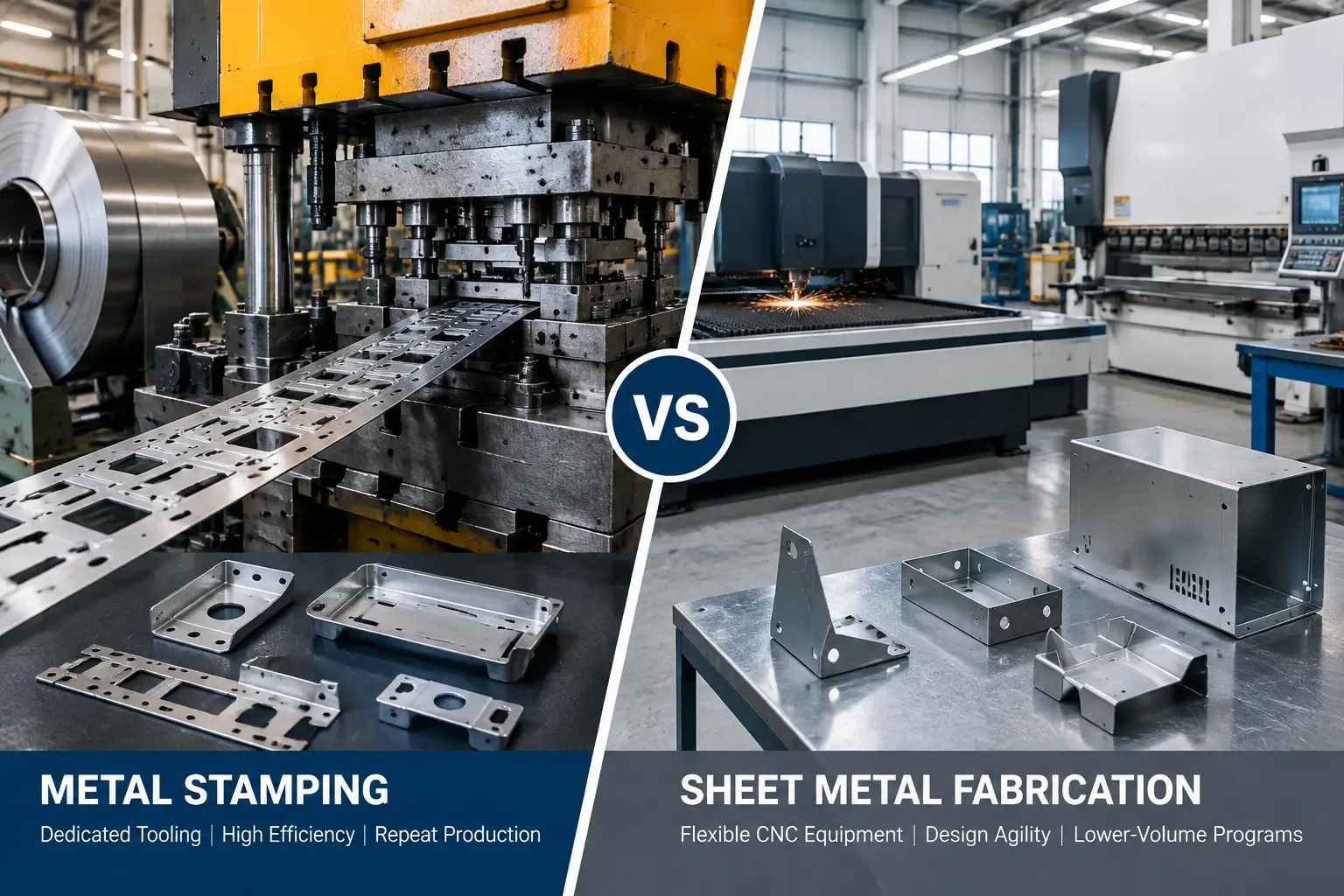
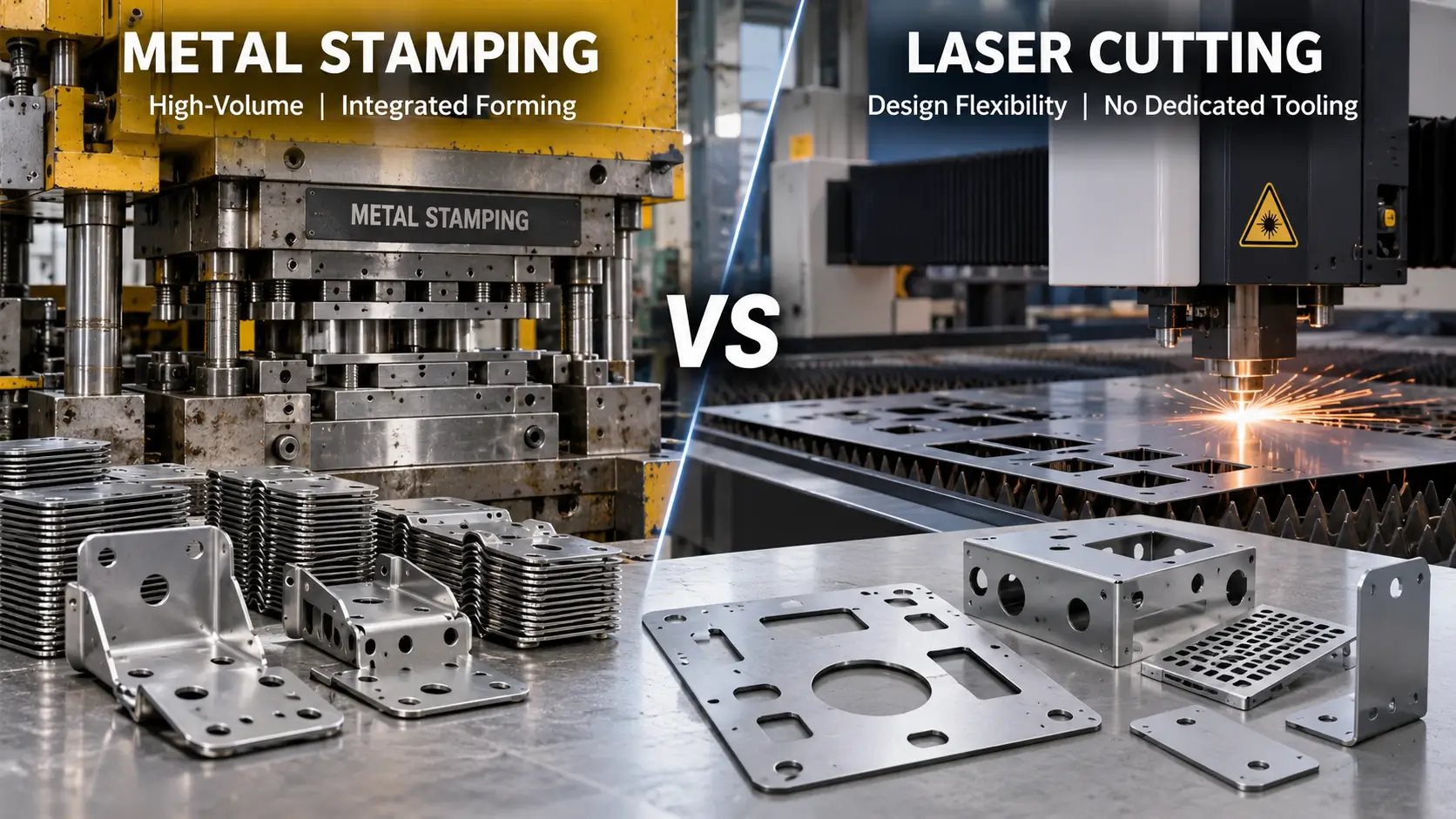
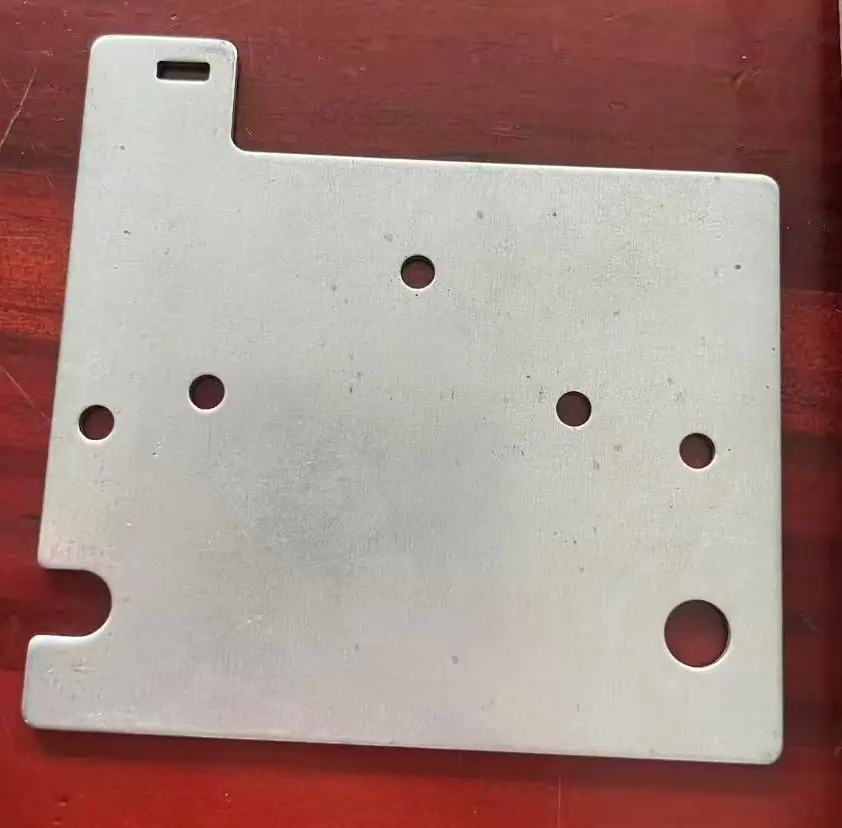
For certain lower-quantity or time-sensitive projects, our factory experience shows that developing dedicated stamping tooling immediately is not always the most practical route. Depending on part geometry and functional requirements, direct profile cutting options can bypass tooling development entirely. Component profiles can be cut directly out of raw sheet material using precision laser cutting or direct component profile wire cutting, followed by precision CNC press brake bending where three-dimensional forming is required.
It is important to understand the precise operational distinction here: wire cutting in this context refers to directly cutting the actual product component profile out of raw sheet material. It does not refer to wire EDM machining used inside a toolroom to fabricate die components.
Factory-specific experience illustrates why this flexible route may be considered for certain project conditions:
- Some tooling projects, particularly progressive dies, may require upfront investment exceeding RMB 10,000 based on our factory experience.
- Some small single-operation stamping dies may require approximately 15 to 30 days to develop, depending on the project.
- Some customers require parts urgently and may not want to wait for tooling development.
- For lower-quantity project runs, when the total upfront tooling investment is added to initial piece costs, the overall project expenditure using dedicated stamping dies can equal or exceed the total cost of direct profile cutting (laser or wire profile cutting) combined with CNC bending.
For suitable lower-quantity projects, direct profile cutting followed by CNC bending can provide an alternative production route without first developing dedicated stamping tooling. Whether this route is appropriate depends on the component requirements and project conditions.
Recurring Photovoltaic Production and Long-Term Planning
When product designs achieve full stability and demand exhibits strong long-term continuity, production planning shifts toward process consistency, repeat accuracy, and line efficiency.
Real-world manufacturing examples from our recurring hardware production lines illustrate this continuous strategy:
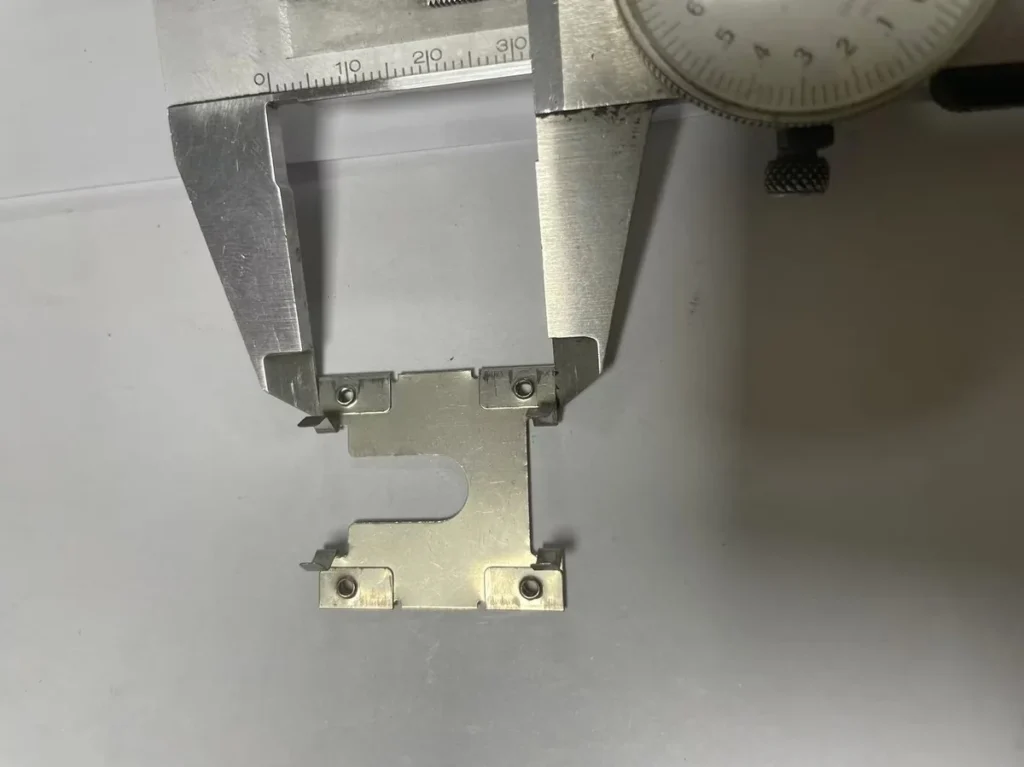
- 304 stainless steel photovoltaic conductive sheets.
- Photovoltaic brackets.
- PV color steel tile brackets.
These are real examples of recurring photovoltaic production in our factory. They support discussion of repeat-production requirements, production continuity, and longer-term manufacturing planning. They do not establish a universal volume threshold or prove that any particular die type must be selected for recurring production.
From Small Initial Orders to Repeat Production
In our export manufacturing experience, new customer programs often begin with smaller orders and may move into larger repeat production as the project develops.
This observation is useful because production strategy does not always need to remain fixed for the entire program. Buyers can consider how initial requirements, design maturity, forecast confidence, and future repeat demand may change over time. If the program develops, the production strategy can be reviewed again with the supplier rather than assuming at the beginning that the initial manufacturing route must remain permanent.
Frequently Asked Questions
How does production volume affect metal stamping strategy?
Production volume influences how manufacturing capital is deployed. Lower volume strategies emphasize capital preservation, design flexibility, and short lead times by using universal tooling or direct profile cutting. Higher volume strategies justify upfront capital expenditure in dedicated tooling to achieve rapid cycle times, automated material handling, and lower unit processing cost in suitable applications.
What is the difference between batch size and annual production volume?
Annual production volume is the total quantity of parts required over a twelve month period. Batch size is the specific quantity produced and delivered in a single manufacturing release. A high annual volume delivered in numerous small batches introduces frequent press setup changeover overhead, whereas large batch releases maximize press uptime and running efficiency.
How does design maturity impact stamping investment?
Design maturity influences the risk associated with committing to dedicated tooling. If a part remains subject to meaningful engineering changes, tooling modifications may add cost and schedule impact. Buyers should evaluate design stability together with demand, program duration, and manufacturing requirements before making a major tooling commitment.
When should a project transition from an initial release to repeat production?
There is no single transition point that applies to every project. Buyers should review design maturity, repeat demand, forecast confidence, release pattern, manufacturing requirements, and tooling exposure with the supplier. A change in production strategy should follow a project-specific feasibility and economic review rather than a universal volume threshold.
How do secondary operations influence metal stamping production strategy?
Secondary operations such as deburring, tapping, hardware insertion, surface finishing, or assembly can add labor, handling, scheduling, and equipment requirements. Their effect on production strategy depends on the specific part and release plan. Buyers should include these operations in the supplier review rather than assuming that a particular level of volume automatically requires manual or automated integration.
How should OEM buyers plan metal stamping when forecasts are uncertain?
When forecasts are uncertain, buyers should evaluate how much upfront capital exposure is appropriate while preserving the ability to respond to future demand changes. For suitable parts, flexible production methods may be considered, but the manufacturing route should still be validated against geometry, tolerance, material, and other project requirements.
How does release frequency affect setup efficiency?
Frequent small releases require the stamping supplier to perform repeated press changeovers, die alignment, and first-piece inspections. This setup frequency increases press downtime and operational friction per part. Consolidating orders into larger, less frequent releases amortizes setup overhead over more units, improving line efficiency.
Why do suppliers define low-volume and high-volume metal stamping differently?
Suppliers may describe low-volume and high-volume work differently because their equipment, operating model, automation level, part mix, and target production programs differ. Buyers should therefore ask how a supplier evaluates their specific program rather than relying on a universal industry quantity threshold.
Conclusion
Selecting the right metal stamping strategy requires evaluating total program requirements rather than relying on a single, isolated production volume figure. Annual unit demand provides an initial reference point, but batch release patterns, design maturity, tooling capital exposure, risk tolerance for engineering changes, and total program lifespan ultimately determine the correct manufacturing path. Flexible lower-volume methods preserve capital, accommodate design revisions, and shorten initial delivery lead times. As product designs freeze and order streams achieve multi-year continuity, transitioning into dedicated, highly automated production infrastructure delivers unit cost efficiency and reliable long-term supply. By conducting thorough DFM reviews, assessing operational release cadences, and validating plant capabilities with an experienced stamping partner early in the design process, OEM procurement teams and engineers can implement a production strategy that balances financial risk with long-term manufacturing performance.
Need Help Planning Your Metal Stamping Production Strategy?
If you are evaluating an initial order, repeat production program, or a future volume ramp-up, send us your part drawing, material, thickness, estimated annual demand, expected batch size, and delivery schedule. We can review the project from a manufacturing and DFM perspective and discuss a production approach based on the actual program requirements.