A solar mounting bracket that fails in the field doesn’t just cost a replacement part — it costs a service call, a damaged reputation, and sometimes a voided warranty on the entire installation. For buyers sourcing racking hardware for harsh climates, the difference between a bracket that lasts 20 years and one that fails in 3 often comes down to two things: material grade and stamping precision. As a solar mounting bracket manufacturer working with harsh-climate installations, here is how we build 304 stainless steel brackets to prevent exactly that.
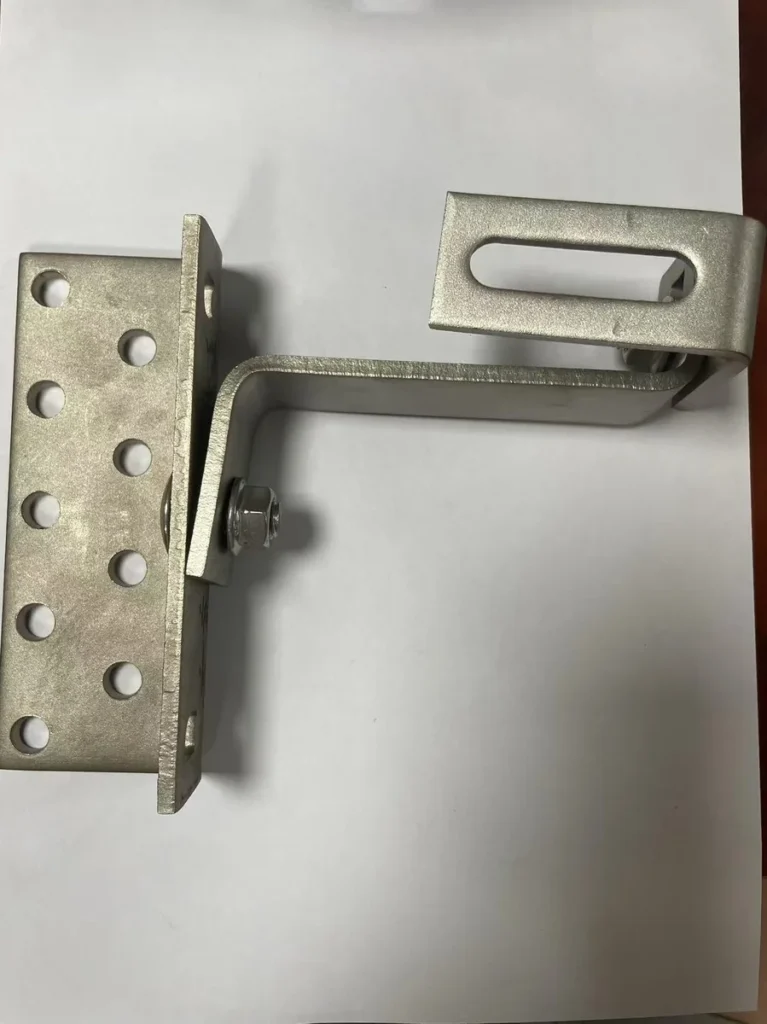
Base plate assembled with L-bracket and Z-bracket — full mounting set for ground or wall installation
Why Material Grade Matters More in High-Outage Regions
Many of our solar bracket orders ship to the Middle East and Southeast Asia — regions where grid power is unreliable and solar installations often run unattended for long stretches between maintenance visits. In these conditions, hardware failure isn’t a minor inconvenience; it can mean weeks without power generation before a technician can reach the site.
We manufacture our solar mounting brackets from 304 stainless steel at 5mm thickness — thicker than the 2-3mm commonly used in budget racking systems. The added thickness resists wind load fatigue and salt-air corrosion in coastal installations, where thinner brackets show stress cracking within a few years.
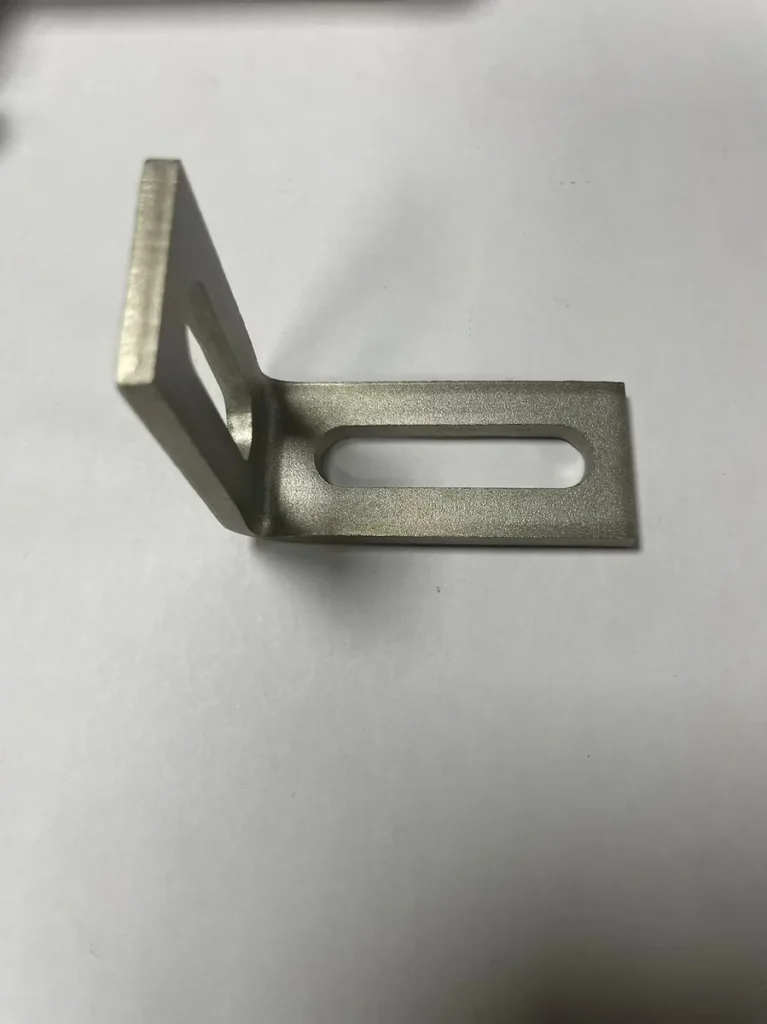
L-bracket — formed in a single bending operation after stamping
L-Bracket and Z-Bracket: Why Shape Matters
Solar racking systems typically need at least two bracket profiles to handle different mounting angles and surface conditions:
L-brackets — used for direct perpendicular mounting, typically where the surface is flat and load distribution is straightforward
Z-brackets — used where the mounting surface and the rail need to be offset, such as ground mounts on uneven terrain or elevated racking systems
Getting the bend angle and slot positioning wrong on either profile creates installation problems in the field — slots that don’t align with rail systems, or angles that put uneven stress on the mounting bolts. Every dimension is verified against the engineering drawing before the batch ships.
Manufacturing Process: From Coil to Finished Bracket
Solar mounting brackets at 5mm thickness require heavier press tonnage than thin-gauge stamping. Learn more about how progressive die stamping works across different material thicknesses in our guide: What is Progressive Die Stamping?
304 stainless steel sheet, 5mm thickness, cut to blank size
Blank stamped with mounting slots and bolt holes — precision die ensures consistent slot positioning across the batch
CNC press-brake bending to form the L or Z profile angle
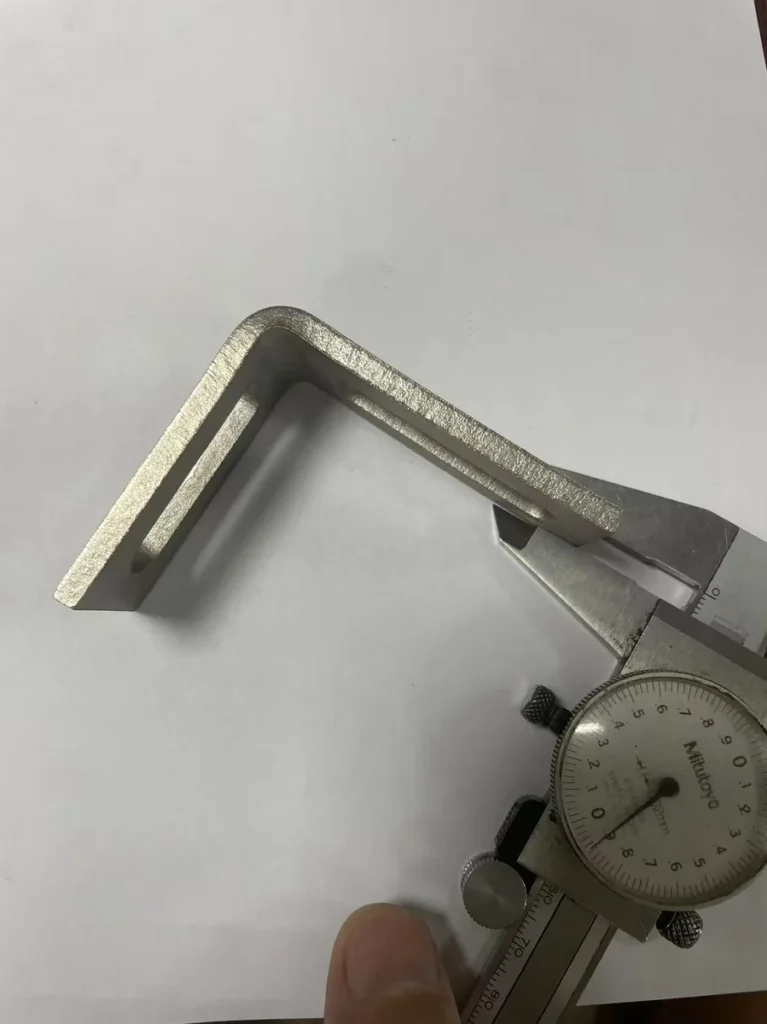
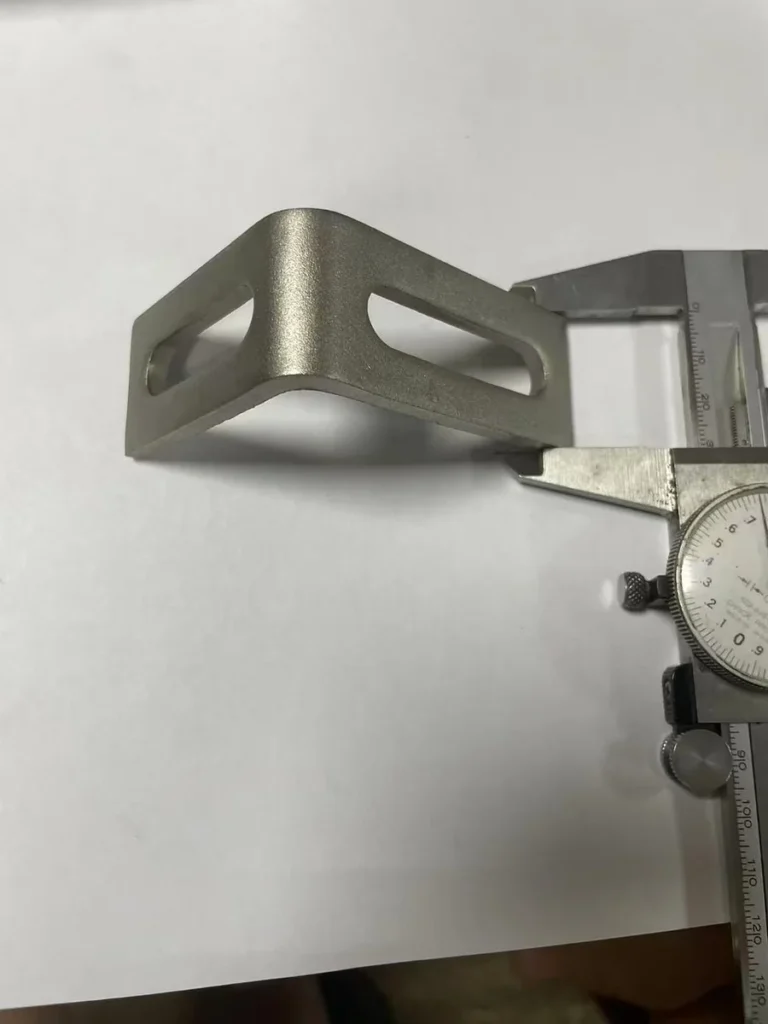
Width and thickness verified with dial caliper against the engineering drawing
Surface finishing — deburred edges, no sharp corners on handled surfaces
Sorted, packed, and prepared for export
5mm material thickness confirmed before the bracket leaves the lineWidth and slot positioning verified against the approved drawing
Beyond Standard Brackets: Roof-Mount Systems
Standard ground and rail brackets are only part of the solar racking picture. Roof-mounted systems — particularly on metal roofing — require a more complex bracket geometry: a deeper stamped base for waterproofing membrane clearance, additional bending operations, anti-slip groove forming, and precision hole punching, all on the same 5mm stainless material.
This level of multi-process tooling — stamping, bending, punching, and groove forming combined in one part — is where many smaller stamping shops reach their limit. We handle the full process in-house, which is why several of our solar hardware partners have shifted heavier, more complex bracket work to us as the broader solar manufacturing sector consolidates under pricing pressure.
What to Confirm Before Ordering Solar Mounting Hardware
Before placing a bulk order for solar racking components, confirm these details with your supplier:
Material certification — request confirmation of 304 grade, not a lower-grade substitute that looks identical when new
Actual thickness, not nominal — ask for caliper-verified measurements on production samples, not just the spec sheet
Bend angle tolerance — slight variations in bend angle compound across a full racking system and cause field alignment issues
Coastal or high-corrosion application — confirm whether additional surface treatment is needed for your specific climate
We provide a free sample with caliper-verified dimensions before any production run begins.
Get a Quote for Your Solar Mounting Bracket Project
Send us your drawing, or describe your racking system requirements — mounting surface, expected load, and climate conditions. We will confirm feasibility, material recommendation, and pricing within 24 hours.