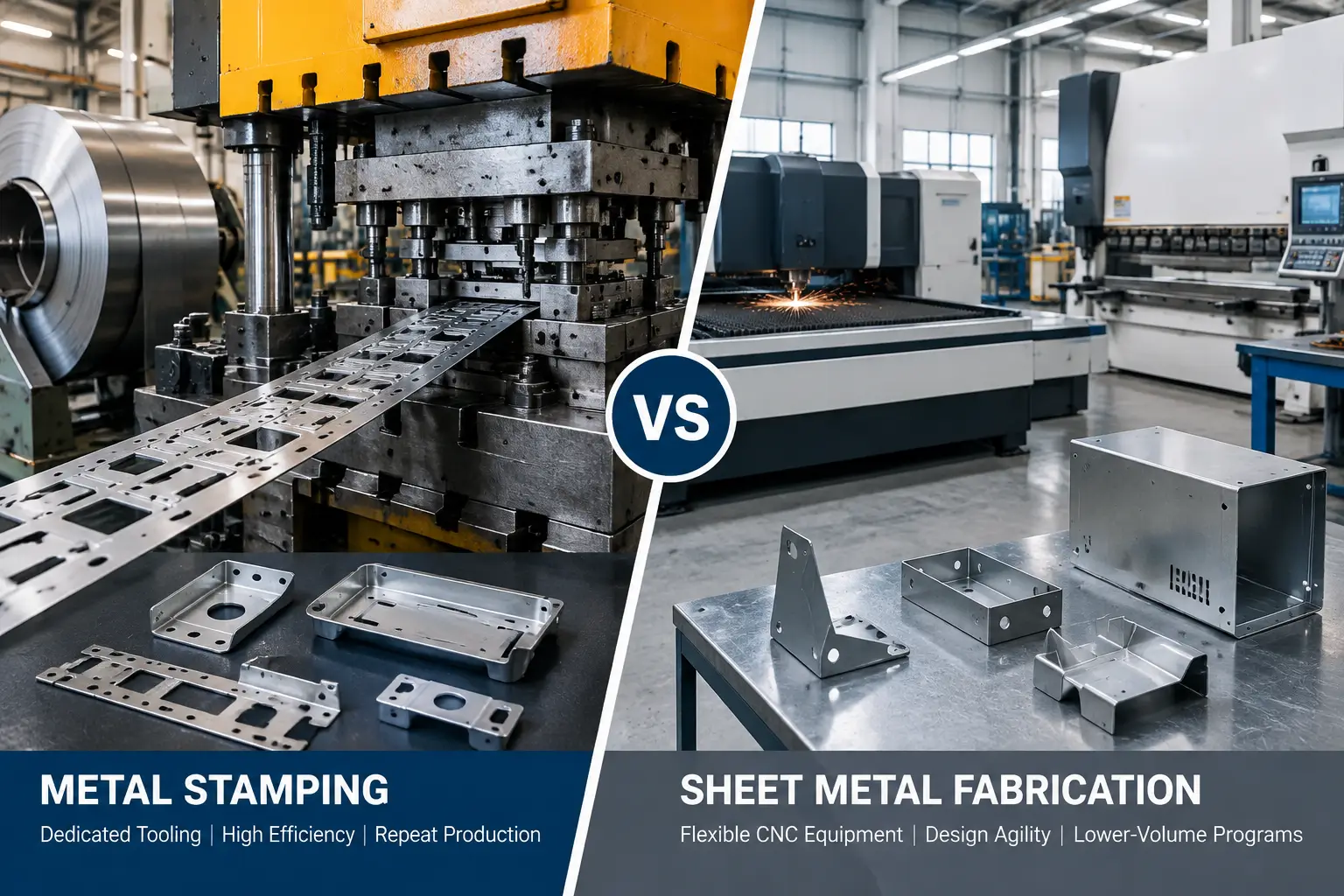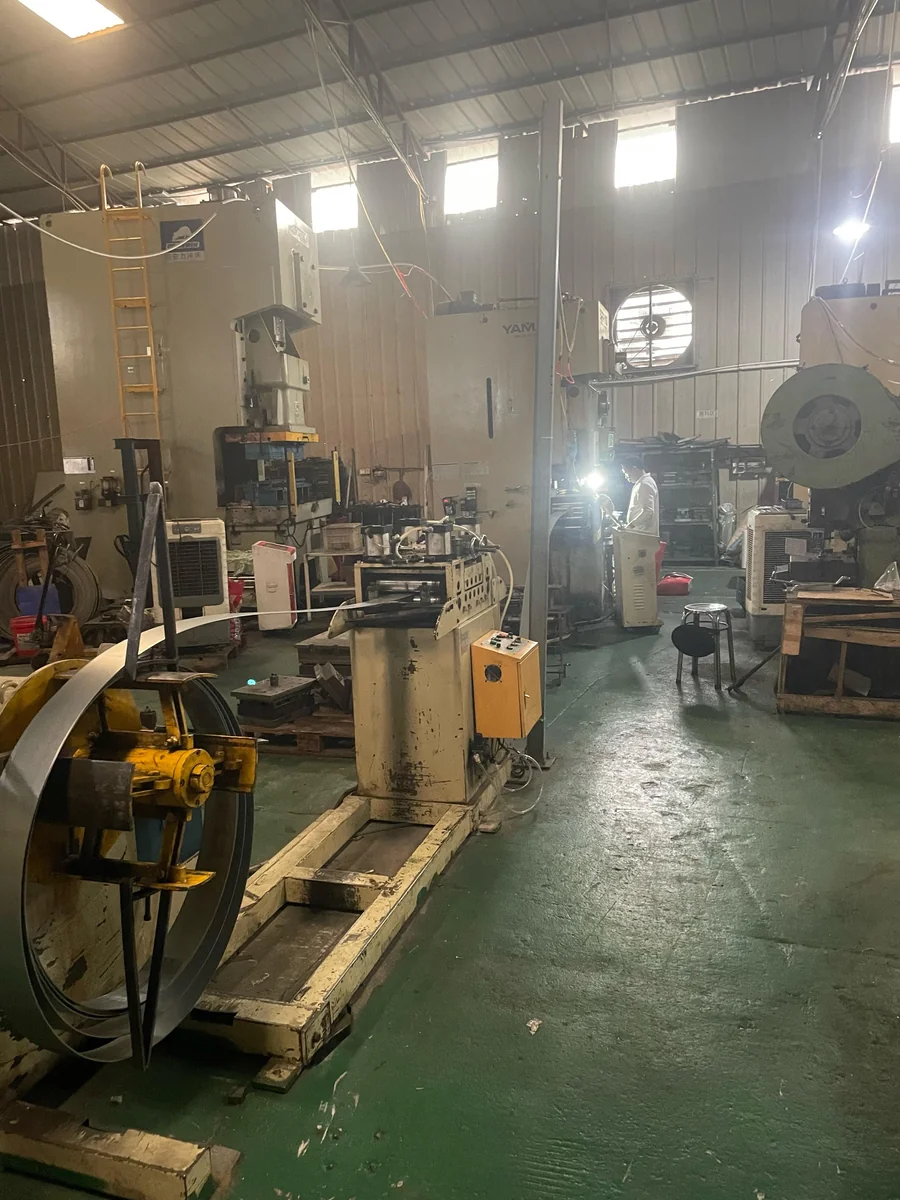
Founder of Metal Stamp Factory with more than 25 years of hands-on experience in tooling development, metal stamping, and OEM production.

When sourcing custom stamped components, OEM procurement teams and supplier quality engineers (SQEs) frequently face a critical documentation decision: should they mandate a full Production Part Approval Process (PPAP) package?
For programs where the customer, industry, or contractual requirements call for PPAP, the submission may be a condition of production approval. However, applying a full automotive-style documentation package to every commercial stamping project can add unnecessary cost, administrative work, and lead-time before tooling or production release.
Understanding PPAP for metal stamping parts requires evaluating how component risk, production volume, tooling complexity, and customer-specific quality requirements intersect. Rather than treating PPAP as a generic “18-element checklist,” OEM buyers should understand how to select the appropriate submission level, request the evidence relevant to their program, and establish clear quality deliverables during the Request for Quotation (RFQ) stage.
PPAP for Metal Stamping Parts: Quick Answer
The Production Part Approval Process (PPAP) is a structured production-approval framework used to provide evidence that a supplier understands the applicable engineering requirements and that the planned manufacturing process can support conforming production under the agreed conditions.
PPAP is not automatically required for every metal stamping project. The customer defines whether PPAP is required, which submission level applies, and what documentation, records, or sample parts must be submitted, retained, or made available for review. These expectations should be clarified as early as possible, preferably before tooling and production planning are finalized.
Table 1: Quick Reference Guide for OEM Buyers
| Buyer Verification Question | Practical Answer for OEM Procurement |
|---|---|
| Is PPAP always required for stamped parts? | No. PPAP requirements depend on customer-specific standards, industry expectations, component risk, and contractual agreements. |
| Who defines the required PPAP scope? | The applicable customer, program, quality, and contractual requirements determine the required submission level and deliverables. |
| Should the PPAP level be agreed upon early? | Yes. Submission level, sample requirements, and required records should be clarified as early as possible, preferably before tooling development is finalized. |
| Does a First Article Inspection (FAI) replace PPAP? | No. FAI provides dimensional or feature-level evidence for inspected sample parts, while PPAP covers a broader production-approval scope where required. |
| Do a CoC or MTR replace PPAP? | No. A CoC is generally a supplier/manufacturer declaration against an identified scope, while an MTR is raw-material documentation. Neither automatically replaces PPAP. |
| Should expectations be defined before tooling? | Preferably, yes. Defining quality deliverables before tooling release can reduce late documentation changes, delays, and misunderstandings. |
What Is PPAP in Metal Stamping?
PPAP is most strongly associated with automotive supply chains and the AIAG Production Part Approval Process (PPAP) framework, but similar customer-driven production-approval requirements may also appear in other OEM manufacturing programs.
In custom metal stamping, PPAP can serve as a structured production-approval framework between development or trial activity and serial production. Depending on the required submission, a PPAP package may address tooling, the production process, material documentation, dimensional results, process controls, and other customer-specified evidence.
PPAP addresses part-level production approval, while supplier quality certifications apply to the organization’s quality management system. For a comparison of the main frameworks, see our guide to supplier quality certification requirements.
Typical project sequence:
- Engineering design and drawings
- Tooling and press process development
- PPAP submission and trial run, where required
- Serial production release according to the agreed approval requirements
What PPAP Is Intended to Verify
At its core, a PPAP submission may provide evidence that:
- Engineering Requirements Are Understood: The supplier has reviewed the applicable drawing, specifications, dimensional requirements, material callouts, and secondary-process requirements.
- Manufacturing Process Is Prepared: The planned stamping process, tooling, feeding, and auxiliary operations have been reviewed against the agreed production and quality requirements, with capability evidence supplied where specified.
- Material and Finishing Requirements Are Supported: Material and secondary-process documentation can be included where required to support the specified grade, finish, or performance requirements.
- Quality Inspection Controls Are Defined: Inspection methods, measurement tools, fixtures, gages, sampling, or reaction requirements may be documented where required by the customer.
Does Every Metal Stamping Project Require PPAP?
A common misconception among procurement teams is that every custom metal component requires a complete PPAP submission package. In practice, requiring a full PPAP package where the customer or program does not need one may add unnecessary engineering, documentation, cost, and lead time for both the buyer and the supplier.
Projects More Likely to Require PPAP
OEM buyers are more likely to require a formal PPAP package under conditions such as:
- Automotive or Customer-Specific Programs: Projects in which the customer, OEM, Tier supplier, or applicable purchasing requirement explicitly requires PPAP.
- Higher-Risk or Critical Components: Parts for which the buyer requires stronger production-approval evidence because failure could have significant functional, safety, or commercial consequences.
- High-Volume Serial Production: Programs where process variation could create significant quality, cost, or launch risk and the customer therefore requires a formal approval package.
- New Tooling & Supplier Qualification: Programs involving new progressive or compound dies, or qualification of a new stamping supplier, may require formal production-approval evidence when specified by the customer.
- Major Engineering or Design Changes: Significant modifications to part geometry, raw material substrate, surface finish, or production press lines.
Projects That May Not Need a Full PPAP Package
Conversely, some commercial stamping projects may not require a full PPAP submission when the customer allows a narrower approval package. Examples may include:
- Low-Risk Structural Hardware: Simple mounting brackets, basic covers, or unplated shims with wide dimensional tolerances and low failure consequences.
- Low-Volume or Prototype Tooling Runs: Short-run production batches or prototype tooling builds intended primarily for fit-and-function testing.
- Non-Automotive Commercial Stampings: Projects where the buyer’s quality protocol calls for a defined combination of dimensional, material, inspection, or shipment records rather than a full PPAP package.
Ultimately, customer-specific requirements control whether PPAP is required. Buyers should evaluate component risk rather than imposing a blanket documentation rule across all purchased parts.
PPAP Submission Levels 1–5: What Buyers Need to Know
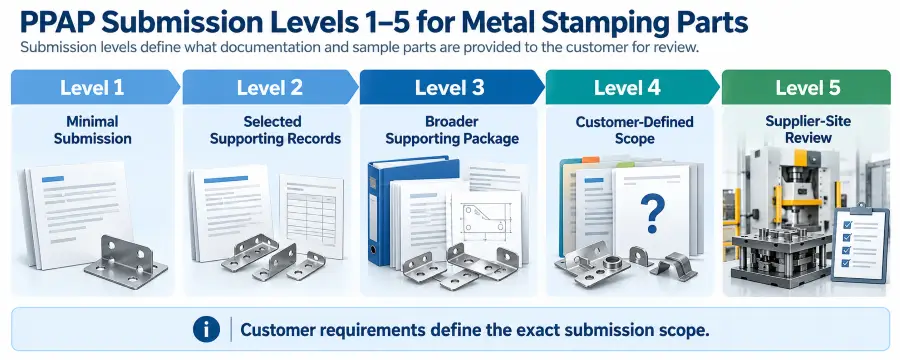
AIAG-style PPAP commonly uses five submission levels. The level mainly defines what the supplier submits or makes available to the customer; the exact records that must be created, retained, submitted, or reviewed still depend on the applicable PPAP requirement and customer-specific requirements.
Table 2: Overview of PPAP Submission Levels for OEM Buyers
| Level | Buyer View / Administrative Scope | Typical Submission Scope to Customer |
|---|---|---|
| Level 1 | Minimal External Submission | Part Submission Warrant (PSW) only (and appearance approval report where specified). |
| Level 2 | Limited Supporting Submission | PSW with product samples and selected supporting documentation as required. |
| Level 3 | Broader Supporting Submission | PSW with product samples and a broader package of supporting quality and process documentation as required. |
| Level 4 | Customer-Defined Scope | PSW and other requirements specifically defined by the customer. |
| Level 5 | Supplier-Site Review | PSW with product samples and supporting documentation made available for review at the supplier’s manufacturing location, as required. |
Note: Submission level does not by itself define every record a supplier must create or retain. The applicable PPAP requirement and customer-specific requirements determine what must be prepared, retained, submitted, or made available for review.
How Should a Buyer Choose a PPAP Level?
When the customer or program does not already prescribe the submission level, OEM buyers can consider:
- Component Criticality & Risk: Higher-risk or tightly controlled parts may justify broader submission requirements, while lower-risk parts may need a more limited package if the customer allows it.
- Supplier History & Quality Track Record: Supplier history may influence how much evidence the customer wants to review, but the required level should still be defined by the customer rather than assumed from supplier status alone.
- Production Volume: Higher-volume production can increase the consequence of process variation, which may support broader approval evidence when required by the customer.
- Tooling & Process Complexity: Complex tooling or secondary operations can increase process risk and may justify broader documentation or review.
- Customer or Program Requirements: The applicable customer manual, drawing, purchase specification, or program requirement takes precedence over generic rules of thumb.
Which PPAP Documents Matter Most for Metal Stamping Buyers?
The AIAG PPAP framework is commonly described through 18 potential elements or requirements, with applicability depending on the submission and customer-specific requirements. Rather than turning this article into a training manual, OEM buyers can group the relevant records into five functional categories for metal stamping.
Five functional PPAP record categories for stamped parts:
- Design and engineering records: drawings, specifications, and revision status
- Process planning records: process flow, PFMEA, and Control Plan where required
- Measurement and dimensional evidence: dimensional results, inspection records, and gage-related evidence where required
- Material and performance evidence: material certificates, secondary-process records, and test results where required
- Submission and approval records: PSW, sample parts, and customer-specific submission records
1. Design and Engineering Records
This category establishes the baseline physical and technical requirements for the component:
- Engineering Drawings and Specifications: The current drawing and applicable specifications that define the part requirements; a ballooned drawing may be used for dimensional reporting where required.
- Engineering Change Documentation: Records detailing any approved design modifications or tolerance adjustments made prior to tooling release.
2. Process Planning Records
These records demonstrate how the stamping supplier plans to manage manufacturing risks:
- Process Flow Diagram: A visual map of the applicable manufacturing sequence, which may include stamping, deburring, cleaning, secondary processing, inspection, and packaging.
- Process Failure Mode and Effects Analysis (PFMEA): Documentation identifying potential manufacturing failure modes—such as die wear, misfeeds, burr formation, or springback variations—and outlining preventive controls.
- Control Plan: A structured table defining the specific inspection points, measuring tools, sampling frequencies, and reaction plans used on the press floor during production.
3. Measurement and Dimensional Evidence
This evidence shows how inspected sample results compare with the specified drawing or inspection requirements:
- Dimensional Inspection Results: A dimensional report comparing measured sample results with the drawing or inspection requirements specified by the customer.
- Measurement System Evidence: Calibration, gage, fixture, or other measurement-system records may be required depending on the customer and PPAP scope.
4. Material and Performance Evidence
This documentation supports review of raw-material and secondary-process requirements:
- Material Test Records: Material documentation, such as an MTR or material certificate where applicable, may support the specified raw-material requirements. For detailed certificate interpretation, see our mill test report for metal stamping guide.
- Performance and Secondary-Process Records: Plating, coating, heat-treatment, corrosion, hardness, or other records may be required when they are part of the customer specification.
- For automotive programs that separately require material and substance reporting, see our guide to IMDS material data for stamped parts. An MTR or PPAP package does not automatically replace an IMDS submission when one is required.
5. Submission and Approval Records
This category covers submission and approval records:
- Part Submission Warrant (PSW): A key PPAP submission document summarizing part and submission information and recording the supplier’s submission status against the applicable customer requirements.
- Production Sample Parts: Physical samples representing the production process may be submitted when required by the customer for evaluation or approval.
PPAP vs First Article Inspection (FAI)
In custom metal stamping procurement, buyers frequently conflate a First Article Inspection (FAI) with PPAP. Both can include dimensional evidence from sample parts, but their scope, purpose, and approval role are different.
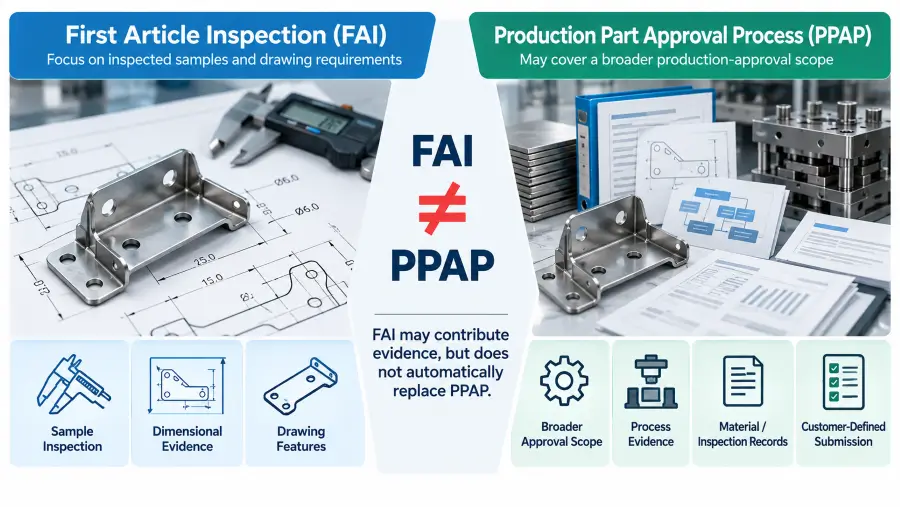
Table 3: Comparative Analysis: PPAP vs First Article Inspection (FAI)
| Comparison Aspect | Production Part Approval Process (PPAP) | First Article Inspection (FAI) |
|---|---|---|
| Primary Objective | Provides broader production-approval evidence for the manufacturing process where PPAP is required. | Provides dimensional or feature-level evidence for inspected sample parts. |
| Documentation Scope | May include design, process, material, dimensional, capability, and submission records depending on the required level and customer scope. | Usually narrower and focused on dimensional or feature inspection evidence. |
| Process Control Coverage | May include process planning and control evidence where required. | Does not automatically establish broader production-process approval. |
| Production Conditions | PPAP samples are generally expected to represent the intended production process under the applicable customer requirements. | FAI conditions depend on the buyer’s inspection requirement and are not automatically equivalent to PPAP production conditions. |
| Typical Sourcing Application | Used when the customer or program requires broader production-approval evidence. | Used when the customer requires first-article or dimensional verification. |
An FAI report provides valuable dimensional evidence for sample parts, but it does not automatically cover the broader process and documentation scope that may be required in PPAP. FAI can contribute dimensional evidence to a PPAP submission, but it does not automatically replace PPAP when the customer requires PPAP.
Can a CoC or MTR Replace PPAP?
A common quality misconception is assuming that receiving a raw material Mill Test Report (MTR) or a finished-part Certificate of Conformance (CoC) eliminates the need for a PPAP package.
Each document answers a fundamentally different quality question:
- Mill Test Report (MTR): Provides raw-material information and test data where applicable. It does not automatically establish conformity of the finished stamped part or approval of the production process.
- Certificate of Conformance (CoC): Is generally a supplier or manufacturer declaration against an identified scope of requirements. It does not automatically replace PPAP or the supporting records required by a PPAP submission.
- PPAP: Is a broader production-approval submission that may combine design, process, material, dimensional, capability, and other supporting evidence according to the required level and customer scope.
For a detailed comparison of these two document types, see our guide to Certificate of Conformance vs Mill Test Report.
Neither a CoC nor an MTR automatically replaces PPAP when the customer or program specifically requires a PPAP submission.
When Should PPAP Be Submitted or Resubmitted?
PPAP approval should not be treated as automatically permanent regardless of later changes. Depending on the applicable requirement, certain product, tooling, material, process, source, location, or production-status changes may require customer notification and/or resubmission.

Depending on the applicable PPAP, customer-specific, and contractual requirements, the following types of events may trigger customer notification, updated records, or PPAP submission/resubmission:
Examples of changes that may require customer review:
- New Part Introduction: Initial release of a new custom stamped part number.
- New or Duplicate Tooling: Building a new progressive die or adding duplicate cavity inserts to increase capacity.
- Tooling Modifications / Engineering Changes: Modifying existing die steel to accommodate geometry changes, altered bend radii, or tight tolerance updates.
- Tooling Transfer or Press Line Relocation: Moving an existing stamping die to a different press within the facility, or transferring tooling to a new manufacturing location.
- Material Substrate or Source Change: Switching raw material suppliers, changing coil coating chemistry (e.g., changing HDG to ZMA), or altering raw strip thickness.
- Process or Secondary Finishing Changes: Changing secondary electroplating partners, heat treatment methods, or deburring processes.
- Reactivation After Extended Production Inactivity: Restarting production after a significant interruption may require customer notification or resubmission when specified by the applicable PPAP or customer requirements.
OEM buyers should define notification and resubmission expectations in the applicable quality or purchasing requirements so suppliers know which changes require customer action.
What Should OEM Buyers Put in the RFQ or Purchase Order?
Clear quality expectations are easiest to establish at the Request for Quotation (RFQ) stage before press tooling development begins. Adding PPAP requirements only after tooling is already developed can create project friction, additional documentation work, unexpected cost, or launch delays.
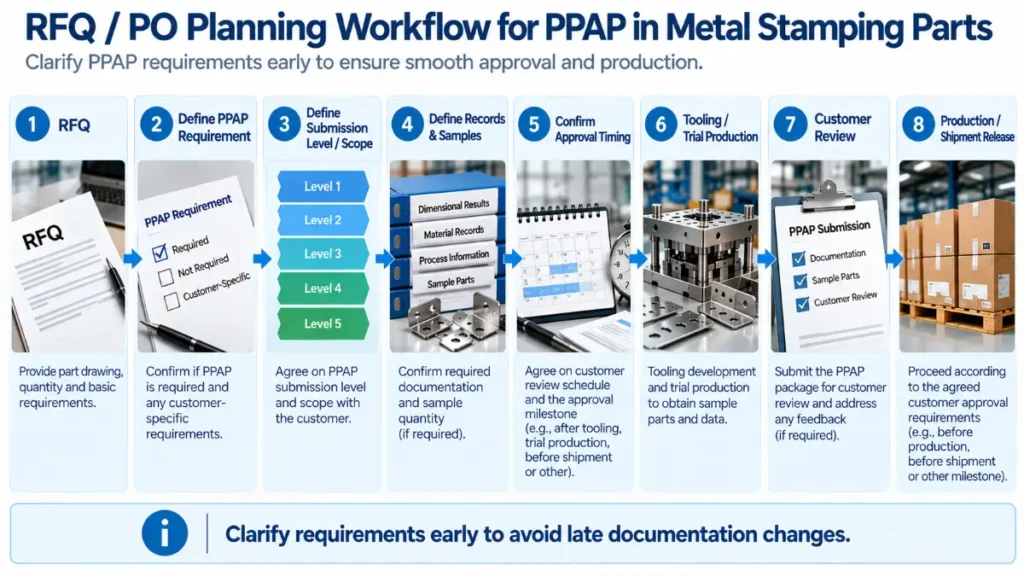
Key Procurement Items to Define in the RFQ/PO
When drafting a stamping RFQ or Purchase Order, buyers should explicitly state:
- PPAP Requirement and Submission Level: State whether PPAP is required and identify the required submission level or customer-defined scope.
- Required Records and Samples: Define the documents, records, and physical samples the customer expects.
- Dimensional Reporting: Clarify which drawing characteristics must be reported, the required sample quantity, and any customer-specific reporting format.
- Material and Secondary-Process Documentation: Specify any required material, plating, coating, heat-treatment, or performance records.
- Capability or Measurement Evidence: State any required process-capability, measurement-system, or special-characteristic evidence rather than assuming it is included.
- Approval Timing and Production Release: Define whether approval is required before tooling release, serial production, shipment, or another project milestone.
- Change Notification and Resubmission: Define which changes require customer notification, updated records, or a new submission.
Recommended planning sequence:
- RFQ stage: define whether PPAP is required and specify the submission level or scope
- PO stage: confirm the agreed documentation and approval requirements
- Tooling and trial stage: build tooling and produce the required samples or records
- Customer review: submit the agreed PPAP package where required
- Production or shipment release: proceed according to the agreed approval milestone
For a broader overview of supplier records and compliance documents that buyers may need to define alongside PPAP, see our guide to compliance documents for metal stamping suppliers.
Example RFQ / PO Contract Clauses
To help procurement teams draft clear documentation specifications, the following example clauses illustrate how PPAP requirements can be phrased:
Example 1: Tailored Commercial Documentation Requirement
“Supplier shall provide the agreed first-article or dimensional inspection report, applicable material documentation, and any customer-specified submission records before production release. A full Level 3 PPAP is not required unless separately specified in writing.”
Example 2: High-Risk / Serial Production Requirement (Level 3 Focus)
“PPAP Level 3 submission required prior to serial production release. Supplier shall provide the PSW, production samples, dimensional results, material and secondary-process records, process planning documents, and other supporting evidence specified by the customer. Production release or shipment shall follow the approval requirements stated in the purchase specification.”
Example 3: Tailored / Customized Requirement (Level 4 Focus)
“PPAP Level 4 submission required. The customer-defined submission shall include the PSW and the specific dimensional, material, process, sample, or secondary-process records listed in the purchase specification. Any additional records that must be retained or made available for review shall also be defined by the customer.”
Note: The example clauses above are provided for illustrative procurement purposes and should be reviewed and adapted by qualified engineering and legal personnel to align with specific organizational and contractual requirements.
What If a Supplier Cannot Provide a Full PPAP Package?
In custom component sourcing, a supplier may have suitable stamping and tooling capability but may not support every PPAP deliverable requested by a particular customer or program.
If an OEM buyer faces this scenario, they have several practical options:
If a supplier cannot support the requested PPAP scope, the buyer can:
- Clarify the Required Scope: If the applicable customer requirement permits a tailored submission, define the exact records and samples that are essential rather than assuming a full package.
- Use Alternative Evidence Only When PPAP Is Not Mandated: For projects that do not require PPAP, the buyer may define an appropriate combination of dimensional, material, inspection, and shipment documentation.
- Do Not Treat Level 5 as a Shortcut: Supplier-site review does not remove required records. It changes where specified evidence is reviewed.
- Re-evaluate Supplier Selection When Required Capability Is Missing: If the customer or program requires PPAP elements that the supplier cannot support, the buyer should determine whether the gap can be resolved before award or whether another supplier is needed.
Common PPAP Mistakes in Metal Stamping Sourcing
- Mandating “Full PPAP” Without Defining Scope: Requesting PPAP in an RFQ without specifying the submission level, sample quantity, or specific document expectations, leading to supplier confusion and unexpected cost additions.
- Assuming Level 3 Is Always Necessary: Requiring a broader submission without first checking the customer, industry, contractual, and component-risk requirements.
- Requesting PPAP After Tooling Is Built: Waiting until progressive dies are finished to request PPAP deliverables, forcing suppliers to retroactively compile process planning records and delaying production launches.
- Treating FAI as a Substitute for PPAP: Assuming that dimensional approval of sample parts automatically satisfies a broader PPAP requirement.
- Expecting MTRs or CoCs to Replace PPAP: Treating material records or supplier declarations as substitutes for a PPAP submission when PPAP is specifically required.
- Applying Automotive-Style Documentation Rules to Every Commercial Project: Over-specifying documentation can add cost and lead time when the customer or project does not require the same submission scope.
- Failing to Define Resubmission Expectations: Forgetting to establish clear rules for when tooling maintenance, die steel modifications, or raw material source changes require customer notification and resubmission.
For broader document and compliance context, see our guide to metal stamping certifications and compliance requirements.
How Metal Stamp Factory Handles PPAP-Related Requirements
Metal Stamp Factory is the export brand of Xiamen Yichong Precision Hardware Manufacturing Co., Ltd., based in Xiamen, China. Established in 2014, the business focuses on drawing-driven custom metal stamping, and OEM production.
Our in-house capabilities include custom metal stamping, progressive die stamping, punching, forming, bending, tooling design, complete die assembly, die tryout, and production process adjustment. Individual die components requiring CNC machining, wire EDM, or other specialized machining operations are manufactured by external machining partners based on our tooling designs. After these components return to our factory, our team completes the die assembly, installs the tooling on our stamping presses, conducts test production, and adjusts the tooling and process before production is finalized.
For a custom stamping project, our general workflow may include:
- Requirement Review: We review the customer drawing, material specification, dimensional requirements, tooling requirements, and requested quality documentation before production planning.
- Tooling and Trial Planning: Tooling is designed in-house according to the approved customer drawing and agreed manufacturing requirements. Individual die components requiring CNC machining, wire EDM, or other specialized machining are produced by external machining partners. After the components return, our team completes die assembly in-house, installs the die on our stamping press, and conducts tryout and test production. Tooling and process adjustments are made based on trial results before production is finalized.
- Material Documentation Review: Where material documentation is required, available supplier Mill Test Reports or material certificates can be reviewed against the specified material requirement.
- First Article and Dimensional Inspection: Trial parts and production features can be checked using conventional measuring tools such as vernier calipers, micrometers, and height gauges. First article and dimensional inspection requirements should be agreed with the customer before production release.
- Secondary Process Coordination: Electroplating, powder coating, heat treatment, and other secondary operations are coordinated through partner facilities where required.
- Customer-Specific Documentation Planning: If a customer requires PPAP-related documentation, the required submission level, records, samples, timing, and approval expectations should be defined before tooling and production begin.
The exact PPAP package depends on the customer’s quality requirements and should be agreed on a project-by-project basis rather than assumed as a standard deliverable for every stamped part.
Metal Stamp Factory does not publish confidential customer drawings, purchase orders, PPAP records, inspection reports, or other project documentation when those records are subject to confidentiality requirements or NDA obligations. For that reason, this guide uses generalized procurement and manufacturing workflows rather than presenting a fabricated or confidential customer PPAP package.
OEM Buyer PPAP Checklist Before Tooling Starts
Before releasing press tooling or issuing a production purchase order for a custom stamped component, procurement and quality teams should review this decision checklist:
- 1. Is PPAP Required? Determine if the component risk, industry standard, or program mandate requires a formal PPAP submission.
- 2. Confirm Submission Level: Define the required level according to the applicable customer, program, and contractual requirements, using component risk and supplier context as supporting considerations.
- 3. Define Required Documents: Specify the exact deliverables, records, and supporting evidence the customer expects rather than relying only on the term “PPAP.”
- 4. Define Sample Quantities: Specify the number and production representation of physical samples required by the customer.
- 5. Establish Approval Timing: Confirm whether written customer PPAP approval is required before serial production release or shipment.
- 6. Lock Contract Language: Insert explicit PPAP clauses into the RFQ and Purchase Order before tooling development begins.
- 7. Define Resubmission Triggers: Clarify which events (e.g., die modifications, tooling transfers, or material changes) require customer notification and resubmission.
- 8. Define Approval and Exception Handling: Clarify how deviations, interim approval, corrective action, or resubmission will be handled if the customer allows those paths.
Technical & Sourcing Consultation
If your engineering or procurement team is planning a new custom metal stamping project and needs to define material specifications, dimensional inspection requirements, or PPAP-related documentation expectations, send us your engineering drawings and project requirements. We can review the manufacturing specifications, tooling requirements, and requested documentation before production planning begins.
Common Questions About PPAP for Metal Stamping Parts
What is PPAP for metal stamping parts?
PPAP (Production Part Approval Process) for metal stamping parts is a structured production-approval framework used to provide evidence that the supplier understands the applicable engineering requirements and that the planned manufacturing process supports conforming production under the agreed conditions.
Does every metal stamping project require PPAP?
No. PPAP requirements depend on component risk, industry standards, production volume, and customer specifications. PPAP is common in automotive programs, but it is not automatically required for every metal stamping project. General commercial projects may use different approval evidence when permitted by the customer’s quality and contractual requirements.
Which PPAP level should an OEM buyer request?
Buyers should follow the applicable customer or program requirement when selecting a PPAP submission level. Component risk, supplier history, process complexity, and the amount of evidence the customer needs to review can help determine the appropriate scope. Level 4 is specifically customer-defined.
What is the difference between PPAP and First Article Inspection (FAI)?
An FAI provides dimensional or feature-level evidence for inspected sample parts. PPAP is broader and may include design, process, material, dimensional, capability, and submission records depending on the required level and customer scope.
Can a Mill Test Report or Certificate of Conformance replace PPAP?
No. An MTR provides raw-material information and test data where applicable, while a CoC is generally a supplier or manufacturer declaration against an identified scope. Neither document automatically replaces the broader evidence required when PPAP is specified.
When is PPAP resubmission required?
PPAP resubmission or customer notification may be required when significant product, tooling, material, process, source, location, or production-status changes occur. The applicable PPAP requirement and customer-specific rules determine which changes trigger action.
What should buyers specify in an RFQ or PO for PPAP?
Buyers should state whether PPAP is required, the submission level or customer-defined scope, required records and samples, dimensional and material documentation expectations, approval timing, and any change-notification or resubmission requirements.