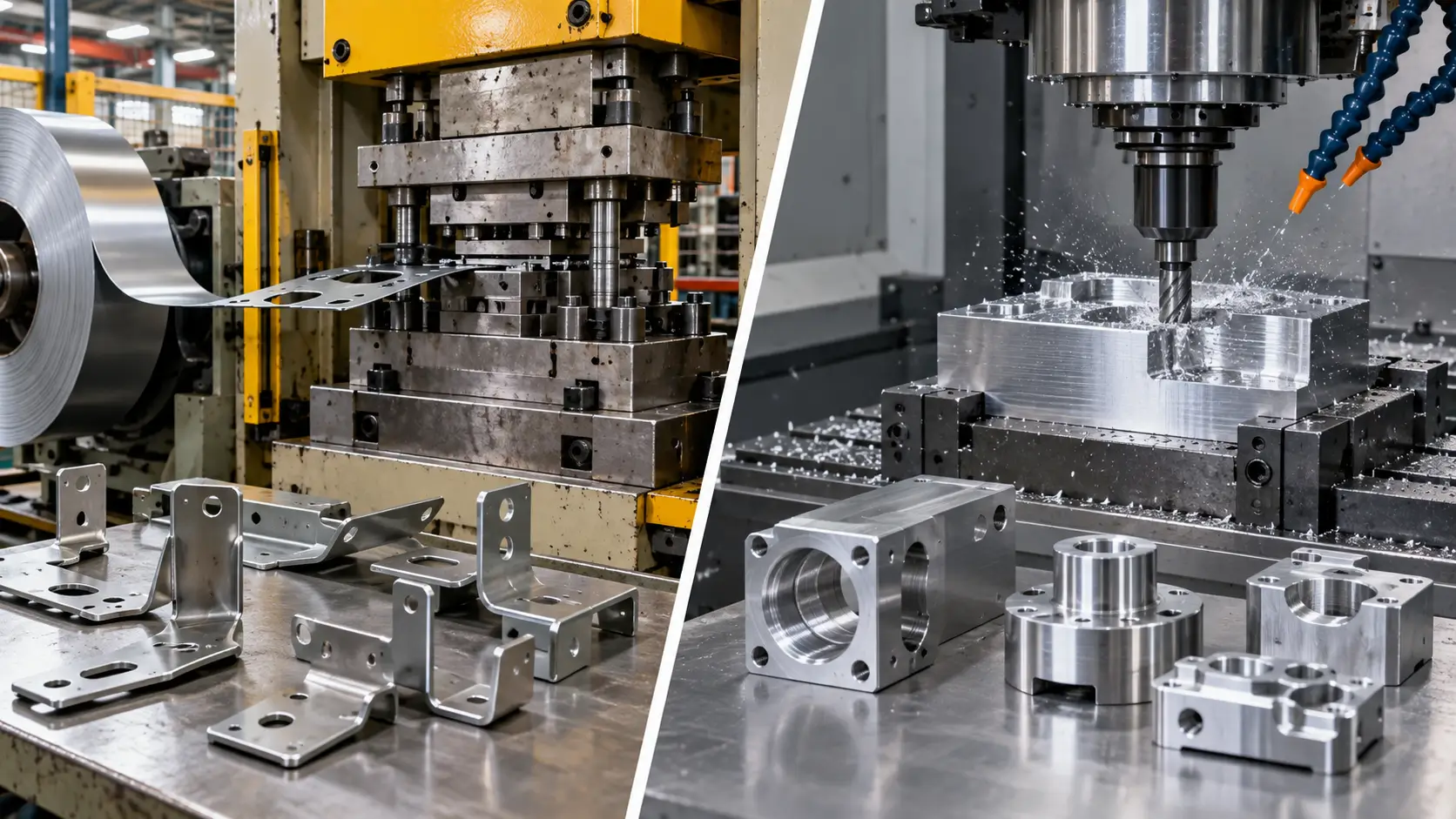
Specifying the appropriate surface finish for a stamped metal component is an important decision in the engineering and procurement lifecycle. Selecting a coating or chemical treatment based on appearance or general naming alone may contribute to performance problems, assembly fit issues, or unnecessary manufacturing cost. A practical metal stamping surface finish selection process evaluates how the base metal, operating environment, functional demands, dimensional tolerances, and secondary manufacturing operations interact.
This guide provides OEM buyers, procurement managers, and design engineers with a structured framework for evaluating surface finishing options. By moving beyond finish names and examining functional requirements, manufacturing integration, dimensional requirements, and supplier validation, engineering teams can develop finish specifications that better match the actual application and manufacturing process.
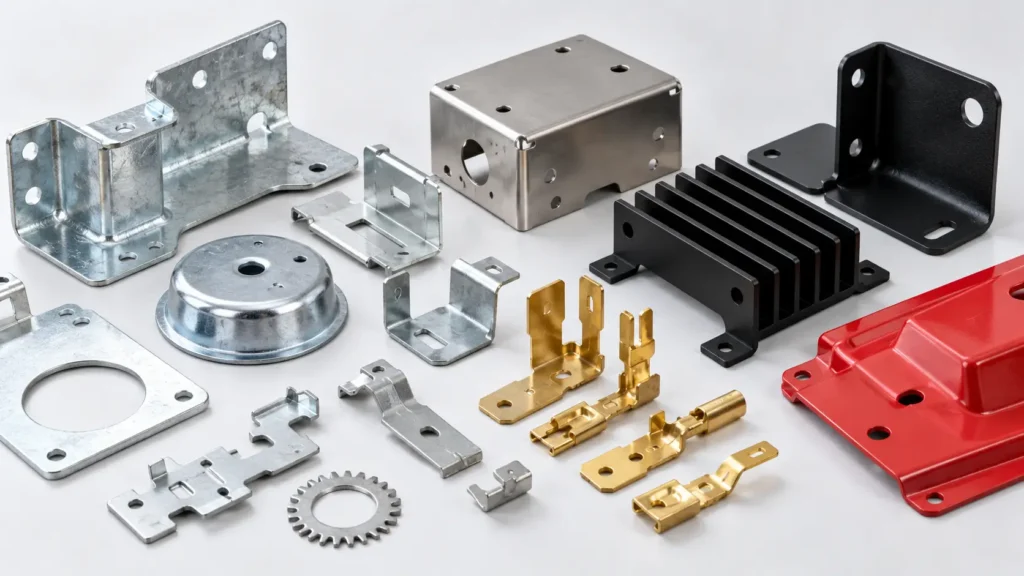
Beyond the Finish Name: Why Surface Selection Requires an Engineering Approach
Surface finishing is sometimes treated as a final, isolated callout on an engineering drawing. In practice, the finish can affect how a stamped metal component interacts with its environment, mating hardware, and electrical or mechanical assemblies. Considering finishing too late may create avoidable manufacturing, dimensional, assembly, or quality risks.
The Risk of Selecting Finishes by Name Alone
Generic terms such as “zinc plated,” “anodized,” or “painted” may not provide enough information to define the required result. Depending on the application, the drawing or purchase specification may also need to address the substrate, applicable finish specification, required coating class or thickness where relevant, post-treatment requirements, critical surfaces, masking, and inspection criteria.
The same general finish name can represent different process specifications and performance requirements. For that reason, the finish should be evaluated together with the base material, application environment, functional surfaces, part geometry, and any governing customer or industry specification rather than treated as a stand-alone label.
Balancing Function, Manufacturability, and Project Economics
Selecting an optimal finish requires balancing three core engineering priorities: functional performance, manufacturing sequence integration, and total commercial cost.
- Functional Performance: The component must withstand environmental exposure, resist mechanical wear, maintain required electrical properties, or satisfy cosmetic expectations.
- Manufacturing Integration: The chosen finish must accommodate downstream processing, including resistance welding, hardware insertion, bending, overmolding, and localized masking.
- Project Economics: Finishing costs encompass more than raw chemical processing. Overall economics are driven by part handling logistics, rack versus bulk barrel processing, inspection protocols, yield loss, and overall supply chain lead times.
Over-specifying corrosion performance, appearance, inspection, or thickness requirements may add unnecessary processing and cost. Under-specifying the finish can also create uncertainty about whether the finished part will meet the application requirement. A better approach is to define the necessary performance and manufacturing constraints early enough for the stamping and finishing suppliers to review them.
Major Factors in Metal Stamping Surface Finish Selection
Evaluating candidate surface finishes involves reviewing several technical and commercial variables. Together, these factors help narrow the range of viable finishing options.
Metal Stamping Surface Finish Selection Factors
| Selection Factor | OEM Consideration |
|---|---|
| Base Material | Steel, stainless steel, aluminum, copper alloy compatibility |
| Environment | Indoor, outdoor, chemical, humidity, salt exposure |
| Function | Corrosion, conductivity, wear, appearance |
| Geometry | Holes, threads, bends, recesses, coating buildup |
| Assembly | Welding, hardware insertion, overmolding |
| Cost | Processing, handling, inspection, logistics |
Base Material and Substrate Compatibility
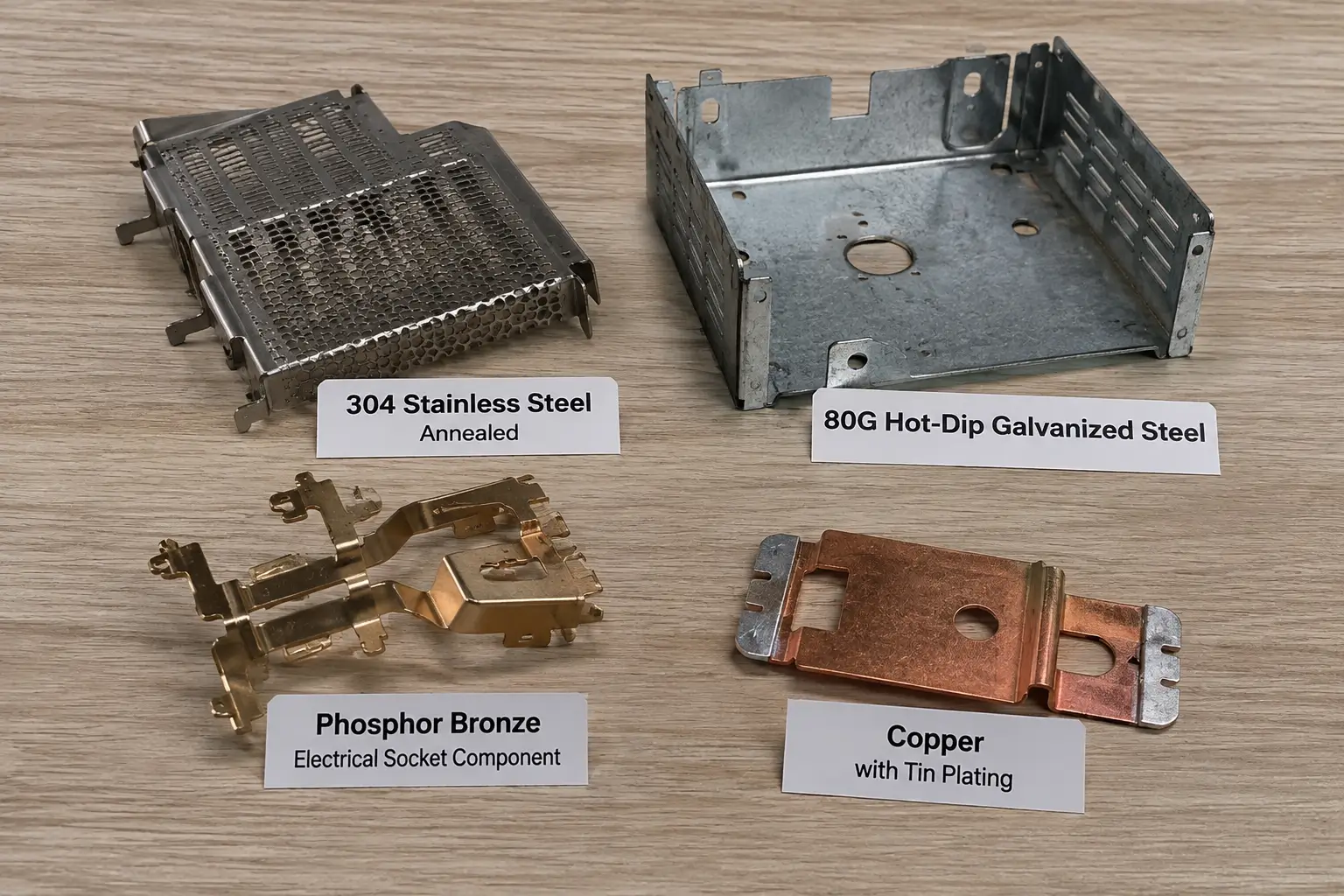
The chemical composition and surface metallurgy of the base metal define the baseline compatibility for any finishing process. Surface treatments interact differently across common stamping alloys:
- Carbon Steel: Carbon steel is susceptible to corrosion in many service environments, so zinc-based metallic coatings, organic barrier coatings, or other protective systems may be considered depending on the application. For higher-strength steels, the finishing route may also require review for hydrogen embrittlement risk where applicable.
- Stainless Steel: Stainless steel relies on a naturally passive surface for much of its corrosion resistance. Passivation may be specified where the application, manufacturing history, or governing specification requires removal of surface contamination and restoration of a suitable passive condition. Other surface treatments may be considered for specific functional requirements.
- Aluminum Alloys: Aluminum forms a natural oxide and is commonly evaluated for anodizing, conversion coatings, painting, powder coating, or other treatments depending on corrosion, appearance, electrical, dimensional, and assembly requirements.
- Copper Alloys (Brass, Bronze, Copper): Copper alloys are widely used in electrical and mechanical applications. Tin, nickel, silver, gold, and other metallic finishes may be evaluated where the application requires particular contact, soldering, wear, corrosion, or appearance characteristics.
Application Environment and Corrosion Protection
The application environment strongly influences the required level and type of corrosion protection. Relevant conditions can range from controlled indoor use to humid industrial, outdoor, chemical, or saline exposure. The actual exposure should be defined for the application rather than assuming that a finish name alone corresponds to a fixed corrosion level.
Different finish systems protect the substrate in different ways. Zinc on steel, for example, can provide sacrificial protection, while organic coatings primarily act as barriers between the substrate and the environment. Other metallic, conversion, anodized, or passivated surfaces have different roles. The appropriate system depends on the substrate, exposure, geometry, required appearance, functional surfaces, and applicable specification.
Surface Functional Requirements: Electrical, Wear, and Appearance
Beyond environmental protection, many stamped components perform active mechanical or electrical functions that dictate finish selection:
- Electrical Conductivity and Contact Performance: Electrical terminals, busbars, and switch contacts may require controlled conductive contact surfaces. Tin, nickel, silver, gold, and other metallic finishes can be evaluated depending on contact design, mating conditions, environment, solderability, wear, and the applicable electrical specification.
- Solderability: Terminal leads and other stampings intended for soldering may require a finish compatible with the specified soldering process and storage conditions. Tin and other suitable metallic finishes are commonly evaluated, but the final selection should follow the actual assembly and customer requirements.
- Wear and Friction: Sliding, mating, or repeatedly cycled stamped components may require additional consideration of wear, friction, or galling. The appropriate surface treatment depends on the substrate, contact load, motion, lubrication, environment, and expected service conditions.
- Cosmetic Appearance: Visual components in consumer goods, architectural lighting, or automotive interiors may require specific colors, textures, or reflectivity levels achievable through powder coating, wet painting, or decorative anodizing.
Feature Geometry and Coating Thickness Stack-Up
Metal stamping produces complex three-dimensional features, including deep-drawn cups, narrow channels, extrusions, small holes, and fine threads. Surface finishing adds physical mass to these features, altering final part dimensions:
- Coating Buildup: Plating and organic coatings can change final feature dimensions. Critical holes, press-fit areas, threads, mating surfaces, and other tight-tolerance features should therefore be reviewed using the final finished-part requirements rather than assuming the stamped dimension and finished dimension are identical.
- Geometry and Deposit Distribution: Electroplated deposits may not build uniformly across every feature. Edges, recesses, holes, and complex three-dimensional geometry can receive different deposit distributions, so critical surfaces and inspection locations should be reviewed with the finishing provider.
- Drainage and Entrapment: Tight folds, hems, recesses, and pockets can complicate cleaning, rinsing, coating, and drainage. These features should be evaluated with the finishing supplier where retained processing fluids or incomplete access could affect the finished part.
Secondary Operations and Assembly Integration
Finishing decisions must accommodate downstream manufacturing steps that occur after the stamping die:
- Joining and Welding: Existing coatings can affect resistance welding and other joining operations. Depending on the coating, joint design, and process requirements, the manufacturing team may need to adjust the sequence, define finish-free contact areas, or validate welding after finishing.
- Hardware Insertion: Clinch nuts, studs, rivets, and other hardware can interact with the finished surface and local dimensions. The sequence should be reviewed so that coating buildup, local deformation, finish damage, and thread or retention requirements are addressed for the actual assembly.
- Overmolding: Stamped inserts that will be overmolded require the surface treatment, cleanliness, geometry, and molding sequence to be compatible with the actual overmolding process. Adhesion or performance should not be assumed from the finish name alone.
- Masking Requirements: When specific zones of a stamping must remain finish-free for electrical grounding or welding, specialized masking (tapes, plugs, or liquid stop-offs) must be integrated into the processing sequence.
Commercial Requirements and Finishing Logistics
Commercial feasibility also depends on finishing-related logistics rather than production volume alone.
- Part Handling: Part size, geometry, cosmetic sensitivity, and the risk of tangling or contact marks can influence how parts are handled during finishing.
- Masking and Secondary Processing: Selective masking, additional cleaning, special handling, and downstream assembly can add operations that should be considered during sourcing.
- Finishing Location and Logistics: When stamping and finishing occur at different facilities, packaging, transport, handling, and scheduling become part of the manufacturing plan.
- Inspection Requirements: Coating thickness, adhesion, corrosion testing, appearance, or other inspection may be required depending on the drawing and applicable specification. The required inspection method should be defined for the project rather than assumed.
Common Metal Stamping Surface Finishing Options
A wide range of surface treatments is available for metal stampings. The following overview examines the primary finish categories, highlighting their typical selection context, substrate compatibility, key benefits, and major validation points.
Surface Finish Comparison for Stamped Parts
| Finish Type | Common Materials | Typical Purpose |
|---|---|---|
| Zinc Plating | Carbon Steel | Corrosion protection |
| Nickel Plating | Steel / Copper Alloy | Wear, appearance, conductivity |
| Tin Plating | Copper Alloy | Electrical contact and solderability |
| Anodizing | Aluminum | Corrosion, appearance, insulation |
| Powder Coating | Steel / Aluminum | Barrier protection and appearance |
| Passivation | Stainless Steel | Surface cleanliness and corrosion performance |
Electrodeposited Plating: Zinc, Nickel, and Tin
Electroplating involves depositing a metallic layer onto the stamped substrate using an electrolytic bath.
- Zinc Plating: Zinc plating is commonly considered for carbon steel stampings where sacrificial corrosion protection is required. The complete specification may include supplementary treatments and inspection requirements depending on the application. Performance depends on the actual coating system, thickness or class where specified, substrate, geometry, environment, and applicable standard.
- Nickel Plating: Nickel plating may be used on steel or copper-alloy stampings for functional or decorative purposes, including selected corrosion, wear, appearance, or multilayer-plating requirements. Whether nickel is used as a final finish or as part of a multilayer system depends on the application and specification.
- Tin Plating: Tin plating is commonly evaluated for electrical terminals, connectors, and other components where solderability or electrical contact requirements are important. Substrate, underplate requirements, mating conditions, storage, whisker risk where relevant, and the governing specification should be considered for the actual application.
Anodizing and Conversion Coatings
Anodizing and conversion coatings alter the native oxide chemistry of the base metal to create protective or functional surface layers.
- Aluminum Anodizing: Anodizing electrochemically modifies the aluminum surface to form an oxide layer. It may be selected for corrosion, wear, electrical insulation, appearance, or other application-specific requirements. Because anodizing changes the surface boundary, critical finished dimensions should be reviewed with the applicable anodizing specification and supplier.
- Chemical Conversion Coatings: Conversion treatments may be used on suitable substrates for corrosion protection, pretreatment, paint adhesion, electrical requirements, or other specified functions. Their suitability and electrical behavior depend on the exact chemistry, substrate, application, and governing specification.
Organic Barrier Coatings: Powder Coating and Paint
Organic coatings provide a physical barrier isolating the metal substrate from surrounding environmental agents.
- Powder Coating: Powder coating applies an organic coating that is subsequently cured to form a barrier layer. It is commonly evaluated for enclosures, brackets, frames, and visible components where corrosion protection, appearance, or surface durability is required. Coating buildup, masking, grounding areas, threads, hardware, and cure compatibility should be reviewed for the actual part.
- Paint: Liquid paint systems may be selected for corrosion protection, appearance, color, or application-specific coating requirements. Paint chemistry, pretreatment, curing, thickness, and compatibility with downstream assembly depend on the specified system and supplier process.
Stainless Steel Passivation
Passivation is a chemical treatment that may be specified for stainless steel to remove certain surface contaminants and support a suitable passive surface condition.
Passivation is not a metallic plating layer. Its use, chemistry, acceptance criteria, and inspection requirements should follow the applicable material, customer, or industry specification where required.
Pre-Galvanized and Pre-Coated Sheet Stock
For some stamped parts, the incoming sheet or coil may already have a galvanized or other pre-applied surface treatment before stamping. This can change the manufacturing sequence because the finish is present during blanking, piercing, and forming.
- Pre-Galvanized Steel: The zinc coating is present on the incoming material before stamping. This can reduce or eliminate a separate post-stamping zinc-finishing operation for projects where the pre-finished material satisfies the drawing and application requirements.
- Sheared Edge Considerations: Blanking, piercing, and trimming can create cut edges that do not have the same coating coverage as the original sheet surfaces. Whether this is acceptable depends on material thickness, geometry, exposure, corrosion requirement, and the applicable specification.
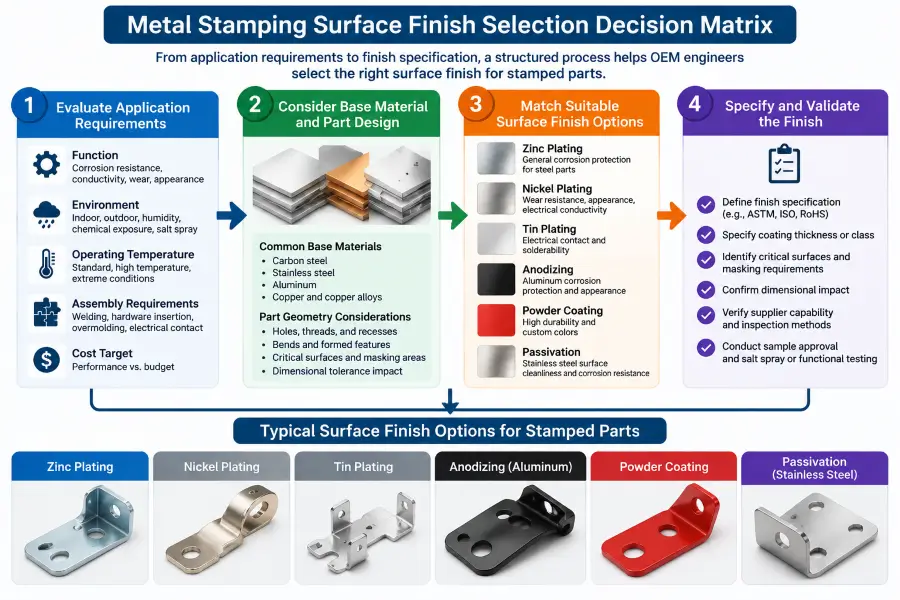
The 4-Stage Stamping Surface Finish Selection Framework
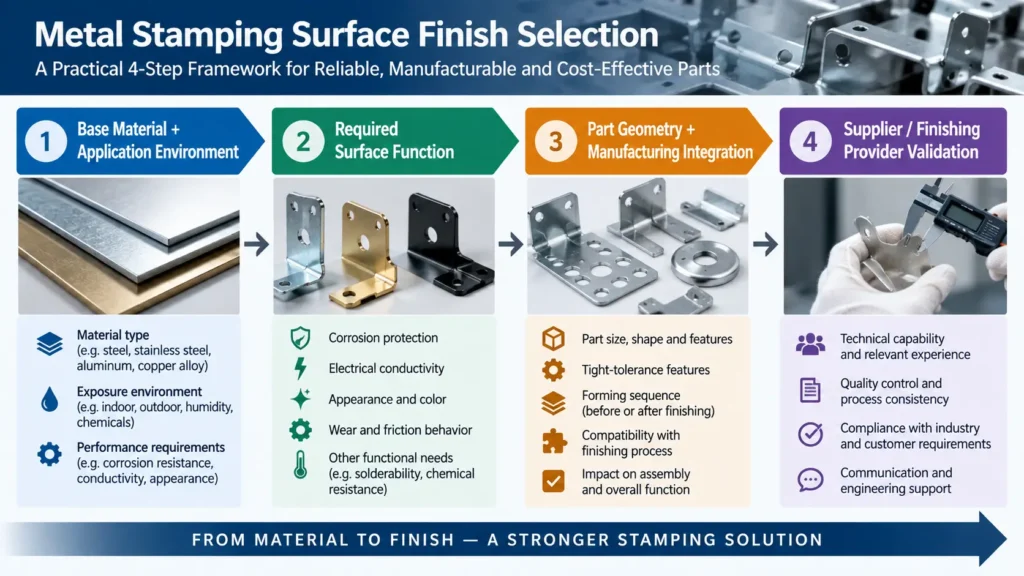
To avoid selecting finishes in isolation, engineering teams should follow a structured four-stage evaluation framework during component design and sourcing.
Surface Finish Decision Workflow
| Stage | Key Question |
|---|---|
| Material | What substrate is being finished? |
| Function | What performance is required? |
| Manufacturing | How does finishing affect stamping and assembly? |
| Validation | How will supplier quality be verified? |
Stage 1: Define the Base Material and Application Environment
- Identify the substrate alloy, temper, and initial surface condition.
- Document the operating environment, including temperature extremes, humidity levels, ultraviolet exposure, chemical contact, and atmospheric salinity.
- Determine whether the component requires sacrificial protection, barrier protection, or passive film optimization based on substrate susceptibility.
Stage 2: Define the Required Surface Function
- Establish mandatory mechanical performance requirements, such as abrasion resistance, coefficient of friction, or flexibility.
- Identify electrical requirements, including surface resistivity, contact resistance limits, shield grounding, and solderability specs.
- Define aesthetic callouts, including color, gloss level, texture, or reflectivity where visual appearance is an acceptance criterion.
Stage 3: Evaluate Part Geometry and Manufacturing Integration
- Review part feature geometry for high-current-density corners, deep recesses, blind holes, and tight thread pitches.
- Calculate total coating thickness build-up and establish appropriate pre-plate dimensional tolerances on tooling drawings.
- Determine downstream manufacturing sequences, identifying secondary welding, hardware insertion, overmolding, or selective masking requirements.
Stage 4: Validate the Finish Specification with the Supplier
- Review candidate finishing processes with the stamping manufacturer and finishing supplier early enough to address dimensional, sequencing, masking, and inspection requirements before they become difficult to change.
- Confirm critical surfaces, acceptable handling or contact-mark locations, drainage concerns, and any areas that require masking or special treatment.
- Finalize the engineering drawing or purchase specification with the applicable finish standard, coating class or thickness where required, supplementary treatments where applicable, critical surfaces, and inspection requirements.
Manufacturing Sequence and Secondary Assembly Integration
Integrating surface finishing into a metal stamping production workflow requires managing physical interactions between the tool, the finish, and downstream assembly steps.
Pre-Finished Coil Stock vs. Post-Stamping Finishing
Deciding whether to stamp pre-finished material or apply finishes after stamping involves distinct trade-offs:
Pre-Finished Coil Stock Processing:
- Advantages: Eliminates post-stamping plating logistics, reduces total lead time, and offers highly uniform mill-controlled coating thickness.
- Trade-Offs: Cut edges expose raw substrate; severe forming radiuses can fracture or micro-crack pre-applied coatings; tool steel die surfaces must be polished or coated to prevent zinc pickup and galling.
Post-Stamping Batch Finishing:
- Advantages: Can provide finish coverage over surfaces created during shearing, piercing, and forming, depending on the finishing process and part geometry; allows customization of finish per batch.
- Trade-Offs: Requires secondary handling, packaging, and transport; introduces risk of part tangling or rack contact marks; requires careful management of feature tolerances due to plating build-up.
Managing Coating Buildup on Tight Stamped Tolerances
When post-stamping plating or organic coating is specified, the drawing should make clear whether critical dimensions apply before or after finishing. The appropriate convention depends on the drawing system, customer requirement, and applicable specification.
Coating buildup can reduce internal clearances and increase external dimensions. Precision holes, slots, press-fit features, threads, and mating surfaces should therefore be reviewed using the specified final condition. Any pre-finish dimensional compensation should be determined from the actual coating requirement and supplier process rather than from a universal allowance.
Secondary Joining: Welding, Riveting, and Hardware Insertion
The operational order between finishing and assembly directly affects component integrity:
- Resistance Spot Welding: Pre-plated zinc steel can be spot welded, though welding parameters and electrode maintenance may need to account for the zinc coating. Heavy organic coatings or anodized surfaces can interfere with electrical contact at weld locations, so the manufacturing sequence or local masking should be evaluated for the specific welding process.
- Clinch Hardware Insertion: Installing self-clinching nuts, studs, or standoffs prior to finishing avoids raw metal exposure around hardware interfaces. However, plating baths can become trapped in internal threads. Installing hardware after post-stamping finishing ensures clean threads but can create micro-cracks in rigid coatings during cold-flow sheet metal displacement.
Real Factory Evidence: Surface Finish Applications in Stamped Production
To illustrate how substrate materials, component geometries, secondary processes, and surface treatments intersect in production, consider the following verified manufacturing cases from Metal Stamp Factory.
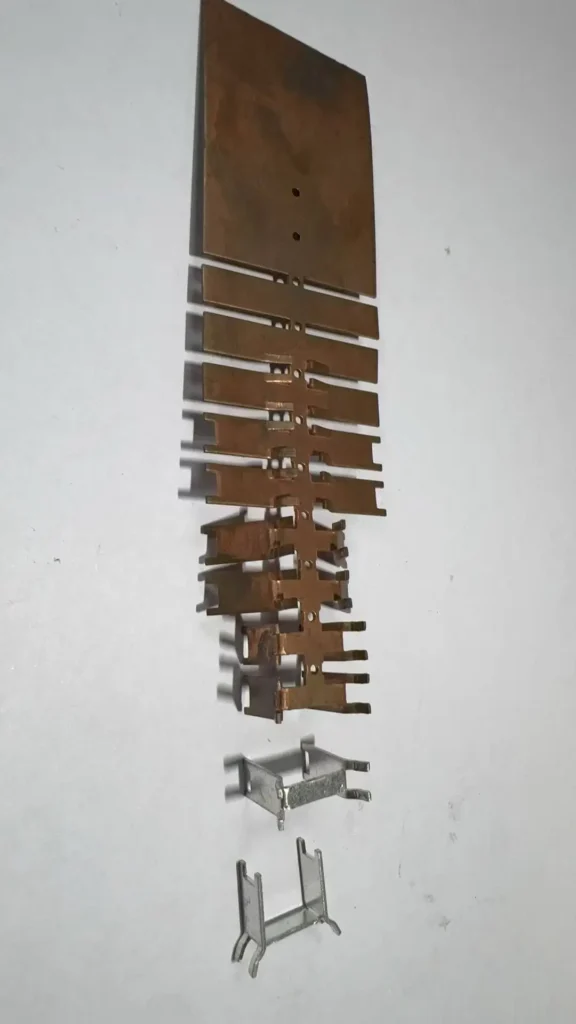
Plated Electrical Components: Brass Terminal Component
Metal Stamp Factory has produced brass electrical terminal and socket plug components with nickel and tin plating for household electrical applications.
- Base Material: Brass.
- Application Context: Household electrical terminal / socket plug component.
- Surface Treatment: Nickel and tin plating.
- Verified Product Details: The component family includes left/right and male/female configurations.
This example shows an actual combination of a brass substrate, metallic surface treatment, and electrical-product application. The available project information does not establish the customer’s specific engineering reason for selecting the nickel and tin plating system, so no conductivity, solderability, corrosion, or service-life result is attributed to this project.
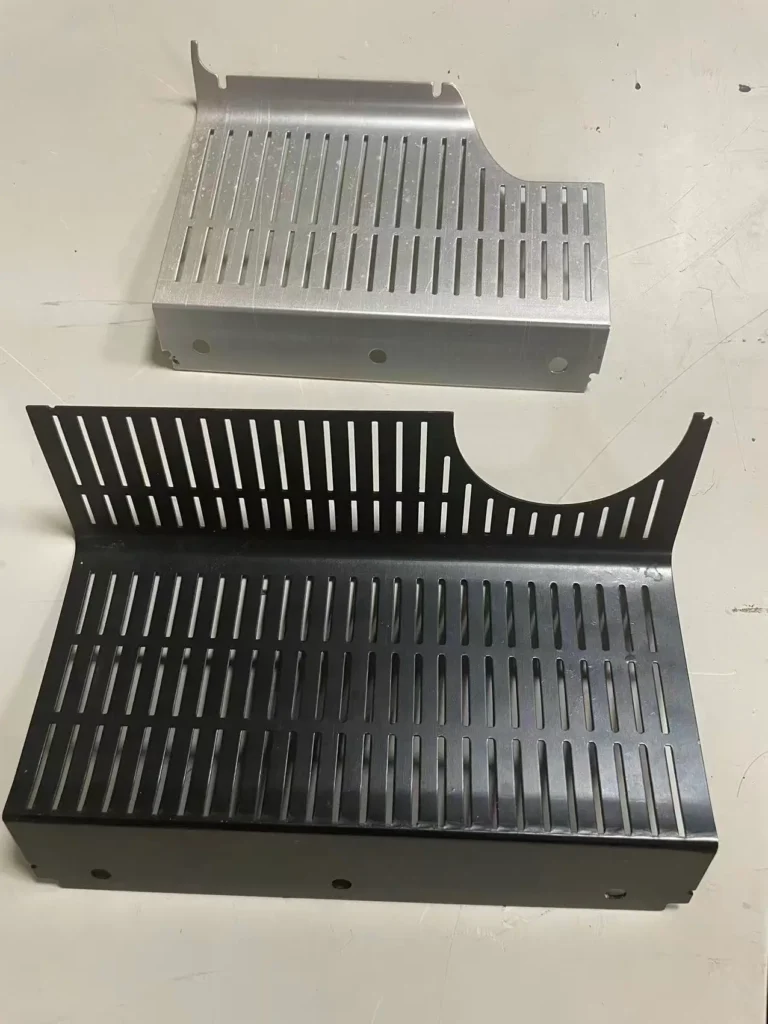
Anodized Aluminum Components: Electronic and Lighting Applications
Aluminum stamping allows for lightweight structural designs, but requires surface stabilization to prevent oxidation and meet visual requirements.
- Base Substrate: Aluminum alloy.
- Application context: Commercial lighting housings and electronic enclosure assemblies.
- Surface Treatment: Chemical anodizing, produced in both natural clear and black dyed finishes.
- Manufacturing Considerations: Anodizing builds an oxide film integrated with the underlying aluminum metal. For electronic and lighting components, anodizing provides surface electrical insulation, corrosion protection, and consistent aesthetic color options without applying heavy paint films.
Post-Stamping Secondary Processing: Galvanized Heavy-Truck Bearing Seat
Heavy-duty automotive components undergo high mechanical stresses and severe environmental exposure, requiring multi-step manufacturing integration.
- Base Substrate: Formed iron/steel plate.
- Application context: Heavy-truck chassis bearing seat assembly.
- Manufacturing Sequence: Heavy-gauge drawing and stamping, followed by secondary projection spot welding, subsequent galvanizing, and final plastic overmolding.
- Manufacturing Considerations: The manufacturing sequence requires that deep drawing and projection welding occur while the base metal is clean. Galvanizing is applied to provide robust corrosion protection across the welded assembly, which is subsequently placed into an injection mold where engineered plastic is overmolded directly onto specific functional zones.
Secondary Assembly Integration: Painted Lighting Bracket with Hardware
Integrating mechanical fasteners with visual surface coatings requires managing assembly hardware sequence.
- Base Substrate: Iron sheet metal.
- Application context: Architectural and commercial lighting lamp frame brackets.
- Surface Treatment: Liquid wet paint finish.
- Secondary Assembly: Threaded rivet nut installation and screw integration.
- Manufacturing Considerations: Structural lighting brackets demand smooth cosmetic paint coverage combined with high-torque mechanical fastening points. The component integrates painted iron frame structures with press-installed rivet nuts and threaded hardware to deliver a complete assembly ready for fixture installation.
Specification Checklist and Supplier Validation
A complete engineering finish callout eliminates ambiguity between the OEM buyer, the stamping manufacturer, and the secondary finishing provider.
Information to Include in an RFQ or Finish Specification
When submitting engineering drawings and request-for-quote packages, provide the following information where it is known or required by the drawing, customer specification, or application:
- Base Material: State the material grade, temper, and initial surface condition where these are defined.
- Intended Finish: Identify the required finish if it has already been selected. If the finish is not yet fixed, describe the required function and application conditions so the supplier can review feasible options.
- Applicable Standard: Reference the customer, OEM, ASTM, ISO, military, or other applicable specification if one is already defined for the project.
- Finish Thickness or Class: State the required coating class or thickness where it is defined by the drawing or applicable specification.
- Supplementary or Post-Treatment Requirements: Identify passivation, sealing, hydrogen embrittlement relief, or other supplementary requirements where they are applicable and specified.
- Critical Functional Surfaces: Identify electrical contact areas, weld zones, masking requirements, cosmetic surfaces, press-fit features, or other locations that require special control.
- Inspection Requirements: State the required acceptance criteria and inspection or testing method where these are defined by the drawing or governing specification.
OEM Surface Finish Specification Checklist
| Item | Required Information |
|---|---|
| Material | Alloy, temper, thickness |
| Finish | Coating type and specification |
| Thickness | Required coating class or thickness |
| Critical Areas | Masking, electrical, cosmetic surfaces |
| Tolerance | Finished dimension requirements |
| Inspection | Acceptance criteria and testing |
What to Validate with the Stamping and Finishing Supplier
Before the finish and manufacturing route are frozen, review relevant validation points with the stamping and finishing suppliers:
- Substrate Cleanliness and Die Lubricants: Confirm that stamping die lubricants used during forming can be effectively cleaned in standard finishing pretreatment wash lines.
- Dimensional Planning: Confirm how coating buildup will be handled on critical finished dimensions and whether any pre-finish dimensional compensation is required.
- Handling, Contact Marks, and Drainage: Confirm acceptable handling or contact-mark locations and review pockets, hems, or recesses that may complicate cleaning, coating, rinsing, or drainage.
- Handling and Packaging: Define appropriate protection for finished parts where cosmetic damage, denting, contamination, or corrosion during handling and transport is a concern.
Frequently Asked Questions
How do I choose the right surface finish for a stamped metal part?
Selecting the appropriate surface finish requires evaluating base material compatibility, operating exposure, mechanical or electrical functional needs, feature tolerances, downstream operations, finishing logistics, and commercial requirements. A structured decision framework helps ensure that these factors are considered together rather than selecting a finish by name alone.
What are the most common surface finishing options for metal stampings?
Common finishing options include electrodeposited plating (zinc, nickel, tin), chemical conversion and anodizing (aluminum anodizing, passivate films), organic barrier coatings (powder coat, wet paint), stainless steel passivation, and mill-applied coatings (pre-galvanized sheet stock).
How does the base metal affect surface finish selection?
Base metal chemistry strongly influences which finishing processes are compatible and useful. Carbon steel may require corrosion protection depending on the application; stainless steel may be passivated where required; aluminum is commonly evaluated for anodizing, conversion coatings, or organic coatings; and copper alloys may use tin, nickel, silver, gold, or other finishes depending on electrical, soldering, wear, corrosion, and appearance requirements.
Which surface finishes provide the best corrosion resistance for steel stampings?
There is no universally best corrosion-resistant finish for every steel stamping. Selection depends on the exposure environment, substrate, part geometry, required appearance, secondary operations, coating system, and governing specification. Zinc-based sacrificial coatings, organic barrier coatings, and other engineered systems may all be appropriate in different applications, so the required corrosion performance should be defined before the finish is finalized.
What surface finishes are best for electrical contact stampings?
Electrical contact stampings may require controlled conductivity, contact resistance, solderability, wear, corrosion, or mating performance. Tin, nickel, silver, gold, and other metallic finishes can be evaluated depending on the application. Electrically insulating finishes generally need to be kept away from required conductive contact areas, or the contact area must otherwise be designed and specified appropriately.
Does surface finishing change the dimensional tolerances of stamped parts?
Yes. Plating, anodizing, and organic coatings can change the final surface boundary and therefore affect finished dimensions. Critical holes, threads, press-fit features, mating surfaces, and other tight-tolerance areas should be reviewed using the final finish requirement. Any dimensional compensation should be based on the actual coating specification and supplier process.
Should metal parts be finished before or after stamping?
There is no universal rule that finishing should occur before or after stamping. Pre-finished sheet can simplify downstream processing when the incoming coating satisfies the final requirement, but stamping creates cut edges and forming can affect the existing finish. Post-stamping finishing can treat surfaces created during blanking, piercing, and forming, but it adds secondary processing and handling. The correct sequence depends on the substrate, finish system, geometry, forming severity, cut-edge requirements, secondary operations, and applicable specification.
What key information must be included in a metal stamping finish specification?
A useful finish specification identifies the base material and the required finish or performance requirement, then adds the applicable standard, coating class or thickness, supplementary treatments, critical surfaces, masking, and inspection criteria where those items are required. If the finish has not yet been selected, the buyer should provide the application environment and functional requirements so the stamping and finishing suppliers can review feasible options.
Conclusion and Finishing Specification Next Steps
Selecting the right metal stamping surface finish requires more than choosing a finish name from a list. Base material, environmental exposure, electrical or mechanical requirements, dimensional tolerances, manufacturing sequence, secondary operations, and commercial requirements should be evaluated together.
Before the manufacturing route and finish specification are frozen, review critical requirements with the stamping manufacturer and finishing provider. Confirm substrate compatibility, finished dimensions, critical surfaces, masking, secondary operations, applicable specifications, and inspection requirements. This early validation helps align the surface finish with the actual part, application, and manufacturing process.