When sourcing custom automotive hardware, OEM buyers and Tier 1 sourcing teams may include International Material Data System (IMDS) requirements alongside tooling, pricing, and other quality deliverables. If IMDS expectations are clarified only late in a project, missing material or sub-supplier data can create additional review work and may delay customer approval milestones.
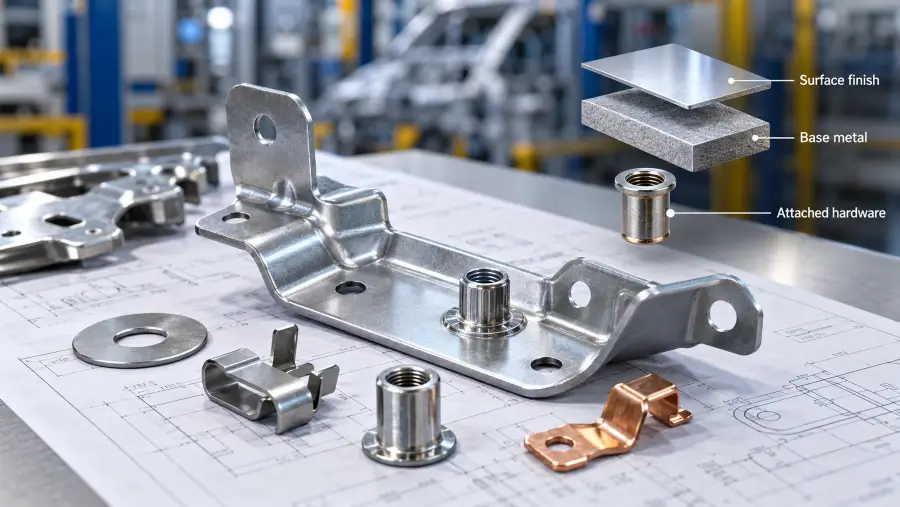
In custom metal stamping, preparing material data involves more than reviewing the raw steel or copper coil loaded into a press. A single stamped component or assembly may combine a stamped metal substrate, electroplating, organic coatings, paint, rivet nuts, press-in studs, washers, spring clips, or other secondary processes.
Understanding IMDS for metal stamping parts requires evaluating how base metals, secondary surface treatments, purchased hardware, and sub-supplier inputs contribute to the material data reported for the finished component or assembly. This guide explains what automotive procurement teams should specify during project planning, what metal stamping suppliers need to collect from raw material mills and finishing partners, how multi-material hardware is structured, and how IMDS requirements differ from other compliance and quality records.
IMDS for Metal Stamping Parts: Quick Answer
The International Material Data System (IMDS) is an automotive material-data system used by OEMs and suppliers to report material and substance information for components and assemblies. It supports review of material composition, declarable substances, and other customer or regulatory material-information requirements.
IMDS reporting is not automatically required for every automotive stamped part. Whether an IMDS Material Data Sheet (MDS) must be submitted—and the specific customer rules, recipient information, and timing that apply—depends on customer-specific requirements, the purchasing OEM or Tier 1 supplier, and contractual project agreements.
Table 1: Quick Reference Guide for Automotive Buyers and Suppliers
Verification Question
Practical Answer for Automotive Procurement
Is IMDS always required for stamped parts?
No. IMDS requirements depend on the customer, purchasing OEM or Tier 1 manual, contract specification, and vehicle program scope.
Who defines the IMDS submission rules?
The customer or purchasing OEM defines whether submission is required, the target recipient details, and any applicable customer-specific reporting guidelines.
What data does the stamping supplier need?
Depending on the customer requirement, the supplier may need base-material information, coating or plating data, paint or secondary-process information, and supporting data for purchased inserts or fasteners.
Does an MTR replace an IMDS entry?
No. A Mill Test Report (MTR) provides information about the raw material covered by the certificate. It does not replace an IMDS submission when IMDS is specifically required.
Does a PPAP package replace IMDS?
No. PPAP and IMDS serve different purposes. A PPAP package does not automatically replace an IMDS submission when IMDS is specifically required.
Should IMDS rules be agreed upon early?
Yes. Clarifying IMDS expectations during RFQ or purchase-order planning can reduce late data gaps and approval delays.
What if secondary coating data is incomplete?
The missing information should be identified early, and the supplier may need to coordinate with the relevant coating or plating partner before an accurate submission can be prepared.
What Is IMDS in Automotive Metal Stamping?
The International Material Data System (IMDS) was developed as a common automotive material-data system for use throughout the automotive supply chain. Suppliers use Material Data Sheets (MDS) to report material and substance information in a standardized electronic format.
In custom metal stamping, an IMDS submission describes the material structure of the finished component or assembly at the level required by the applicable reporting rules. It can include the base material, surface-treatment materials, and attached sub-components so the customer can review the reported material and substance information against its applicable requirements.
What IMDS Is Intended to Support
Within automotive supply chains, IMDS material data supports several key functions:
Material Transparency: It provides structured material and substance information for reported components and assemblies.
Restricted Substance Review: It supports customer review of declarable or restricted substances within reported material data.
Environmental and Regulatory Review: It can support vehicle manufacturers in evaluating material information relevant to automotive environmental and substance requirements.
Supply-Chain Data Consistency: It provides a standardized framework for exchanging material information across multiple tiers of the automotive supply chain.
Does Every Automotive Stamped Part Require IMDS?
A common assumption in automotive procurement is that any metal part made for a vehicle automatically requires an IMDS entry. In practice, whether IMDS reporting is required depends on the specific project, customer, and purchasing contract.
Projects More Likely to Require IMDS
Automotive buyers are more likely to require a formal IMDS submission under conditions such as:
Direct OEM and Tier-1 Production Programs: Serial production programs where the customer or program requirements specifically call for IMDS reporting.
Customer-Controlled Production Components: Parts for which the OEM or Tier customer specifically requires material-data reporting as part of the program.
Plated, Coated, or Multi-Component Assemblies: Parts with multiple material contributors may require more detailed data preparation when the customer requires IMDS reporting.
When IMDS May Not Be Required
Conversely, IMDS entries may not be required for every custom metal stamping project. Examples where IMDS reporting may be omitted or handled differently include:
Non-Automotive Commercial Hardware: Industrial, solar, electrical enclosure, or medical device stampings where automotive IMDS reporting does not apply.
Early-Stage Functional Prototypes: Some prototype or trial-tooling stages may not require the same IMDS submission timing as serial production, depending on the customer program.
Indirect Tooling, Fixtures, and Manufacturing Aids: Press tooling, check gages, assembly fixtures, or internal factory hardware that does not become part of the final production vehicle.
Projects Without an IMDS Requirement: Some commercial or non-automotive projects may use other agreed documentation instead of IMDS.
Customer-specific requirements govern whether IMDS is required. Buyers should evaluate program expectations during sourcing rather than assuming identical rules apply to every stamped component.
Why IMDS Can Be More Complex for Metal Stamping Parts
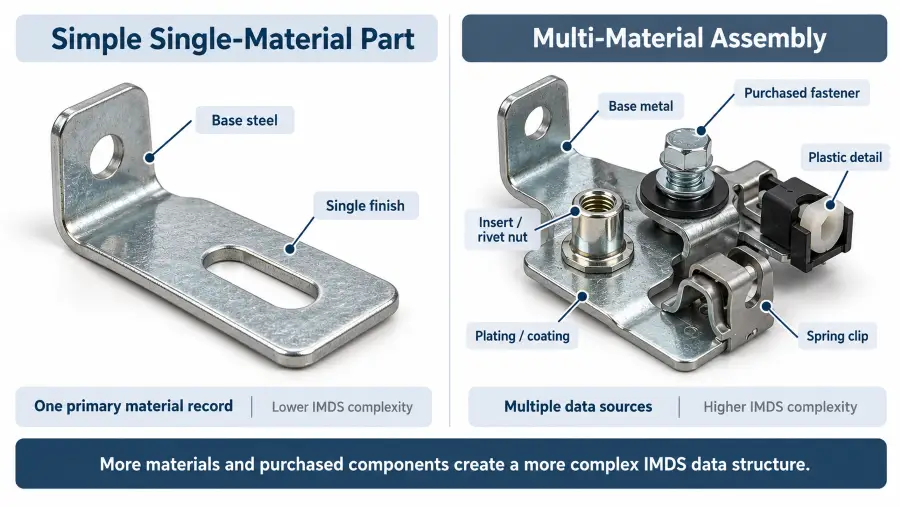
Entering a simple, unplated carbon steel washer into a database might seem straightforward. However, custom metal stampings frequently involve multiple manufacturing steps, secondary surface finishing partners, and assembled hardware that make material data preparation more complex.
Base Material Is Only One Part of the Data
A raw metal coil or sheet substrate (such as cold-rolled steel, stainless steel, aluminum, brass, or beryllium copper) forms the physical foundation of a stamped part. However, raw substrate chemistry alone does not describe the finished product delivered to an automotive assembly line.
In precision stamping, raw strip material is fed into progressive or compound dies, punched, formed, bent, deburred, washed, and often sent for secondary surface treatments. Additional finish layers or attached components may need to be represented in the material structure when they are part of the finished deliverable and the applicable reporting scope.
Plating, Coating, Paint, and Secondary Finishes
Secondary operations can add material layers to a stamped component. When the finished part includes plating, coating, paint, passivation, or similar treatments, the relevant material information may need to be represented in the IMDS submission according to the applicable reporting rules.
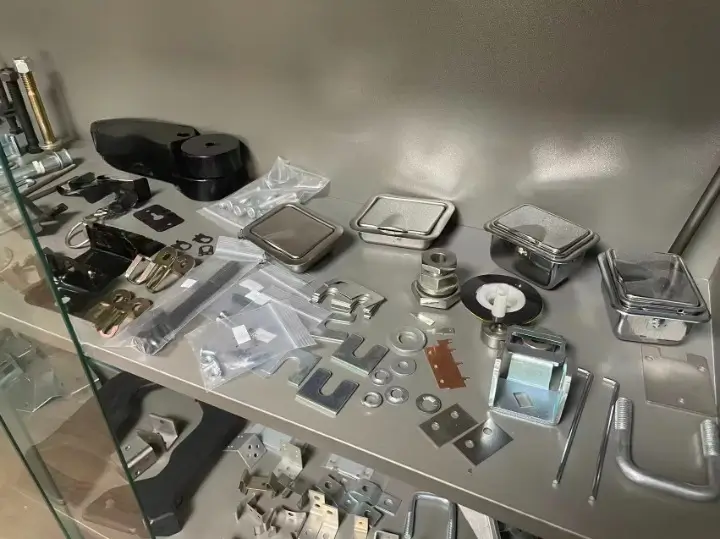
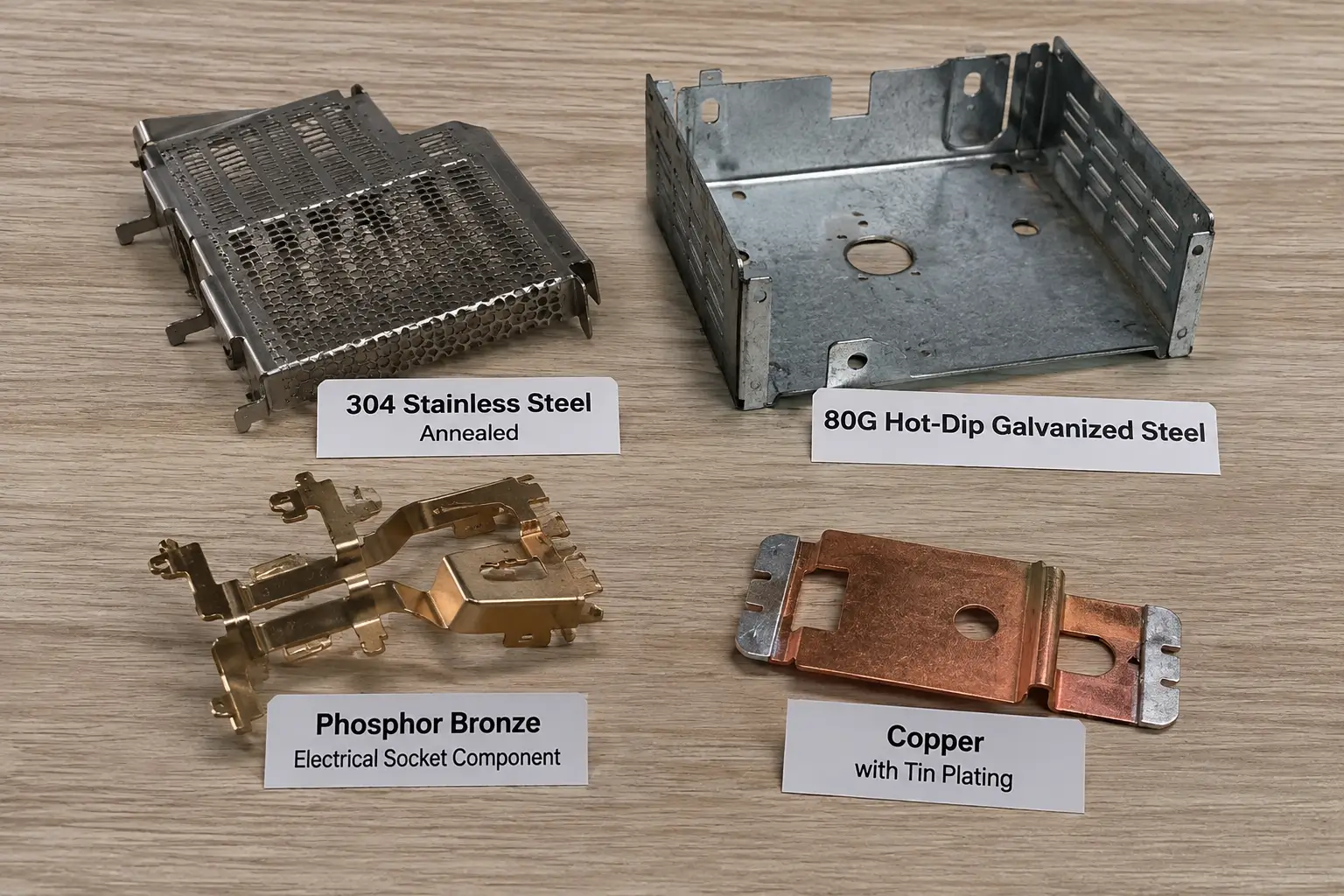
Automotive stamped component samples may involve multiple materials and secondary finishes, so material and coating information should be identified early when IMDS reporting is required.
For example, a stamped steel component that receives electroplating after forming may require more than the base-steel information alone. Depending on the applicable IMDS structure, relevant data may include the base substrate, the applied plating or coating, and any additional passivation or conversion treatment. Preparing that information can require coordination between the stamping supplier and the secondary finishing partner.
Inserts, Rivet Nuts, Fasteners, Washers, and Spring Clips
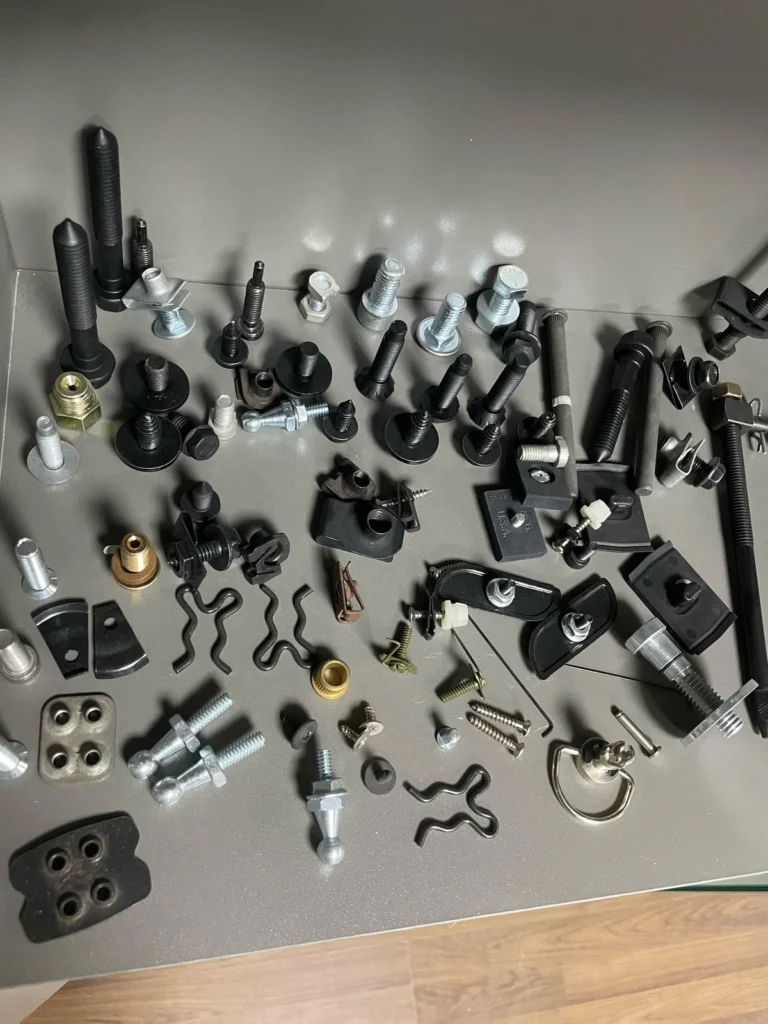
Custom automotive stampings frequently evolve from single stamped blanks into multi-material sub-assemblies. Press-in studs, rivet nuts, custom screws, washers, spring clips, and conductive copper contacts are routinely installed during or after press operations.
Custom automotive hardware can combine stamped substrates, fasteners, inserts, washers, spring clips, copper components, coatings, and other secondary processes, which increases the importance of accurate upstream material data for IMDS preparation.
When an assembly includes attached hardware, the IMDS structure may need to represent multiple components rather than a single stamped part. The required underlying material information for those sub-components depends on the applicable IMDS and customer requirements.
Physical Samples Do Not Automatically Provide IMDS Data
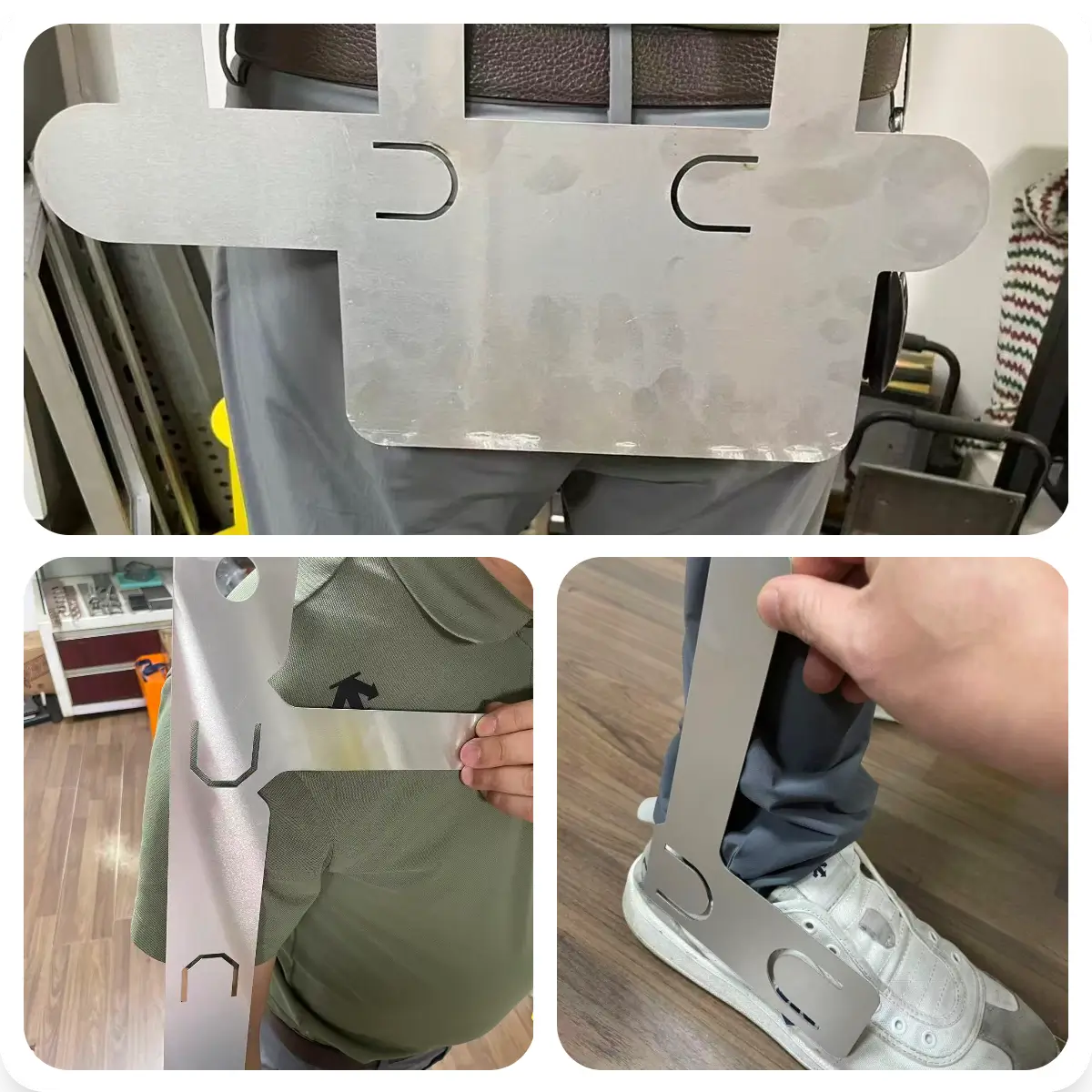
In some sourcing projects, overseas customers send original vehicle components removed from an existing vehicle or assembly for manufacturing review and custom reproduction.
A physical sample can be useful for evaluating part geometry, sheet thickness, tooling feasibility, forming radii, and assembly construction. However, it does not by itself provide the complete material or substance information needed for an IMDS submission.
Dimensional inspection with vernier calipers or micrometers can help assess geometry and size, but it does not establish the complete material or substance composition. Additional supplier documentation or other customer-accepted material information may still be needed before an accurate Material Data Sheet can be prepared.
What Information Does a Metal Stamping Supplier Need for IMDS?
To prepare material data for an automotive component, a custom metal stamping supplier may need information from the customer, raw-material supplier, finishing partner, and purchased-component suppliers.
Typical data inputs may include:
Exact Part Number and Drawing Revision: The official customer part number, part description, and active drawing revision level.
Base Material Specification: The specified alloy designation (e.g., EN 10346 DX51D+ZMA, ASTM A1008, JIS G3141 SPCC, or SUS304) and governing material standard.
Raw Material Information: Available material certificates, supplier declarations, or other supporting composition information relevant to the specified base material.
Surface Finish and Plating Specifications: Drawing callouts and supporting information that identify the required coating, plating, passivation, or other finish.
Paint and Secondary-Process Data: Available supplier or specification information for paint, e-coat, powder coating, or other secondary treatments applied after stamping.
Purchased Component Material Data: Available material or supplier information for purchased sub-components included in the finished assembly.
Insert, Fastener, and Rivet Nut Details: Material identification and other required information for attached hardware, studs, washers, spring clips, or inserts.
Finished Component Mass: The measured net weight of the individual finished part or assembly.
Customer Submission Details: Any customer-provided recipient, routing, or system information needed for the required submission.
Submission Scope and Timing Expectations: The customer-defined timing, review milestone, and any relationship to sample approval or other production-approval activities.
Who Provides the Data When Secondary Processes Are Outsourced?
Custom metal stamping factories may coordinate specialized secondary processes—such as electroplating, coating, painting, or heat treatment—through partner facilities where required.
This multi-tier workflow requires clear communication across the supply chain:
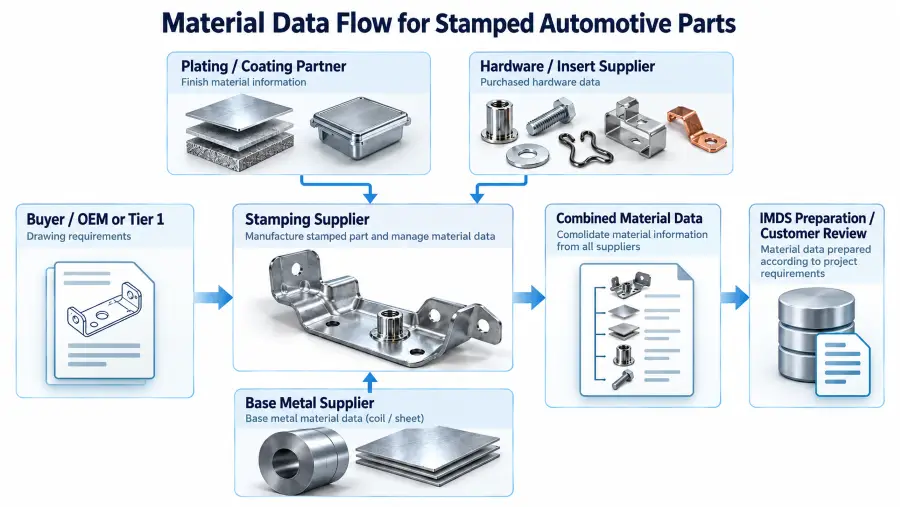
The Stamping Manufacturer: Reviews the drawing, base material, attached hardware, and manufacturing requirements for the stamped component.
The Secondary Finishing Partner: May need to provide supporting information for the applied coating, plating, paint, passivation, or other treatment.
Sub-Tier Hardware Suppliers: May need to provide supporting material information for purchased items such as rivet nuts, specialty fasteners, washers, or spring clips.
The IMDS Steering Committee guidance for purchased parts emphasizes the supply-chain need to provide required IMDS data to the direct customer. In practice, the party responsible for preparing the submission needs access to sufficient upstream information to represent the finished part accurately. If relevant sub-supplier data is missing, that gap should be identified early rather than filled with assumptions.
IMDS-related material data for stamped automotive parts may require coordination among the customer, stamping supplier, finishing partner, and purchased-component suppliers.
How Should Buyers Handle Multi-Material or Assembled Stamped Parts?
When an automotive component contains multiple joined parts or material contributors, its IMDS representation may require a component or assembly structure rather than treatment as a single homogeneous item.
Consider a stamped automotive bracket assembly that incorporates:
A stamped steel base plate
Two press-in steel rivet nuts
A stamped copper conductive contact strip
A stainless steel spring clip
Zinc-nickel electroplating with passivation on the stamped steel base plate
A simplified conceptual breakdown might include:
Stamped base component: base metal plus any applicable finish layers
Rivet nuts or other inserts: represented as separate attached components where applicable
Copper contact or conductive insert: represented according to its own material data
Spring clip or other attached hardware: represented according to its own material data
The exact structure should follow the applicable IMDS and customer-specific requirements for the finished assembly.
A finished automotive assembly may contain more material contributors than a simple stamped part, increasing the need for accurate upstream material information.
IMDS vs MTR vs CoC vs PPAP
Automotive procurement teams frequently encounter multiple quality and compliance documents. While these records often support the same vehicle program, they address different verification questions.
Table 2: Comparing IMDS, MTR, CoC, and PPAP
Comparative Dimension
International Material Data System (IMDS)
Mill Test Report (MTR / MTC)
Certificate of Conformance (CoC)
Production Part Approval Process (PPAP)
Primary Purpose
Reports material and substance information for automotive components and assemblies.
Provides raw-material information and test data where applicable.
Supplier or manufacturer declaration against an identified scope of requirements.
Provides broader production-approval evidence where PPAP is required.
Document Type
Electronic database entry / Material Data Sheet (MDS).
Physical or digital material test certificate.
Supplier declaration or conformity document.
Multi-element production-approval package defined by the applicable customer or program requirements.
Issuing / Submission Source
Submitted through IMDS by the party responsible for the required material-data submission.
Typically originates from the material producer or another documented supply-chain source.
Issued by the supplier or manufacturer responsible for the stated declaration.
Submitted by the supplier according to the applicable customer or program requirement.
Coverage Scope
Material/substance data for the reported component or assembly, which may include base material, finishes, and attached sub-components.
Raw-material information for the material covered by the certificate.
The requirements and scope identified by the declaration.
Design, process, material, dimensional, sample, and other records as required by the applicable PPAP scope.
Can Replace the Others?
No. IMDS does not automatically replace MTR, CoC, or PPAP requirements.
No. An MTR does not automatically replace IMDS or finished-part approval requirements.
No. A CoC does not automatically replace IMDS or PPAP.
No. PPAP does not automatically replace IMDS when IMDS is specifically required.
When Should IMDS Requirements Be Defined?
IMDS expectations are best clarified as early as possible, preferably during Request for Quotation (RFQ) and Purchase Order (PO) planning before tooling and production requirements are finalized.
If IMDS requirements are introduced only after parts are already manufactured, missing upstream data may create additional review work or delay customer approval milestones.
What Buyers Should Put in the RFQ or Purchase Order
When preparing an RFQ or purchasing contract for custom automotive stampings, buyers should explicitly state:
IMDS Requirement Statement: Clearly specify whether an IMDS submission is mandatory for the part number.
Customer Submission Details: Provide any customer-specific recipient or routing information needed for the submission.
Applicable Part Revision: State the exact drawing revision level that the MDS entry must reference.
Coating and Secondary Process Specifications: Identify the required finish and any customer documentation expectations so relevant upstream information can be coordinated early.
Purchased Hardware Scope: Identify inserts, rivet nuts, fasteners, washers, spring clips, or other attached components that are part of the finished deliverable.
Submission Timing Milestones: Define when the MDS should be submitted or reviewed relative to the customer’s project milestones.
Change Management Expectations: Clarify which material, finish, source, or assembly changes require review, notification, or an updated submission.
What Changes May Require IMDS Review or Update?
An IMDS entry represents the reported material structure of a component or assembly at a given point in the program. During the life of an automotive stamping program, manufacturing or engineering changes may occur that require the existing Material Data Sheet to be reviewed and, where applicable, updated.
Events that may trigger an IMDS review or resubmission include:
Base Material Changes: Changes to the specified grade, composition, or other material characteristics that affect the reported data.
Secondary Surface Finish Changes: Changes to plating, coating, paint, passivation, or other finish materials that affect the reported composition.
Purchased Component Changes: Changes to attached rivet nuts, studs, washers, spring clips, inserts, or other purchased hardware that affect the material data.
Weight or Geometry Changes: Engineering changes that affect reported component weights or material proportions may require review.
Drawing or Part-Revision Changes: Revisions that change material, finish, component content, or other data relevant to the submission may require review.
Applicable Rule or Customer-Requirement Changes: Updates to reporting requirements or customer rules may require existing data to be reviewed.
OEM buyers and suppliers should define change-notification expectations so relevant engineering, material, finish, source, or assembly changes are reviewed against the applicable IMDS and customer requirements.
What If Sub-Supplier Material Data Is Incomplete?
A common challenge in preparing material data for stamped assemblies is incomplete or missing information from sub-tier finishing facilities or hardware suppliers.
If a stamping supplier encounters missing sub-tier data, appropriate resolution steps include:
Request Upstream Data Early: Contact secondary finishing partners and hardware suppliers during project setup to request technical data sheets or composition breakdowns.
Identify Specific Material Gaps: Determine whether the missing data relates to base substrate chemistry, applied plating thickness, passivation layers, or purchased insert alloys.
Avoid Speculative Composition Entry: Missing composition data should not be invented or guessed. Unsupported entries can create inaccurate records or customer rejection.
Do Not Substitute MTRs or CoCs Automatically: An MTR or CoC may provide useful supporting information, but neither document by itself satisfies an IMDS reporting requirement.
Clarify the Customer-Approved Path: If a sub-supplier cannot provide the required information, the buyer and supplier should clarify what additional upstream documentation, supplier support, or customer-approved reporting path is acceptable.
Common IMDS Mistakes in Metal Stamping Projects
Treating IMDS as a Factory Certification: Assuming that a stamping facility can be “IMDS certified.” IMDS is a material database for product entries, not an organizational quality system certification like ISO 9001 or IATF 16949. For a comparison of these quality management system standards, see our guide to ISO 9001, IATF 16949, and AS9100.
Assuming Every Automotive Stamping Requires IMDS: Failing to confirm whether the specific customer, project specification, or contract actually mandates an IMDS entry before starting data compilation.
Waiting Until Late in the Project to Request IMDS: Delayed material-data collection can create missing-data problems or slow customer approval activities.
Reporting Only the Base Material and Ignoring Finishes: Reporting the base metal while omitting applicable electroplating, passivation, e-coat, paint, or other finish information from the material data.
Omitting Attached Hardware in Assemblies: Declaring the stamped metal body while forgetting to include press-in rivet nuts, studs, washers, or spring clips in the assembly structure.
Assuming an MTR or CoC Replaces IMDS: Treating a material certificate or supplier declaration as a substitute for an IMDS submission when IMDS is specifically required.
Guessing Missing Composition Data: Filling data gaps with unsupported assumptions instead of obtaining available supplier documentation or clarifying the acceptable reporting path.
How Metal Stamp Factory Handles IMDS-Related Material Information
Metal Stamp Factory is the export brand of Xiamen Yichong Precision Hardware Manufacturing Co., Ltd., based in Xiamen, China. Established in 2014, the business focuses on drawing-driven custom metal stamping and OEM production.
Our in-house capabilities include custom metal stamping, progressive die stamping, punching, forming, bending, tooling design, complete die assembly, die tryout, and production process adjustment. Individual die components requiring CNC machining, wire EDM, or other specialized machining operations are manufactured by external machining partners based on our tooling designs. Our team completes the die assembly and conducts tooling tryout and production adjustments in-house after the machined components return.
For custom automotive component projects, our general workflow may include:
Requirement Review: We review customer engineering drawings, material specifications, secondary finishing callouts, and requested quality deliverables during initial project evaluation.
Material Documentation Review: Where material documentation is required, available supplier Mill Test Reports or material certificates can be reviewed against the specified material requirement.
Physical Inspection and Dimensional Verification: Trial stampings and production features are inspected using conventional measuring equipment, including vernier calipers, micrometers, and height gauges.
Secondary Process Coordination: Electroplating, powder coating, heat treatment, painting, and other secondary operations are coordinated through partner facilities where required.
Customer-Specific Data Planning: When a customer requires IMDS-related material information, the required base-material, finish, purchased-component, supplier-documentation, timing, and submission expectations should be clarified during project planning.
Customer Sample Evaluation: When overseas customers provide original vehicle components for manufacturing review or custom reproduction, the samples can be used to evaluate geometry, construction, forming features, and tooling feasibility. They do not by themselves establish the complete material composition needed for IMDS.
Metal Stamp Factory does not publish confidential customer drawings, IMDS records, purchase orders, proprietary material declarations, or assembly details when those records are subject to confidentiality requirements or NDAs. The examples in this guide reflect generalized manufacturing workflows based on real component types and production experience.
Metal Stamp Factory can review available raw-material documentation and coordinate requests for relevant material information from secondary-process partners and purchased-component suppliers. However, responsibility for preparing and submitting an IMDS Material Data Sheet must be agreed with the customer for each project. Required system access, data completeness, recipient information, and submission responsibilities should be confirmed before any submission commitment is made.
OEM Buyer IMDS Checklist Before Tooling Starts
Before releasing press tooling or issuing a production Purchase Order for custom automotive stampings, procurement and quality teams should review this decision checklist:
1. Is IMDS Required? Confirm whether the purchasing OEM, Tier 1 customer, or project contract mandates an IMDS entry.
2. Confirm Part Number & Revision: Ensure the official part number, description, and active drawing revision level are defined.
3. Identify Base Material Specifications: Confirm exact alloy designations and standards for all stamped sheet metal substrates.
4. Define Plating, Coating & Paint Callouts: Specify the required secondary finishes and any material-data expectations associated with those finishes.
5. Inventory Attached Hardware: List all pressed-in inserts, rivet nuts, custom screws, washers, spring clips, or copper contacts included in the assembly.
6. Assign Upstream Data Responsibilities: Clarify who provides technical material data for outsourced electroplating, organic coatings, or purchased hardware.
7. Provide Customer Submission Details: Supply any customer-specific recipient or routing information required for the submission.
8. Establish Submission Timing: Define when the MDS should be submitted or reviewed relative to the customer’s project milestones.
9. Align IMDS with Other Approval Milestones: Confirm how the IMDS requirement relates to PPAP, production release, shipment, or other customer-defined milestones where applicable.
10. Define Change Notification Rules: Establish procedures for reviewing and, where applicable, updating material data if base materials, finishes, purchased components, or other relevant project inputs change during production.
Technical & Sourcing Consultation
If your engineering or procurement team is planning a new custom automotive metal stamping project and needs to define material specifications, secondary-process requirements, or documentation expectations, send us your engineering drawings and project requirements. We can review manufacturing feasibility, tooling needs, and requested material or quality documentation before production planning begins.
Common Questions About IMDS for Metal Stamping Parts
What is IMDS for metal stamping parts?
IMDS for metal stamping parts refers to reporting material and substance information for automotive stamped components or assemblies through the International Material Data System according to applicable customer and IMDS requirements.
Does every automotive stamped part require IMDS?
No. IMDS requirements depend on the customer, purchasing OEM or Tier 1 quality manual, contract terms, and vehicle program scope. While IMDS is common in automotive production programs, it may not be required for non-automotive parts, some prototype stages, or projects where the customer does not specify IMDS reporting.
Can a Mill Test Report, CoC, or PPAP replace IMDS?
No. An MTR provides raw-material information and test data where applicable, a CoC is generally a supplier or manufacturer declaration against an identified scope, and PPAP provides broader production-approval evidence where required. None of these automatically replaces an IMDS submission when IMDS is specifically required.
How should plating, coating, or paint be handled in IMDS?
Plating, e-coating, powder coating, paint, passivation, and other finishes may need to be represented in the material data for the finished part. The exact structure and supporting information depend on the applicable IMDS and customer requirements.
How are rivet nuts, fasteners, inserts, and other purchased components handled?
Attached hardware such as inserts, rivet nuts, studs, washers, or spring clips may need to be represented separately within the finished assembly, with supporting material information provided according to the applicable IMDS and customer requirements.
When should IMDS requirements be defined in an automotive stamping project?
IMDS requirements should be defined as early as possible, preferably during Request for Quotation (RFQ) and Purchase Order (PO) planning before tooling and production requirements are finalized. Early definition gives the supply chain more time to identify and resolve missing material information.
What happens if a plating or component supplier cannot provide complete material data?
If a sub-tier partner cannot provide the required material information, the missing data should be identified early. The buyer and supplier should clarify what additional documentation, supplier support, or customer-approved reporting path is acceptable rather than guessing the missing composition.